Taxi and private hire fleets run on tight margins and constant scrutiny — from TfL, local licensing authorities, insurers, and passengers filming everything on their phones. A 4G dash cam that streams live footage and links to GPS data is now the baseline for defending against fraudulent claims and keeping premiums down in 2026.
- 4G dash cams for taxi and private hire fleets cut false claim payouts by giving live, GPS-tagged footage on demand.
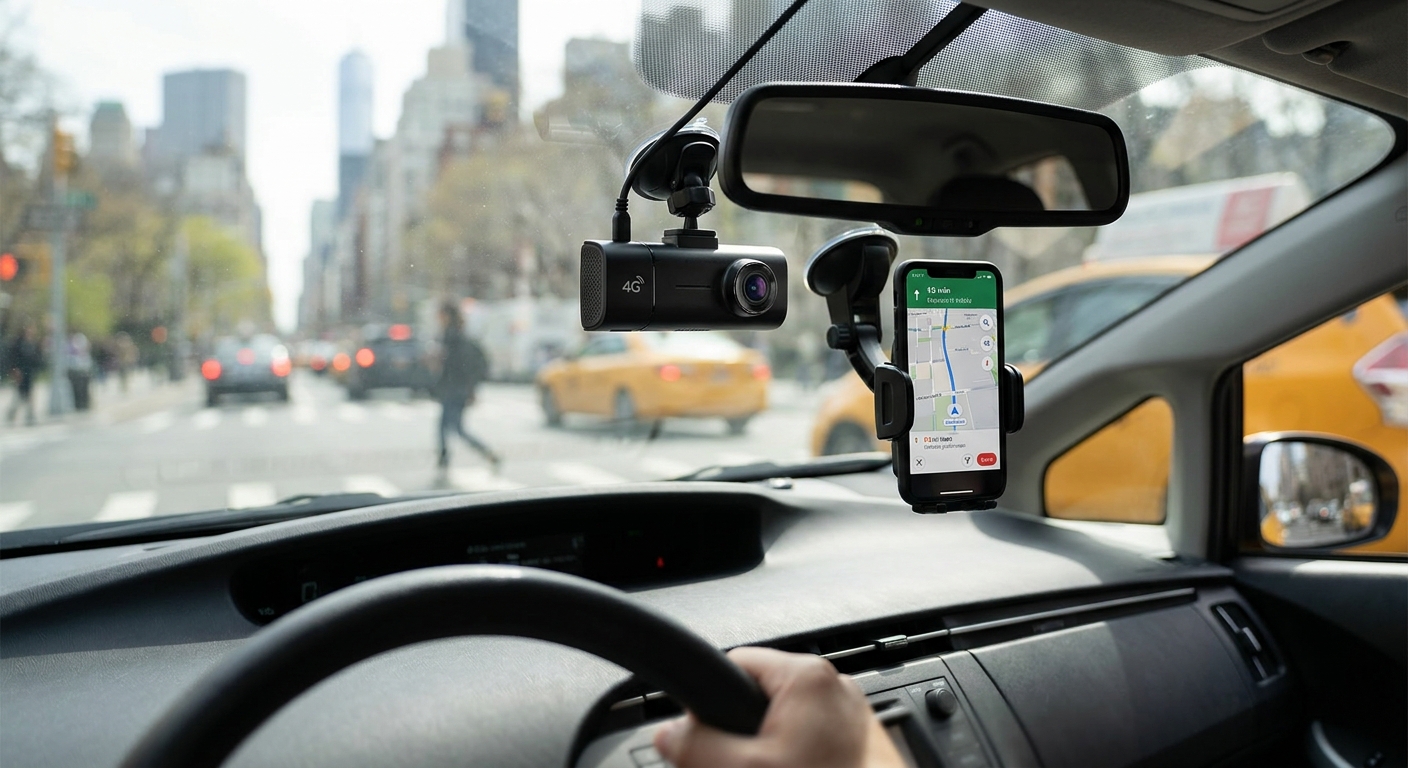
- Crystal Ball's 4G Fleet Dash Cam streams incidents in real time instead of waiting for SD card retrieval — Buy for licensed operators.
- Thatcham S7 trackers pair with dash cam footage for insurer-approved theft and incident evidence in 2026.
- Skip dash cams with SD-card-only storage — no live retrieval means no evidence when a passenger disputes a fare or a collision happens off-site.
- 360-degree CCTV coverage matters more for private hire than standard vans because passenger disputes happen inside the cabin, not just on the road.
Why this matters
A private hire vehicle logs 40,000 to 60,000 miles a year with a different passenger in the back seat every 15 minutes. That's a lot of exposure to "cash for crash" claims, assault allegations, and licensing audits that demand footage within hours, not days.
Insurers increasingly ask licensed operators for camera and tracking evidence before they'll even quote. Get a 4G dash cam and tracking setup wrong and you're either paying for storage you can't retrieve fast enough, or paying an excess on a claim you could have disputed with 30 seconds of cabin footage.
Who this is for
This guide is for fleet managers and owner-operators running licensed taxis or private hire vehicles — single-vehicle PHV drivers scaling to 10 cars, minicab firms with 50+ vehicles, and local authority-regulated hackney carriage fleets. If you're managing HGVs or vans instead, the priorities shift toward route compliance and asset protection rather than passenger-facing evidence.
What to look for in 4G dash cams for taxi and private hire fleets
Live 4G streaming, not just local storage
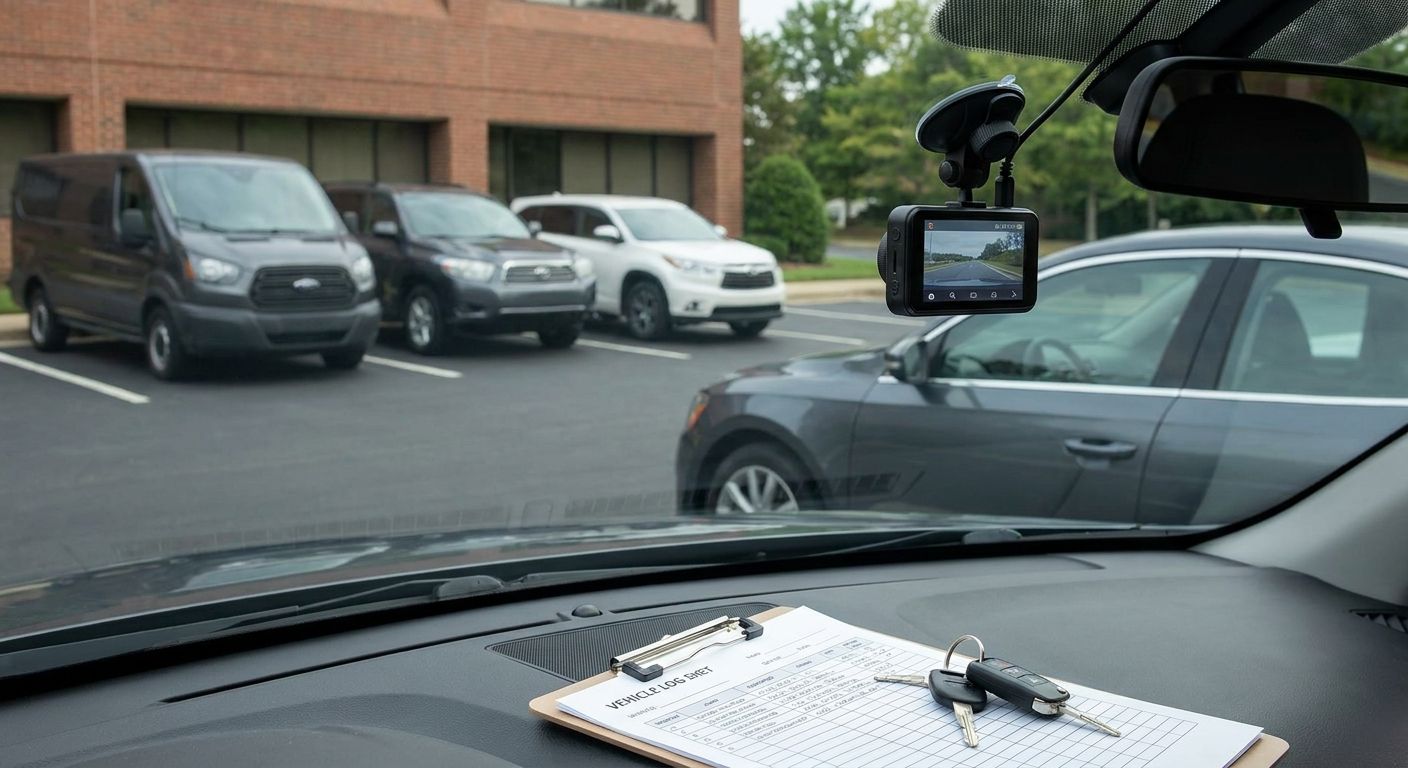
An SD card only helps after the fact — if the vehicle is stolen, vandalised, or involved in an incident away from base, you can't pull footage until the card is physically retrieved. Live 4G streaming lets a fleet manager view or pull a clip within minutes of an incident report, which matters when a licensing authority gives you 24 hours to respond to a complaint.
Cabin-facing camera for passenger disputes
Taxi and private hire work is unique among fleet categories because the camera needs to face inward as often as outward. A fare dispute, an assault claim, or a "driver was on the phone" complaint gets resolved in seconds with cabin footage — without it, it's the driver's word against the passenger's.
Thatcham-approved GPS integration
Dash cam footage carries more weight with insurers when it's timestamped against GPS location and speed data from a Thatcham-approved tracker. This combination is what actually moves the needle on premiums, not the camera alone.
Storage retention and evidence retrieval windows
Check how long footage is retained before it's overwritten — 30 days is a reasonable minimum for a licensed operator fielding late complaints. A camera that only holds footage for 72 hours won't help when a passenger complaint arrives a week later.
Night vision and low-light clarity
Most private hire trips happen after dark. A camera with weak night vision produces footage too grainy to identify faces or read number plates, which defeats the purpose in exactly the scenarios where you need it most.
Cost per vehicle across a mixed fleet
If you're running a mix of saloon cars, MPVs, and wheelchair-accessible vehicles, price the camera and tracker per vehicle, not per fleet. A 12-car firm scaling to 20 needs a system that doesn't require re-negotiating a contract every time a vehicle is added.
Top picks for taxi and private hire fleets
The all-rounder — 4G Fleet Dash Cam. This is the camera built for exactly this use case: live streaming means footage is retrievable within minutes of an incident, not after a card is pulled at end of shift. Pair it with GPS-linked evidence and it becomes the strongest single tool for disputing fraudulent claims in 2026. Buy for any licensed operator running more than three vehicles.
The insurer favourite — Thatcham S7 Tracker. At £198.00, this is the insurance-approved tracker most underwriters recognise by name, with 24/7/365 monitoring and nationwide on-site installation. It won't replace a dash cam's visual evidence, but it's the tracking half of the pairing insurers actually ask for. Buy alongside a dash cam, not instead of one.
The premium option — Thatcham S5 Plus Tracker. Priced at £548.00, this is aimed at higher-value vehicles or fleets that want the top monitoring tier with full app-based journey access for owners and managers. For a standard saloon PHV, it's more tracker than most operators need. Consider for premium or executive private hire vehicles; Skip for standard hackney carriages on tight margins.
The cabin-safety pick — 360° Vehicle CCTV. At £599.00, full 360-degree coverage removes the blind spots that a single forward-facing camera leaves — useful for firms that field frequent "driver did X" complaints from passengers. Buy for operators with a history of passenger disputes; Consider for smaller fleets where budget is the deciding factor.
The compliance layer — Driver Behaviour monitoring. This measures driving style and performance across the fleet, which matters when a licensing authority or insurer asks for evidence that drivers are managed, not just tracked. It doesn't produce footage on its own, so it's a complement to a dash cam, never a replacement. Buy if your licensing authority requests driver conduct records; Skip if you're a single-vehicle operator with no fleet to benchmark.


What to avoid
- SD-card-only dash cams with no live 4G feed — they look identical to a proper system on paper but leave you waiting hours or days for footage after an incident.
- Trackers without Thatcham approval — insurers won't recognise them for premium discounts, which defeats half the point of fitting one in 2026.
- Single forward-facing cameras for cabin-heavy work — a taxi's biggest risk is inside the vehicle, not just in front of it.
“A tracker without a dash cam gives you a location; a dash cam without a tracker gives you a picture. Insurers want both.”
Verdict comparison
| Product | Best for | Key spec | Verdict |
|---|---|---|---|
| 4G Fleet Dash Cam | Live incident evidence | Real-time 4G streaming | Buy |
| Thatcham S7 Tracker | Insurer-approved tracking | 24/7/365 monitoring, £198.00 | Buy |
| Thatcham S5 Plus Tracker | Premium/executive PHVs | App-based journey access, £548.00 | Consider |
| 360° Vehicle CCTV | Passenger dispute evidence | Full 360-degree coverage, £599.00 | Buy |
| Driver Behaviour | Compliance and driver management | Fleet-wide performance scoring | Consider |
FAQ
What's the best 4G dash cam for taxi and private hire fleets in 2026?
A dash cam with live 4G streaming and a cabin-facing camera, such as Crystal Ball's 4G Fleet Dash Cam, is the strongest option in 2026 because it delivers retrievable footage within minutes of an incident rather than after a shift ends.
Do taxi and private hire vehicles need a Thatcham-approved tracker?
Most insurers now expect Thatcham-approved tracking on licensed vehicles before offering competitive premiums. Pairing a tracker like the Thatcham S7 with dash cam footage gives underwriters the combined evidence they look for.
Is a cabin-facing camera necessary for private hire vehicles?
Yes — passenger disputes, assault claims, and fare complaints happen inside the vehicle, so a forward-facing-only dash cam misses the footage that actually resolves these cases.
How much does a 4G dash cam system cost for a fleet in 2026?
Pricing varies by tracker tier and coverage level, with Thatcham trackers ranging from around £198.00 to £548.00 per vehicle depending on the monitoring package chosen; dash cam pricing depends on the fleet size and contract terms.
How long should dash cam footage be retained?
A minimum of 30 days is reasonable for licensed taxi and private hire operators, since passenger complaints and licensing queries can arrive well after the trip has ended.
Can dash cam footage lower insurance premiums for private hire fleets?
Yes, when paired with Thatcham-approved GPS tracking, dash cam evidence supports lower premiums because insurers can verify incidents rather than relying on driver or passenger accounts alone.
What's the difference between the Thatcham S5 and S7 trackers for taxi fleets?
The S7 is the more commonly recognised insurer-approved option at a lower price point, while the S5 Plus adds a higher monitoring tier suited to premium or executive private hire vehicles.
Do local licensing authorities require dash cams on private hire vehicles?
Requirements vary by licensing authority, but many now expect operators to demonstrate footage retrieval capability as part of compliance reviews, which live 4G streaming systems satisfy more reliably than SD-card-only setups.
One last thing
Most operators fit the dash cam first and treat the tracker as an afterthought — but insurers weight the two differently. A Thatcham-approved tracker paired with 4G footage retrieval is what actually shows up as a line-item discount on a 2026 renewal quote, not the camera resolution spec sheet.