Scaffolding and access equipment firms run tipper trucks, flatbeds, and scaffold-carrying vans that spend as much time parked on a yard or site compound as they do on the road — and that's exactly when tube, fittings, and towed plant go missing. Fleet tracking scaffolding companies need in 2026 has to cover the vehicle, the trailer, and the stacked load at the same time, not just the cab up front.
- Fleet tracking scaffolding companies rely on pairs vehicle trackers with separate trailer and plant tracking, never just one.
- Thatcham S5 Tracker (£349) and Thatcham S7 Tracker (£248) protect the tow vehicle but not a trailer left on site.
- 4G dash cams settle liability disputes on narrow site access roads — Buy for any vehicle over 3.5 tonnes.
- Skip plug-in OBD trackers on tippers: they stop reporting once the ignition's off, which is when theft happens.
Why this matters
Scaffold tube and fittings carry scrap value, which makes yards and site compounds a target for theft that has nothing to do with the vehicle itself. A tipper truck parked overnight with a trailer of tube behind it is two theft risks, not one, and most standard vehicle trackers only cover the first.
Multi-site operations make the problem worse. When crews move between three or four live jobs a week, nobody can say for certain which yard a trailer sat in last night without a tracking system doing the remembering. Insurance premiums for scaffolding and access equipment fleets reflect that risk profile directly — insurers price for theft frequency, and a fleet that can prove tracking and monitoring on both vehicles and assets negotiates from a stronger position.
Who this is for
This is written for scaffolding contractors and access equipment hire operators running mixed fleets — tipper trucks, flatbeds, transit-sized vans, plus towed trailers and stacked plant that move between sites daily. If your crews share pool vans between jobs, tow trailers loaded with tube and boards, or you've had a theft claim on stock rather than a vehicle, construction plant and equipment tracking is the starting point, not an afterthought.
What to look for in fleet tracking for scaffolding and access equipment firms
Asset and trailer tracking, not just vehicle tracking
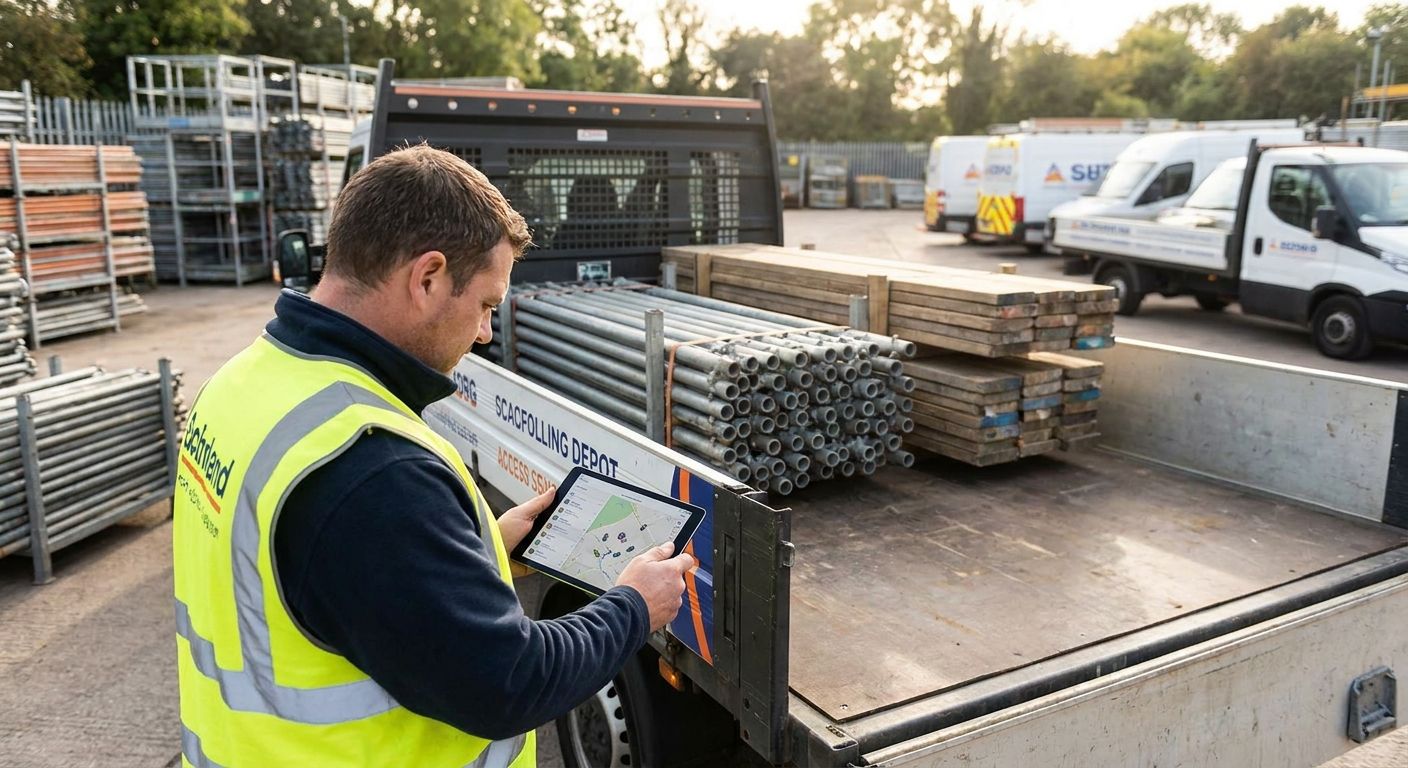
A vehicle tracker on the tow truck tells you where the cab went — it says nothing about the trailer once it's dropped on site. Scaffolding fleets need tracking on the trailer or the stillage of tube itself, because that's the part that gets stolen while the truck is elsewhere.
Geofencing on yards and site compounds
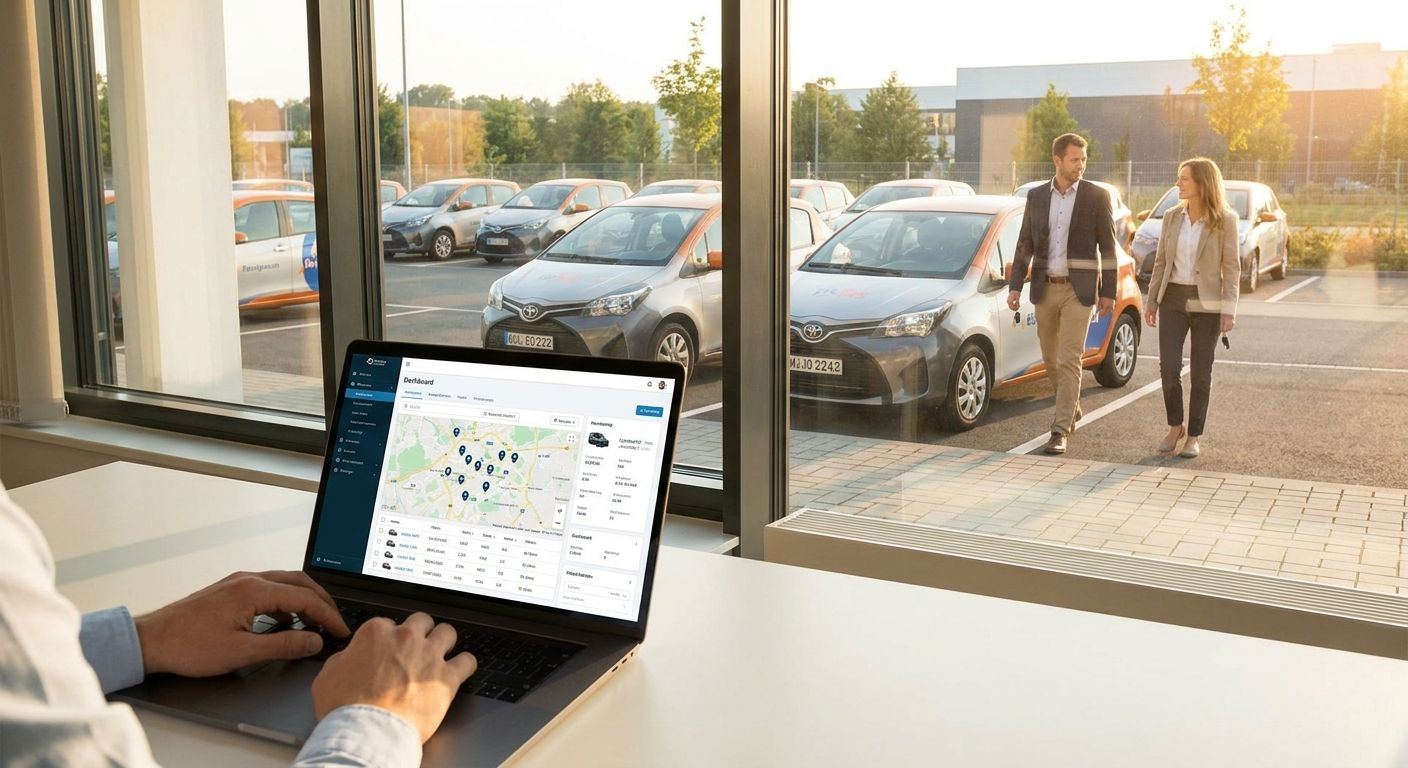
Set a geofence around the yard and every active site compound, and you get an alert the moment a vehicle or trailer moves outside working hours. For a fleet running four or five live jobs at once, that's the difference between spotting a theft at 2am and finding out at 7am when the crew turns up short.
Thatcham-approved tracking on tow vehicles
Insurers recognise Thatcham-approved systems specifically, which matters for premium negotiations on tipper trucks and flatbeds that carry higher theft risk than a standard van. A tracker that isn't Thatcham-approved might still work fine day to day, but it won't move the needle on your renewal quote.
4G dash cams for site access disputes
Narrow site access roads, reversing tippers, and third-party vehicles parked where they shouldn't be make liability disputes routine on scaffolding jobs. A 4G dash cam that uploads footage in real time settles a false claim in minutes instead of weeks of back-and-forth with an insurer.
Driver ID for shared pool vehicles
Scaffolding crews rotate between vans more than most trades — a driver ID system tells you who was behind the wheel when an incident happened, which matters for both insurance claims and internal accountability when a van comes back damaged.
Top picks
Thatcham S5 Tracker — the standard pick for tow vehicles. Covers 24/7/365 theft monitoring at £349, which is the entry point for getting a scaffolding fleet's tippers and flatbeds Thatcham-recognised. It tracks the vehicle continuously, including when parked overnight in a yard. Thatcham-approved tracking for high-value fleet vehicles explains the S5 vs S7 trade-off in more detail. Verdict: Buy for any tow vehicle carrying trailers regularly.
Asset/Trailer Tracking — the one that actually protects the tube. This is the pick most scaffolding firms skip and then regret, because it covers the trailer and stacked plant independently of the tow vehicle. Once the trailer is dropped on site, this is the only thing still reporting its location. Tracking trailers and plant across multiple sites walks through setup for firms running more than one active job. Verdict: Buy if trailers are ever left unattended overnight.
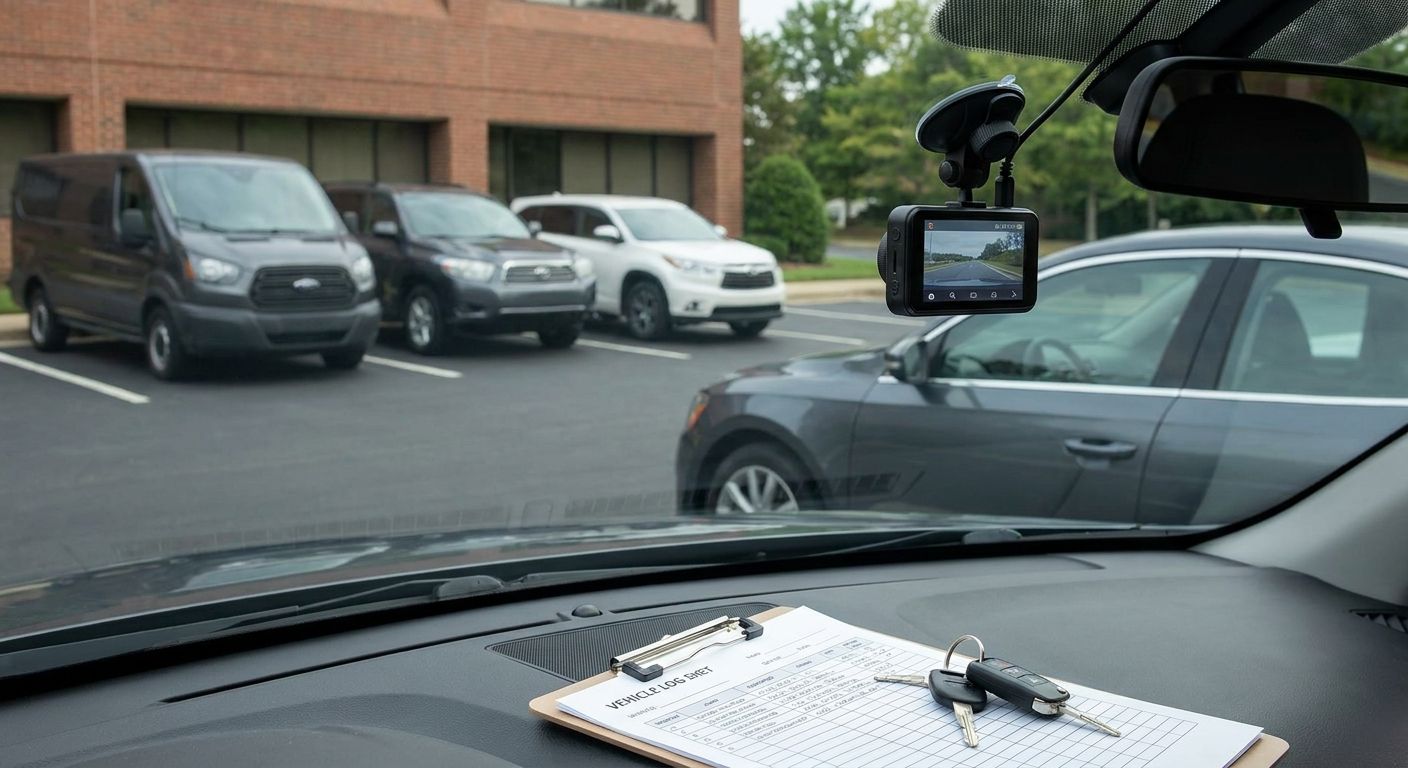
4G Fleet Dash Cams — the liability shield on narrow site roads. Real-time footage upload means a dispute over a reversing incident on a tight access road gets resolved with video instead of two conflicting accounts. Verdict: Buy for any vehicle over 3.5 tonnes working live sites.
360° Vehicle CCTV — for tipper and HGV-class vehicles only. Full-perimeter visibility matters on larger vehicles where blind spots around the rear and nearside are the actual accident risk, not just the front camera angle. Verdict: Consider for tippers and HGVs; Skip it for a van-only fleet where a single 4G dash cam already covers the risk.
Driver ID — the one for shared pool vans. Useful once you've got more drivers than vehicles rotating through a depot, less useful if the same two people always drive the same two vans. Verdict: Consider for fleets with shared or pool vehicles.


What to avoid
- Generic OBD plug-in trackers on tippers and trailers. These pull power from the vehicle's ignition circuit, so once the truck is off — which is exactly when theft happens — the tracker stops reporting.
- Consumer-grade GPS trackers marketed for personal vehicles. They aren't built for being buried under stacked tube or left exposed to weather in a site compound; expect battery failure and lost signal at the worst moment.
- Vehicle-only insurance-approved trackers with no asset add-on. A Thatcham-approved system on the tow truck looks like it covers everything, but if it doesn't extend to the trailer, your highest-value cargo is still unprotected.
Verdict comparison table
| Pick | Covers trailers/plant | Thatcham approved | Includes camera | Price | Verdict |
|---|---|---|---|---|---|
| Thatcham S5 Tracker | No | Yes | No | £349 | Buy |
| Asset/Trailer Tracking | Yes | No | No | Quote-based | Buy |
| 4G Fleet Dash Cams | No | No | Yes | Quote-based | Buy |
| 360° Vehicle CCTV | No | No | Yes | Quote-based | Consider (HGV/tipper only) |
| Driver ID | No | No | No | Quote-based | Consider |
FAQ
What's the best fleet tracking for scaffolding companies?
The best setup pairs a Thatcham-approved vehicle tracker on the tow truck with separate asset or trailer tracking on the load. Neither one alone covers both the vehicle and the tube it's carrying.
Is Thatcham S5 or S7 better for scaffold tow vehicles?
The Thatcham S5 Tracker (£349) and S7 Tracker (£248) both give 24/7/365 monitoring; the choice comes down to the level of insurer recognition your policy requires. Check with your insurer which category your premium discount depends on before choosing.
Can vehicle trackers protect scaffold tube and fittings on site?
A standard vehicle tracker cannot protect tube once it's off the truck; that requires separate asset or trailer tracking. Fleets running loaded trailers overnight need both systems, not one.
How much does fleet tracking cost for a small scaffolding firm?
Thatcham-approved vehicle trackers start around £248 to £349 per unit in 2026, with asset and dash cam add-ons quoted separately based on fleet size. Costs scale with the number of vehicles and trailers tracked.
Do dash cams help scaffolding firms with insurance claims?
Yes — 4G dash cams with real-time footage upload settle liability disputes on narrow site access roads far faster than relying on driver accounts alone. This matters most for reversing incidents involving tippers.
Is asset tracking necessary for a scaffolding fleet?
It's necessary for any fleet that leaves trailers or stacked plant unattended on a site or yard overnight. Vehicle tracking alone won't tell you if the trailer itself has moved.
How does geofencing help multi-site scaffolding operations?
Geofencing flags the moment a vehicle or trailer leaves a yard or site compound outside working hours, which is when most theft occurs. For firms running several live jobs at once, it replaces guesswork with an alert.
One last thing
Most scaffolding firms put their tracking budget on the truck and forget the yard itself. A geofence alert on the yard gate, tied to any vehicle or trailer movement between midnight and 5am, catches more theft attempts than a dash cam ever will — because by the time footage matters, the tube is already gone.