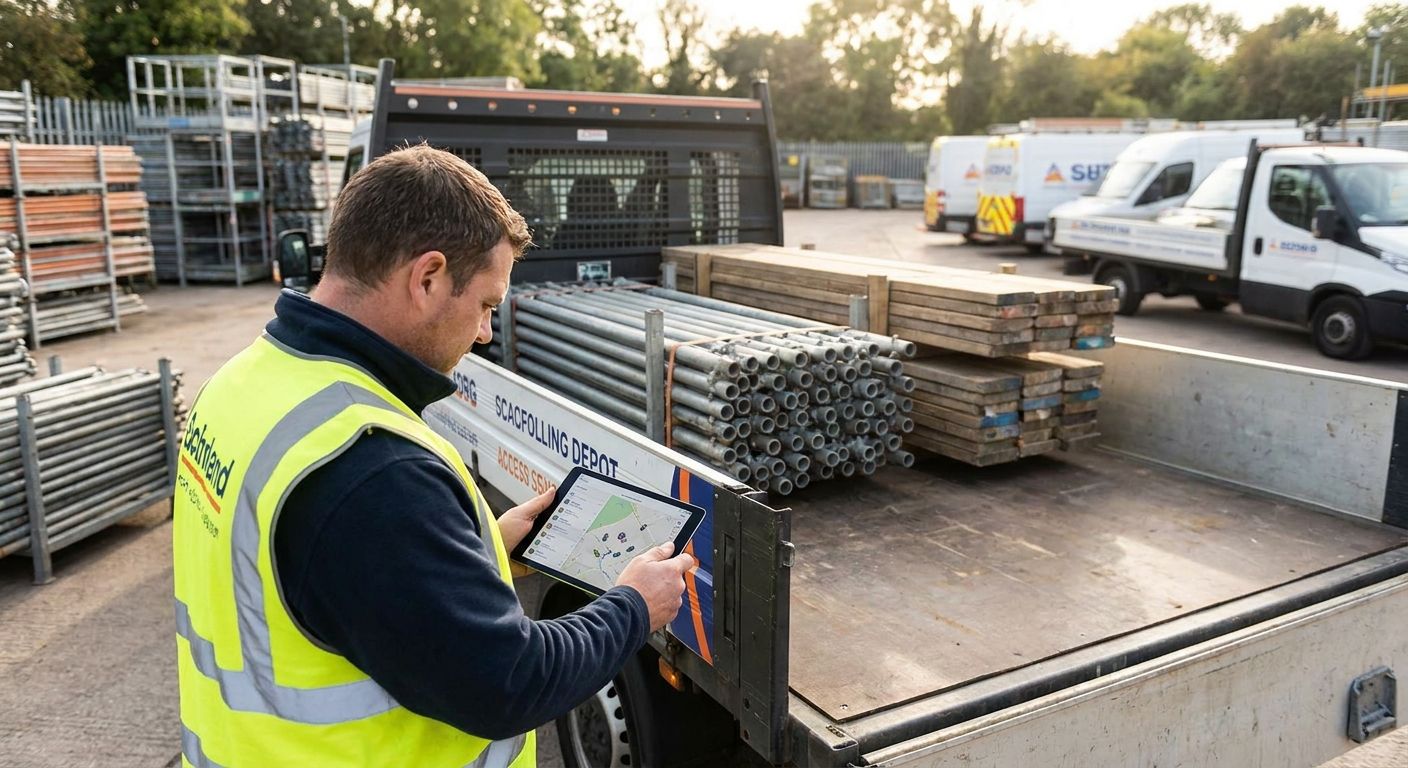
Pool car schemes lose money quietly, through double bookings, disputed mileage claims, and vehicles nobody can locate at 5pm on a Friday. Fleet management software built for shared vehicles closes those gaps with real-time booking, GPS tracking, and driver-level accountability that single-driver company car tools were never designed to handle.
- Fleet management software for pool cars needs booking, GPS tracking, and driver ID in one system, not three separate tools.
- Crystal Ball's Thatcham S5 tracker at £349 covers theft protection and insurance discount requirements for shared vehicles in 2026.
- Skip personal company car tracking apps for pool cars, they lack shared-vehicle booking and driver rotation features.
- Driver licence checking matters more for pool cars than single-driver fleets because usage rotates weekly or daily.
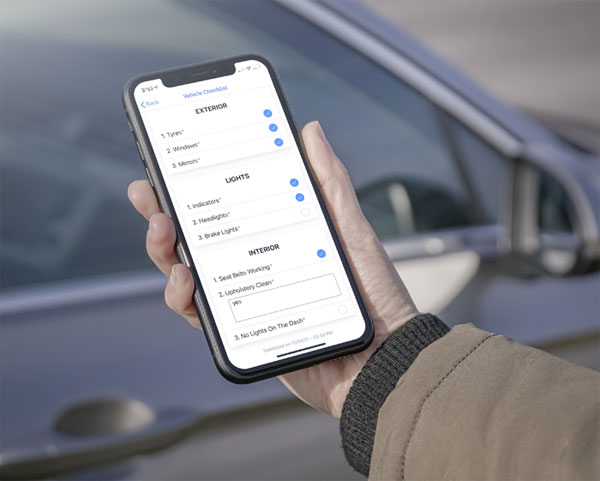
- Vehicle checklists and defect reporting stop shared-car damage disputes before they turn into insurance claims.
Why this matters
A pool car sits idle half the week, gets driven by six different staff members the other half, and racks up mileage claims nobody can verify against actual journeys. That's the core problem with running shared vehicles on spreadsheets or paper diaries in 2026: there's no single record of who drove it, where it went, or what state it came back in.
Councils and SMEs running pool car schemes carry extra liability because the person behind the wheel changes constantly. Fleet management software closes that gap by tying every trip to a verified driver, a GPS trail, and a mileage log that survives an audit. That matters for HMRC mileage claims, for insurance disputes, and for knowing which driver had the car when a wing mirror got clipped in a car park.
Who this is for
This guide is for fleet managers, office managers, and procurement leads at SMEs and local government bodies running a shared pool of two to fifty cars, where staff book vehicles for site visits, meetings, or short-term hire instead of holding a permanent company car. If your organisation already runs single-driver company cars with fixed assignments, your priorities shift toward personal driver behaviour scoring rather than booking and rotation, and a different setup applies.
What to look for in fleet management software for pool cars
Real-time booking and utilisation tracking
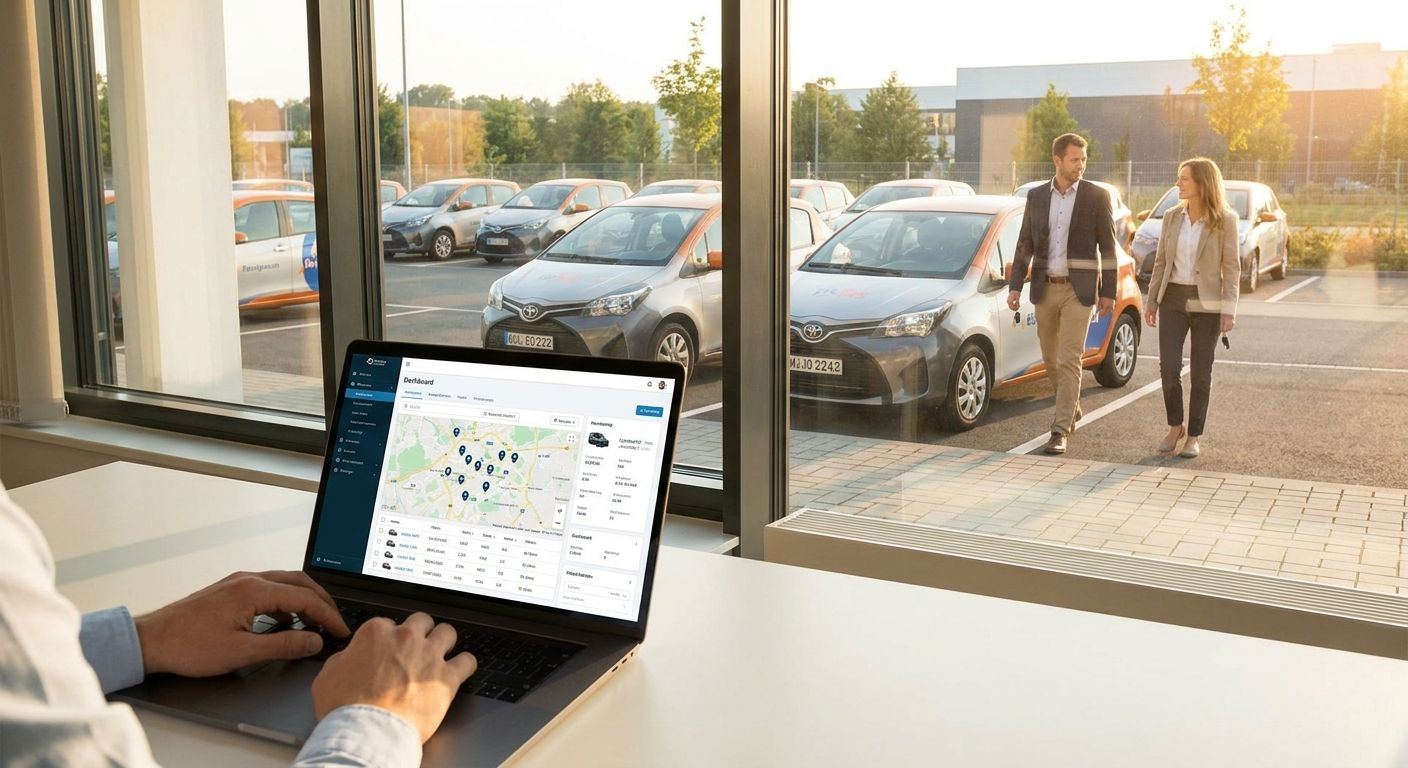
Double-booked pool cars are the single most common complaint from staff, and it usually means the booking calendar isn't linked to actual vehicle location. Software that shows live availability against GPS position stops staff booking a car that's still 40 minutes from returning to base.
GPS location and geofencing
A pool car parked overnight at a different depot, or left running outside its permitted radius, needs a geofence alert, not a phone call the next morning. This matters more for pool cars than assigned vehicles because nobody "owns" the car enough to notice it's gone missing until someone else needs it.
Driver ID and licence checking
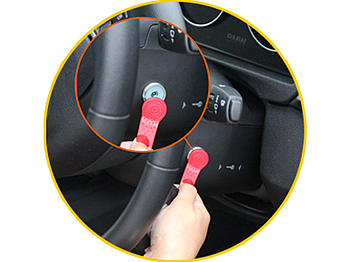
With six or more drivers rotating through one vehicle, you need automated licence checking built into the driver licence checking software, not an annual manual check that misses a points endorsement picked up in month four. Driver ID hardware also settles the "who was driving" question the moment an insurance claim lands.
Mileage and fuel reporting
Pool car mileage claims get disputed constantly because staff estimate journeys rather than logging them. Software that pulls mileage straight from GPS data removes the guesswork and gives finance a defensible number for HMRC reporting in 2026.
Vehicle checklist and defect reporting
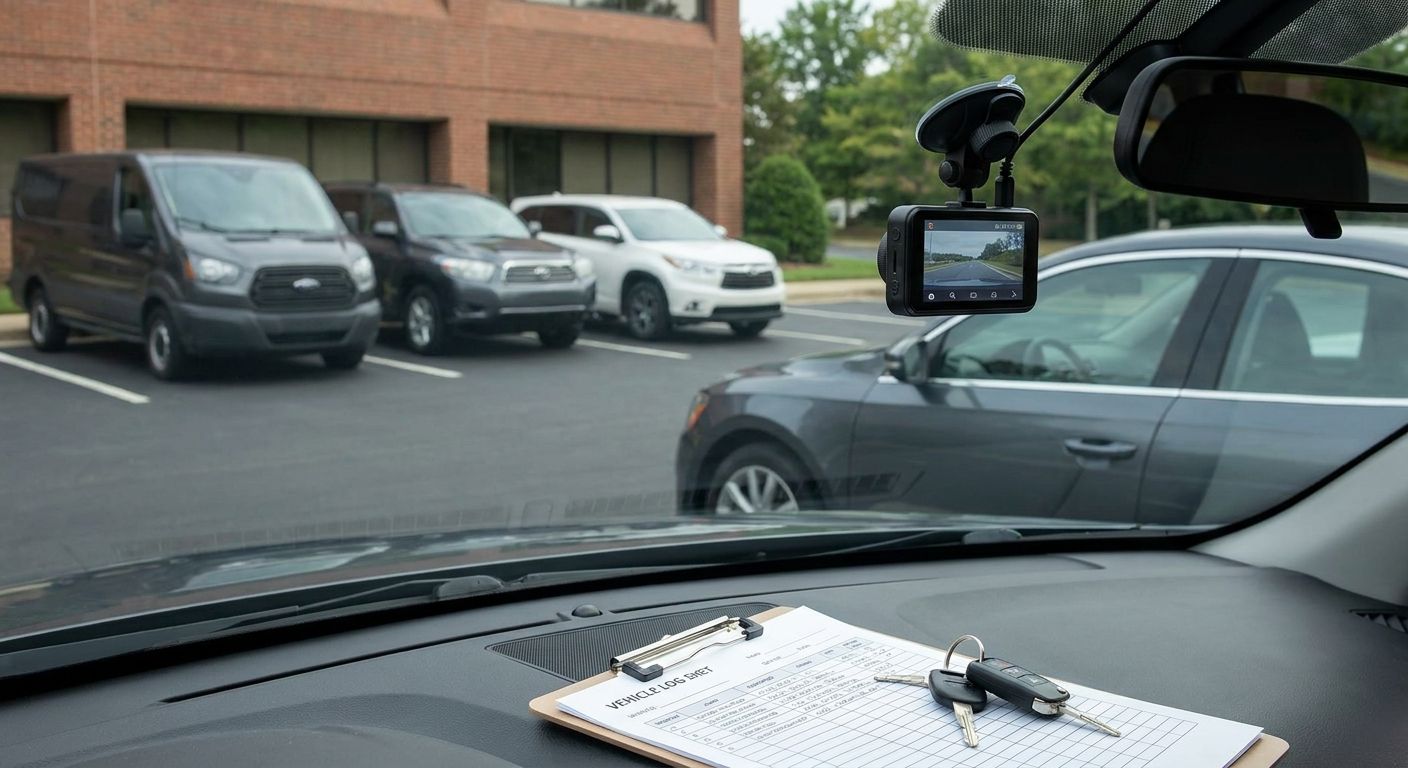
A car driven by ten different people a month accumulates damage nobody claims responsibility for. A digital vehicle checklist completed at each handover creates a timestamped record of condition before and after every trip, which is the difference between recovering repair costs and eating them.
Remote immobilisation and theft protection
Pool cars often sit in shared car parks or satellite offices overnight, away from a locked depot. That's exactly the theft exposure Thatcham-approved tracking and remote immobilisation were built for, and it's also a factor insurers weigh when pricing fleet premiums.
Top picks for pool car schemes
The safe pick: Thatcham S5 Tracker. At £349, this insurance-approved tracker gives 24/7/365 theft monitoring and nationwide installation, which suits a pool car that moves between sites and parks overnight in unpredictable locations. Buy if theft risk and insurance premium reduction are your main drivers.
The compliance pick: Driver ID. Pool cars fail audits when nobody can say who was driving at a given time. Driver ID ties every journey to a named individual automatically, closing the accountability gap that shared vehicles create. Buy for any scheme with five or more rotating drivers.
The visibility pick: Manager App. Fleet managers running pool cars from a desk need to see live location and booking status without calling round the office. The Manager App puts that on a phone or tablet, which matters when bookings shift last-minute. Consider if your team is small enough that a desktop dashboard already covers most needs.
The transparency pick: 4G Fleet Dash Cams. When a pool car gets involved in a minor collision and three different drivers used it that week, dash cam footage settles disputes fast instead of dragging into a blame exercise. Consider for higher-mileage pool schemes where incident frequency justifies the extra hardware.


What to avoid
Personal company car tracking apps. These are built around one driver, one journey history, and one behaviour score. Point one at a pool car and it can't separate six different drivers' trips, which defeats the accountability a shared scheme actually needs. If your organisation runs a mix of assigned and pool vehicles, check whether the same platform handles both before buying two separate systems, and see how company car fleet trackers differ from pool-car-specific setups.
Mileage-only apps with no booking layer. A tool that logs journeys but doesn't manage availability solves half the problem and leaves double-booking exactly where it was. This is the same gap that shows up in grey fleet management, where mileage capture exists but nobody controls who's driving what.
Enterprise HGV-grade telematics. Systems built for tachograph compliance and driver hours on 44-tonne vehicles bring reporting complexity a five-car pool scheme doesn't need and will pay for regardless.
Verdict comparison
| Criteria | Why it matters for pool cars | 2026 verdict |
|---|---|---|
| Booking + utilisation | Stops double-booking, shows real availability | Essential |
| GPS + geofencing | Confirms location, flags out-of-area use | Essential |
| Driver ID / licence check | Settles "who was driving" disputes | Essential for 5+ drivers |
| Mileage reporting | Removes estimate-based HMRC claims | High priority |
| Vehicle checklist | Assigns damage responsibility per handover | High priority |
| Remote immobilisation | Reduces theft risk in unmonitored car parks | Recommended |
FAQ
What is the best fleet management software for pool cars in 2026?
The best fleet management software for pool car schemes combines live booking, GPS tracking, and driver ID in one platform rather than three separate tools. Crystal Ball's Thatcham-approved trackers plus Driver ID cover the theft protection and driver accountability pool car schemes need most.
Is fleet management software worth it for a small pool car scheme?
Yes, even a two or three-car pool scheme benefits from booking software once double bookings or mileage disputes start costing staff time. The cost of a Thatcham S5 tracker at £349 per vehicle is small against one avoided theft claim or insurance dispute.
How do you stop pool cars being double-booked?
Link the booking calendar to real-time GPS location so staff can only book a vehicle once it's actually back at base. Software without that live link relies on staff manually updating a calendar, which is where double bookings creep in.
Do pool cars need driver ID technology?
Driver ID becomes important once five or more staff rotate through the same vehicle, because it automatically records who was driving at the time of any incident. Without it, fleet managers rely on manual sign-out sheets that are easy to forget or falsify.
How much does a Thatcham-approved tracker cost for a pool car?
A Thatcham S5 tracker costs £349, and the higher-spec S5 Plus costs £548, both aimed at insurance-approved theft monitoring. The S7 tracker sits lower at £248 for a reduced monitoring tier.
Can pool car software handle mixed EV and petrol fleets?
Yes, GPS tracking and booking software work the same regardless of fuel type, though EV pool cars add charging status as an extra data point worth checking for. Confirm the platform reports state of charge alongside location if your pool includes electric vehicles.
What's the difference between pool car tracking and company car tracking?
Pool car tracking needs shared booking, rotating driver ID, and handover checklists because multiple people use one vehicle. Company car tracking assumes one driver per vehicle and focuses more on individual driving behaviour scoring over time.
One last thing
The pool car detail most schemes miss isn't tracking or booking, it's the handover checklist. A digital vehicle checklist completed at pickup and drop-off, cross-referenced against Driver ID, turns "who scratched the bumper" from an unanswerable office argument into a five-second lookup. That single record settles more disputes in a pool car scheme than any dashboard report does.