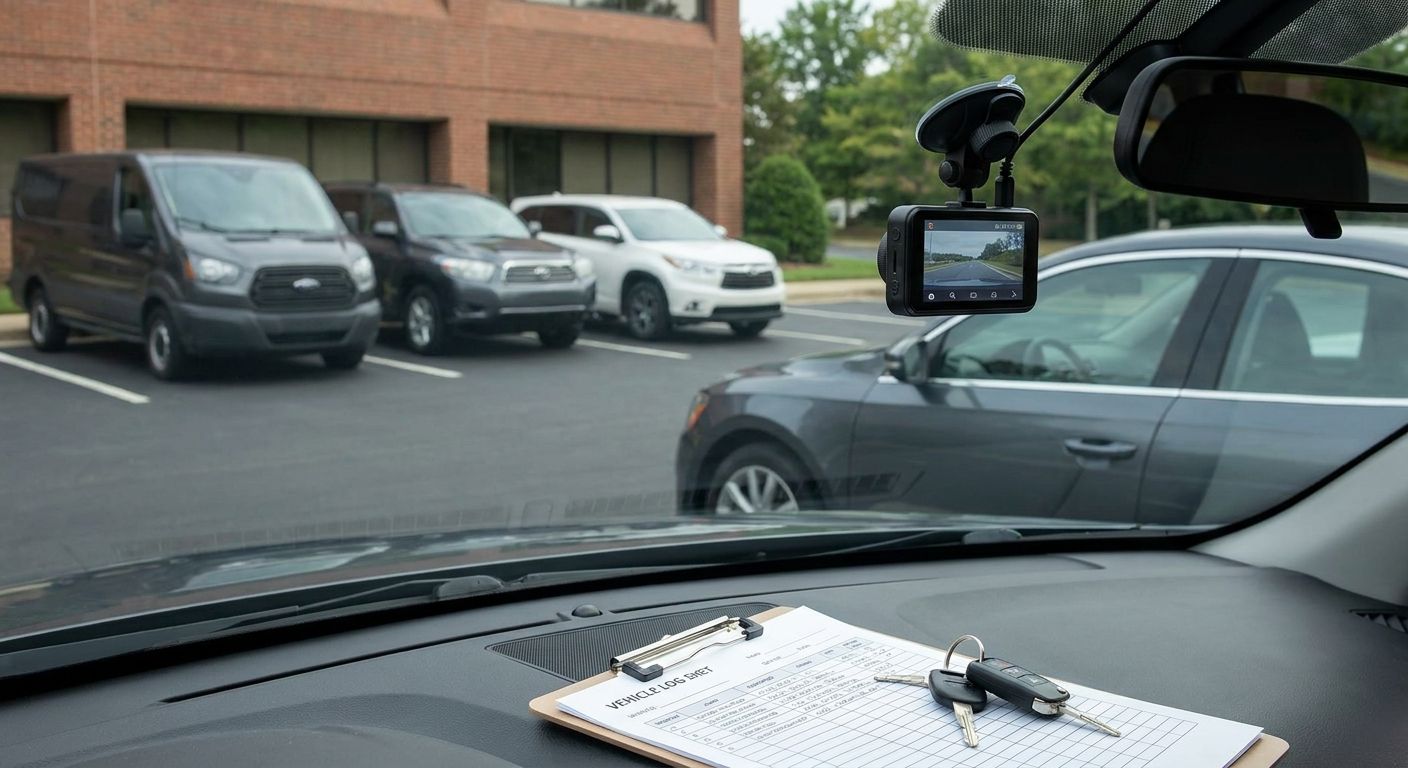

Driver licence checking software fleet decisions used to mean an annual paper check and a filing cabinet. In 2026, DVLA endorsement data changes daily and insurers expect proof you're watching it in real time, not once a year.
This guide is for fleet managers and compliance leads at SMEs and local authorities who need to pick a system that checks licences automatically and ties that data into the rest of their fleet management software.
- Driver licence checking software fleet tools should run automated DVLA checks, not annual manual ones — Crystal Ball links this data to vehicle tracking.
- HGV operators need licence checks tied to operator licence compliance evidence, not a standalone spreadsheet.
- 12 points triggers a totting-up ban in 2026 — software that alerts at 6-9 points gives you time to act.
- Grey fleet drivers (personal cars used for work) need the same check cadence as company vehicles — most tools miss this.
- Manual annual checks are the weakest option in 2026 and the one insurers increasingly flag at renewal.
Why this matters
A driver with a revoked or expired licence behind the wheel of your vehicle is a liability problem, not a paperwork problem. Under UK law, an employer who knowingly allows an unlicensed or disqualified driver to operate a company vehicle can face the same scrutiny as the driver themselves, and insurers can void cover after an incident if you can't show you checked.
For HGV operators, licence checking sits inside a wider compliance picture that includes driver hours and operator licence requirements — a missed licence check can undermine an otherwise clean DVSA audit trail. For SMEs running vans and cars, the risk is smaller in scale but identical in principle: one uninsured incident because a licence lapsed unnoticed costs more than any software subscription.
Who this is for
This guide is built for fleet managers running mixed fleets of 5 to 500+ vehicles — cars, vans, HGVs — where at least one driver isn't checked as often as they should be. It's for local government fleet teams who need an auditable record for insurers and internal governance, and for SMEs who've had a near-miss with an out-of-date licence and don't want a repeat in 2026.
What to look for in driver licence checking software for fleets
Automated DVLA verification, not manual re-entry
Software that pulls licence status directly rather than relying on a driver photographing their licence once a year closes the gap between when something changes on the licence and when you find out. Manual checks catch problems months late; automated checks catch them within days.
Real-time endorsement and points alerts
A driver accumulating points doesn't usually tell their employer. Twelve points within three years triggers a totting-up disqualification in 2026, so software that flags a driver at 6-9 points gives you a window to retrain, reassign, or have a conversation before it becomes a licensing crisis.
Integration with vehicle tracking and driver behaviour data
Licence status on its own is a static fact. Paired with driver behaviour monitoring and vehicle tracking, you can see whether a driver with recent points is also showing risky driving patterns — harsh braking, speeding events — and act on both signals together rather than treating them as separate systems.
Renewal and expiry reminders that reach the driver, not just the manager
A licence check is only as good as the follow-up. Systems that push renewal reminders directly to drivers, not just a dashboard alert the fleet manager might miss, close more gaps before they become compliance failures.
Audit trail depth for insurance and operator licence purposes
For HGV operators specifically, DVSA earned recognition audits and operator licence reviews expect documented evidence of licence checks alongside driver hours compliance records. A system that exports a clean, dated audit trail saves days of manual reconstruction if you're audited.
Grey fleet coverage
If staff use personal vehicles for work, those licences carry the same legal exposure as company vehicles but get checked far less consistently. Software that treats grey fleet drivers as first-class entries, not an afterthought, closes a gap most fleets don't realise they have until an incident forces the question.
Top setups by fleet type
The right configuration depends on what your fleet actually does. Here's how the picks break down.
The HGV compliance stack — the safe pick. Operators running trucks under an O-licence need licence checking tied directly into HGV operator licence compliance evidence, because DVSA reviews look at the whole compliance picture, not licence status in isolation. The concrete number that matters here: DVSA earned recognition status requires ongoing, documented compliance monitoring, not a once-a-year snapshot. Verdict: Buy if you run 5+ HGVs under an operator licence.
The CPC-linked setup — the wildcard. Drivers holding Driver CPC need 35 hours of periodic training every five years, and a licence check that also tracks CPC card expiry catches two compliance risks with one system instead of two spreadsheets. This pairs naturally with Driver CPC training compliance tracking. Verdict: Buy for any fleet employing professional LGV or PCV drivers.
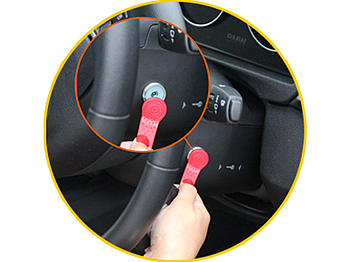
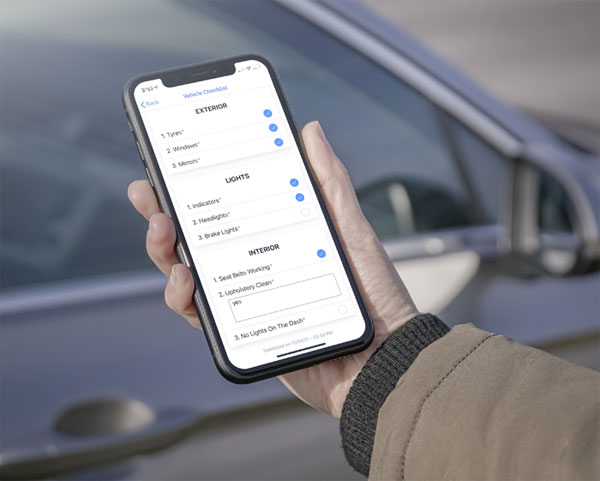
The defect-and-licence combo — the practical middle ground. Fleets that already run daily walkaround checks get more value pairing licence status with driver defect reporting, because both feed the same compliance file and both get checked by the same driver, at the same touchpoint, every day. Verdict: Consider if defect reporting isn't already digitised — it's worth doing both at once rather than bolting licence checks on later.
The annual-check-only tool — the one to skip. Any system that still relies on a driver submitting a photo of their licence once a year, with no DVLA data feed, is functionally a filing system, not a compliance tool. It looks compliant on paper until an insurer asks for the last check date after an incident. Verdict: Skip in 2026 — the gap between check dates is exactly where liability sits.

What to avoid
- Licence checking bolted onto HR software with no vehicle link. It looks thorough on the HR side but never talks to your vehicle tracking or driver behaviour data, so a flagged licence and a risky driving pattern on the same person never get connected.
- A single annual check date for every driver. Staggered, ongoing checks catch a licence change within days; a fixed annual date means a change in month two sits unnoticed for ten months.
- Tools that skip grey fleet entirely. If the software only tracks drivers on company-owned vehicles, every employee using their own car for work is a blind spot with the same legal exposure as a company driver.
Verdict comparison
| Setup | Best for | Check cadence | Verdict |
|---|---|---|---|
| HGV compliance stack | Operators under an O-licence | Ongoing, DVSA-audit ready | Buy |
| CPC-linked setup | Fleets with LGV/PCV drivers | Ongoing + 5-year CPC cycle | Buy |
| Defect-and-licence combo | Fleets with daily walkaround checks | Daily touchpoint, ongoing licence feed | Consider |
| Annual-check-only tool | No one, by 2026 standards | Once a year | Skip |
Crystal Ball's fleet management software approach ties driver identification, behaviour monitoring, and compliance records into one system rather than leaving licence checking as a separate task nobody owns. For fleets managing vans, cars, and HGVs side by side, that connection between who's driving and what their record looks like is the difference between catching a problem in week one and finding out about it after an incident report.
FAQ
What does driver licence checking software actually check?
It verifies a driver's licence status, category entitlements, and any endorsements or points directly against DVLA records rather than relying on a photo the driver submits once a year. Good systems refresh this automatically and alert you when something changes.
How often should a fleet check driver licences in 2026?
Ongoing automated checks beat any fixed schedule, but if you're setting a manual cadence, quarterly is the minimum for higher-risk drivers such as those with existing points. Annual-only checks leave a gap of up to 11 months where a change goes unnoticed.
How many points before a driver is disqualified?
Twelve points within a three-year period triggers a totting-up disqualification under UK law. Software that alerts at 6-9 points gives a fleet manager time to intervene before that threshold is reached.
Does licence checking software cover grey fleet drivers?
Only some do, and it's one of the biggest gaps in fleet compliance. Employees using personal vehicles for work carry the same legal exposure as company drivers, so any licence checking setup should include them by default, not as an add-on.
Is driver licence checking a legal requirement for fleets?
Employers have a duty of care to ensure staff driving on company business are legally entitled to do so, and insurers can challenge claims if you can't evidence checks. For HGV operators, licence status also feeds into wider operator licence compliance reviewed by the DVSA.
Should licence checking be part of fleet management software or a separate tool?
Pairing it with existing fleet management software makes more sense than running it standalone, because you can cross-reference licence status with driver behaviour and vehicle assignment data in one place. Running it separately means someone has to manually connect the two records after the fact.
What's the biggest mistake fleets make with licence checking?
Treating it as a once-a-year compliance box to tick rather than an ongoing data feed. The gap between check dates is exactly where liability sits if a licence lapses or a driver accumulates points mid-cycle.
One last thing
The fleets that get caught out aren't usually the ones with no licence checking at all — they're the ones with an annual process that quietly stopped being followed after the first year. If your last recorded check date is more than three months old for any driver, that's the gap to close first, not the software you're using to close it.