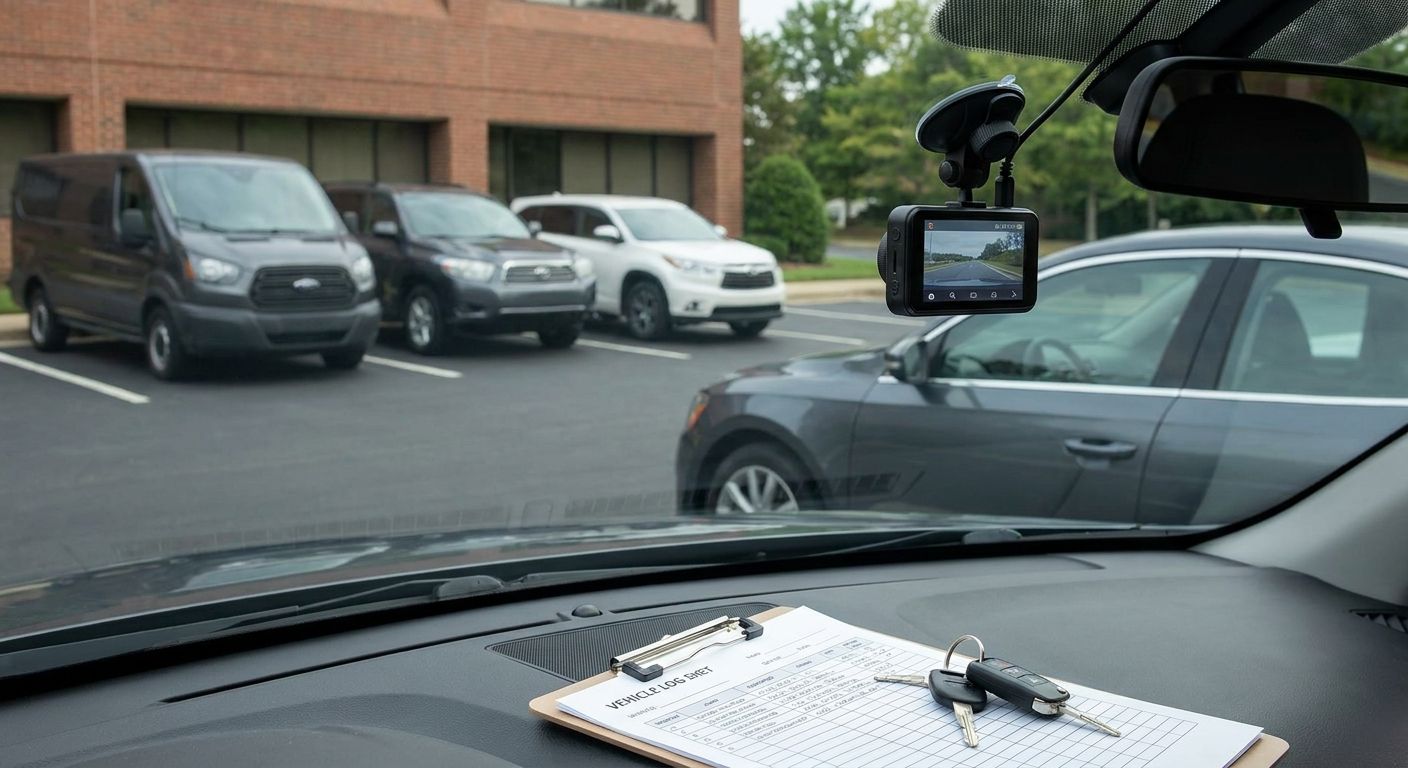
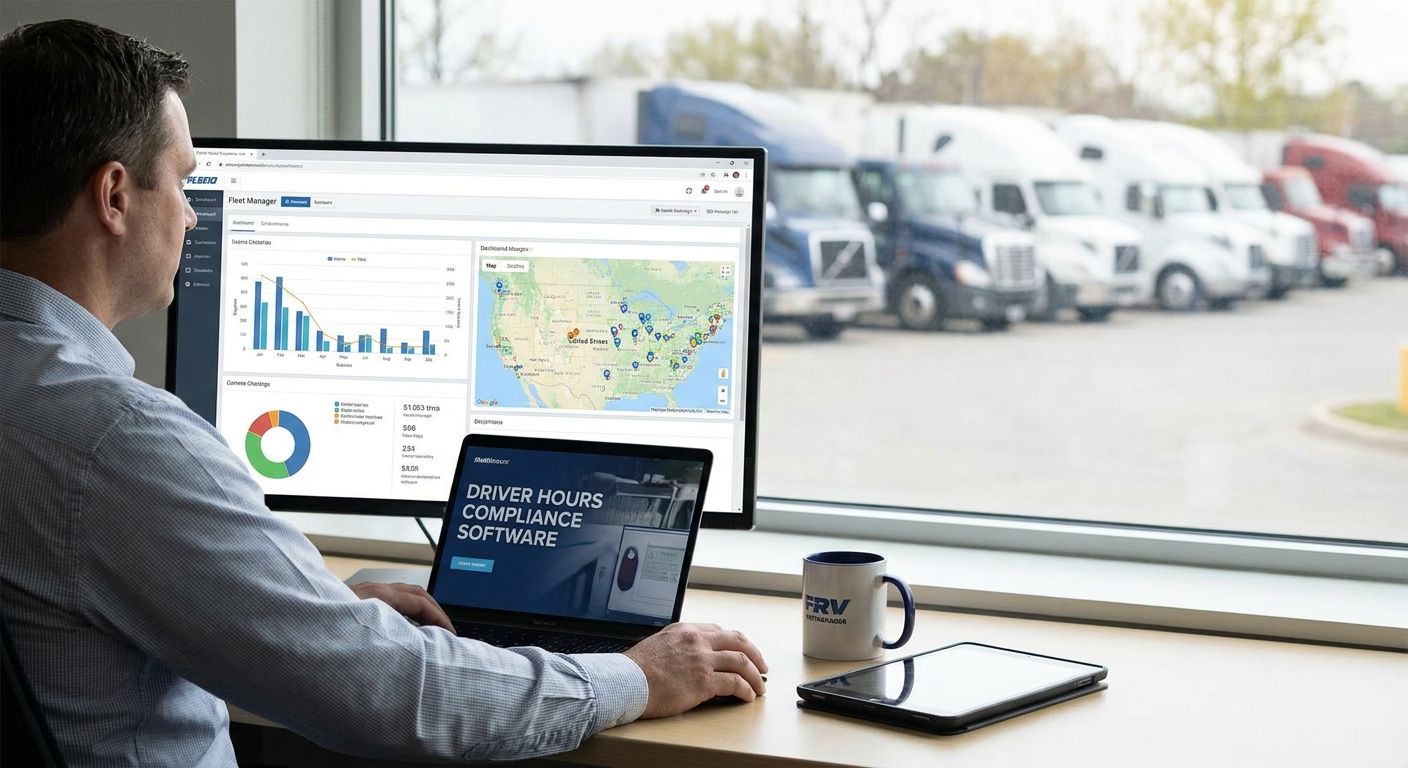
Driver hours compliance isn't optional paperwork — it's the difference between a clean DVSA audit and a Traffic Commissioner calling your operator licence into question. This guide breaks down what driver hours compliance software actually needs to do, who needs it, and which Crystal Ball resources solve which part of the problem.
- Driver hours compliance software must pull tachograph data automatically — manual DDD downloads miss infringements for weeks.
- HGV operators managing 56-hour weekly driving limits need live GPS tied to tacho events, not two separate systems.
- Thatcham-approved trackers double as audit evidence when a Traffic Commissioner questions your record-keeping in 2026.
- Driver behaviour monitoring catches fatigue risk before it becomes a Working Time Directive breach.
Why this matters
A DVSA roadside check or a Traffic Commissioner public inquiry doesn't care whether your spreadsheet is up to date — it cares whether the data exists and matches the tachograph. Operators still running annual manual downloads find out too late that a driver has been running 58-hour weeks for a month.
Driver hours compliance software closes that gap by pulling tachograph data automatically, flagging infringements the same day they happen, and keeping records in a format an inspector can actually read. In 2026, with DVSA earned recognition schemes tightening what counts as "good practice," the operators without automated systems are the ones getting pulled aside first.
Who this is for
This guide is for transport managers and fleet operators holding an O-licence — anyone running HGVs, PSVs, or mixed fleets where drivers are subject to EU or GB domestic drivers' hours rules. If you're managing commercial vehicle tracking for HGV operators across more than a handful of trucks, or you've had a DVSA prohibition notice in the last 12 months, this is written for you specifically — not for car fleets where hours rules don't apply.
What to look for in driver hours compliance software
Automatic tachograph downloads
Remote DDD file capture matters because manual downloads get skipped when depots are busy. A system that pulls tachograph data over-the-air every 21 days (the legal minimum retention window before data can be overwritten) means you never lose a record because a driver forgot to plug in a card.
Infringement detection against both rule sets
GB domestic rules and EU drivers' hours rules aren't identical, and software that only checks one set will miss violations on mixed-fleet operations. Look for software that flags breaches against both rule sets automatically, not a system that requires you to manually select which ruleset applies per journey.
Working Time Directive tracking, not just driving hours
WTD covers total working time — loading, unloading, admin — not just time behind the wheel, and the 48-hour average is measured over a 17-week reference period. A driver can be fully compliant on driving hours and still breach WTD if the software isn't tracking the full working day.
Live GPS tied to tacho events
When a tachograph download and a GPS tracker are two separate systems, you're cross-referencing two logins to answer one question: was this driver where the tacho says they were? Compliance software that links location data to tacho events in one dashboard turns a 20-minute investigation into a 30-second check.
Audit-ready reporting for DVSA and the Traffic Commissioner
Records need to be exportable in a format an inspector recognises, with a clear infringement history and evidence of management action taken. Software that just says "3 infringements this month" without a documented follow-up trail doesn't help you at a public inquiry.
Driver ID mapping
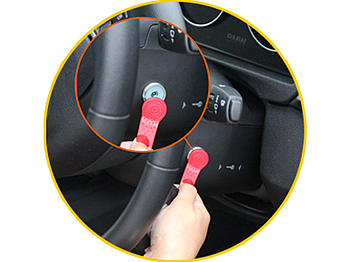
Accurate driver ID means every trip is attributed to the right person, which matters when you're proving who was driving during a flagged event. Fleets running agency or relief drivers without proper ID mapping end up with infringement reports assigned to the wrong name — a problem at audit time.

Top picks
The specialist pick — HGV-grade tracking devices
Generic car trackers weren't built for the vibration, voltage, and duty cycle of an HGV running 9-hour shifts. The relevant spec: continuous power draw handling across engine-off periods, since HGVs sit idle for mandatory rest breaks far more than vans do. Buy if you're running more than 5 HGVs and need device-level reliability that matches tacho uptime — see the best vehicle tracking devices for HGV fleets for the spec breakdown.
The audit-proof pick — Thatcham-approved trackers
Thatcham approval isn't just an insurance discount lever — it's a documented, independently verified installation standard that holds up when a Traffic Commissioner asks how your fleet security and record-keeping work together. One number that matters: Thatcham-approved systems require professional fitting, which itself becomes part of your audit trail. Buy for high-value HGV assets where you need both theft protection and a paper trail — check Thatcham-approved trackers for high-value fleet vehicles.
The fatigue-risk pick — driver behaviour monitoring
Harsh braking and erratic acceleration patterns climb noticeably in the hours before a driver hits their 9-hour limit — fatigue shows up in driving style before it shows up as a logged infringement. Consider this as a leading indicator layered on top of tacho data, not a replacement for it: read how to cut fleet accident rates with driver behaviour monitoring for the detail.
What to avoid
- Car-grade GPS trackers marketed at HGV fleets — they track location fine but don't integrate with tachograph data at all, leaving you manually cross-referencing two systems.
- Annual tacho analysis software with no live alerts — if infringements surface once a year during an audit prep, you've already broken the rules for 11 months without knowing it.
- Systems that store DDD files locally only — a laptop failure or a lost USB stick means lost legal records; cloud retention isn't optional for a fleet under scrutiny.
Verdict comparison
| Criteria | Basic GPS-only tracker | Manual tacho analysis | Compliance-focused telematics |
|---|---|---|---|
| Automatic DDD download | No | No | Yes |
| EU + GB domestic rule checks | No | Manual | Yes |
| WTD tracking (48-hr average) | No | Rare | Yes |
| GPS tied to tacho events | No | No | Yes |
| DVSA audit export | No | Partial | Yes |
| Verdict | Skip | Hold | Buy |
FAQ
What is driver hours compliance software?
It's software that automatically pulls tachograph data, checks it against EU and GB domestic drivers' hours rules, and flags infringements in real time. In 2026, most DVSA-facing operators pair it with GPS tracking so location and tacho data sit in one dashboard.
Is EU or GB domestic rules software different?
Yes — GB domestic rules apply to some vehicles exempt from EU rules, and the daily/weekly limits differ. Software checking only one ruleset will miss infringements on mixed-fleet operations running both types of work.
How long must tachograph data be retained?
Tachograph data must be downloaded from the vehicle unit at least every 90 days and from driver cards every 28 days, with records kept for at least 12 months. Automated remote download software handles this without depot staff intervention.
Does driver hours software replace a tachograph?
No. It reads and analyses data from the existing digital tachograph — it doesn't replace the legally required recording device itself. The software's job is turning raw tacho data into readable, audit-ready reports.
What's the Working Time Directive limit for HGV drivers?
The WTD caps average working time at 48 hours a week, measured over a 17-week reference period, with an absolute maximum of 60 hours in any single week. This covers loading and admin time, not just driving.
Can driver behaviour monitoring predict fatigue?
It can flag leading indicators like harsh braking and lane drift that increase in the hours before a driving limit is hit. It's a supplement to tacho-based hours tracking, not a standalone compliance tool.
How much does driver hours compliance software cost?
Pricing varies by fleet size and whether it's bundled with GPS tracking or sold standalone — check current options directly with a provider rather than relying on list prices, which change through 2026.
One last thing
The fleets that fail DVSA audits in 2026 rarely fail because a driver broke the rules once — they fail because the infringement sat unflagged for weeks with no documented management response. The single highest-leverage fix isn't a better tracker; it's an alert that reaches a transport manager the same day the breach happens.