Driver behaviour monitoring turns raw telematics data into a weekly scorecard that catches harsh braking, speeding and cornering before they turn into a written-off van and a hiked premium. This guide walks through the setup, the coaching process, and the fixes for the problems every fleet manager hits in month one.
- Driver behaviour monitoring cuts fleet accident rates in 2026 by flagging harsh braking, speeding and cornering before they become claims.
- Crystal Ball's Driver Behaviour tool and 4G Fleet Dash Cams turn telematics data into weekly scorecards drivers actually check.
- Thatcham-approved trackers paired with dash cam footage speed up no-fault claims and cut insurance disputes for high-value fleets.
- Coaching beats punishment — fleets that pair scorecards with one-to-one reviews see faster improvement than fleets that only fine drivers.
Why this matters
At-fault collisions cost more than the repair bill. They cost you the excess, the downtime on the vehicle, the replacement hire, and a renewal quote from your insurer that's gone up because your claims history looks worse than it did in 2025.
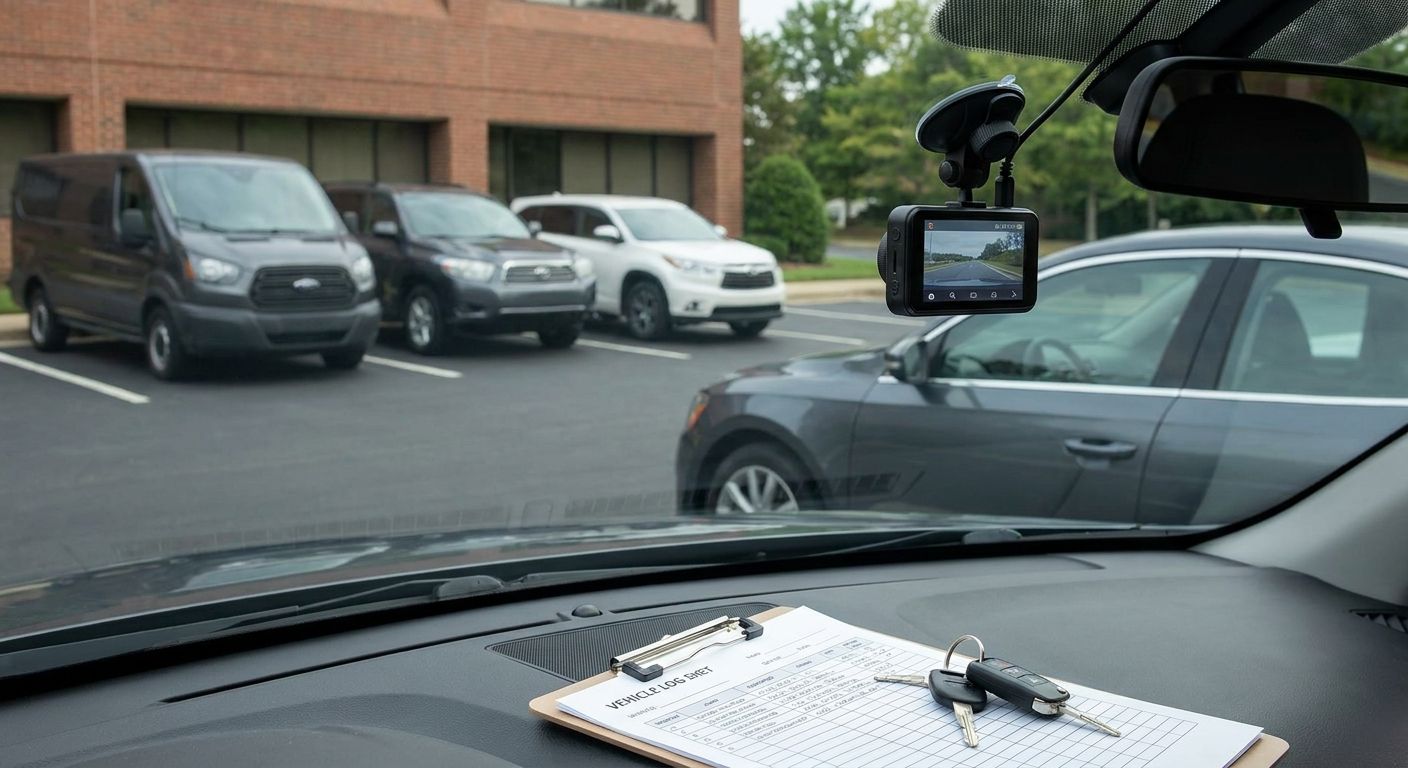
Driver behaviour monitoring closes the gap between "something went wrong" and "we know why." Instead of finding out about a driving problem when a customer complains or a third party makes a claim, you get an event log — harsh braking at 14:32, speeding on the A34, a phone pickup at a junction — the moment it happens. Dash cams built for driver behaviour monitoring give you the footage to back the telematics score up, which matters when a claim goes to dispute.
What you'll need
- Telematics hardware fitted to every vehicle you want scored, not a sample — partial coverage skews league tables and lets the worst drivers hide in the gaps
- A dash cam system that timestamps footage against telematics events, so a harsh-braking flag has video attached
- A driver scorecard platform that ranks by event rate per 100 miles, not raw event count — otherwise your highest-mileage drivers always look worst
- Written thresholds for what counts as an event (deceleration rate, cornering G-force, speed over the posted limit) agreed before you switch the system on
- Time on the calendar for one-to-one coaching — the scoring system does nothing without a conversation attached to it
The steps
1. Fit telematics and dash cams across the whole fleet
A partial rollout tells you about the vehicles you fitted, not the fleet you run. Get every car, van and HGV wired in the same month so your baseline data covers one operating period, not three staggered ones.
Expected outcome: a complete event feed across the fleet within the first billing cycle. Common mistake: fitting the newest vehicles first and leaving older, higher-risk vans for "phase two" — phase two often doesn't happen, and those are usually your worst-scoring vehicles anyway.
2. Run a four-week baseline before you change anything
Don't set targets on day one. Let the system run for four weeks untouched so you're scoring against how your drivers actually drive, not a guess.
Expected outcome: a ranked list of drivers by harsh-event rate per 100 miles, with your fleet average as the reference point. Common mistake: comparing this month's score against last month's before the baseline period is even finished — four weeks of data isn't enough to call a trend yet.
3. Set event thresholds and tie them to the right hardware
Harsh braking, harsh cornering, speeding, and idling all need a defined trigger point — most platforms let you set deceleration in m/s² and speed tolerance in mph over the limit. If you're running high-value vehicles, pair the scoring system with Thatcham-approved trackers for high-value vehicles so the same device that's scoring driver behaviour is also the one your insurer recognises for theft cover.
Expected outcome: thresholds that match your vehicle types — a 3.5-tonne van and a laden HGV shouldn't share the same braking trigger. Common mistake: using the manufacturer default thresholds without adjusting for vehicle weight, which floods the scorecard with false harsh-braking flags on heavier vehicles.
4. Build weekly scorecards drivers can actually see
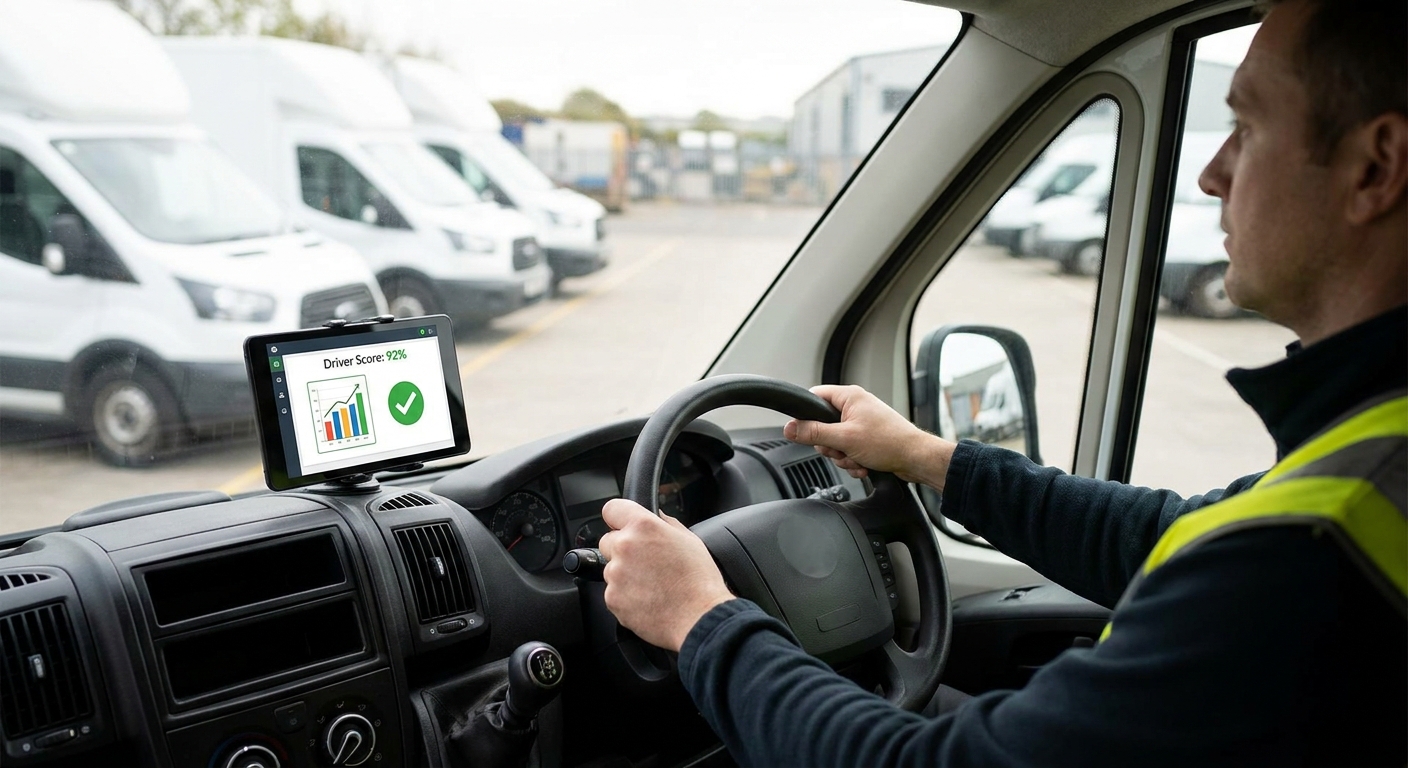
A score that only the fleet manager sees changes nothing. Publish a weekly league table — even an anonymised one — so drivers know where they sit against the fleet average.
Expected outcome: drivers checking their own score without being asked, usually within three to four weeks of the scorecard going live. Common mistake: publishing scores monthly instead of weekly — the feedback loop is too slow for drivers to connect a specific journey to a specific number.
5. Run one-to-one coaching, not group warnings
A driver with a high harsh-braking rate on one specific route usually has a route problem, not a driving problem. Pull the dash cam footage for their three worst events and review them together — most drivers correct within two sessions once they see the clip.
Expected outcome: a measurable drop in that driver's event rate within the following two to three weeks. Common mistake: sending a group email about "fleet driving standards" instead of naming the specific event and the specific driver in a private conversation — group messages get ignored.
6. Tie the score to something that matters
Insurance renewal, fuel allowance, or first pick of vehicle — attach a real consequence to sustained improvement, not just a mention in a newsletter. Fleets that link scores to something tangible see faster compliance than fleets that treat the scorecard as informational only.
Expected outcome: drivers treating the monitoring system as part of the job, not a surveillance tool they're trying to beat. Common mistake: threatening dismissal on the first low score — that drives drivers to disconnect telematics units or drive around blackspots instead of improving.
7. Review thresholds every quarter
Routes change, new vehicles join the fleet, and what counted as harsh braking in January 2026 might be normal for a new van model by summer. Revisit your thresholds every quarter rather than leaving them fixed for the year.
Expected outcome: a scorecard that stays fair as your fleet composition changes. Common mistake: never touching the thresholds after the first setup, which means new vehicle types get scored against rules that don't fit them.

“If a driver's harsh-braking count doesn't drop after two coaching sessions, the problem is the route, not the driver.”
Troubleshooting
Drivers disconnect or cover the dash cam. Tie the device to the vehicle's ignition circuit so it can't be unplugged without triggering a tamper alert, and make tampering a disciplinary matter in the driver handbook, not just a technical glitch.
Scores look worse after fitting newer, more sensitive sensors. Recalibrate thresholds rather than assuming driving got worse — a sensor upgrade in 2026 will often read events that older hardware missed entirely.
High-mileage drivers always rank at the bottom. Switch the scorecard from total events to events per 100 miles. Raw counts punish drivers who simply spend more hours on the road.
Insurer won't recognise the telematics data for a premium reduction. Confirm your hardware is on an approved list before renewal conversations — 4G dash cams that qualify for insurance discounts are built with the footage and event logs insurers actually accept.
One driver's score never moves despite coaching. Check whether the vehicle itself is the issue — worn brakes or poor tyre condition will trigger harsh-braking flags no amount of coaching fixes.
Managers get flooded with event alerts and stop checking them. Set alert thresholds to flag only repeated or severe events, not every single minor cornering flag — daily digest reports work better than real-time pings for most fleets.
Tools and resources
- Telematics and dash cam hardware fitted fleet-wide, timestamped and synced
- A weekly scorecard report drivers can access themselves
- Written event thresholds reviewed quarterly
- Fleet management software for small businesses if you're running the scorecard alongside route planning and vehicle checks in one system
- A coaching log so repeated conversations with the same driver are documented for HR and insurance purposes
What to do next
Once the scorecard is running and thresholds are stable, the next problem is usually vehicle-specific rather than driver-specific — heavier vans and HGVs need different braking and cornering tolerances than cars. Book a demo to see how the scoring adjusts by vehicle class, and check the dash cam side of the setup while you're at it — footage tied to events is what actually wins a dispute with a third party or an insurer in 2026.
FAQ
What's the best way to start driver behaviour monitoring for a small fleet?
Fit telematics and dash cams across every vehicle at once, run a four-week baseline, then set thresholds off that data. Starting with a partial rollout gives you a skewed baseline that undermines the scorecard from day one.
Is driver behaviour monitoring better than dash cams alone?
They solve different problems and work best combined. Telematics scores driving style over time; dash cams provide the footage that proves what happened in a specific incident.
How much does driver behaviour monitoring cost for a fleet in 2026?
Cost depends on fleet size and whether you're bundling telematics with dash cams and lone worker features. Get a fleet-specific quote rather than pricing per unit, since bundled packages usually work out cheaper than buying each tool separately.
Does driver behaviour monitoring actually lower insurance premiums?
Insurers increasingly recognise telematics data and dash cam footage as evidence of lower risk, and some offer discounts for approved hardware. The reduction depends on your insurer and your claims history, not the monitoring system alone.
How long does it take to see fewer accidents after fitting driver behaviour monitoring?
Most fleets see measurable drops in harsh-event rates within four to six weeks of coaching starting, once drivers know their score is visible and tied to a real conversation.
Should I punish drivers for low scores or coach them?
Coaching works faster than punishment in almost every case. Punitive systems push drivers to disconnect devices or avoid flagged routes rather than actually improve their driving.
Do I need a Thatcham-approved tracker for driver behaviour monitoring?
Thatcham approval matters for insurance and theft recovery, not for scoring driving style itself, but running both on the same device simplifies fitting and reporting for high-value vehicles.
Can driver behaviour monitoring work for HGVs as well as vans?
Yes, but thresholds need adjusting for vehicle weight — a braking rate that's harsh for a car is normal for a laden HGV, so the scoring rules can't be identical across vehicle classes.
One last thing
The fastest wins usually come from the drivers ranked in the middle of the scorecard, not the bottom. The worst-scoring drivers often need a longer coaching cycle or a vehicle check, but mid-table drivers tend to close most of the gap to the fleet average within a single coaching cycle once they see their own event footage next to the fleet leader's.