Van fleets lose evidence, not just vehicles, when the wrong dash cam is fitted. The right unit turns a disputed insurance claim into a five-minute email and a wrongful accusation into a closed case in under an hour.
- 4G-connected dash cams are the best dash cams for van fleets in 2026 because footage pulls live, not after a crash.
- Dual-facing cameras close 'he said, she said' claims fastest — fit them on any van doing customer-facing or high-mileage work.
- 360-degree CCTV earns its cost on box vans and multi-drop couriers reversing into loading bays daily.
- Consumer-grade dash cams bought off Amazon are a Skip for fleets — no live feed, no remote pull, no fleet-wide record.
- Crystal Ball's 4G Fleet Dash Cam is the Buy pick for operators who need footage the moment an incident happens, not after someone finds the SD card.
Why this matters
A van fleet without dash cam coverage runs on guesswork the moment something goes wrong on the road. Insurers increasingly ask for footage before settling a claim, and a driver disputing a "no-fault" allegation with nothing but their word loses more often than not in 2026.
The dash cam market has split into two tiers: consumer units built for private cars, and fleet-grade systems built to survive 300 miles a day, multiple drivers, and a manager who needs to pull footage without touching the vehicle. Crystal Ball builds for the second tier, and that split is the single biggest factor in this guide.
How this guide ranks dash cams for van fleets
Each category below is judged against what actually matters for van operators running mixed fleets in 2026: how fast footage reaches a manager after an incident, whether the unit satisfies insurer evidence requirements, install cost across a multi-vehicle fleet, and whether it covers the driver's cab as well as the road. Categories that fail on live access or insurer acceptance get marked down regardless of picture quality.
1. 4G-connected dash cams — the "what actually happened" answer
A 4G dash cam uploads footage to a cloud dashboard the moment an event trigger fires — harsh braking, impact, or a manual SOS press. A fleet manager can pull the clip from a desk within minutes of a collision, instead of waiting for the van to return to base.
This matters because footage that only lives on an SD card inside a crashed van is footage that can be damaged, lost, or simply inaccessible for days. 4G units solve that by getting the clip off the vehicle before the vehicle even gets back to the yard. Verdict: Buy — this is the baseline standard for van fleets in 2026, not a premium extra.
2. Dual-facing (driver + road) cameras — the insurance conversation ender
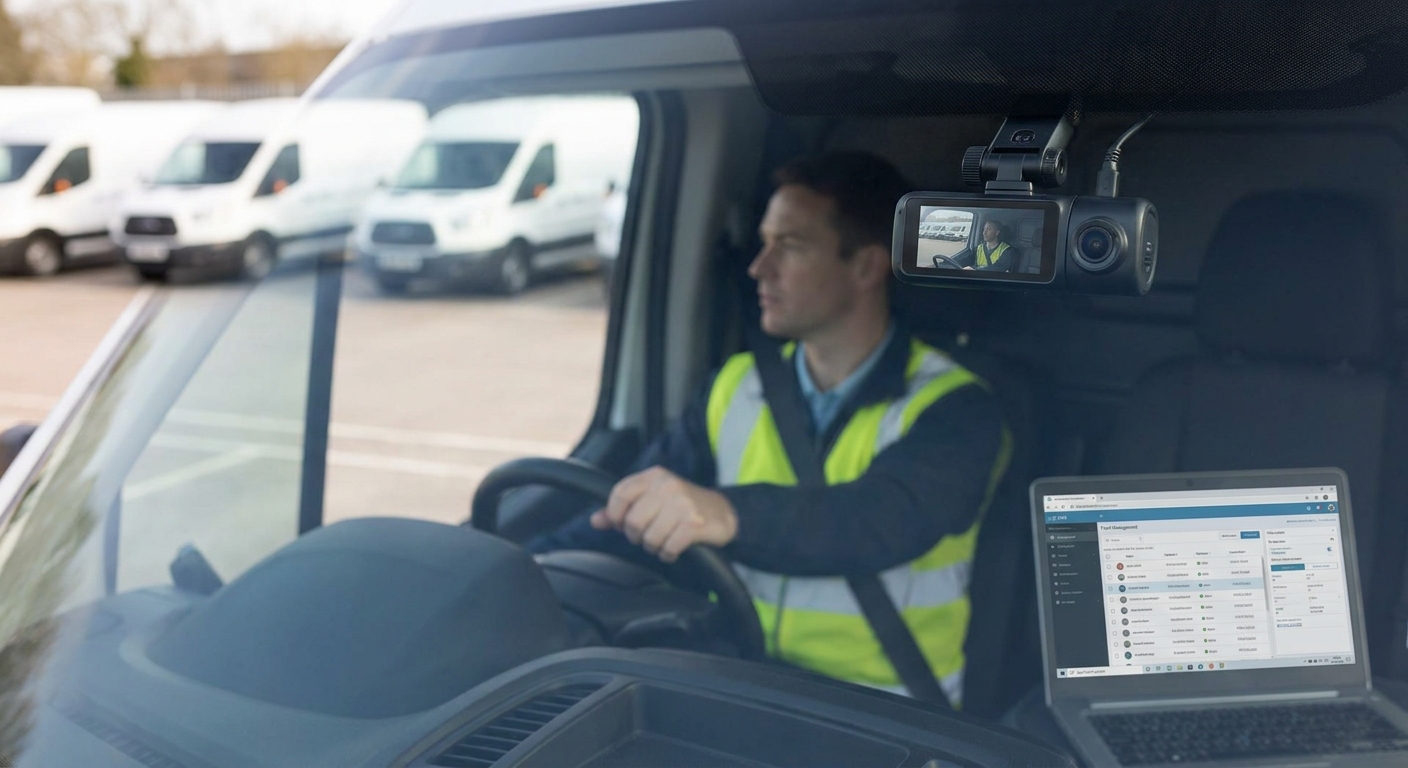
Dual-facing units record the cab and the windscreen view at the same time, which settles two of the most common fleet disputes: was the driver on their phone, and was the driver actually at fault. Taxi and private hire operators adopted these early for exactly this reason — see how 4G dash cams for taxi and private hire fleets get used for passenger disputes, and the same logic applies to any van doing customer call-outs or last-mile delivery.
For van fleets, the driver-facing lens also settles fatigue and distraction claims after an incident, which forward-only cameras simply cannot do. Verdict: Buy for any van doing customer-facing work, call-outs, or routes over 150 miles a week.
3. AI event-triggered cameras — the one that flags itself
AI-triggered systems detect harsh braking, lane drift, and following distance without a human reviewing hours of footage. The camera decides what's worth watching and uploads only that clip, which cuts the admin load on a fleet manager running 20+ vans.
The trade-off is that AI triggers sometimes miss slow-speed incidents — a reversing bump in a loading bay rarely trips a harsh-braking sensor. Verdict: Consider as an add-on to a 4G system, not a replacement for one.
4. 360-degree vehicle CCTV — the blind-spot killer for box vans
A full-perimeter camera system covers the sides and rear of a vehicle, not just the windscreen, which matters for box vans and larger panel vans doing multi-drop rounds. Reversing incidents account for a large share of low-speed fleet claims, and a forward-facing dash cam captures none of them.
Courier and delivery operators running dense urban rounds get the most out of this — see how van tracking for courier and delivery fleets pairs location data with incident footage to close claims fast. Verdict: Buy for box vans and multi-drop couriers; Skip for a single panel van doing motorway miles, where the cost per vehicle doesn't pay back.
5. Forward-only single-channel dash cams — the bare minimum
A single forward-facing camera covers the windscreen view only. It's the cheapest unit to fit across a mixed fleet and still beats having no camera at all, but it leaves cab disputes and reversing incidents completely undocumented.
Operators running low-risk, low-mileage routes with one or two vans sometimes start here before scaling up — the same logic behind GPS tracking for single-van small businesses, where cost per vehicle has to justify itself immediately. Verdict: Hold — fine as a stopgap, not a long-term fleet standard for 2026.
6. Consumer-grade dash cams — the one HR keeps finding zip-tied to the dashboard
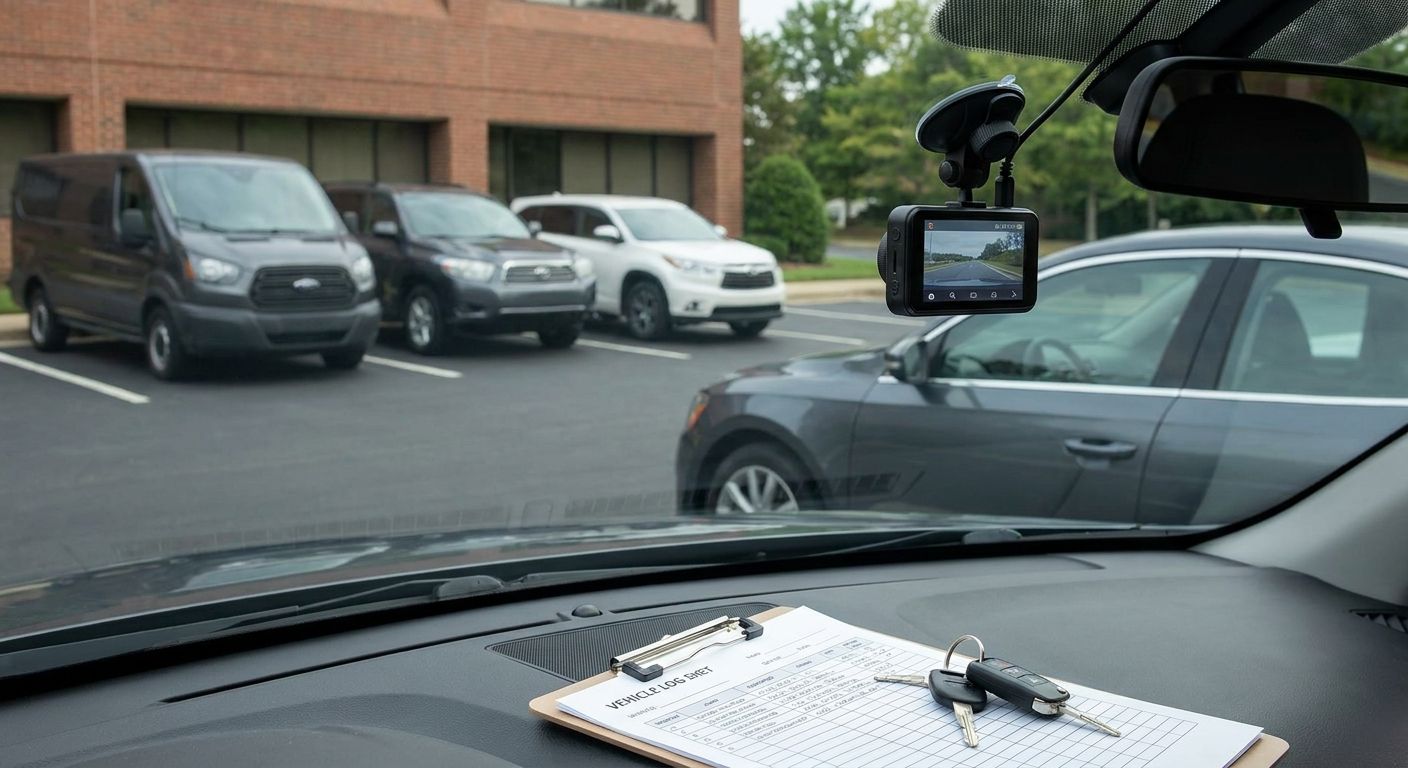
Drivers sometimes fit their own off-the-shelf dash cam because the fleet hasn't issued one yet. These units have no live feed, no remote pull, and footage locked to a physical SD card that a manager can only access if the driver hands it over.
There's no fleet-wide record, no insurer-recognised evidence chain, and no way to prove footage wasn't edited or deleted before handover. Verdict: Skip — for fleet purposes this isn't a dash cam category, it's a liability gap with a lens on it.


Comparison: dash cam types for van fleets, 2026
| Type | Connectivity | Footage access | Best for | Verdict |
|---|---|---|---|---|
| 4G-connected | Live cloud upload | Minutes after trigger | All van fleets | Buy |
| Dual-facing | 4G or SD | Cab + road view | Customer-facing routes | Buy |
| AI event-triggered | 4G add-on | Flagged clips only | Large mixed fleets | Consider |
| 360-degree CCTV | 4G or hardwired | Full perimeter | Box vans, couriers | Buy for multi-drop, Skip for single van |
| Forward-only single-channel | SD card | On return to base | Low-mileage single van | Hold |
| Consumer-grade | None | Physical handover only | Nobody running a fleet | Skip |
"A dash cam that only proves something happened after the van is back at base isn't fleet-grade — it's a black box nobody can open in time."
What to avoid
- Single-channel units on customer-facing vans. Windscreen-only footage can't settle a driver conduct complaint, and complaints without evidence cost more in goodwill than a dual-facing camera costs to fit.
- SD-card-only systems on high-mileage routes. Cards fail, get lost, or get overwritten before anyone reviews them — 4G upload removes that risk entirely.
- Skipping install compliance checks. A dash cam fitted badly can obstruct the driver's view or fail a roadworthiness check; instructors face the same scrutiny, which is why dash cams for driving instructors get fitted to a specific compliance standard rather than wherever fits.
Where to buy dash cams for van fleets
- Buy from a supplier that installs and monitors, not just ships hardware — a camera nobody configured to your fleet's trigger settings is a camera that misses the incident that matters.
- Confirm the footage format is accepted by your insurer before rollout; some insurers in 2026 still ask for specific evidence chains that consumer units can't produce.
- Fit the same system fleet-wide rather than mixing brands per van — a manager pulling footage from six different apps loses the minutes that matter after a collision.
FAQ
What are the best dash cams for van fleets in 2026?
4G-connected, dual-facing dash cams are the best dash cams for van fleets in 2026 because footage uploads live rather than staying locked on an SD card. Fleets running box vans or multi-drop rounds add 360-degree CCTV on top for reversing coverage.
Do van fleets need dual-facing dash cams or is forward-only enough?
Forward-only is enough for low-mileage, low-risk single-van operators, but any van doing customer-facing work needs dual-facing coverage. The cab-facing lens is what settles driver conduct and fatigue disputes that a windscreen-only camera can't touch.
How much do fleet dash cams cost per van?
Cost varies by connectivity and coverage, with 4G units and 360-degree systems priced higher than basic forward-only cameras. Check current fleet dash cam pricing directly, as install and monitoring costs shift with fleet size.
Is a 4G dash cam better than an SD-card dash cam for fleets?
Yes, a 4G dash cam is better for fleets because footage reaches a manager within minutes of an event instead of waiting until the van returns to base. SD-card-only units also risk losing footage if the card is damaged in a collision.
Do dash cams help lower fleet insurance premiums?
Dash cam footage helps insurers settle claims faster and reduces disputed liability payouts, which is why more fleets fit them ahead of policy renewal in 2026. The camera type matters — insurers increasingly expect footage that can be verified and time-stamped.
What's the difference between a dash cam and 360-degree vehicle CCTV?
A dash cam typically covers the windscreen view, sometimes with a second cab-facing lens, while 360-degree CCTV covers the full perimeter of the vehicle. Box vans and couriers doing frequent reversing manoeuvres get more value from full-perimeter coverage.
Can drivers use their own dash cam instead of a fleet-issued one?
Consumer dash cams bought by drivers lack live upload and fleet-wide monitoring, so footage only exists if the driver hands over the physical card. For fleet purposes this leaves no reliable evidence chain, which is why it's a Skip for anything beyond a single vehicle.
How fast can a fleet manager get dash cam footage after a collision?
With a 4G-connected dash cam, footage typically reaches a cloud dashboard within minutes of the trigger event. SD-card-only systems require the van to return to base before anyone can review the clip, which can take hours or days.
One last thing
The fleets that regret their dash cam choice in 2026 almost never regret the camera itself — they regret picking forward-only coverage on vans that later needed to prove what happened inside the cab, not just outside the windscreen. Fit the dual-facing option even on the vans that seem low-risk today; the incident that needs it never sends a warning first.