Driving instructors spend more hours alone in a car with a stranger than almost any other tradesperson, which makes dash cam footage the difference between a clean insurance renewal and a six-month dispute over who clipped a wing mirror on a three-point turn.
- 4G-enabled dual-facing dash cams are the baseline for driving instructors in 2026 — buy one, not a basic single-lens unit.
- Thatcham S7 tracking at £198 covers theft risk on a personal instructor car; multi-car schools should look at S5 at £374.
- Audio recording and cabin-facing footage settle pupil disputes and safeguarding questions that GPS alone can't.
- Skip cams that rely on Wi-Fi-only retrieval — you need 4G to pull footage before a claim goes cold.
Why this matters
An instructor's car is a workplace with a passenger who is, by definition, still learning to control it. That's a different risk profile from a courier van or a taxi, and it means the dash cam brief for driving instructors isn't the same brief as for 4G dash cams for taxi and private hire fleets — though the two overlap more than most instructors assume.
Insurers increasingly ask for footage before they'll settle a claim involving a learner driver, and driving schools running more than one car are managing the same theft and safeguarding exposure as any small commercial fleet. Crystal Ball builds dash cam and tracking systems for exactly that middle ground — SMEs running two to twenty vehicles who need proof, not just a black box.
Who this is for
This guide is for sole-trader ADIs running one car, franchise instructors tied to a driving school brand, and multi-instructor schools managing a small fleet of dual-control vehicles. If you're insuring a car that a 17-year-old will be behind the wheel of within the hour, this applies to you.
What to look for in dash cams for driving instructors
Dual-facing recording
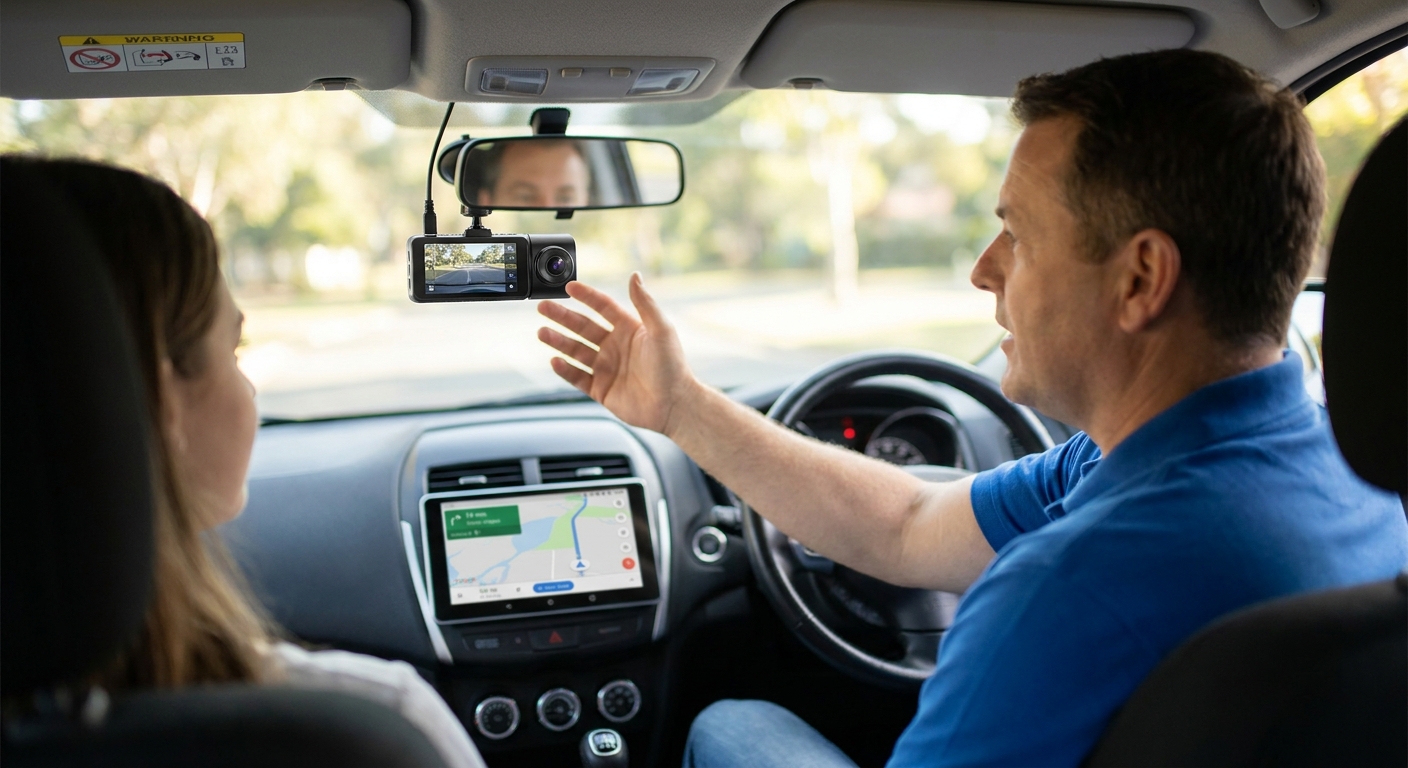
A forward-only lens captures the road but misses the thing that actually generates disputes: what happened inside the car. Cabin-facing footage shows hand position on the wheel, whether the instructor grabbed the dual controls, and whether a pupil panicked before a near-miss. Without it, every claim comes down to two people's memory of the same three seconds.
4G connectivity, not Wi-Fi-only
A cam that only offloads footage over Wi-Fi when you're back at the office is useless the day a pupil's parent calls within the hour demanding to see what happened. 4G-connected units push flagged clips to a portal in near real time, which matters because insurers and DVSA-related complaints move fast once they're filed. This is the single biggest upgrade over a consumer dash cam bought for £40 on a marketplace.
Audio recording
Audio is the evidence nobody thinks about until they need it. A recorded verbal instruction — "brake now" — given seconds before an incident is often the only thing that separates instructor liability from pupil error. Check local recording consent rules before switching this on, but for a professional instruction vehicle it's close to essential in 2026.
Event locking and loop recording
Continuous loop recording overwrites old footage to save storage, which is fine until the clip you need gets overwritten before you've pulled it. A G-sensor should lock any footage around a hard brake or impact automatically, so the file survives the loop regardless of how busy the day gets.
GPS and speed tagging
Time-stamped GPS and speed data turns a video clip into evidence a solicitor or insurer can actually use — it proves the car was doing 22mph in a 30 zone, not just that a video exists showing a road. Multi-car schools get an added benefit here: the same data feeds fleet-style tracking, useful for driving schools running enough cars to start acting like a small fleet operator, similar to how school minibus operators manage passenger-carrying vehicles.
Top picks
The essential kit — dual-facing 4G dash cam
Buy. A 4G-enabled unit with forward and cabin lenses is the non-negotiable starting point for any instructor car in 2026. It's the one piece of kit that directly answers "who's at fault" in a dispute, and it does it without needing to argue over dashcam footage quality months after the fact.
The insurance play — Thatcham-approved tracker
Buy. A Thatcham-approved tracker starting around £198 for an S7-rated unit cuts theft risk on a car that's parked outside a pupil's house or left at a test centre for an hour. Instructor cars are stationary and unattended more than most commercial vehicles realise, and insurers often price that risk into the premium whether you've got cover or not.
The safeguarding benchmark — passenger-carrying setup
Consider. Look at how taxi and private hire operators spec their dash cams and borrow the same logic: audio on, cabin-facing lens active, footage retrievable within the hour. A driving instructor's car carries a vulnerable passenger just as often as a private hire vehicle does, and the safeguarding case for recording is nearly identical.
The multi-car driving school
Consider. Once a school runs three or more cars, dash cam footage stops being a single-incident tool and becomes fleet data — who's driving which car, how hard braking events cluster, whether one vehicle is generating more incidents than the rest. At that point you're not buying a dash cam anymore, you're buying a small fleet management system with a camera attached.


What to avoid
- Single-lens, forward-only cams. They look like a bargain until a pupil disputes a claim and there's no cabin footage to back up either version of events.
- Wi-Fi-only retrieval units. Fine for a personal car, a liability for a professional vehicle where an insurer or parent wants footage the same day.
- No-name marketplace cams with no local support. When the SD card corrupts mid-lesson, a proper fleet supplier replaces the unit; a marketplace seller doesn't answer the phone.
Verdict comparison
| Setup | Dual-facing | 4G retrieval | Audio | Best for | Verdict |
|---|---|---|---|---|---|
| Basic single-lens cam | No | No | Rarely | Nobody running a paid instruction business | Skip |
| 4G dual-facing dash cam | Yes | Yes | Yes | Sole-trader ADI, one car | Buy |
| Dash cam + Thatcham S7 tracker | Yes | Yes | Yes | Instructor with a parked-overnight car | Buy |
| Dash cam + fleet-style tracking | Yes | Yes | Yes | Multi-car driving school (3+ vehicles) | Consider |
FAQ
What's the best dash cam for driving instructors in 2026?
A 4G-enabled dual-facing dash cam with cabin audio is the best fit for driving instructors in 2026, because it captures both the road and the pupil's actions and lets you pull footage the same day a dispute is raised.
Do driving instructors legally need a dash cam?
There's no legal requirement to run a dash cam as a driving instructor, but most professional indemnity and motor insurers treat footage as strong supporting evidence, and some now factor it into premium pricing.
Is audio recording in a dash cam legal for lessons?
Audio recording is generally permitted in a private vehicle you own, but check consent requirements with pupils before switching it on, particularly for under-18 learners.
How much does a Thatcham-approved tracker cost?
A Thatcham S7-rated tracker starts around £198, while a higher-spec S5 unit runs closer to £374 as of 2026, both with 24/7 theft monitoring included.
Should a multi-car driving school use fleet tracking instead of individual dash cams?
A multi-car driving school needs both — dash cams handle per-incident evidence, while fleet tracking adds visibility across all vehicles, useful once you're managing three or more instructor cars.
How long does dash cam footage need to be kept?
Retention depends on your insurer's claims window, but 30 days of retrievable footage covers most disputes, which is why 4G retrieval matters more than raw storage size.
Do dash cams for driving instructors record when the car is parked?
Cams paired with a G-sensor and parking mode record automatically when the vehicle is struck or moved while parked, which matters for cars left outside test centres or pupils' homes.
One last thing
Most instructors buy a dash cam to protect themselves in a collision and never think about the parked hours in between lessons — but a car sitting outside a test centre for 40 minutes with the instructor inside filling out paperwork is exactly when theft risk peaks, and it's the gap a Thatcham-approved tracker closes that a dash cam alone can't.