Security and patrol companies run vehicles that need to prove where they've been, protect officers working alone at night, and survive being parked outside industrial units for eight-hour shifts — most fleet software handles one of those jobs, not all three.
- Fleet management software for security and patrol companies must combine GPS tracking, lone worker protection, and 4G dash cams in one system.
- Thatcham S7 Tracker at £198 suits liveried patrol cars parked overnight on industrial estates — Buy.
- 4G Fleet Dash Cams give live-streaming evidence for incident disputes and false complaints — Buy.
- Lone worker apps with automatic check-in timers protect solo night officers on foot patrol — Buy.
- Basic OBD trackers without geofencing can't prove a checkpoint was actually visited — Skip.
Why this matters
Patrol contracts get judged on proof, not promises. A client asking why a checkpoint was missed at 2am wants a timestamped location log, not an explanation after the fact. Crystal Ball's fleet management software for security and patrol companies is built around that gap — GPS tracking, lone worker alerts, and 4G dash cam evidence in one system instead of three separate subscriptions renewing on three separate dates.
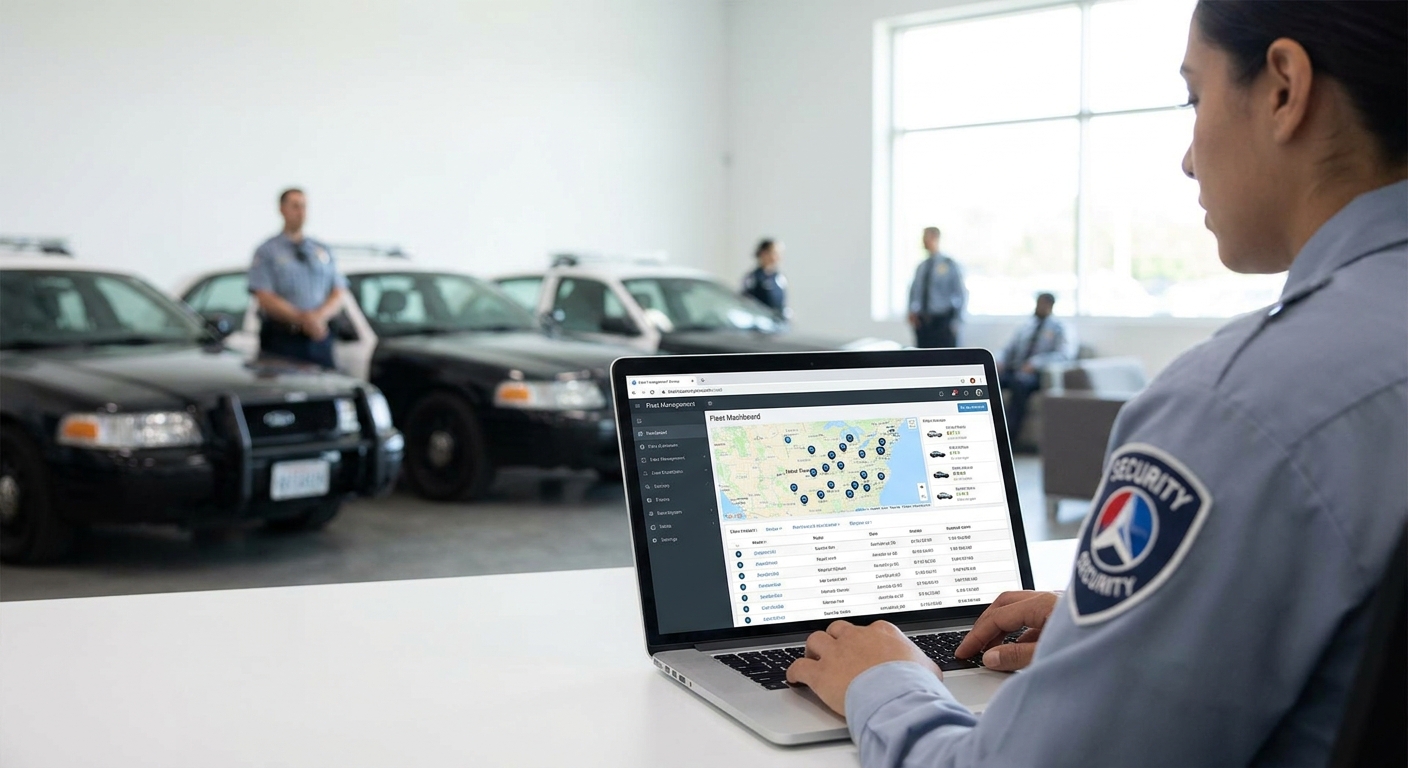
Fleet management software for security and patrol companies has to answer three questions on demand: where was the vehicle, was the officer safe, and what actually happened. In 2026, most patrol contracts write at least one of those into the SLA. Software that can't answer all three isn't fleet management — it's just a map.
Who this is for
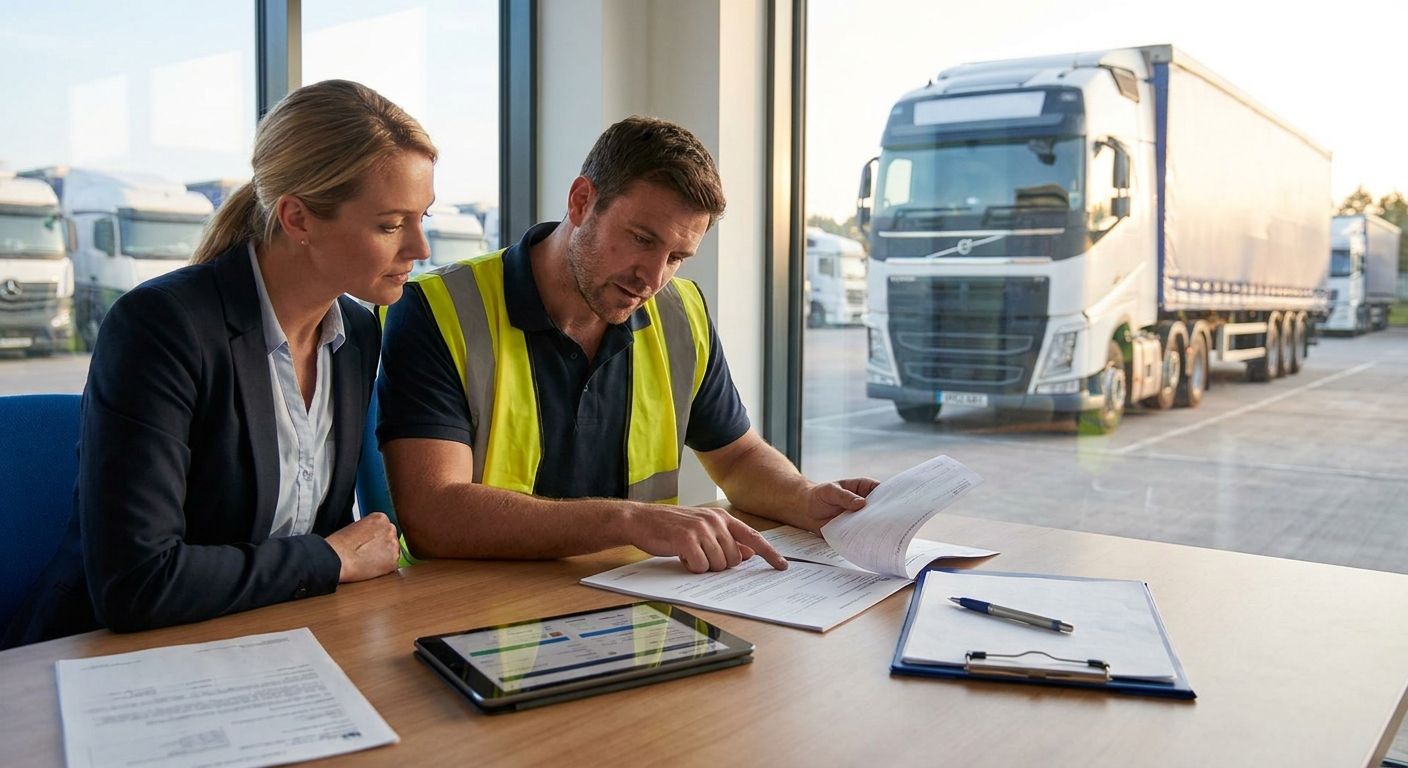
This guide is for operations managers and directors at mobile patrol firms, keyholding and alarm-response companies, and static or mobile guarding businesses running liveried response vehicles. If you're managing anywhere from 5 to 200 vehicles patrolling commercial estates, retail parks, or construction sites overnight, and your contracts carry SLA reporting or lone worker duty-of-care obligations, the criteria below apply directly to you.
What to look for in fleet management software for security and patrol companies
Real-time GPS tracking with geofencing
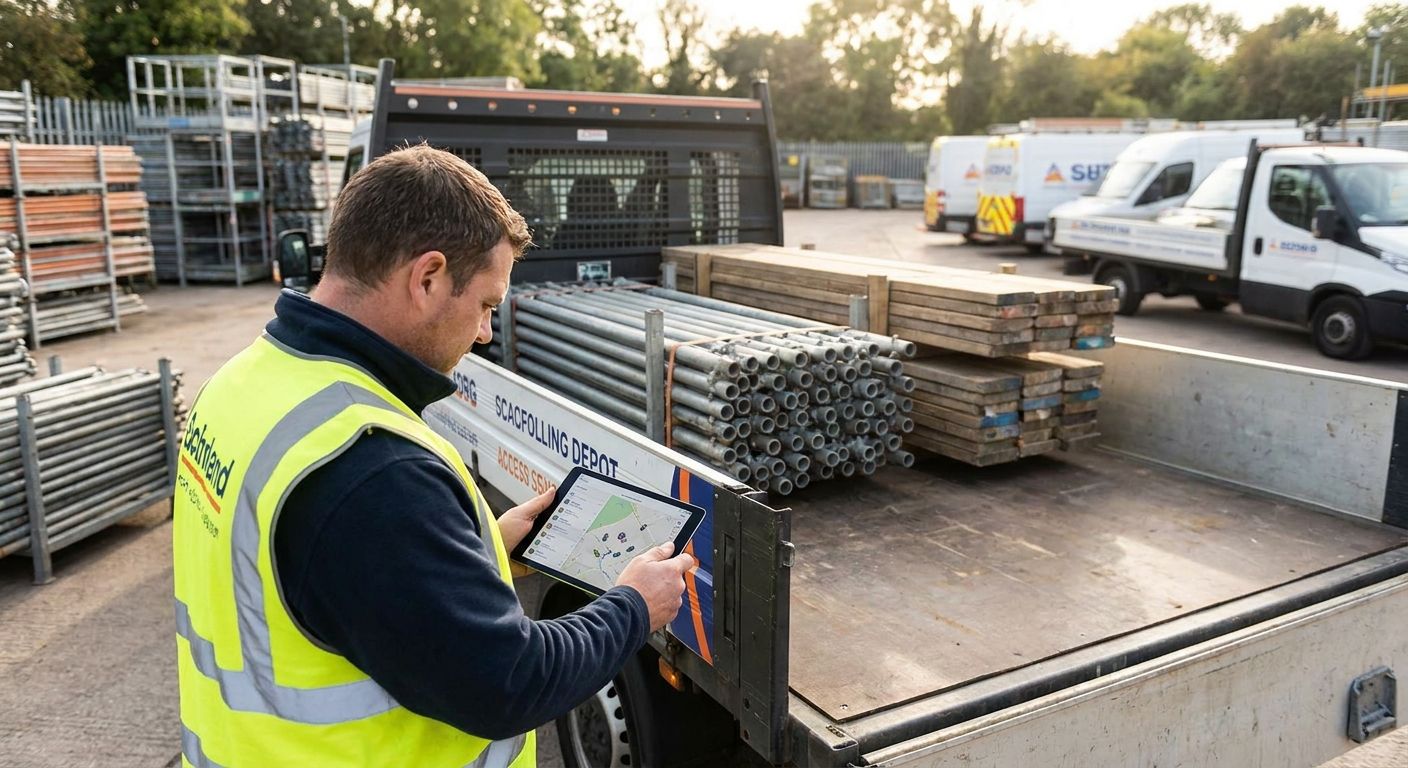
A patrol vehicle's value to a client is proof of attendance, and a location ping every 30 seconds does that better than a route plan on a whiteboard. Geofencing around client sites triggers an alert the moment a vehicle enters or leaves, which is the difference between telling a client "we were there" and showing them the log. Without this, disputed check calls become a he-said-she-said argument you can't win.
Lone worker protection built in, not bolted on
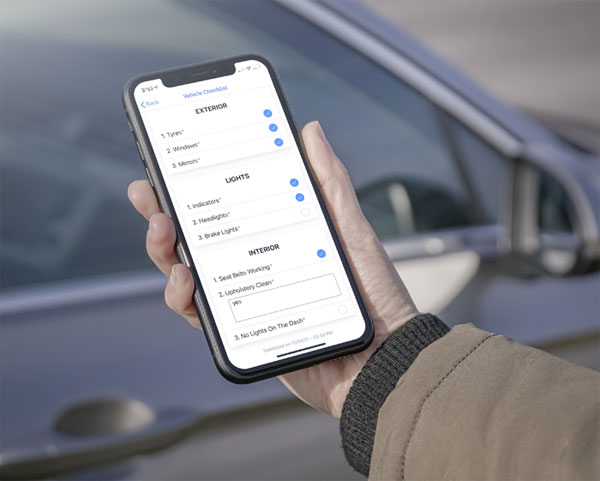
Patrol officers working alone at night are exactly the profile lone worker apps exist for — solo, mobile, and often out of radio contact for stretches at a time. An automatic check-in timer that escalates to control if an officer doesn't respond is the feature that matters most; a panic button nobody's watching is theatre. Crystal Ball's lone worker protection app applies the same logic used for home care staff to any solo field role, patrol included.
“If a lone officer doesn't check in within the expected window, the app should alert control automatically — not the other way around.”
4G dash cams with live streaming, not just recording
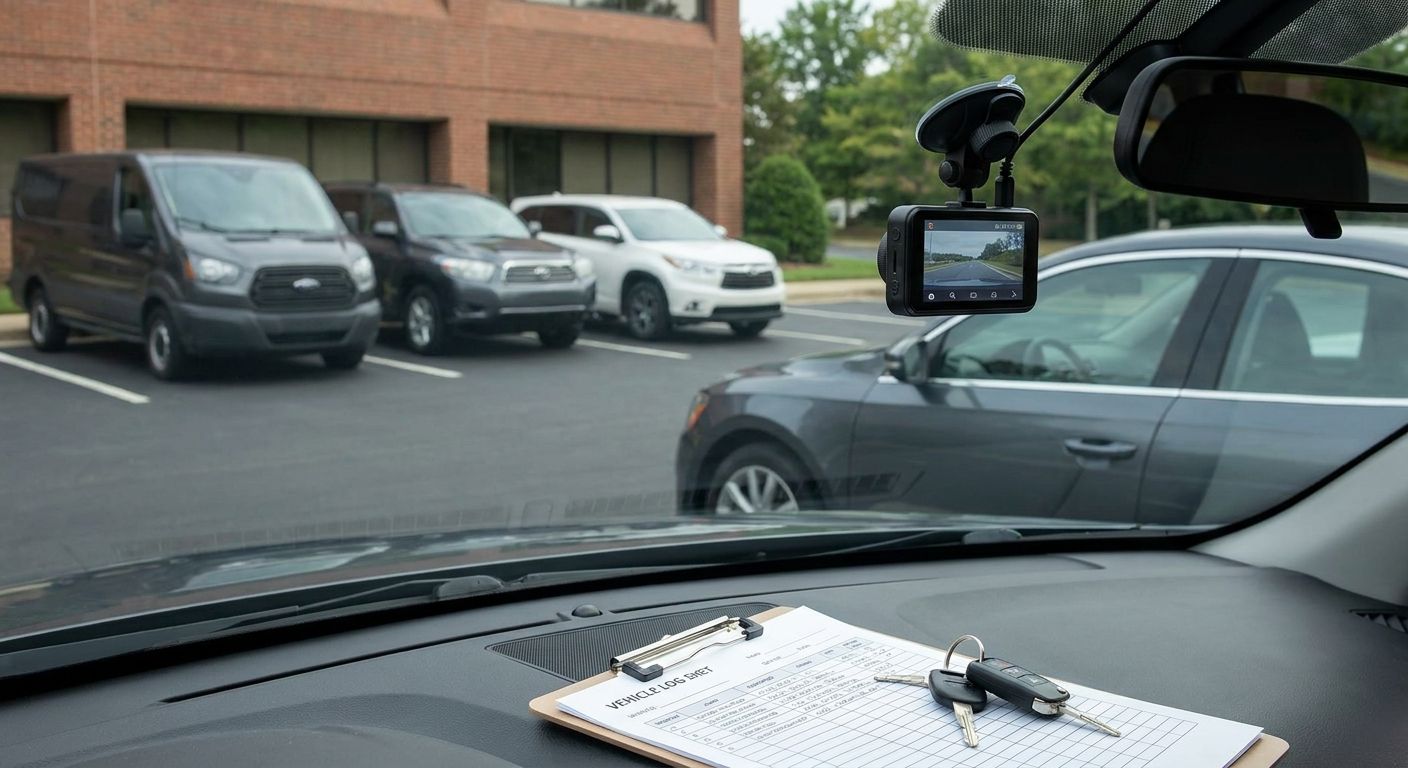
A dash cam that only stores footage locally is useless during an active incident — you find out what happened after the confrontation, not during it. 4G-connected cams let a control room pull a live feed the second an officer flags trouble, and that footage becomes the evidence that settles a false complaint in minutes instead of weeks. For patrol work specifically, this is the feature clients ask about most when scoping a new contract in 2026.
Thatcham-approved security for liveried vehicles
Liveried security vehicles are a theft target precisely because they look like they belong somewhere valuable. Thatcham-approved trackers with 24/7/365 monitoring and remote immobilisation are the standard insurers recognise, and running one typically supports lower premiums on the fleet. A patrol car parked outside a depot from midnight to 6am without one is an open invitation.
Driver behaviour and SLA reporting
Clients increasingly want more than "the vehicle was there" — they want to know it wasn't speeding through a residential estate at 3am either. Driver behaviour scoring on acceleration, braking, and cornering gives you the data to answer that before it becomes a complaint, and it's the same data that backs up SLA reporting when a contract comes up for renewal.
Top picks for security and patrol fleets
GPS tracking with geofencing — the checkpoint proof. Live location updates with geofence alerts firing within seconds of a boundary breach turn a disputed patrol log into a settled one. This is the non-negotiable base layer for any patrol contract with SLA reporting. Verdict: Buy.
Lone worker app — the safety net. Automatic check-in timers and an SOS alert that reaches control without the officer touching a button cover the gap that radios and phone check-ins leave open on solo night shifts. Verdict: Buy.
4G Fleet Dash Cams — the evidence pick. Live-streamed footage on demand means a control room can see a confrontation as it happens, not reconstruct it from a memory card two days later. Verdict: Buy.
Thatcham S7 Tracker (£198) — the theft deterrent. 24/7/365 monitoring with nationwide installation suits patrol cars that sit parked overnight on industrial estates. For higher-value response vehicles, the Thatcham S5 Plus Tracker at £548 adds a driver card and deeper monitoring — worth it if the vehicle itself is a target, not just the equipment inside it. Verdict: Buy for standard patrol cars, Consider for high-value response fleet.
Driver behaviour monitoring — the SLA pick. Scoring driving style gives you a paper trail for client reporting rounds, but it's only worth adding once the tracking and safety layers above are already in place. Verdict: Consider.
If your patrol contracts cover council estates, public buildings, or local authority sites, pair standard tracking with council fleet tracking requirements, since public-sector clients often specify their own reporting formats.


What to avoid
- Basic OBD-II trackers with no geofencing. They'll tell you a vehicle exists somewhere on a map, but they won't alert anyone when it enters or leaves a client site — which means no proof of attendance. Skip.
- Dash cams that only record locally. Footage sitting on an SD card until someone pulls it days later isn't evidence during an active incident, it's evidence for a post-mortem. Skip.
- Generic van tracking built for delivery fleets. Van tracking systems designed for courier and delivery routes optimise for drop times, not lone worker safety or checkpoint verification — fine for parcels, wrong for patrol officers. Skip unless paired with a dedicated lone worker layer.
Verdict comparison
| Solution | Best for | Key spec | Verdict |
|---|---|---|---|
| GPS tracking with geofencing | Checkpoint and route verification | Location updates and geofence alerts within seconds | Buy |
| Lone worker app | Solo night patrols | Automatic check-in timer, SOS escalation | Buy |
| 4G Fleet Dash Cams | Incident evidence | Live-streamed footage on demand | Buy |
| Thatcham S7 Tracker (£198) | Theft deterrence, standard patrol cars | 24/7/365 monitoring centre | Buy |
| Thatcham S5 Plus (£548) | High-value response vehicles | Driver card, deeper monitoring | Consider |
| Driver behaviour monitoring | Client SLA reporting | Scores acceleration, braking, cornering | Consider |
FAQ
What's the best fleet management software for security and patrol companies in 2026?
The best setup combines GPS tracking with geofencing, a lone worker app, and 4G dash cams rather than one standalone product. Crystal Ball packages all three for patrol fleets managing solo night shifts and client SLA reporting in 2026.
Is a lone worker app necessary for patrol officers?
Yes, if officers work solo shifts without constant radio contact. An automatic check-in timer that escalates to control covers the gap that phone check-ins leave open on overnight patrols.
How much does a Thatcham-approved tracker cost?
A Thatcham S7 Tracker costs £198, while the Thatcham S5 Plus Tracker runs £548 with deeper monitoring and a driver card included. Pricing reflects 2026 rates and covers 24/7/365 monitoring centre access.
Do 4G dash cams help with false complaint disputes?
Yes, live-streamed footage settles disputed incidents in minutes rather than waiting days to retrieve a memory card. This matters most for patrol and security roles where confrontations happen without warning.
Can fleet software prove a patrol route was completed?
Geofenced GPS tracking logs the exact time a vehicle entered and left each client site, which is the proof clients ask for when a checkpoint is disputed. Route plans alone don't provide that timestamped record.
What's the difference between the S5 and S7 Thatcham trackers?
The S7 (£198) suits standard patrol vehicles with 24/7/365 monitoring, while the S5 Plus (£548) adds a driver card and is aimed at higher-value vehicles that need deeper monitoring. Both are UK insurance-approved.
Does vehicle tracking reduce insurance premiums for security fleets?
Insurers generally recognise Thatcham-approved trackers, and running one on liveried patrol vehicles typically supports lower premiums. The saving depends on the insurer and the fleet's claims history.
How long should dash cam footage be retained for evidence?
Retention needs vary by contract, but live-streaming capability matters more than storage length for active incidents, since control can pull footage in real time rather than waiting to retrieve it later. Check your specific client SLA for any mandated retention period.
One last thing
The patrol companies that lose contracts in 2026 rarely lose them over price — they lose them over an unprovable checkpoint or an officer nobody could reach for twenty minutes. Fix the proof problem and the safety problem before you touch anything else on this list.