Local authorities running mixed fleets of pool cars, vans, gritters and HGVs need GPS fleet tracking for local councils that satisfies procurement rules, insurance conditions and public accountability all at once — not just a dot on a map.
- Thatcham S7 Tracker is the baseline pick for council pool cars and vans in 2026 at £198 — insurance-approved, minimal fuss. Buy.
- Thatcham S5 Tracker adds driver ID and 24/7/365 monitoring for £374 — right for HGVs and high-value plant. Buy.
- 4G Fleet Dash Cams matter more for councils than private fleets because footage settles FOI requests and public complaints. Buy.
- Skip unbranded consumer GPS trackers — no Thatcham approval means no insurance discount and no audit trail for scrutiny committees.
- GPS fleet tracking for local councils only earns its budget line when procurement, GDPR and insurance boxes are all ticked together.
Why this matters
Council fleets get a different level of scrutiny than a private haulier's vans. Every mile driven in a liveried vehicle can end up in a Freedom of Information request, an insurance dispute, or a councillor's inbox after a resident complaint.
That changes what good tracking looks like. A council doesn't just want to know where a van is — it needs a defensible record of driving behaviour, idling time, and route compliance that survives an audit. Crystal Ball builds its tracking and dash cam systems around exactly that kind of evidence trail, which is why it turns up repeatedly in council procurement shortlists rather than generic consumer trackers.
Budget pressure is the other half of the story. Fuel, insurance and maintenance are the three biggest variable costs on a council fleet, and GPS fleet tracking for local councils is one of the few interventions that moves all three at once — insurers cut premiums for Thatcham-approved hardware, fuel burn drops when idling is flagged, and maintenance scheduling improves once mileage and driver behaviour data exist.
Who this is for
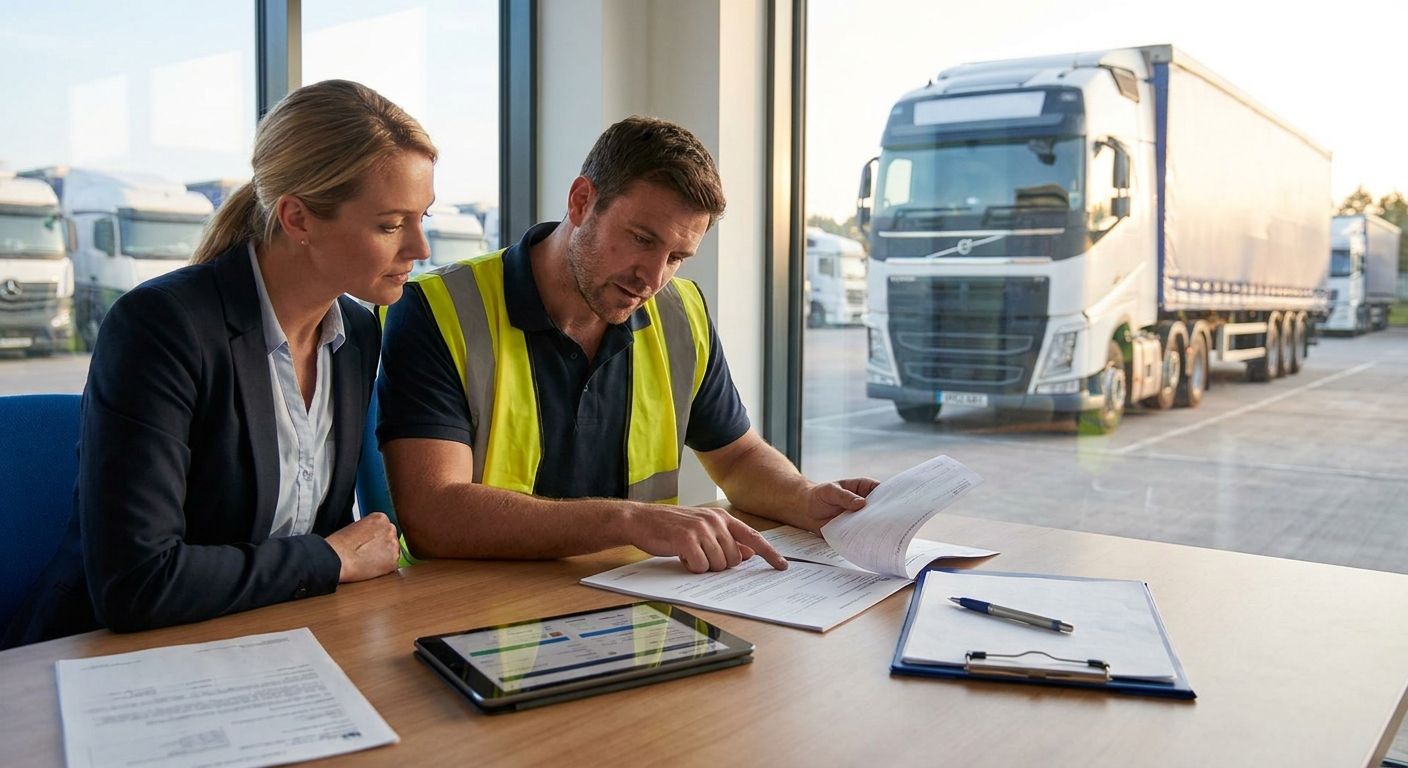
This guide is for fleet managers, transport officers and procurement leads at district, borough, county and unitary councils running a mix of pool cars, vans, refuse vehicles, gritters or HGVs — typically somewhere between 15 and 500 vehicles, where manual mileage logs and paper vehicle checklists have stopped being defensible. If your fleet is entirely leased with the leasing company already providing telematics, most of this won't apply; this is written for councils that own or directly manage their vehicles and need their own system in 2026.
What to look for in GPS tracking for council fleets
Thatcham approval
Insurers price council fleet policies partly on the security fitted to each vehicle, and Thatcham S5 or S7 certification is what actually moves the premium. A tracker without Thatcham approval might show the same map dot, but it does nothing for the renewal quote.
24/7/365 monitoring centre
A council van stolen at 2am on a bank holiday needs a monitoring centre that's staffed then, not a dashboard someone checks on Monday. Continuous monitoring is the difference between recovering a vehicle within hours and writing it off.
Driver ID and behaviour data
Councils run shared pool vehicles more than most private fleets, so knowing which employee was driving at a given time matters for both safety reporting and disciplinary process. Driver ID data also settles the who-was-driving question the moment a complaint or claim lands.
FOI and GDPR-ready reporting
Any system holding location and driver data on council vehicles will eventually be the subject of a records request or a data protection query. Look for export and retention controls that let a transport officer answer that request without an emergency call to the supplier.
Fits vans, HGVs and specialist vehicles
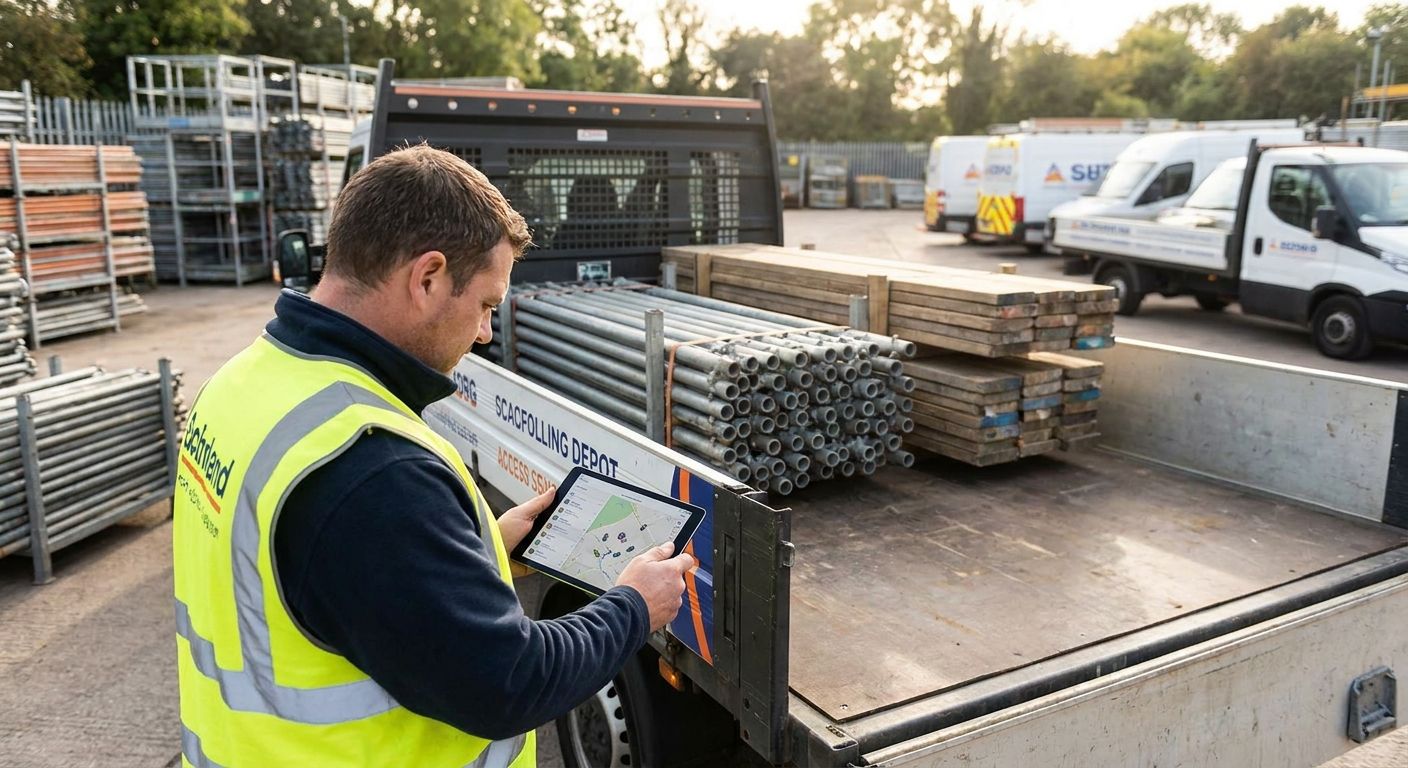
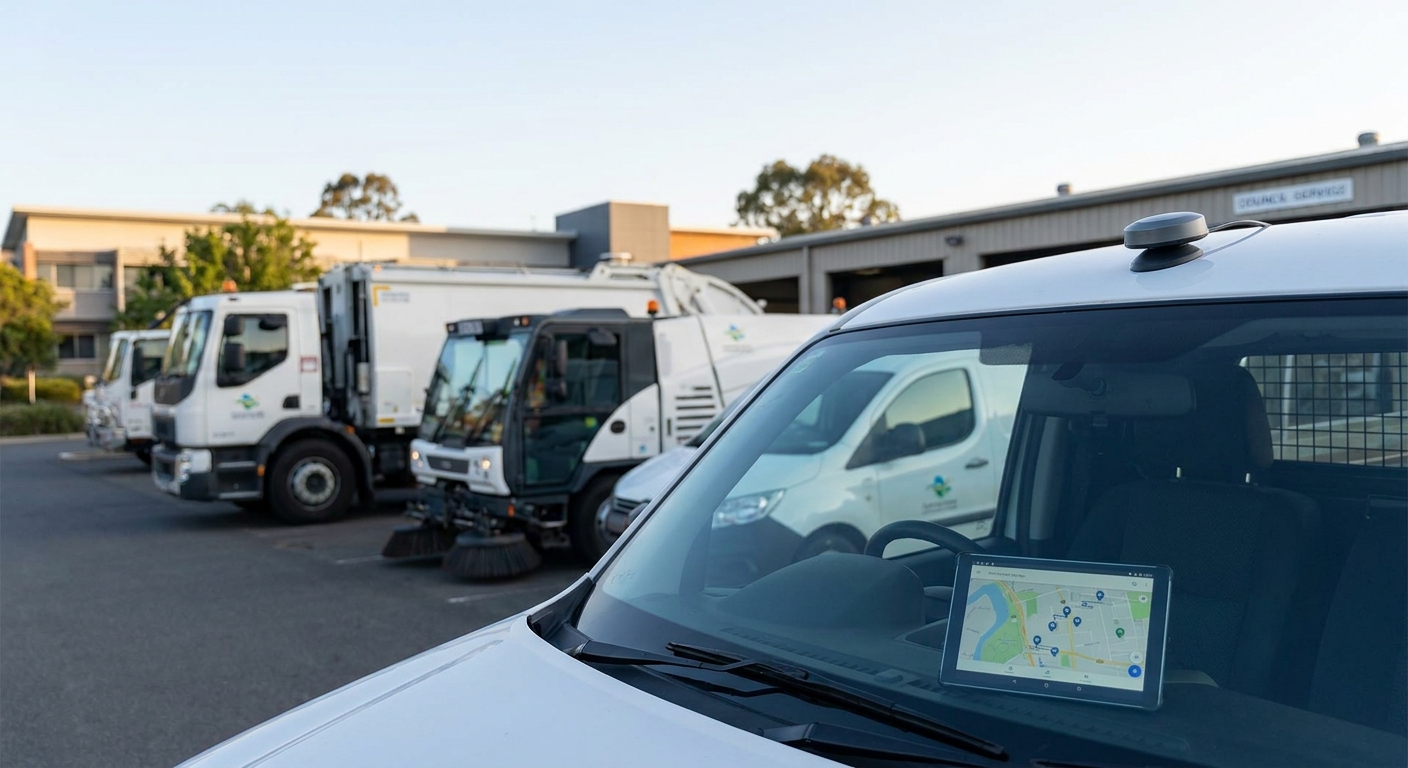
Most councils run a mixed fleet — cars, vans, HGVs, sometimes gritters, road sweepers or trailers. A solution that only handles light vans forces a second supplier contract for the HGV side, which doubles the admin and the invoices.
Evidence capture alongside tracking
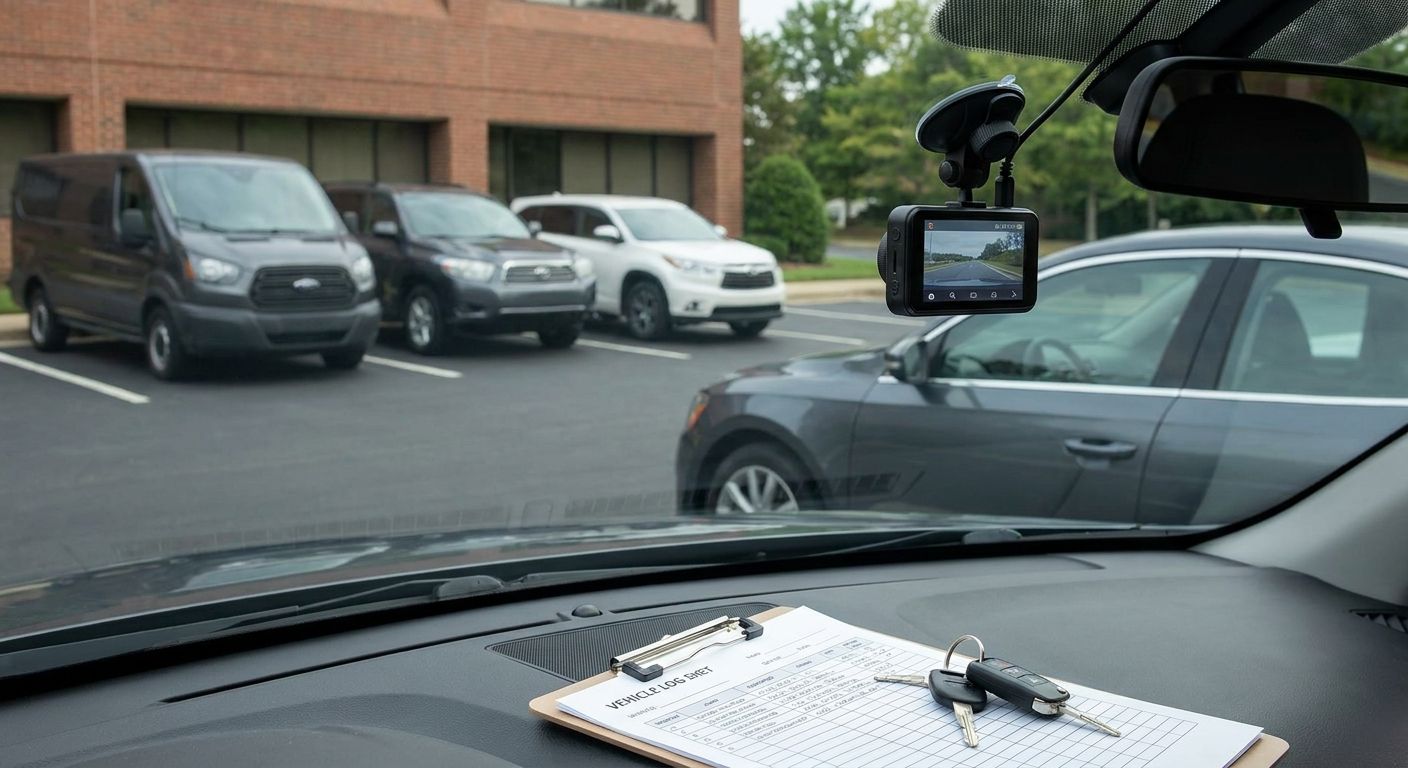
Location data alone doesn't resolve a dispute about a near-miss with a pedestrian or a damage claim against a bin lorry. 4G dash cam footage, synced to the same tracking platform, closes that gap.
Top picks for council fleets in 2026
Thatcham S7 Tracker — the safe pick. £198.00, insurance-approved, backed by a UK monitoring centre running 24/7/365. This is the right entry point for council pool cars, light vans and any vehicle where the goal is theft deterrence plus an insurance discount without extra hardware complexity. Verdict: Buy for pool cars and general-purpose vans.
Thatcham S5 Tracker — the upgrade pick. £374.00, same 24/7/365 monitoring but with a higher security specification suited to higher-value vehicles and includes a driver card for identification. Councils running specialist or higher-value plant on the road should default here rather than to the S7. Verdict: Buy for HGVs, specialist vehicles and higher-value assets.
4G Fleet Dash Cams — the evidence layer. Award-recognised in its category, this pairs live 4G footage with the same fleet tracking data, which is what turns a location log into something a legal or insurance team can actually use. For councils facing public complaints or third-party claims, footage settles disputes that GPS data alone can't. Verdict: Buy for any vehicle that interacts with the public — refuse collection, highways, social care transport.
Fleet Vehicle Tracking (van, car and HGV package) — the wildcard for mixed fleets. This is the broader tracking platform behind the individual vehicle-type pages, built for exactly the van-truck-car mix most councils run. It's the pick when procurement wants one contract and one dashboard rather than separate systems per vehicle class. Verdict: Consider if your fleet spans three or more vehicle categories and a single reporting view matters more than per-vehicle specification.


What to avoid
- Non-Thatcham budget trackers. They look identical on a spec sheet but carry no insurance recognition, so the premium saving that justifies the spend never materialises.
- Consumer GPS apps repurposed for fleet use. No driver ID, no audit trail, no 24/7 monitoring centre — fine for a personal car, indefensible in front of a scrutiny committee.
- Dash cams without 4G connectivity. SD-card-only footage means someone has to physically retrieve the card after an incident, which is exactly the delay that turns a minor dispute into an FOI headache.
Verdict comparison
| Solution | Best for | Thatcham approved | Price | Verdict |
|---|---|---|---|---|
| Thatcham S7 Tracker | Pool cars, light vans | Yes | £198.00 | Buy |
| Thatcham S5 Tracker | HGVs, specialist vehicles | Yes | £374.00 | Buy |
| 4G Fleet Dash Cams | Public-facing vehicles | N/A (dash cam) | Quote | Buy |
| Fleet Vehicle Tracking package | Mixed van/car/HGV fleets | Yes | Quote | Consider |
FAQ
What is the best GPS fleet tracking for local councils in 2026?
For council fleets in 2026, a Thatcham-approved tracker such as the S7 or S5 paired with a 4G dash cam covers both insurance requirements and evidence needs. The S7 fits pool cars and vans; the S5 suits higher-value or specialist vehicles.
Do council vehicles need Thatcham-approved trackers?
Thatcham approval isn't a legal requirement, but it's what insurers recognise for a premium reduction. A council fleet running non-approved trackers pays full premium with none of the discount that justifies the hardware cost.
How much does GPS tracking cost for a council fleet?
Thatcham-approved hardware runs from £198.00 for an S7 tracker to £548.00 for an S5 Plus unit in 2026, with monitoring and platform access typically quoted separately per vehicle count.
Can one system track cars, vans and HGVs together?
Yes — a combined fleet vehicle tracking package covers cars, vans and HGVs under one dashboard, which suits councils that want a single contract instead of separate suppliers per vehicle class.
Is GPS tracking data covered by GDPR for council fleets?
Location and driver data collected through fleet tracking counts as personal data under GDPR, so councils need retention limits and export controls that let a transport officer respond to a data subject or FOI request without delay.
How does 4G dash cam footage help council fleets specifically?
Dash cam footage settles liability disputes and public complaints faster than location data alone, which matters for councils facing third-party claims from refuse collection, highways or social care transport routes.
What's the difference between Thatcham S5 and S7 for a council fleet?
S7 is the entry-level insurance-approved tier suited to pool cars and general vans; S5 adds a higher security specification and driver identification, better suited to HGVs and higher-value specialist vehicles.
Should councils track pool cars the same way as HGVs?
No — pool cars generally need theft deterrence and basic mileage logging at S7 level, while HGVs and specialist vehicles justify the higher S5 specification given their value and compliance exposure.
One last thing
The detail councils miss most often isn't the tracker spec — it's that Thatcham approval directly affects the insurance renewal, not just theft recovery odds. A fleet running S5 or S7 hardware across even a modest number of vehicles can shift the renewal conversation with the insurer before a single claim is ever filed, which is the part procurement teams tend to undervalue when comparing GPS fleet tracking for local councils on price alone in 2026.