Pool cars get shared across five, six, sometimes ten different drivers a month, and when something goes wrong on the road, nobody can say for certain who was behind the wheel or what actually happened. Dash cams fix that gap — but only if you pick the right setup for a shared-vehicle fleet rather than a single-driver company car.
- 4G dual-facing dash cams are the strongest overall pick for best dash cams pool car fleets in 2026 — Buy.
- Standalone cams without fleet software make driver accountability impossible across shared vehicles — Skip.
- Pairing dash cam footage with a Thatcham S5 tracker (from £349) strengthens insurance claims — Buy.
- Insurance-discount qualifying 4G setups earn their cost back through premium reductions within a year for most SME fleets — Buy.
Why this matters
A company car with one named driver is easy to manage: one person, one driving record, one insurance profile. A pool car breaks that model. Multiple employees book the same vehicle across a week, and if there's a bump in a car park or a disputed claim, fleet managers need footage that's tied to a specific journey and a specific driver, not a vague "someone drove it that day."
That's the core reason dash cam choice matters more for pool car fleets than for standard company cars. Crystal Ball builds 4G fleet dash cams specifically to solve the multi-driver accountability problem, and the picks below reflect what actually works when a vehicle changes hands daily rather than staying with one driver for years.
How this list was ranked
Each entry below is ranked against four criteria that matter specifically for shared-vehicle fleets: whether footage can be pulled remotely without waiting for the car to return to base, whether the setup supports multiple driver profiles, whether it qualifies for fleet insurance discounts, and whether it produces evidence that stands up in an insurance dispute. General dash cam "best of" lists built for private cars or single-driver vans miss most of this — pool car fleets need the management layer as much as the camera.
Pricing referenced below reflects 2026 list pricing on Thatcham-approved trackers, which are commonly paired with dash cams on shared vehicles for extra security cover.
The ranked list
1. 4G dual-facing dash cams — the default pick
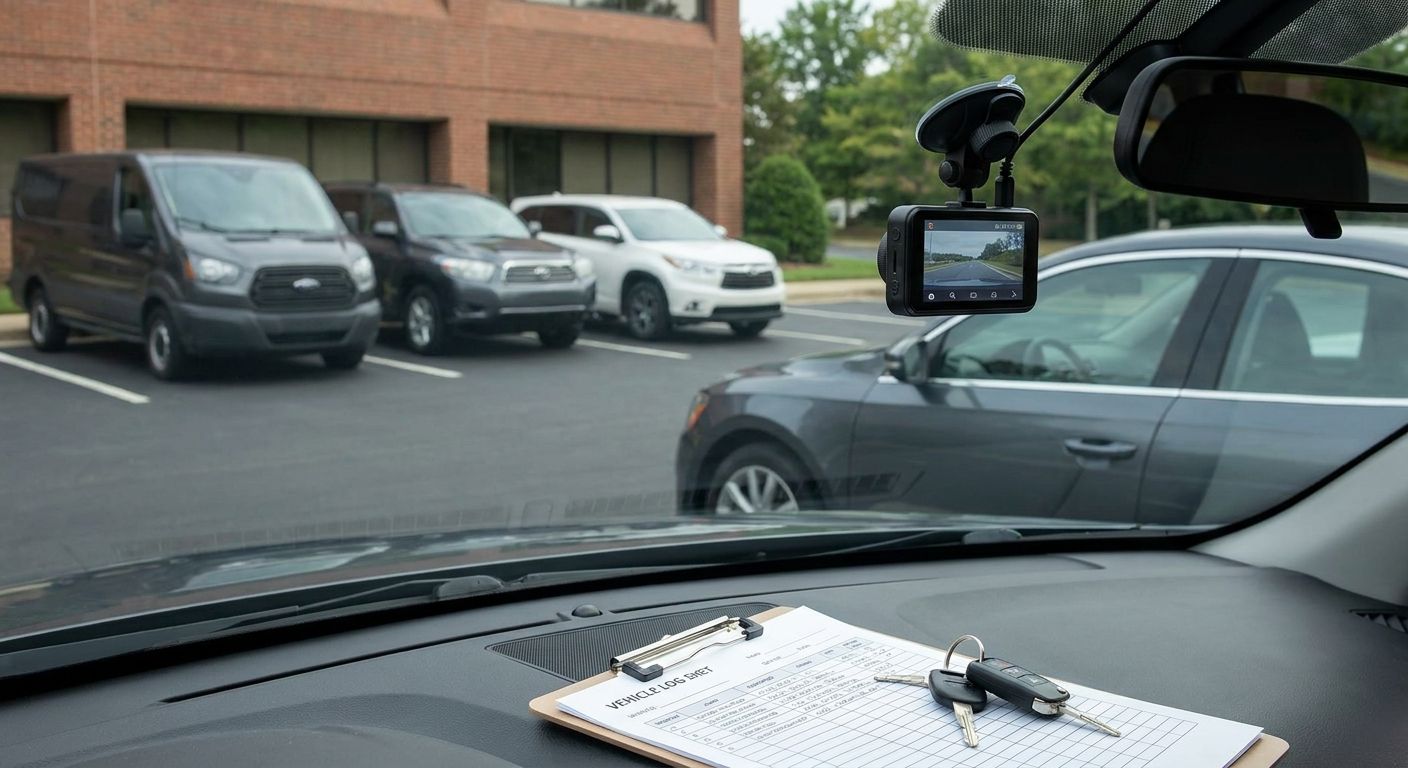
The hook here is simple: live access. A 4G dash cam streams footage on demand rather than storing it locally until someone plugs in an SD card back at the depot — which matters when the driver who had the incident isn't due back at base until next week.
For pool cars specifically, dual-facing coverage (road-facing and cabin-facing) settles the "who was driving" question in seconds instead of relying on a booking spreadsheet. Verdict: Buy — this is the baseline setup for any fleet running shared vehicles in 2026.
2. Dash cams paired with a company car tracker — for accountability at scale
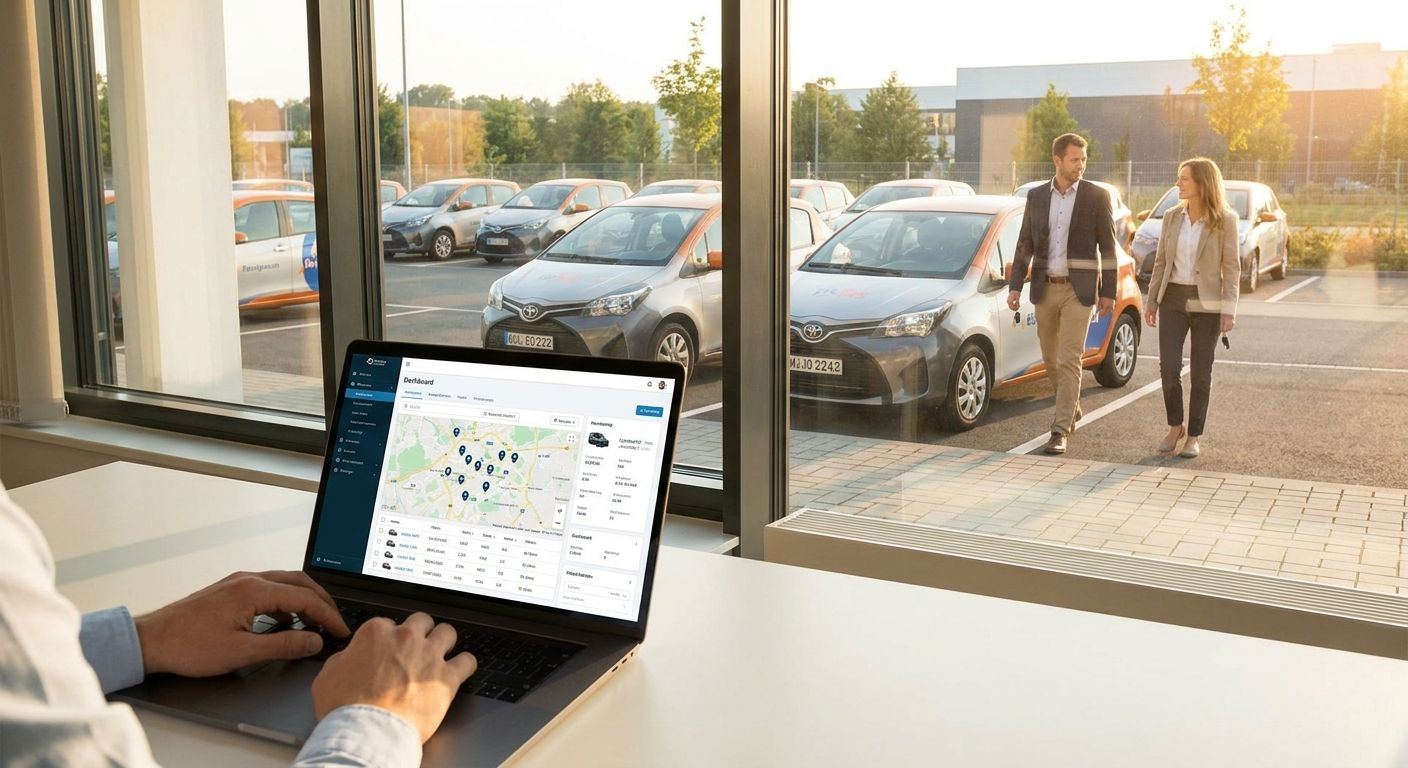
A dash cam alone tells you what happened. A tracker built for company car fleets tells you where and when, tying footage to a logged journey rather than a driver's memory.
This combination matters most once a pool exceeds roughly a handful of vehicles, where manual booking logs stop being reliable evidence on their own. Verdict: Buy for any fleet running more than a few pool vehicles across multiple sites.
3. Insurance-discount qualifying 4G setups — for premium reduction
Not every dash cam qualifies for an insurer discount, and fleet managers frequently overpay because they bought a consumer-grade camera instead of a fleet-grade 4G dash cam recognised by insurers.
The distinction is the monitoring and reporting layer behind the camera, not the lens itself. If premium reduction is the goal for 2026 renewals, this is the category to check before you buy. Verdict: Buy if insurance cost is a factor in the purchase decision — and it usually is.
4. Evidence-grade footage for claim disputes — for high-churn pools
Pool cars see more low-speed knocks and car park disputes than single-driver company cars simply because more people are parking and manoeuvring them. When a claim gets disputed, footage needs to be retrievable and admissible, not just "somewhere on a memory card."
The process for using dash cam footage to dispute a false insurance claim only works if the footage was captured and stored correctly in the first place. Verdict: Buy for any fleet that has faced a disputed claim in the past 12 months.
5. Cross-checking against van fleet dash cam specs — for mixed fleets
Some SMEs run pool cars alongside a small van fleet, and it's tempting to buy the same dash cam across both. It's usually the wrong call: van fleet dash cam requirements lean toward wider-angle rear and side coverage for loading bays, while pool cars need stronger cabin-facing coverage for driver identification.
Buying one spec for both vehicle types under-serves one or the other. Verdict: Hold — check both guides before standardising hardware across a mixed fleet.
6. Standalone consumer dash cams — the one to skip
A £30-£80 consumer dash cam bought from a general retailer looks like it does the same job as a fleet-grade 4G camera. It doesn't. There's no remote footage pull, no driver-behaviour reporting, and no tie-in to a fleet management platform, which means every incident on a shared vehicle still comes down to a manual SD card retrieval and guesswork about who was driving.
For a single private car, that's fine. For a pool of shared vehicles, it defeats the entire point of fitting a camera. Verdict: Skip for any vehicle used by more than one regular driver.

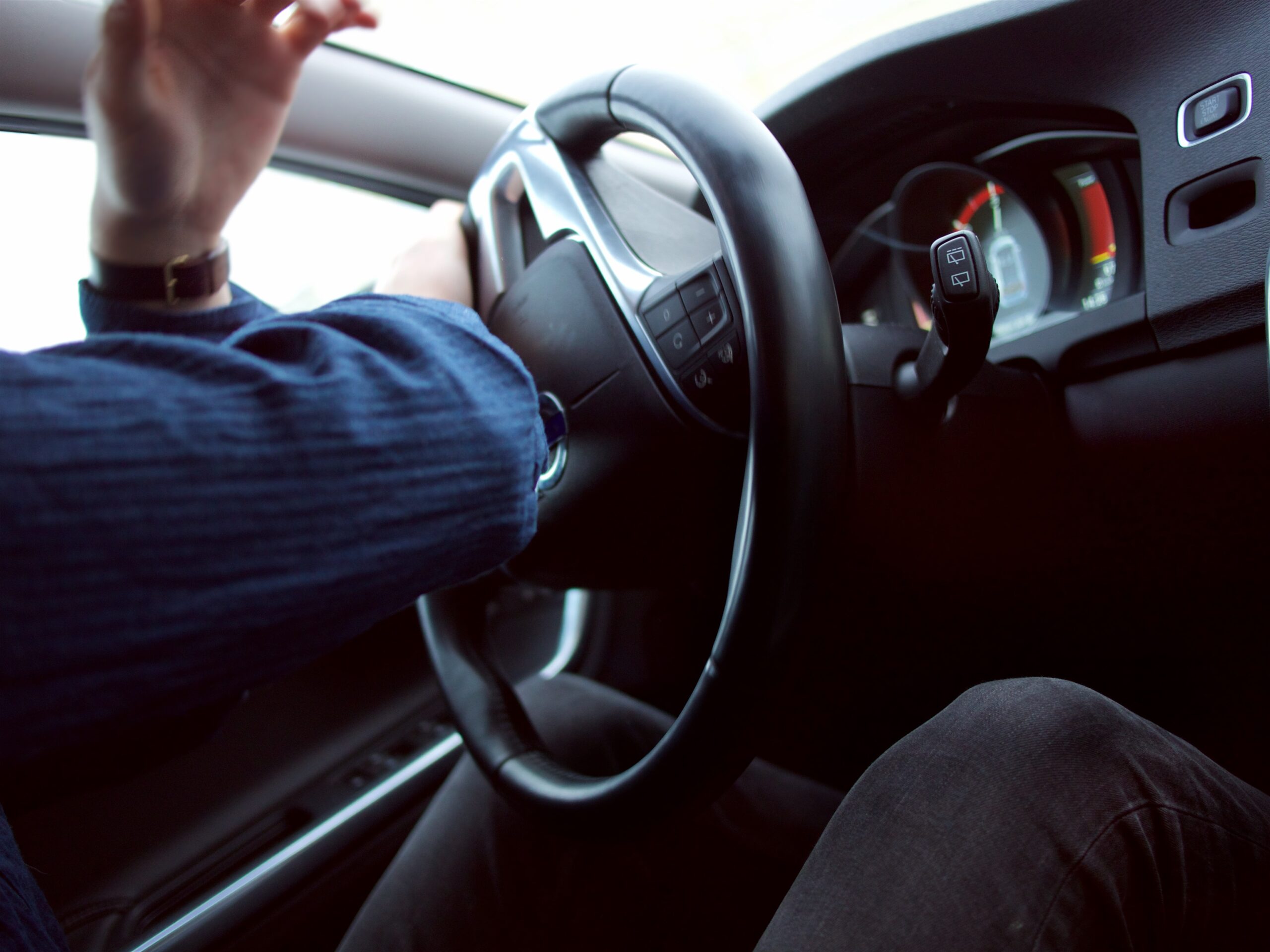
“If you can't tell which of five drivers had the incident, the dash cam is only doing half its job.”
Comparison table
| Setup | Best for | Standout feature | 2026 verdict |
|---|---|---|---|
| 4G dual-facing dash cam | All pool car fleets | Remote footage pull, no waiting for the car | Buy |
| Dash cam + company car tracker | Fleets over a handful of vehicles | Journey-level accountability | Buy |
| Insurance-discount qualifying 4G setup | Premium-conscious SMEs | Insurer-recognised reporting | Buy |
| Evidence-grade footage workflow | High-churn or high-dispute fleets | Admissible retrieval process | Buy |
| Same spec across pool cars and vans | Mixed pool car and van fleets | Shared hardware budget | Hold |
| Standalone consumer dash cam | Single private vehicles only | Low upfront cost | Skip |
Where to buy
- Buy the dash cam and the management platform as one package — a camera with no reporting layer just creates more unanswered footage to sort through manually.
- Confirm insurer recognition before purchase if a premium discount is part of the business case; not all 4G dash cams qualify, even from reputable brands.
- If the fleet already runs a Thatcham-approved tracker — the S5 lists at £349, the S5 Plus at £548, and the S7 at £248 in 2026 — check whether the dash cam integrates with that existing hardware before buying a second, separate system.
FAQ
What's the best dash cam for pool car fleets in 2026?
A 4G dual-facing dash cam is the best dash cam for pool car fleets in 2026 because it lets a fleet manager pull footage remotely and identify the driver in the cabin, not just the road ahead. Standalone consumer cameras without fleet reporting can't do either.
Is a 4G dash cam better than a standard dash cam for shared vehicles?
Yes, for shared vehicles a 4G dash cam is better because footage can be retrieved remotely rather than waiting for the specific driver to return the vehicle and hand over a memory card. That speed matters most when several employees rotate through the same pool car.
Do dash cams reduce fleet insurance premiums for company cars?
Fleet-grade 4G dash cams recognised by insurers can qualify for a premium discount, though the discount depends on the insurer and the reporting features behind the camera, not just the lens. Check with the insurer directly before assuming a discount applies.
How long should pool car dash cam footage be kept for GDPR compliance?
There's no fixed legal retention period under UK GDPR; ICO guidance says footage should be kept only as long as it serves a genuine purpose, then deleted, unless it's needed as evidence for an incident or claim. Fleet managers should set a clear retention policy rather than storing footage indefinitely.
Can dash cam footage be used to dispute a false insurance claim?
Yes, dash cam footage is commonly used to dispute false insurance claims, provided it clearly shows the incident and was stored correctly rather than overwritten. Fleets that have faced a disputed claim before should prioritise setups built for evidence retrieval over basic recording.
Do pool cars need Thatcham-approved trackers as well as dash cams?
Pool cars don't strictly need a Thatcham-approved tracker alongside a dash cam, but pairing the two adds theft recovery and journey-level tracking that a camera alone can't provide. Thatcham S5 and S7 trackers cover different levels of monitoring and price, from £248 to £548 in 2026.
How much does a fleet dash cam system cost in 2026?
Fleet dash cam pricing in 2026 varies by fleet size, camera configuration and whether footage monitoring is included, so it's worth getting a direct quote rather than assuming a flat per-unit cost. Complementary hardware like Thatcham trackers is priced separately, from £248 to £548.
What's the difference between dash cams for company cars and dash cams for vans?
Dash cams for pool and company cars generally prioritise cabin-facing coverage to identify the driver, while van dash cams lean toward wider rear and side coverage for loading areas. Fleets running both vehicle types should check specs for each separately rather than standardising on one setup.
One last thing
The fleets that get the most out of pool car dash cams in 2026 aren't the ones with the newest camera hardware — they're the ones that set a driver handover rule before the first incident happens, not after. A camera that captures footage nobody can tie to a driver is barely better than no camera at all.