Insurers don't take your word for it anymore — they want video evidence, live GPS, and a Thatcham reference number before they touch your premium. This guide ranks the 4G dash cam setups that actually move fleet insurance discounts in 2026, and tells you flatly which ones insurers barely notice.
- Dual-facing 4G dash cams with live GPS give insurers the strongest evidence for fleet insurance discounts in 2026 — Buy.
- A Thatcham S7 tracker at £198 paired with a dash cam clears most insurer discount checklists — Buy.
- Single-channel dash cams with no GPS rarely qualify for the best 4g dash cams for fleet insurance discounts category — Hold.
- SD-card-only cameras with no live upload get a Skip verdict because insurers can't verify footage on demand.
- Thatcham S5 Plus at £548 suits high-value fleet vehicles chasing the largest premium reductions — Consider.
Why this matters
A dash cam bolted to the windscreen doesn't automatically earn a discount. Insurers underwriting commercial fleets in 2026 want proof of two things: that a vehicle can be located and immobilised if stolen, and that footage exists to settle liability disputes without a six-week claims argument. Crystal Ball builds both into one stack — 4G dash cams and Thatcham-rated trackers — because the two together is what actually gets underwriters to move.
A fleet running only a basic camera with no live connectivity still looks, on paper, like a fleet with no verifiable security. That distinction is the entire point of this ranking.
How we ranked
Each setup below is scored against what insurers and Thatcham categorisation actually check for: live GPS positioning, dual-channel video (cabin and road), remote data retrieval, and whether the hardware carries a recognised Thatcham rating. Setups that hit all four get a Buy. Setups missing live connectivity or GPS drop to Hold or Skip, because insurers treat unverifiable footage the same as no footage at all.
Pricing reflects 2026 figures for Thatcham-rated hardware. Where a setup is a category rather than a single product — like "single-channel dash cam with no GPS" — the verdict applies to the category as a whole, not one brand.
The ranked list
1. 4G dual-facing dash cam with live GPS — the insurer's favourite
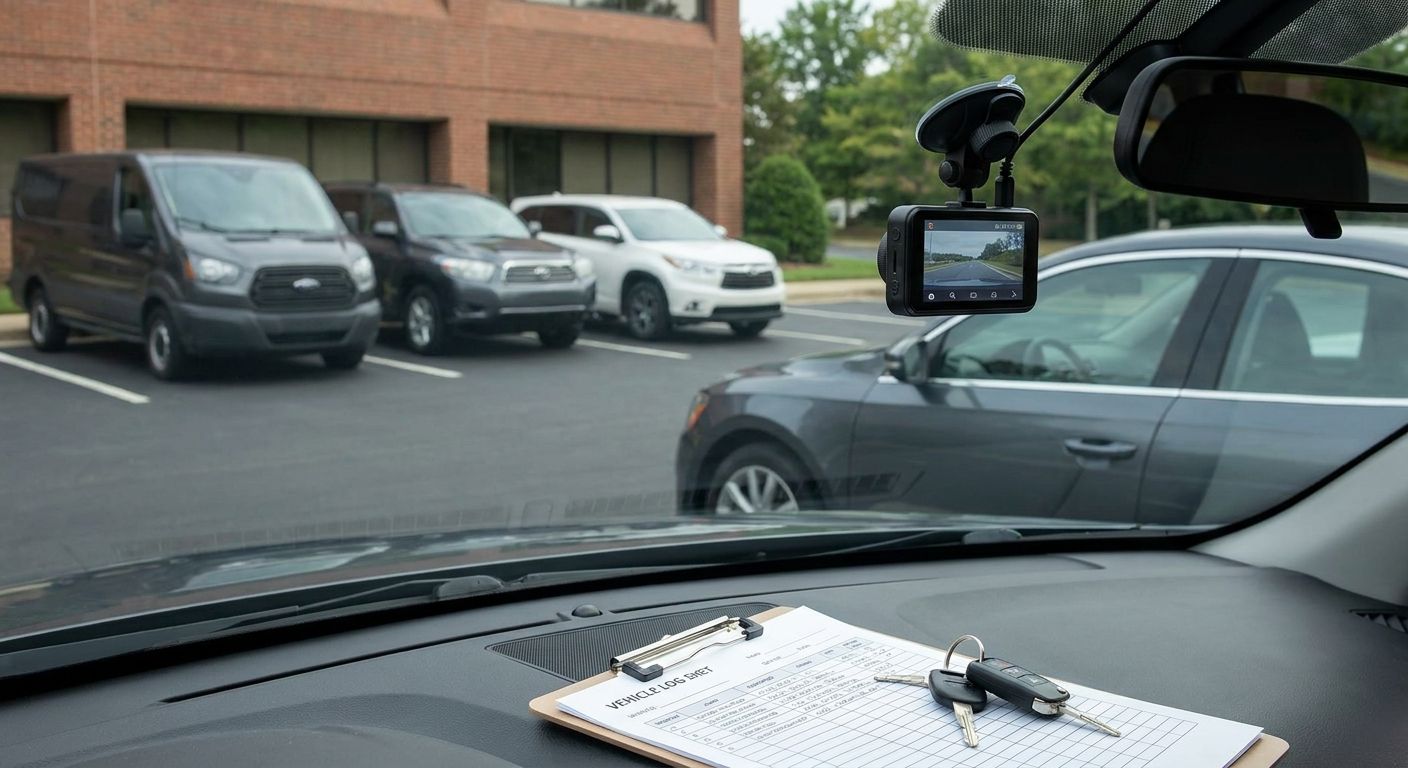
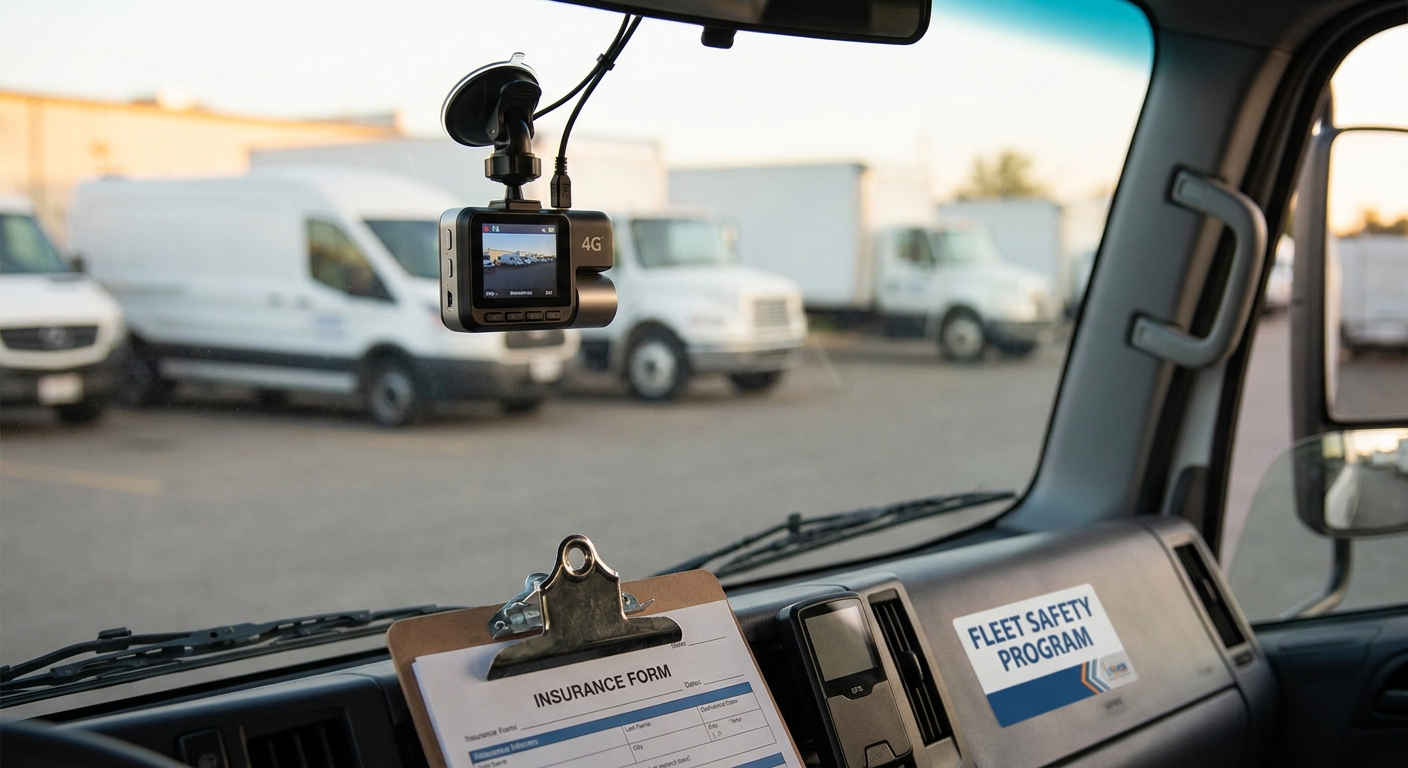
This is the setup that clears the most fleet insurance discount checklists in 2026. It records the road and the cabin simultaneously, streams footage live over 4G, and pins the vehicle's location in real time rather than relying on a memory card someone has to physically retrieve.
For fleets running vans day-to-day, this is the configuration worth checking against the best dash cams for van fleets breakdown before you commit to a supplier. Verdict: Buy.
2. Thatcham S7 tracker plus dash cam — the theft deterrent
At £198, the Thatcham S7 tracker is the entry point into insurer-recognised telematics. It's a tracking-only device — no remote immobilisation — but it's still enough to satisfy many discount schemes when paired with dash cam footage for the driving-behaviour side of the equation.
Fleets that need this specifically for passenger-carrying or high-turnover vehicles, like taxi operators, should look at the 4G dash cams for taxi and private hire fleets setup, since insurers in that segment ask for video evidence more aggressively than standard van cover. Verdict: Buy.
3. Thatcham S5 Plus tracker plus dash cam — the high-value asset shield
At £548, the Thatcham S5 Plus tracker adds remote immobilisation on top of tracking, which is the category insurers reserve their biggest discounts for on premium or high-value vehicles. It costs more than the S7, and for a standard panel van the extra spend rarely pays back fast enough to justify it.
For HGVs, specialist plant, or vehicles worth protecting beyond the standard fleet average, it earns its keep. Verdict: Consider — only for vehicles where theft loss would be expensive enough to matter.
4. Single-channel 4G dash cam with no GPS — the starter that stalls
This setup records the road ahead and uploads over 4G, but skips both the cabin-facing camera and any location data. It looks like a dash cam solution on a spec sheet, and it is one — just not one that satisfies an insurer's full checklist.
Without GPS, there's no way to prove where the vehicle was at the time of an incident, which is the exact gap underwriters flag. Verdict: Hold — fine for basic liability footage, weak for a discount application.
5. SD-card-only dash cam with no live upload — the one that looks the part
This is the camera that gets bought because it's cheap and it's called a "dash cam," full stop. No 4G, no live streaming, footage only retrievable by pulling the card manually after the fact.
Insurers in 2026 increasingly want footage they can request and receive without you driving to a depot to extract a memory card. Verdict: Skip for any fleet chasing an insurance discount — keep it as a personal vehicle option at best.


Comparison table
| Setup | Thatcham rating | Live GPS | Video coverage | Verdict |
|---|---|---|---|---|
| 4G dual-facing dash cam | Optional pairing | Yes | Cabin and road | Buy |
| Thatcham S7 + dash cam | S7 | Yes | Via paired camera | Buy |
| Thatcham S5 Plus + dash cam | S5 Plus | Yes | Via paired camera | Consider |
| Single-channel 4G, no GPS | None | No | Forward only | Hold |
| SD-card-only, no 4G | None | No | Forward only, delayed | Skip |
Where to buy
- Check the Thatcham category before you buy, not after. S5, S5 Plus and S7 are distinct ratings — S5 includes remote immobilisation, S7 is tracking-only — and insurers ask for the specific category, not just "a tracker." Confirm against the Thatcham-approved trackers for high-value fleet vehicles rating breakdown before ordering.
- Get installation done by an approved fitter. A self-fitted or badly positioned dash cam can invalidate the insurer's acceptance of the evidence, even if the hardware itself qualifies.
- Bundle dash cam and tracker orders where you can. Buying them as one package from one supplier avoids gaps in coverage between two separate systems that don't talk to each other.
FAQ
What's the best 4G dash cam for fleet insurance discounts in 2026?
A dual-facing 4G dash cam paired with a Thatcham-rated tracker is the strongest option in 2026, because it covers both live location data and verifiable video evidence. Single-channel or SD-card-only cameras rarely satisfy the same checklist.
Do insurers actually give discounts for fleet dash cams?
Many commercial fleet insurers factor verifiable dash cam and telematics evidence into premium calculations. The exact terms vary by insurer, so check your policy's telematics or dash cam clause directly.
Is a Thatcham-approved tracker better than a dash cam alone?
A Thatcham tracker and a dash cam solve different problems — location and theft recovery versus incident evidence — and insurers generally want both, not one or the other.
How much does a Thatcham S7 tracker cost?
A Thatcham S7 tracker costs £198 in 2026. It covers tracking only, without remote immobilisation.
How much does a Thatcham S5 Plus tracker cost?
A Thatcham S5 Plus tracker costs £548 in 2026, and it includes remote immobilisation on top of live tracking, which suits higher-value fleet vehicles.
What's the difference between Thatcham S5 and S7?
S5 includes remote immobilisation alongside tracking, while S7 is a tracking-only category. S5 typically carries a higher price and a stronger security profile for insurers.
Do I need 4G connectivity or is Wi-Fi-only dash cam footage enough?
4G connectivity lets footage upload and location data stream in real time, which is what insurers increasingly ask for. Wi-Fi-only or SD-card-only cameras require manual retrieval, which weakens the evidence trail for a discount claim.
Can one dash cam qualify a whole fleet for a discount?
No — insurers assess coverage across the fleet, not one vehicle. A single camera on one van won't move the premium on vehicles that remain unequipped.
One last thing
The gap between a Hold and a Buy verdict here isn't the camera lens quality — it's whether the footage and location data reach the insurer without a manual step in between. Fleets that skip live upload because it costs more upfront usually end up re-buying hardware within a year once a claim gets rejected for unverifiable evidence.