
An HGV operator licence doesn't run on a fixed points tally the way a driving licence does — it runs on your DVSA compliance record, and a rising risk profile is what pulls an operator in front of a Traffic Commissioner. Reducing HGV operator licence penalty points in 2026 means driving down prohibition notices, MOT failures and driver hours infringements before DVSA decides to look closer.
- Reducing HGV operator licence penalty points means cutting prohibition notices and OCRS risk, not chasing a points total.
- Roadworthiness defects and tachograph errors drive most of the DVSA risk score for operators in 2026.
- DVSA Earned Recognition status removes stable operators from random roadside targeting once KPIs hold steady.
- A Traffic Commissioner warning letter needs a response inside the stated deadline or it escalates to public inquiry.
- Vehicle tracking and defect-reporting data catch problems before DVSA finds them at the roadside.
Why this matters
DVSA scores every operator on the Operator Compliance Risk Score (OCRS), which weighs two things separately: roadworthiness (defects, prohibitions, MOT/annual test failures) and traffic compliance (drivers' hours, tachograph records, licensing). A worsening band on either side means more roadside stops, more site visits, and eventually a letter from the Traffic Commissioner asking why.
Ignore that letter and the next step is a public inquiry, where a Traffic Commissioner can curtail your authorised vehicle numbers, suspend the licence, or revoke it outright. None of that happens overnight in 2026 — it builds from repeated small failures that never get fixed at source. The HGV operator licence compliance requirements that underpin your licence are the same ones DVSA checks against when scoring you, so fixing the requirements fixes the score.
What you'll need
- Access to your DVSA Vehicle Operator Licensing (VOL) account to check current OCRS bands and prohibition history
- Preventative maintenance inspection (PMI) records for every vehicle on the licence
- Tachograph download data covering the last 12 months
- A digital or paper daily walkaround check process, with signed-off defect reports
- A named, contactable Transport Manager who takes ownership of compliance issues
- A vehicle tracking or telematics dashboard to spot patterns before DVSA does
The steps
1. Pull your current DVSA compliance record
Log into VOL and check your OCRS bands on both roadworthiness and traffic. This tells you which side of the licence is actually at risk — fixing tyres won't help if the problem is tachograph infringements. Expected outcome: a clear list of prohibition notices and their causes from the last 12-24 months. Common mistake: assuming both scores move together — they're scored and reviewed independently.
2. Fix the defect that keeps recurring
Run the prohibition history against your maintenance records and find the repeat offender — usually tyres, brakes, lighting or trailer coupling. One defect type causing three or more prohibitions in a year is what triggers closer DVSA attention. Tightening driver defect reporting so drivers log the same fault before it becomes a roadside stop is the single fastest way to bring the roadworthiness score down. Common mistake: treating each prohibition as a one-off instead of a pattern.
3. Make the walkaround check non-negotiable
No vehicle should leave the yard with an outstanding safety-critical defect logged against it. Set the rule that a driver cannot start a job until the defect check is signed off, on paper or through an app, and that any red-flagged item stops the vehicle. Expected outcome: defects get caught in the yard, not at a DVSA checkpoint on the A1.
4. Tighten drivers' hours and tachograph accuracy
Drivers' hours rules cap daily driving at 9 hours, extendable to 10 hours twice a week, with a 56-hour weekly limit and a mandatory 45-minute break after 4.5 hours of driving. Infringements here hit your traffic OCRS score just as hard as a bald tyre hits your roadworthiness score. Download and review tachograph data monthly rather than waiting for an annual audit — infringements caught early are infringements you can correct with a driver conversation instead of a Traffic Commissioner letter.
5. Rebuild your PMI schedule around actual usage
A fixed 6-weekly inspection interval only works if it matches how hard the vehicle is actually run. HGVs doing high mileage or heavy loads need shorter intervals; low-utilisation vehicles can often run longer ones. Common mistake: keeping every vehicle on the same interval regardless of duty cycle, which either wastes inspection capacity or misses developing faults.
6. Apply for DVSA Earned Recognition once your KPIs are stable
Once prohibition rates and MOT first-time pass rates hold steady for a sustained period, Earned Recognition status takes you out of the random roadside targeting pool and replaces it with data-based monitoring. It's not a quick fix — DVSA wants a track record before granting it — but it's the clearest long-term route to fewer roadside interventions.
7. Respond to every Traffic Commissioner communication before the deadline
A warning letter is not a formality — miss the response deadline stated on it and the file moves toward a public inquiry automatically. Assign one person, usually the Transport Manager, to own every DVSA and Traffic Commissioner communication so nothing sits unanswered in a shared inbox.
8. Use tracking and camera data to get ahead of DVSA
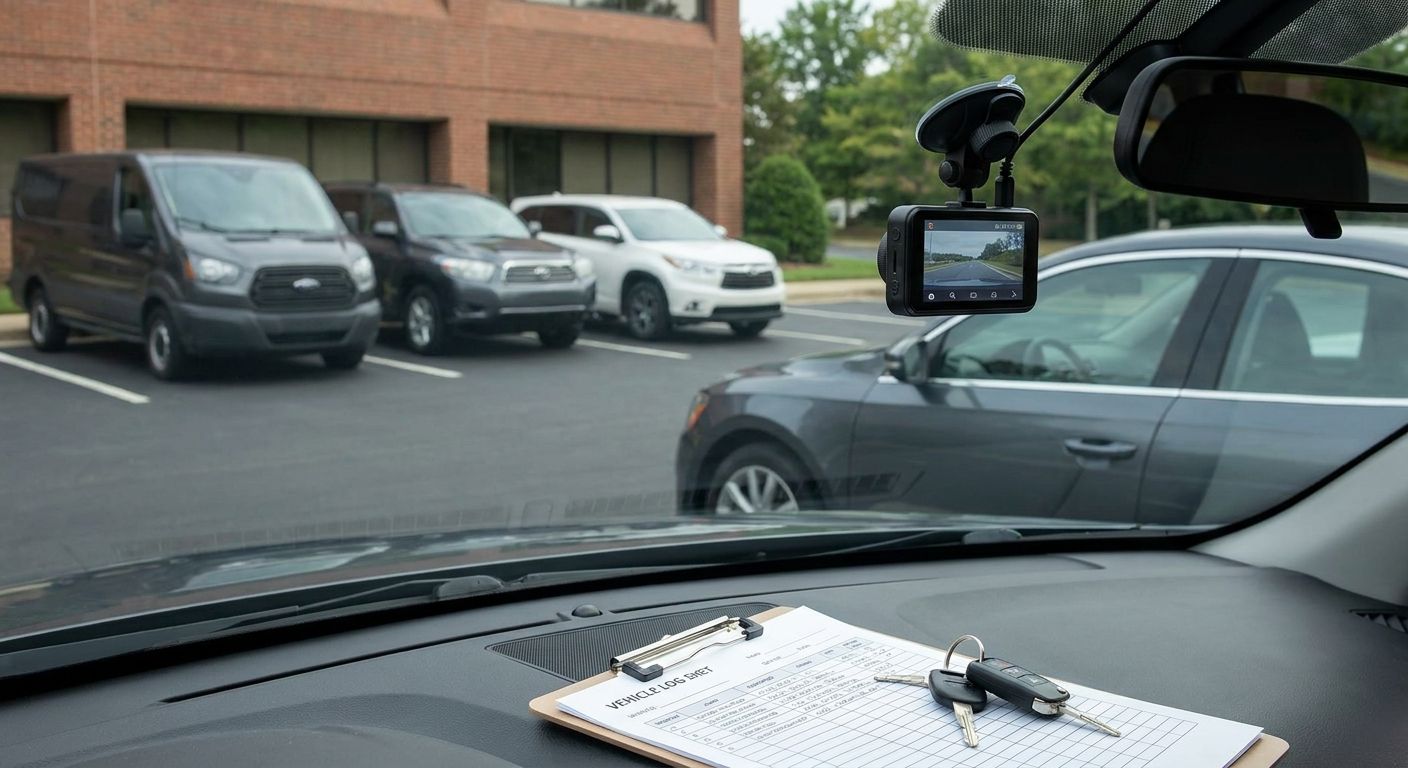
Vehicle tracking data flags harsh braking, speeding and idling patterns that correlate with driver behaviour issues DVSA will eventually notice too. Dash cam and 360-degree camera footage give you evidence to challenge a disputed prohibition or back up a driver's account at an inspection, rather than relying on memory.



Troubleshooting
- Same defect keeps causing prohibitions: check whether it's a maintenance interval problem or a driver reporting gap — if the defect was logged and ignored, the process broke, not the vehicle.
- Tachograph infringements keep appearing despite checks: audit whether the card reader or unit needs calibration before assuming it's driver error.
- MOT/annual test failures are climbing: pre-test at a DVSA-approved facility a week before the booked test to catch faults with time to fix them.
- A warning letter arrived and the deadline is close: respond immediately even with a partial answer and a clear plan — silence is worse than an incomplete response.
- Nobody owns the compliance file: name one Transport Manager as the single point of contact for DVSA and Traffic Commissioner correspondence.
Tools and resources
- VOL (Vehicle Operator Licensing) account for OCRS bands and licence status
- Digital defect reporting to replace paper walkaround sheets
- Tachograph analysis software for monthly infringement reviews
- Vehicle tracking and dash cam data for driver behaviour and dispute evidence
- A documented PMI schedule reviewed against actual vehicle usage in 2026
What to do next
If your operator licence is due a formal check before DVSA does it for you, run through how to prepare for a DVSA earned recognition audit — the same evidence that supports an Earned Recognition application is what a Traffic Commissioner wants to see at public inquiry.
FAQ
How do I reduce HGV operator licence penalty points in 2026?
There's no fixed points total on an operator licence — you reduce risk by cutting prohibition notices, MOT failures and drivers' hours infringements, which is what drives your DVSA OCRS score. Fixing recurring defects and tightening tachograph accuracy has the fastest effect.
What is the OCRS score for HGV operators?
The Operator Compliance Risk Score bands operators as green, amber or red across two separate categories: roadworthiness and traffic compliance. A worsening band on either side increases the chance of roadside stops and DVSA site visits.
What happens if my HGV operator licence gets a public inquiry?
A Traffic Commissioner can curtail your authorised vehicle numbers, suspend the licence, or revoke it entirely at a public inquiry. It's typically the end result of unanswered warning letters or repeated compliance failures, not a first step.
Is DVSA Earned Recognition worth applying for?
Yes, once your prohibition rate and MOT first-time pass rate are stable, because it replaces random roadside targeting with data-based monitoring. DVSA wants a sustained track record before granting it, so it's a medium-term fix, not an immediate one.
What are the drivers' hours limits for HGV drivers?
UK drivers' hours rules cap daily driving at 9 hours, extendable to 10 hours twice a week, with a 56-hour weekly limit and a mandatory 45-minute break after 4.5 hours of driving. Breaching these repeatedly damages the traffic side of your OCRS score.
Can vehicle tracking help with HGV operator licence compliance?
Yes, tracking data flags harsh braking, speeding and idling before those patterns turn into a prohibition notice or driver conduct issue. It also gives evidence to dispute a roadside prohibition you believe was issued unfairly.
How often does DVSA review an operator's compliance record?
DVSA monitors OCRS on a rolling basis, weighting recent prohibitions and infringements more heavily than older ones. There's no fixed annual review date — a cluster of failures in any period can trigger a Traffic Commissioner letter.
What causes most HGV prohibition notices?
Roadworthiness prohibitions most often come from tyres, brakes, lighting and trailer coupling defects picked up at roadside checks or the annual test. Tightening daily walkaround checks catches most of these before DVSA does.
One last thing
The operators that stay out of public inquiry in 2026 aren't the ones with zero defects — they're the ones who fix the same defect once instead of three times. A repeat fault is the single clearest signal DVSA reads as a management failure rather than bad luck, so treat the second occurrence of any prohibition cause as the real deadline, not the fifth.