School minibus operators face a different risk profile from van or HGV fleets: young passengers, tight pickup windows, and parents who want proof their child got to school safely. Vehicle tracking for school minibus operators in 2026 needs to answer safeguarding questions first and cost questions second.
- 4G dash cams with cabin-facing cameras are the safeguarding baseline for school minibus operators in 2026 — buy, don't wait.
- Thatcham S7 trackers cut insurance premiums and give 24/7/365 theft monitoring for minibuses left overnight at depots.
- Geofencing around school gates matters more than raw GPS accuracy for parent reassurance and pickup timing.
- Skip basic GPS-only trackers with no camera if you're running unaccompanied school runs — evidence gaps cost more than the saving.
Why this matters
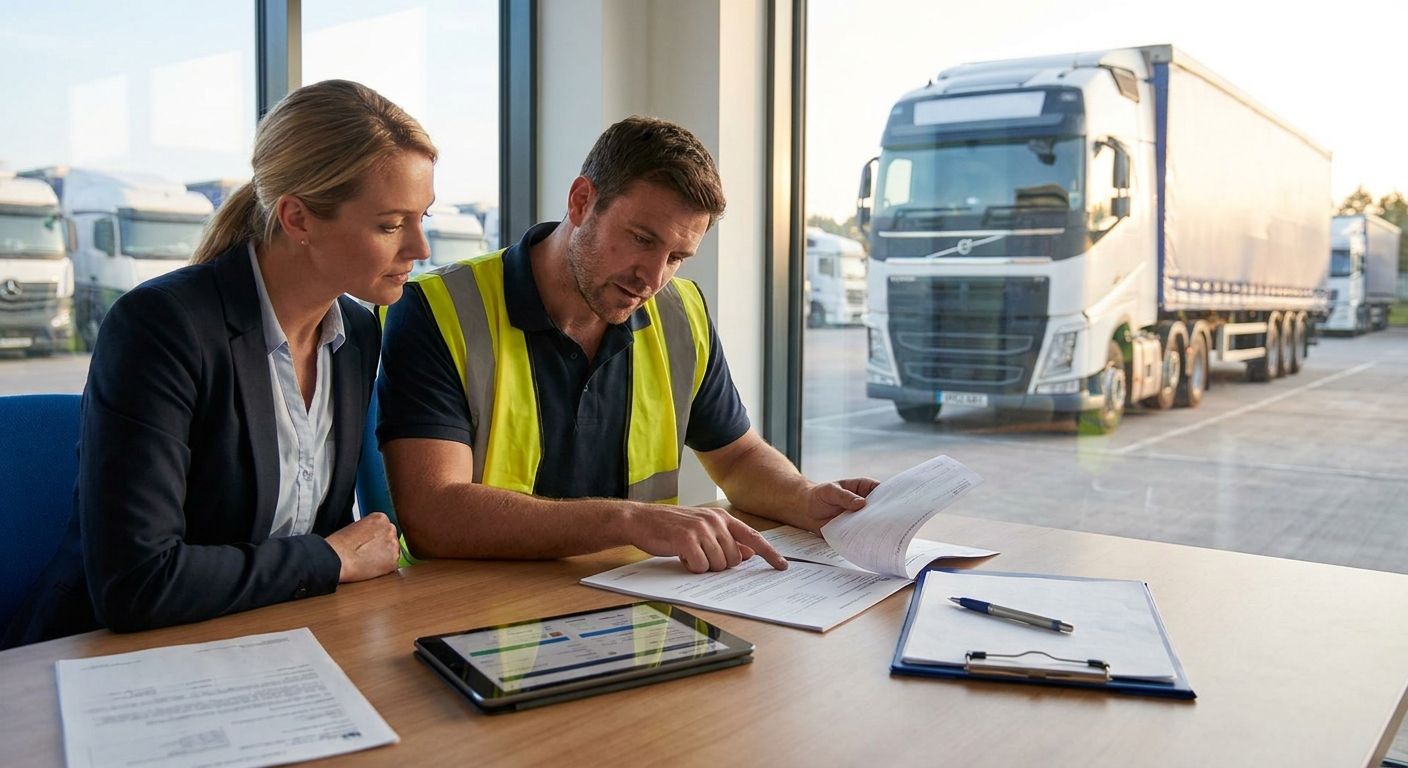
A minibus carrying 12-16 children isn't a delivery van with a different badge on it. Regulators, parents, and insurers all expect a higher standard of proof: where the vehicle was, who was driving, and what happened if something went wrong on route. A fleet tracking platform built for general vans doesn't automatically cover that — you need geofencing tuned to school sites, camera evidence for incident disputes, and driver behaviour data that flags harsh braking near a school gate, not just on a motorway.
Insurers are also tightening terms for passenger-carrying minibuses in 2026, particularly where Section 19 or Section 22 permits are involved and MiDAS-trained drivers are rotated across a small fleet. A Thatcham-rated tracker and dash cam combination is increasingly the difference between a renewable premium and a declined one.
Who this is for
This guide is for school transport coordinators, PTA-run minibus schemes, independent school transport managers, and local authority fleet teams running minibuses for SEN transport, school trips, and after-school clubs. If you're managing anywhere from a single minibus to a mixed fleet of 20+ vehicles including cars and vans, the same buying logic applies — the risk is the passengers, not the vehicle count.
What to look for in vehicle tracking for school minibus operators
Geofencing around schools and pickup points
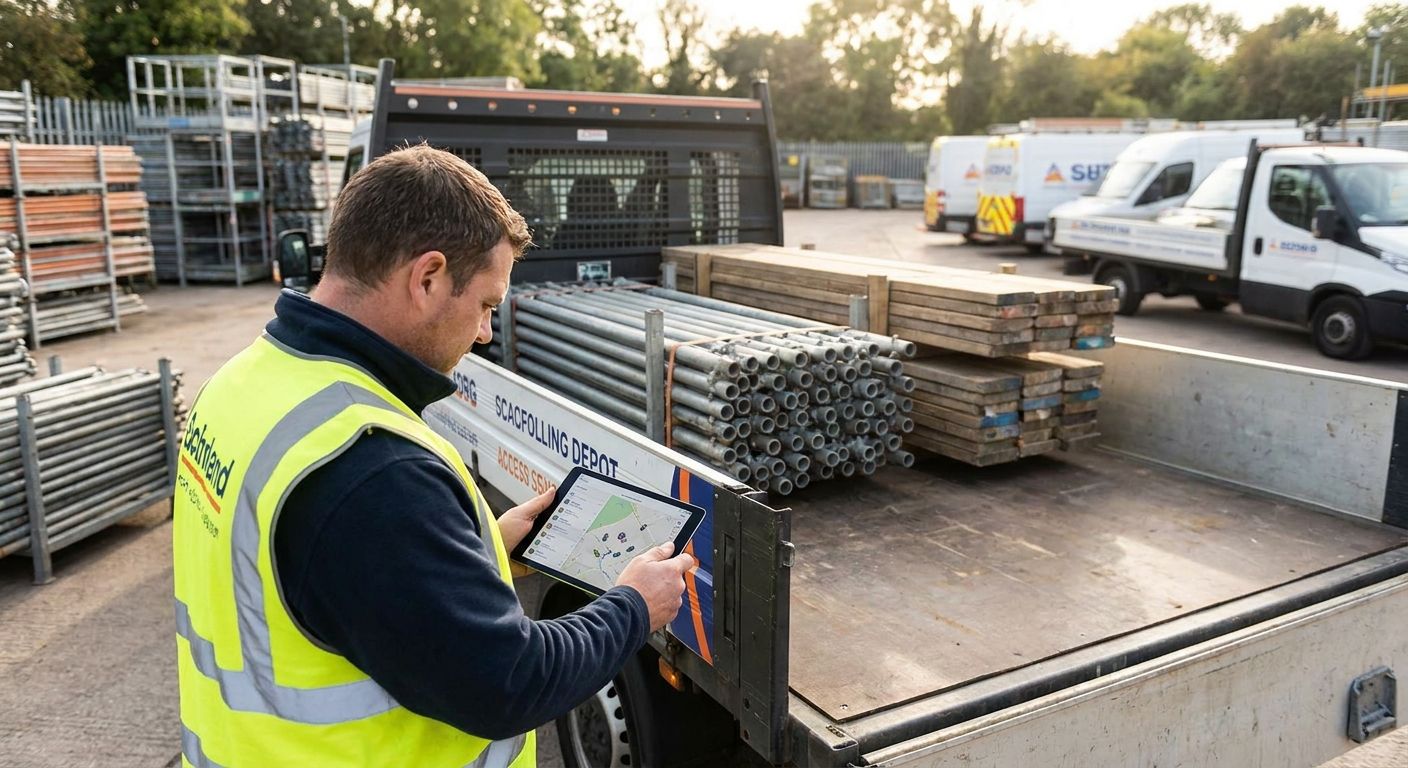
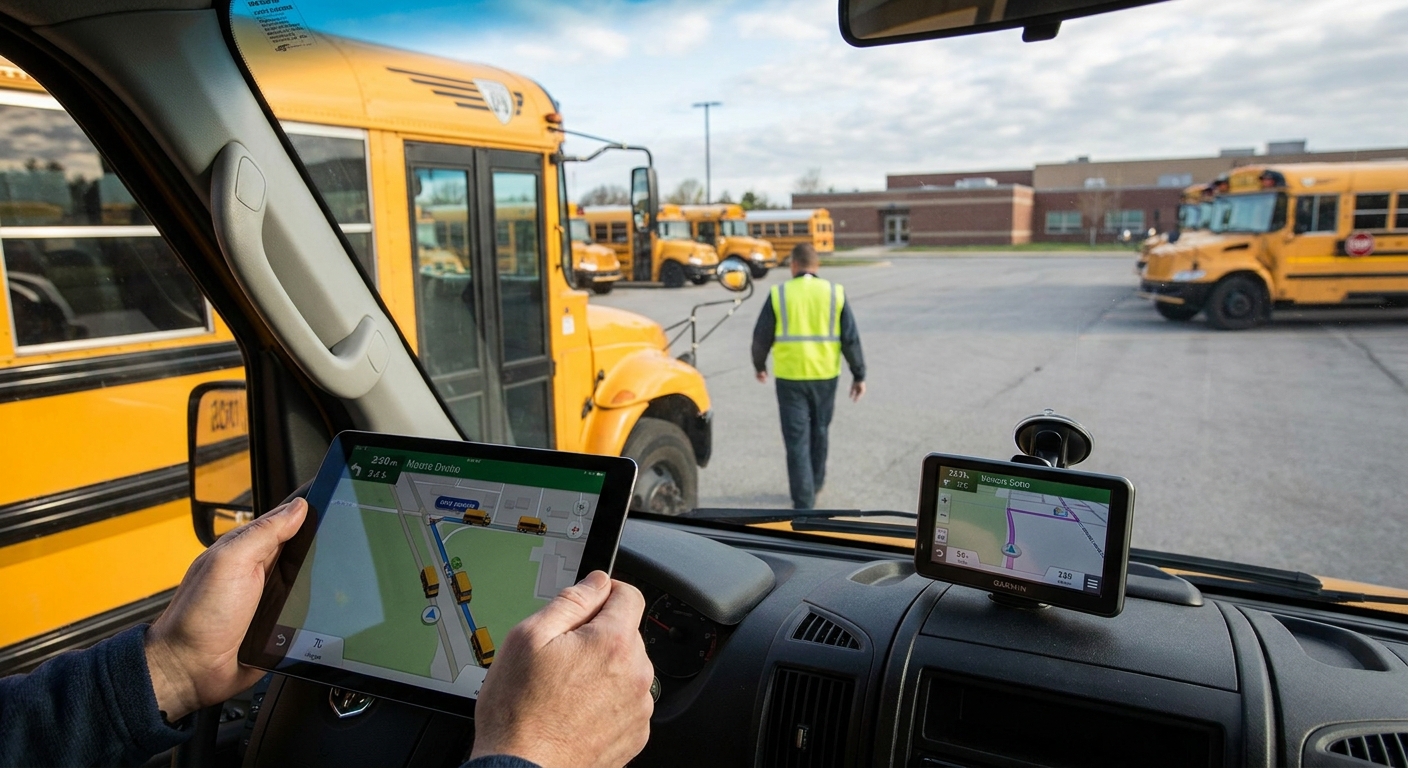
A geofence that triggers an alert the moment a minibus arrives at or leaves a school site gives office staff a real-time answer when a parent calls asking "has the bus left yet?" Generic fleet geofencing built for depots and job sites won't have the granularity for tight urban school gates.
Cabin-facing 4G dash cam footage
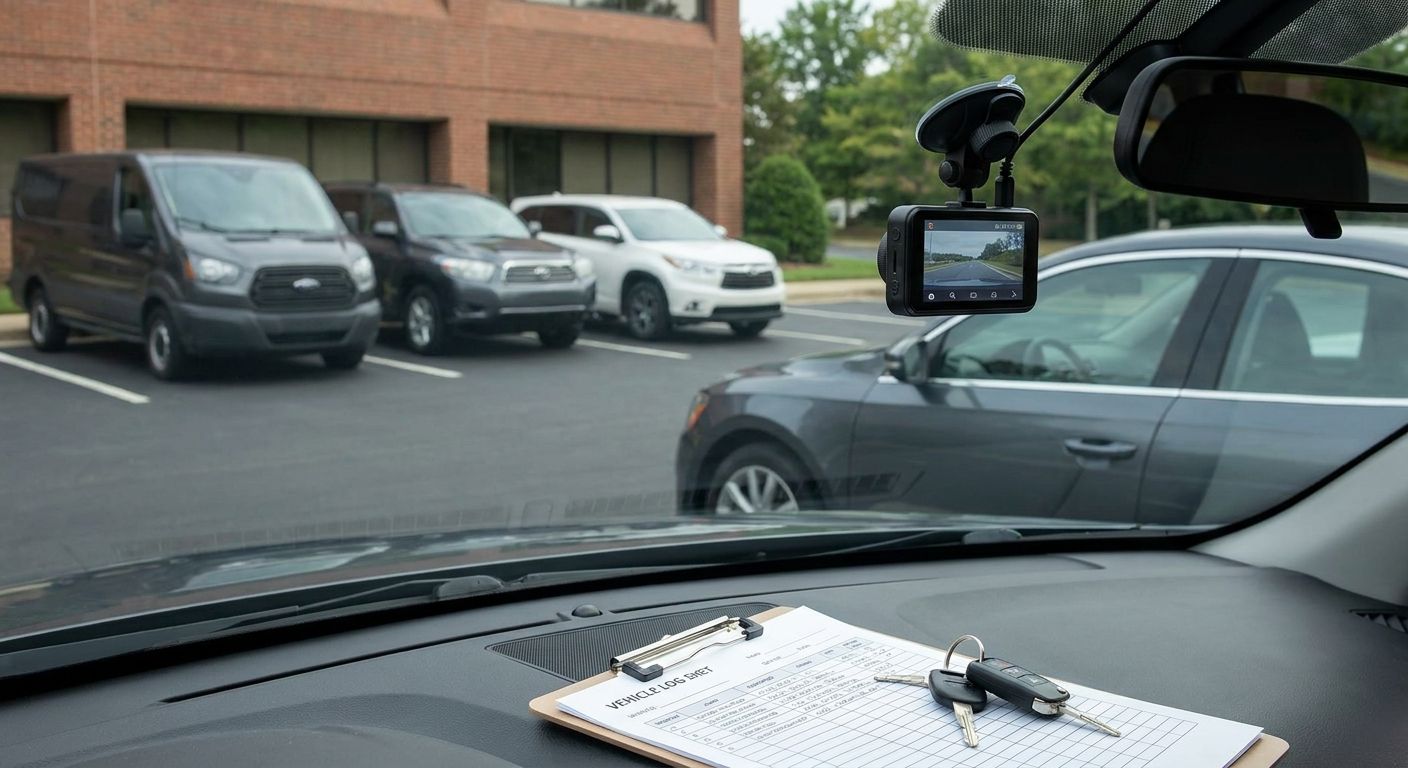
Forward-facing cameras protect against liability claims on the road. Cabin-facing cameras protect against the disputes that actually happen on school runs — a child left unsupervised, a behaviour incident, a parent complaint about a driver. Footage that streams over 4G rather than sitting on an SD card means you can pull it the same day, not after a data recovery request.
Driver behaviour scoring near sensitive routes
Harsh braking and acceleration data matters differently on a school run than on a trunk road. Look for scoring that can be reviewed by route and by driver, so you can retrain before a near-miss becomes an incident report.
Thatcham-approved security rating
Minibuses left overnight at a depot or a school car park are theft targets, and insurers know it. A Thatcham S5 or S7 rated tracker with 24/7/365 monitoring typically brings a measurable premium reduction and satisfies the insurer's tracking mandate outright, rather than leaving you self-certifying a non-approved device.
Lone driver and breakdown alerting
Early-morning and late-evening school runs often mean a single driver on the road before anyone else is in the office. Automated breakdown and panic alerts matter more here than on a daytime delivery round where a manager is a phone call away.
Reporting parents and schools can actually use
A tracking system that only produces fleet-manager-level reports is wasted on a school contract. Look for exportable arrival/departure timestamps you can hand to a headteacher or a local authority auditor without translating the data yourself.
Top picks for school minibus operators
The safeguarding pick — 4G dash cams with cabin view. A 4G-connected dash cam setup with both forward and cabin-facing lenses is the single highest-impact purchase for a minibus operator carrying children in 2026. Footage retrieval over 4G rather than physical SD card removal is the difference between resolving a parent complaint the same afternoon and waiting a week. The same camera logic underpins tracking built for 4G dash cams on taxi and private hire fleets, where passenger safety and incident evidence carry the same weight as on a school minibus. Buy.
The security pick — Thatcham S7 tracker. A Thatcham S7-rated tracker gives you 24/7/365 monitoring and nationwide on-site installation, which matters when a minibus is parked overnight at a school or community centre rather than a secured depot. It's the insurer-recognised route to a lower premium, not a workaround. Buy.
The local authority pick — council-integrated fleet tracking. If your minibuses sit inside a wider local authority fleet alongside refuse trucks, gritters, or pool cars, you want a platform built to handle mixed vehicle types under one dashboard rather than a standalone minibus app. Councils running school transport contracts alongside other services should look at GPS fleet tracking built for local council fleets rather than bolting on a separate consumer-grade tracker. Consider.
The budget pick — GPS-only tracking with no camera. A basic GPS tracker with no camera and no geofence customisation costs less upfront, but it leaves you with zero evidence if a safeguarding complaint or an insurance dispute lands on your desk. For a single minibus doing occasional trips it's tolerable. For anyone running regular unaccompanied school runs, it's a gap you'll regret. Skip.


“If the tracker can't tell you the minibus reached the school gate before you hang up the phone to a parent, it isn't built for the school run.”
What to avoid
- Consumer GPS trackers marketed for cars. They lack fleet-grade geofencing and won't satisfy an insurer's Thatcham requirement, regardless of accuracy claims.
- SD-card-only dash cams. They look identical to 4G units in a product photo, but retrieving footage means physically removing the card and finding a reader — a delay you don't have during a live safeguarding query.
- Platforms with no per-route reporting. Fleet-wide driver scores are useless if you can't isolate the school-run leg from the rest of a driver's day.
Verdict comparison
| Pick | Best for | Key feature | Verdict |
|---|---|---|---|
| 4G dash cam (cabin + forward) | Safeguarding evidence | Same-day 4G footage retrieval | Buy |
| Thatcham S7 tracker | Overnight parking, insurance | 24/7/365 monitoring, £198 | Buy |
| Council-integrated tracking | Mixed local authority fleets | Single dashboard across vehicle types | Consider |
| GPS-only, no camera | Occasional single-minibus trips | Lowest upfront cost | Skip |
FAQ
What's the best vehicle tracking for school minibus operators in 2026?
A 4G dash cam with cabin-facing footage paired with a Thatcham-rated tracker is the strongest combination for school minibus operators in 2026. The camera covers safeguarding and dispute evidence; the tracker covers theft monitoring and insurance compliance.
Do school minibuses need Thatcham-approved trackers?
Not by law, but most fleet insurers ask for Thatcham S5 or S7 approval to qualify for reduced premiums on minibuses. Without it, you're relying on standard cover with no tracking discount.
Is GPS tracking enough, or do I need dash cams too?
GPS alone tells you where the vehicle is, not what happened inside it. For passenger-carrying minibuses, a cabin-facing dash cam adds the evidence layer that GPS location data can't provide.
How much does vehicle tracking cost for a single minibus?
Thatcham-rated trackers for a single vehicle run from roughly £198 to £548 depending on the rating, with 4G dash cams priced separately. Multi-vehicle fleets typically get lower per-unit pricing through a quote.
Can vehicle tracking help with school transport permits?
Tracking data supports compliance reporting for Section 19 and Section 22 permit holders by producing timestamped route and arrival records that local authorities or auditors can request.
Does dash cam footage help with parent complaints?
Yes — cabin-facing footage retrieved over 4G lets you resolve a behaviour or safeguarding complaint the same day, instead of waiting for an SD card to be physically removed and reviewed.
Is vehicle tracking for school minibuses different from van tracking?
The hardware overlaps, but the priorities differ. Minibus operators weight geofencing precision, cabin cameras, and safeguarding reporting higher than route efficiency, which is the main focus for standard van fleets.
One last thing
The detail operators miss most often isn't the tracker spec — it's the geofence radius. A geofence set for a depot (200-300 metres) is too wide for a school gate on a residential street; tighten it to 50-75 metres or you'll get false arrival alerts before the minibus has actually stopped.