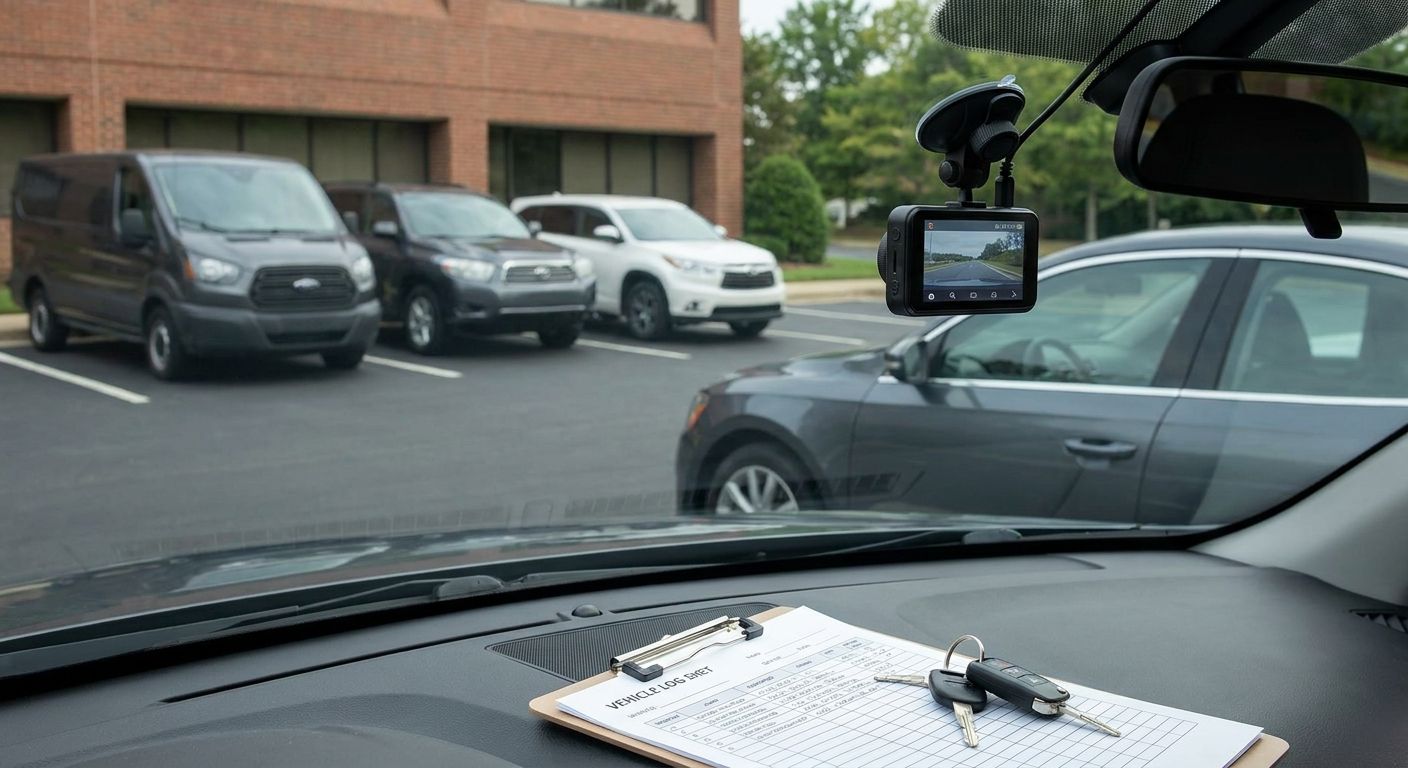

Calculating ROI on fleet management software means comparing what the system costs against what it saves in fuel, accidents, admin hours and insurance premiums over a fixed period. This guide gives you the exact formula fleet managers in the UK are using in 2026, the inputs you need before you run the numbers, and the mistakes that make ROI calculations look worse (or better) than reality.
- ROI on fleet management software = (annual savings minus annual cost) divided by annual cost, times 100.
- Most SME fleets in 2026 recover software costs in 4-9 months once fuel, accident and admin savings are counted - Buy the case, not just the subscription.
- Hardware and installation fees belong in the cost side of the equation, not just the monthly per-vehicle fee - leaving them out inflates the figure.
- Track actual savings against the projection for the first two quarters - a gap over 15% means the rollout needs fixing, not the formula.
Why this matters
A fleet manager who cannot show ROI within the first budget cycle loses the argument for renewal, no matter how much the system actually saved. Crystal Ball sees the same pattern across SME and public sector fleets: the technology works, but the business case gets written badly, using guessed savings instead of measured ones.
Getting the ROI calculation right in 2026 is not optional if you are the one signing off the spend. It is the difference between a five-minute conversation with finance and a quarterly interrogation about why the fleet budget has not moved.
What you'll need
- 12 months of baseline fuel spend, ideally broken down by vehicle or route
- Accident and insurance claims history for the same 12-month window
- The full quoted cost of the fleet management software: subscription, hardware, installation and any training fees
- An hourly rate for the admin time currently spent on manual mileage logs, timesheets or vehicle checks
- Access to your fleet insurer's discount policy for telematics or Thatcham-approved devices
- A spreadsheet or simple ROI calculator - nothing complicated is required
The steps to calculate ROI
1. Define your baseline costs first
You cannot measure savings without knowing what you are saving against. Pull 12 months of fuel spend, insurance premiums and any accident-related costs before the system goes in.
Expected outcome: a single baseline number per vehicle or per fleet that every future comparison gets measured against. Common mistake: using industry averages instead of your own fleet's data - your ROI figure only means something if it is built on your actual numbers.
2. List every real cost of the software, not just the subscription
Monthly per-vehicle fees are the visible cost. Installation, hardware, driver cards and any training time are the hidden ones, and they are front-loaded into month one.
Expected outcome: a true total cost for year one that is usually higher than the subscription price quoted on a sales call. Common mistake: annualising only the subscription fee and forgetting the one-off install cost, which makes month-one ROI look artificially bad.
3. Quantify each savings category separately
Break savings into fuel, accidents, admin time and insurance. Fuel savings from route optimisation and reduced idling typically show up within 60-90 days of rollout. Accident-related savings come from fewer claims and lower excess payments once driver behaviour monitoring is active - see how driver behaviour monitoring cuts accident rates for the mechanics.
Expected outcome: four separate savings lines instead of one vague number. Common mistake: lumping every saving into a single efficiency-gains line - vague categories do not survive a finance review.
4. Run the ROI formula
The formula is: ROI = (Annual savings − Annual cost) ÷ Annual cost × 100. Example: a 25-vehicle SME fleet spending £4,200 a year on fleet management software and saving £2,800 in fuel, £1,900 in reduced admin time and £900 in avoided accident excess has annual savings of £5,600 against a cost of £4,200. That is a 33% ROI in year one.
Expected outcome: a single percentage you can defend in a budget meeting. Common mistake: reporting gross savings without subtracting the software cost, which is not ROI, it is just a savings estimate.
5. Factor in payback period, not just annual ROI
A 33% annual ROI sounds good, but the number that actually matters to a finance director is how many months it takes to break even. Divide total year-one cost by monthly savings to get your payback period. Most SME fleets running fleet management software in 2026 see payback in 4-9 months, depending on fleet size and how quickly driver behaviour changes stick.
Expected outcome: a payback figure in months, which is easier to sell internally than a percentage. Common mistake: only reporting the annual ROI and skipping payback - it is the number decision-makers actually ask for.
6. Track actual results against your projection
Once the system is live, pull real fuel, accident and admin data at 90 and 180 days and compare it to what you projected in step 4. This is also where you will want to confirm the insurance discount has actually been applied - it is not automatic and requires notifying your insurer with your tracker's Thatcham certificate.
Expected outcome: a corrected ROI figure based on measured, not projected, savings. Common mistake: never revisiting the projection after go-live, so the ROI quoted a year later is still the sales estimate, not reality.




Troubleshooting: common ROI calculation mistakes
- ROI looks negative in month one. Hardware and install costs are front-loaded. Recalculate over a full 12 months instead of the first billing cycle.
- Fuel savings aren't showing up. Idling and harsh-braking reductions from telematics typically take 60-90 days to become measurable as driver habits shift.
- The insurance discount never applied. Insurers do not apply telematics or Thatcham discounts automatically - you have to send the certificate and request the review.
- Accident data isn't in the comparison. Pull 12 months of pre-installation claims history; without it you have no baseline to measure the reduction against.
- Admin time savings feel made up. Time an actual manager doing a manual mileage log versus a system-generated report, then multiply the minutes saved by the hourly rate. That is your real number, not a guess.
Tools and resources
- A spreadsheet with four columns: baseline cost, current cost, savings category, monthly variance
- 12 months of fuel card or fuel receipt data
- Your insurer's telematics discount policy document
- Claims history from your existing fleet insurance provider
- If you are rolling out beyond a pilot fleet, the process for scaling matters as much as the ROI maths
What to do next
Once the ROI formula is producing real numbers, the next decision is which system actually fits a fleet your size. Smaller operations should not buy enterprise-grade telematics built for 200-vehicle depots - check fleet management software built for small businesses before signing anything, because the cost side of your ROI equation changes completely depending on which tier you buy.
FAQ
What's the average payback period for fleet management software in 2026?
Most SME fleets in 2026 recover the cost of fleet management software in 4-9 months once fuel, accident and admin savings are counted. Larger fleets with more vehicles per subscription tend to hit payback faster because fixed costs like installation are spread across more units.
Is fleet tracking software worth it for a fleet under 10 vehicles?
Yes, provided the software costs and savings are calculated per vehicle rather than as a fleet-wide average. Small fleets see proportionally larger admin time savings because manual logging is replaced entirely rather than partially.
How much does fleet management software cost per vehicle in 2026?
Costs vary by provider, vehicle type and hardware tier, so get a quote based on your fleet mix rather than a headline figure. Include installation and any driver card fees in the total, not just the advertised monthly rate.
Does fleet tracking reduce insurance premiums?
It can, but only if you notify your insurer and provide proof of a Thatcham-approved device - the discount is not applied automatically. Ask your insurer directly what discount tier applies to your specific tracker before including it in your ROI projection.
What's the ROI formula for fleet management software?
ROI equals annual savings minus annual cost, divided by annual cost, multiplied by 100. Run the calculation over a full 12 months rather than the first quarter, since installation costs are front-loaded and distort short-term figures.
How long before fuel savings show up after installing telematics?
Fuel savings from route optimisation and reduced idling typically become measurable within 60-90 days of go-live. The delay reflects the time it takes drivers to adjust behaviour once monitoring and feedback are active.
Can dash cams improve ROI beyond fuel and accident savings?
Yes, 4G dash cams add ROI through faster liability resolution on claims and reduced fraudulent third-party claims, which shortens the time and cost of settling an incident. That savings category is separate from the fuel and accident-rate line items and should be tracked on its own.
Should ROI include driver time savings?
Yes - admin time spent on manual mileage logs, timesheets and vehicle checks is a real cost and should be converted to an hourly rate and included as a savings category. Skipping it understates the true ROI of the system.
One last thing
The single biggest gap between a projected ROI and a real one is not fuel, it is the insurance discount fleet managers forget to claim. A Thatcham-certified tracker does not lower a premium on its own - somebody has to send the certificate to the insurer and ask for the review, and that step gets skipped more often than any other line in the calculation.