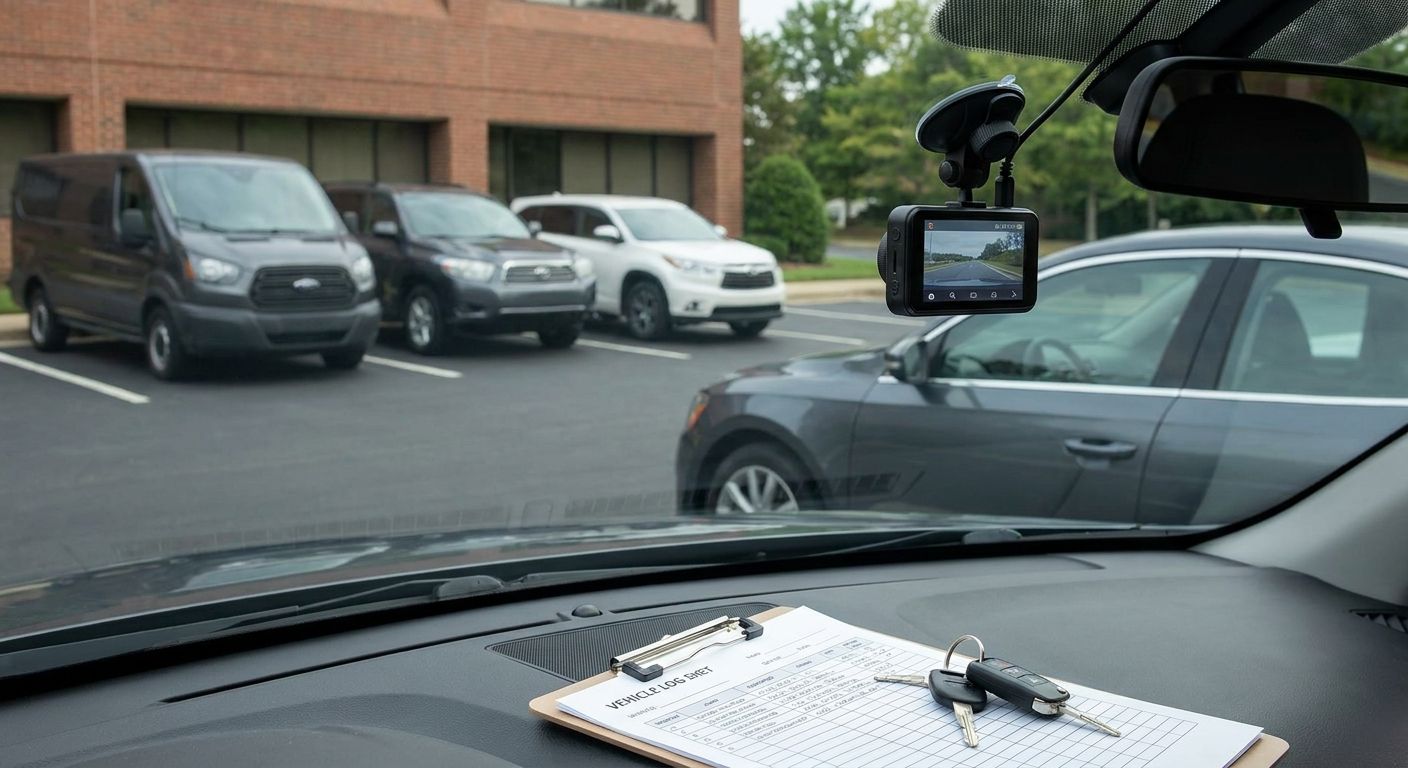

Driver CPC lapses don't show up as a single big incident — they show up as a driver who can't legally be on the road on a Tuesday morning, and a fleet manager who finds out the same day. Fleet management software closes that gap by turning training deadlines and driver records into something you can see before it becomes a problem.
- Driver CPC training compliance software should flag expiring Driver Qualification Cards before the 5-year renewal deadline, not after.
- Crystal Ball's driver identification and defect reporting tools build the audit trail DVSA and insurers ask for.
- Spreadsheet tracking fails past 15-20 HGV drivers — the picks below assume you're already past that point in 2026.
- The best setups pair driver ID verification with hours monitoring so CPC status and driving hours sit in one place.
Why this matters
Driver CPC (Certificate of Professional Competence) applies to most drivers of vehicles over 3.5 tonnes and buses or coaches with 9+ seats used professionally. The rule is fixed: 35 hours of periodic training every 5 years, delivered in blocks of at least 7 hours, tracked through the Driver Qualification Card (DQC).
Miss the deadline and a driver can't legally drive professionally until the training is topped up. For an HGV operator that means a van or lorry sitting idle, a route reshuffled at short notice, or worse — a DVSA roadside check that flags an expired DQC and puts the operator licence under review.
Fleet management software for driver hours compliance covers the tachograph side of this. Driver CPC training compliance software is the layer that sits alongside it — tracking who's trained, who's due, and who's already over the line, in one dashboard instead of a folder of certificates.
Who this is for
This guide is for fleet managers and transport managers running HGV, PCV, or mixed van-and-truck fleets in 2026 who are responsible for keeping drivers legally qualified and the operator licence clean. If you're managing fewer than 10 professional drivers, a spreadsheet and calendar reminders might still work. Past that, the manual system breaks the first time someone's away on leave when a renewal is due.
What to look for in driver CPC training compliance software
Driver identification tied to every trip
Software that can't confirm which driver was behind the wheel can't tell you whose CPC clock is running down. Driver ID hardware paired with your tracking system removes the guesswork and ties every journey to a named, qualified driver — which matters as much for insurance claims as for training records.
Automated expiry alerts, not annual reviews
A system that only surfaces CPC status once a year during a compliance review is a system that finds problems too late. Look for alerts set 90, 60, and 30 days out from a DQC renewal date, so there's time to book training rather than scramble for it.
Defect reporting with a timestamped audit trail
CPC compliance doesn't exist in isolation — a DVSA audit looks at driver qualifications alongside vehicle defect records and maintenance history. Digital defect reporting that timestamps every check gives you one clean file to hand over instead of three different paper trails.
Reporting built for O-licence and earned recognition audits
If your operator licence is under review, or you're working toward DVSA Earned Recognition, the software needs to export driver records in a format an auditor can actually use. A system that can only show data on-screen forces you to rebuild reports manually before every audit.
Scales without a re-platform
A setup that works for 8 vehicles and falls over at 40 costs you twice — once to buy it, once to replace it. Confirm the platform's reporting and alerting hold up as driver numbers grow, not just the tracking hardware.

Top picks for driver CPC training compliance
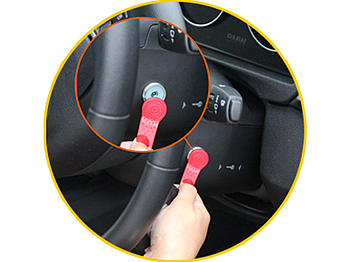
Driver ID — the identity check. Hardware-linked driver verification means every trip is attributed to a named, qualified driver rather than a vehicle. That one data point is what lets any other CPC tracking work at all. Buy.
Driver hours compliance software — the hours cross-check. Fleet management software for driver hours compliance tracks tachograph hours alongside driving patterns, which flags drivers approaching both hours limits and CPC deadlines in the same view. Useful for HGV operators running tight schedules. Buy.
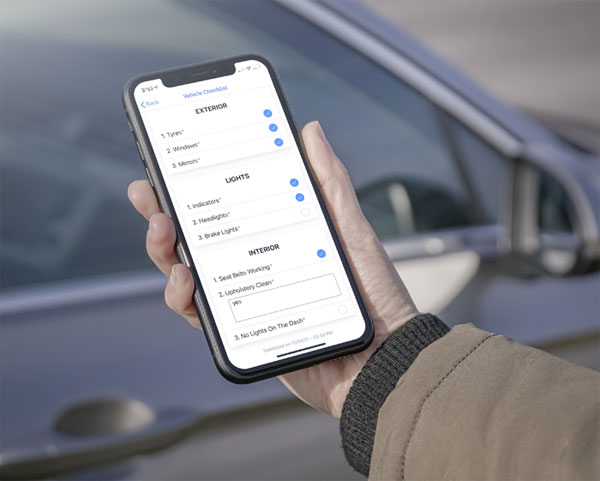
Digital defect reporting — the audit trail. Driver defect reporting for fleet compliance turns paper walkaround checks into timestamped digital records, which sit next to CPC records when DVSA or an insurer asks for evidence. Buy.
Operator licence compliance framework — the bigger picture. How to meet HGV operator licence compliance requirements covers where CPC training fits against the rest of O-licence obligations — maintenance, tachographs, driver hours. Read this before you buy any single tool. Consider.
Driver Behaviour monitoring — the wildcard. Not built for CPC specifically, but pairing behaviour scores with qualification data gives you a fuller risk picture per driver — useful when deciding who needs refresher training sooner than the 5-year deadline forces. Consider.
What to avoid
- Generic e-learning-only platforms. They deliver the 35 hours of training but don't talk to your fleet software, so you're still manually cross-checking DQC expiry dates against a separate spreadsheet.
- Tracking systems with no driver ID layer. Vehicle-only tracking tells you where the van went, not who was driving it — which makes CPC compliance impossible to verify against actual trips.
- Annual paper audits. A once-a-year manual review of certificates catches problems months after a driver's DQC has already expired, not before.
Verdict comparison
| Tool | Best for | Driver ID check | Automated alerts | Verdict |
|---|---|---|---|---|
| Driver ID | Confirming who's driving | Yes | No | Buy |
| Driver hours compliance software | HGV schedule cross-checks | Partial | Yes | Buy |
| Digital defect reporting | Audit trail evidence | No | No | Buy |
| Operator licence framework | Overall O-licence strategy | No | No | Consider |
| Driver Behaviour monitoring | Risk-based training priority | No | No | Consider |
FAQ
What is driver CPC training compliance software?
It's fleet management software that tracks Driver Qualification Card status, training hours, and renewal deadlines alongside vehicle and driver identification data. It replaces manual certificate tracking with automated alerts and audit-ready reporting.
How many hours of Driver CPC training are required?
Professional HGV and PCV drivers need 35 hours of periodic training every 5 years, delivered in blocks of at least 7 hours. The requirement is set by DVSA and applies to drivers covered by the EU/GB Driver CPC scheme.
Does fleet tracking software track Driver CPC hours directly?
Most vehicle tracking systems don't record CPC training hours themselves, but they can flag driver identity and hours worked, which supports the compliance picture alongside a dedicated training record. Pairing driver ID with defect reporting closes most of the gap.
What happens if a driver's CPC lapses?
A driver with an expired DQC can't legally drive professionally until they complete enough training hours to renew it. For an operator, this can mean a vehicle standing idle and increased scrutiny during a DVSA roadside check or audit.
Is Driver CPC the same as an operator's licence (O-licence)?
No. Driver CPC qualifies the individual driver; the O-licence authorises the operator to run commercial vehicles. Both are checked during DVSA compliance reviews and Earned Recognition audits.
How much does driver CPC compliance software cost in 2026?
Costs vary by fleet size and whether you're adding driver ID hardware, tracking, or reporting tools on top of an existing telematics system. Check current pricing directly against your fleet's vehicle count and feature needs.
Can small fleets manage Driver CPC compliance without software?
Fleets under roughly 10 professional drivers can often manage with spreadsheets and calendar reminders. Past that size, manual tracking misses renewals often enough that automated alerts pay for themselves.
One last thing
The DQC renewal clock doesn't pause for staff turnover — a driver who joins mid-cycle carries their existing 5-year deadline with them, and if their previous employer wasn't tracking it, neither are you until you check. Verify DQC expiry on day one of onboarding, not during the next scheduled review.