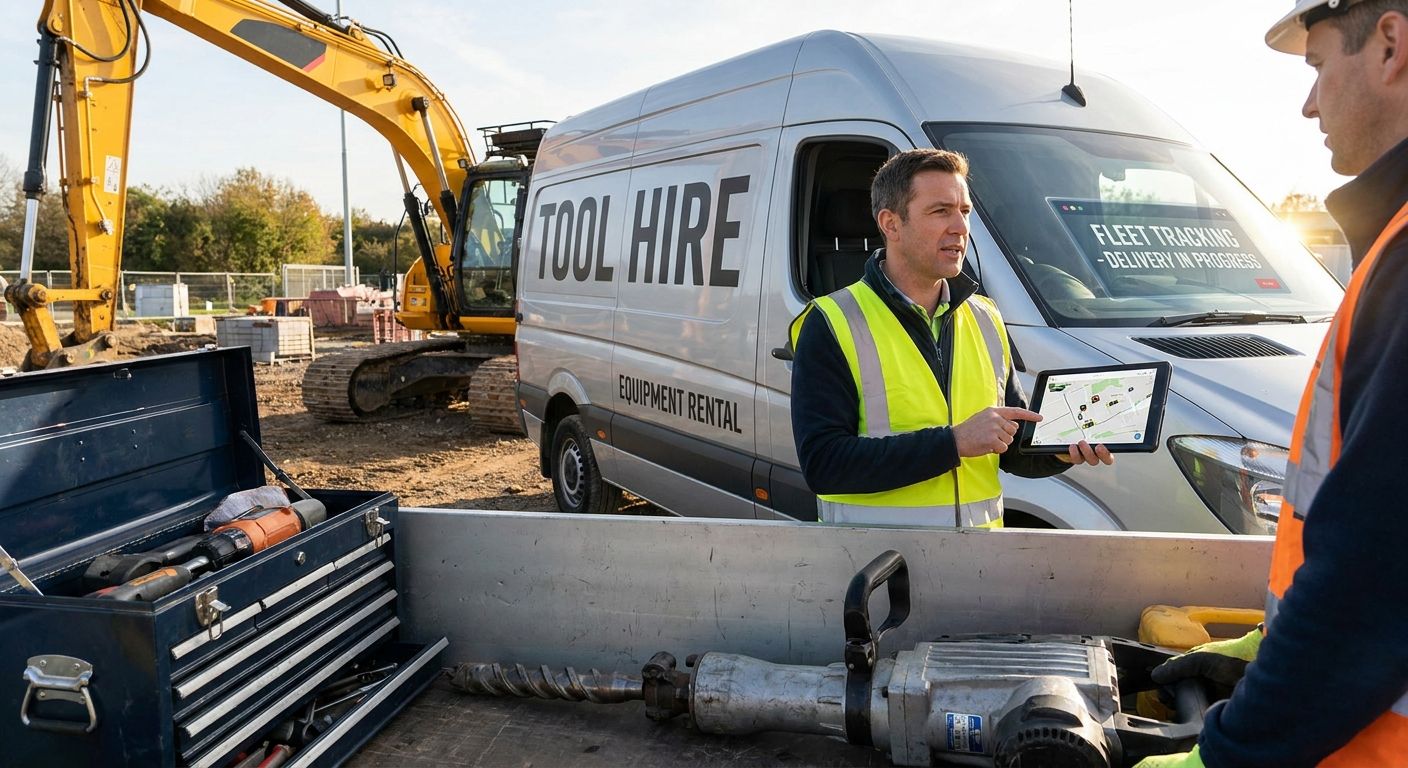
Tool hire and equipment rental delivery runs on vans that leave the depot loaded with kit worth more than the vehicle itself, then scatter across multiple job sites in a single day. Fleet tracking tool hire delivery operations need has to cover the van, the driver, and the tools riding in the back — most systems only do the first one.
- Crystal Ball's van tracking covers the vehicle; asset-level GPS trackers cover the tools riding inside it — hire fleets need both.
- Thatcham S7 trackers start at £198 and cut theft risk on vans carrying high-value plant. Buy.
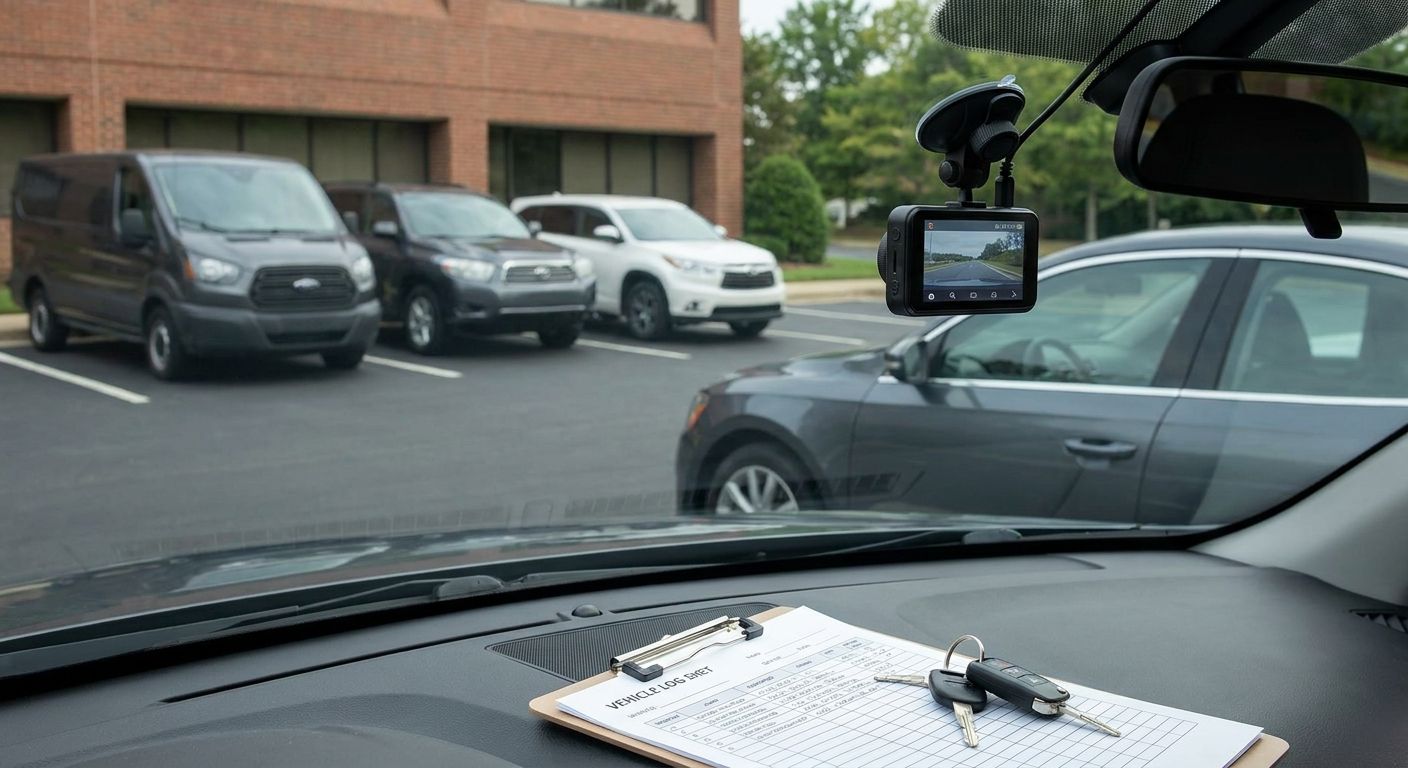
- 4G dash cams settle damage disputes on multi-drop delivery days where 'it arrived broken' claims are common. Consider.
- Bluetooth tool tags without live cellular tracking only show a last-known ping, not a live location. Skip for commercial fleets.
- Fleet tracking for tool hire and equipment rental delivery pays off fastest on fleets running five or more daily multi-drop routes in 2026.
Why this matters
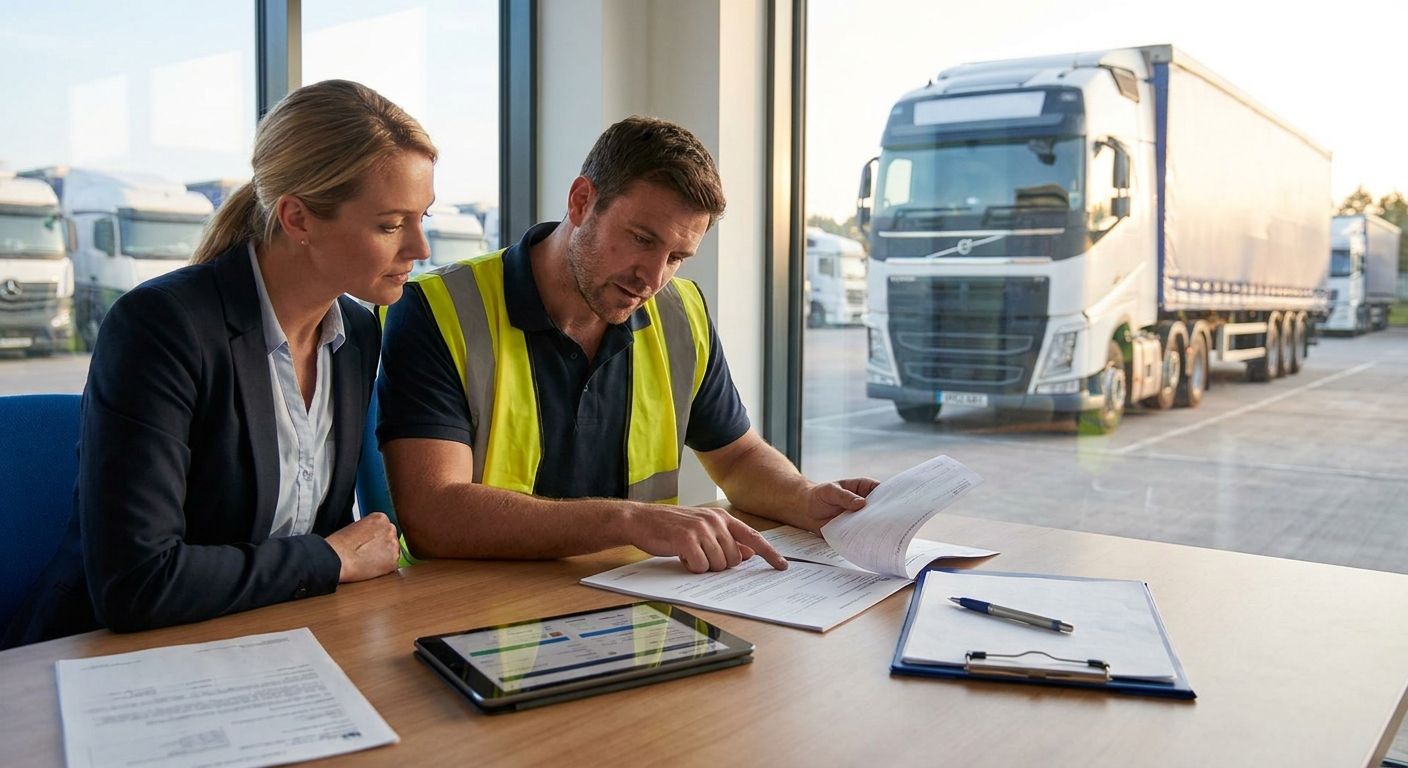
A tool hire delivery van isn't a normal commercial vehicle. It's a mobile warehouse that stops at unattended sites, hands equipment to people the driver has never met, and drives off before anyone checks the load properly. In 2026, insurers and hire firms both know this pattern attracts theft, damage disputes, and "it never arrived" claims that basic vehicle tracking doesn't solve on its own.
Standard fleet tracking answers "where's the van." Tool hire and equipment rental delivery needs answers to "where's the excavator we loaded this morning" and "did the driver actually hand over the breaker on-site." That gap is where most hire operators lose money without realising it.
Who this is for
This guide is built for owners and fleet managers at tool hire, plant hire, and equipment rental businesses running their own delivery vans rather than relying on third-party couriers. If your fleet does multi-drop delivery and collection rounds, carries plant or power tools worth more than a few thousand pounds per load, and deals with damage or non-return disputes on a regular basis, this covers what to buy and what to skip. It's less relevant if you run a single van doing local drop-offs with no history of loss or dispute — in that case, core van tracking alone will cover most of the risk.
What to look for in fleet tracking for tool hire and equipment rental delivery
Live location and geofencing per job site
A hire delivery driver visits several sites a day, often unattended ones where kit sits outside a locked building for hours. Geofencing that alerts you the moment a van — or a tracked asset — leaves a drawn zone outside scheduled hours turns a theft into a same-day recovery instead of a write-off.
Asset-level tracking for tools and plant, not just the van
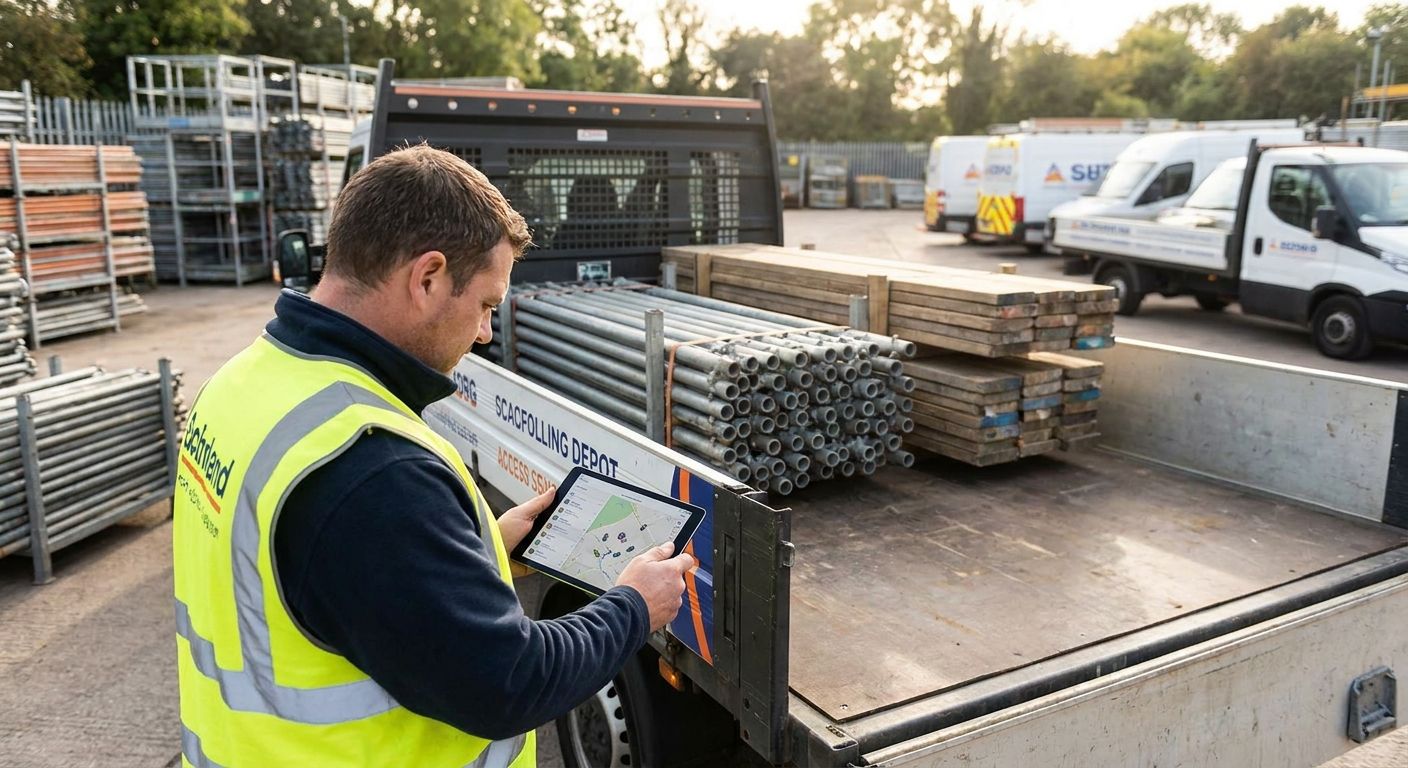
Tracking the vehicle tells you nothing once the doors open and the equipment is unloaded onto a site. Hire fleets carrying diggers, generators, or compressors need trackers fitted to the assets themselves, separate from the van's own GPS unit.
Driver behaviour and route data across multi-drop days
Multi-drop rounds are where fuel and time leak out of a hire business. Harsh braking, excess idling between drops, and inefficient routing all show up in driver behaviour data and are fixable once you can see them.
4G dash cam evidence for damage and delivery disputes
Hire delivery attracts a specific dispute pattern: "the equipment arrived damaged" or "nothing was delivered at all." Timestamped 4G dash cam footage from the moment of drop-off settles these arguments in minutes instead of days of back-and-forth.
Thatcham-approved security to protect insurance premiums
Vans loaded with resaleable plant and power tools are a theft target, and insurers price that risk into premiums. A Thatcham-approved tracker is often the difference between a standard premium and a loaded one on a hire delivery fleet.
Scalability as the hire fleet grows
Most tool hire operators start with two or three vans and expand fast once demand proves out. Whatever system you pick in 2026 needs to onboard vehicle number ten as easily as vehicle number one, without a full software swap.
Top picks for tool hire and equipment rental delivery fleets
The essential pick: core van tracking
Every tool hire delivery fleet needs live vehicle location and route history before anything else. Van tracking built for rental-style fleets covers the baseline: live location, geofence alerts, and route history across every van doing daily drops. A Thatcham S7 tracker for this tier starts at £198 installed. Verdict: Buy.
The one most hire firms skip: asset-level tracking
The van gets tracked; the £15,000 excavator riding in the back doesn't. GPS trackers built for construction plant and equipment close that gap, giving each high-value asset its own location feed independent of the vehicle carrying it. For any hire firm moving plant rather than just hand tools, this is the piece that actually prevents write-offs. Verdict: Buy.
The one for multi-depot operators: cross-site asset tracking
Once a hire business runs from more than one depot, or equipment moves between customer sites before coming back, tracking needs to follow the asset across locations, not just within one yard. Tracking trailers and plant across multiple sites is built for exactly this handoff problem. Verdict: Consider if you operate more than one depot or regularly relocate plant between jobs.
The wildcard: combined hire and haulage setups
Some tool hire operators also run haulage or skip delivery on the side, and the tracking needs overlap more than expected — heavy loads, multi-stop routes, and site access restrictions. Fleet tracking for skip hire and haulage operators is worth reviewing if your delivery fleet mixes hire drops with haulage work. Verdict: Consider for mixed operations; Skip if delivery is purely tool and equipment drop-off.


What to avoid
- Consumer Bluetooth tags on tools. They only report a last-known ping when a paired phone passes nearby — no live cellular location, no geofence alert, no use once the van is out of range.
- Plug-in OBD trackers as the only security layer. They unplug in seconds and give a thief a five-second job to kill the signal on a van worth stopping for.
- Long lock-in contracts sized for the wrong fleet. A system priced and built for two vans rarely scales cleanly to fifteen without a forced re-platform — check onboarding cost before signing, not after van number eleven arrives.
Verdict comparison
| Setup | Tracks | Best for | Verdict |
|---|---|---|---|
| Core van tracking | Vehicle location, routes, geofences | Every tool hire delivery fleet | Buy |
| Asset-level plant tracking | Individual tools, plant, trailers | Fleets carrying high-value kit | Buy |
| 4G dash cam | Drop-off footage, damage disputes | Multi-drop fleets with claim risk | Consider |
| Cross-site asset tracking | Plant moving between depots/sites | Multi-depot hire operators | Consider |
| Consumer Bluetooth tag | Last known ping only | Nothing at commercial scale | Skip |
FAQ
What's the best fleet tracking for tool hire and equipment rental delivery in 2026?
A combination of core van tracking plus asset-level GPS on the tools or plant riding inside the van is the standard setup for 2026. Vehicle-only tracking misses the equipment once it's unloaded on-site, which is where most hire disputes and losses happen.
Is asset tracking necessary if the van already has a tracker?
Yes, if the equipment carried is worth more than the van itself. Vehicle tracking stops being useful the moment the doors open and the tool or plant item leaves the vehicle, which is exactly when hire equipment goes missing.
How much does a Thatcham-approved tracker cost?
Thatcham-approved trackers for hire delivery vans start around £198 installed for an S7-rated device, rising toward £548 for higher S5 Plus specifications. Cost depends on the security category and monitoring level required by your insurer.
Can fleet tracking reduce fleet insurance premiums for hire fleets?
Thatcham-approved tracking is one of the recognised ways insurers reduce premiums on higher-theft-risk fleets. Hire delivery vans carrying resaleable equipment typically sit in a higher risk category, so the discount potential is larger than on a standard van fleet.
Do 4G dash cams help with damage disputes on hired equipment?
Yes, timestamped footage from the drop-off moment settles most 'arrived damaged' or 'never delivered' disputes without extended back-and-forth. This matters more for hire delivery than most fleet types because disputes over condition and receipt are routine.
How many vans need tracking before it's worth full telematics software?
There's no fixed threshold, but multi-drop hire fleets typically see value from three vans upward once route inefficiency and asset loss start compounding daily. Below that, core van tracking alone usually covers the risk.
Is GPS tracking legal for tracking hired tools and equipment?
Tracking business-owned vehicles and assets is standard practice in UK fleet operations, provided drivers are informed it's in place. Tracking a customer's own property after hire without their knowledge raises separate consent questions and should be handled through hire terms, not covert tracking.
What happens if a van leaves a geofenced job site outside scheduled hours?
A properly configured geofence sends an immediate alert to the fleet manager the moment the vehicle or tracked asset crosses the boundary outside its scheduled window. That alert is what turns an overnight theft into a same-day recovery instead of a total loss.
One last thing
Most tool hire operators track the van and assume that covers the load — it doesn't. The tracker on the vehicle goes quiet the second the back doors open on-site, which is precisely the moment a £10,000 breaker or generator becomes untraceable. Fleet tracking for tool hire and equipment rental delivery only closes that gap when the tracking sits on the asset, not just the axle underneath it.