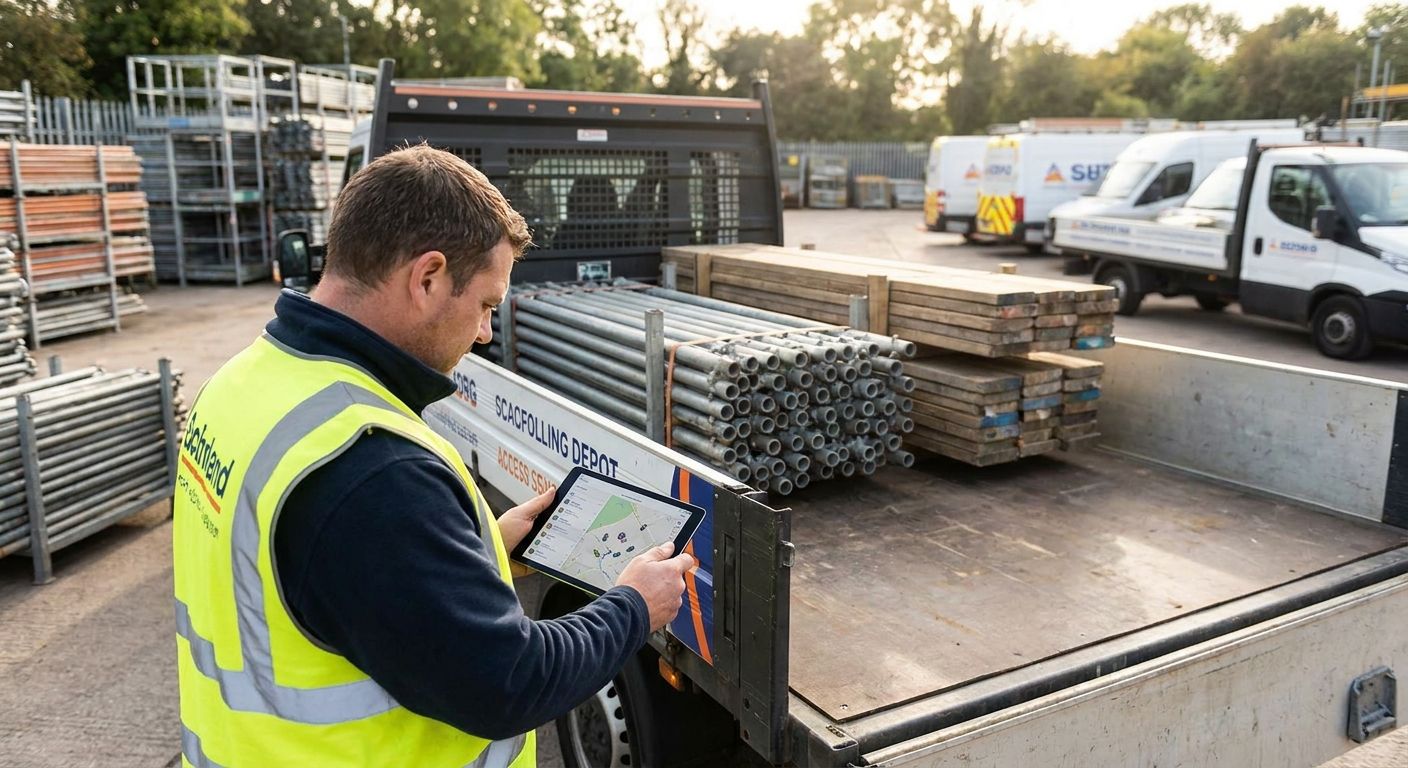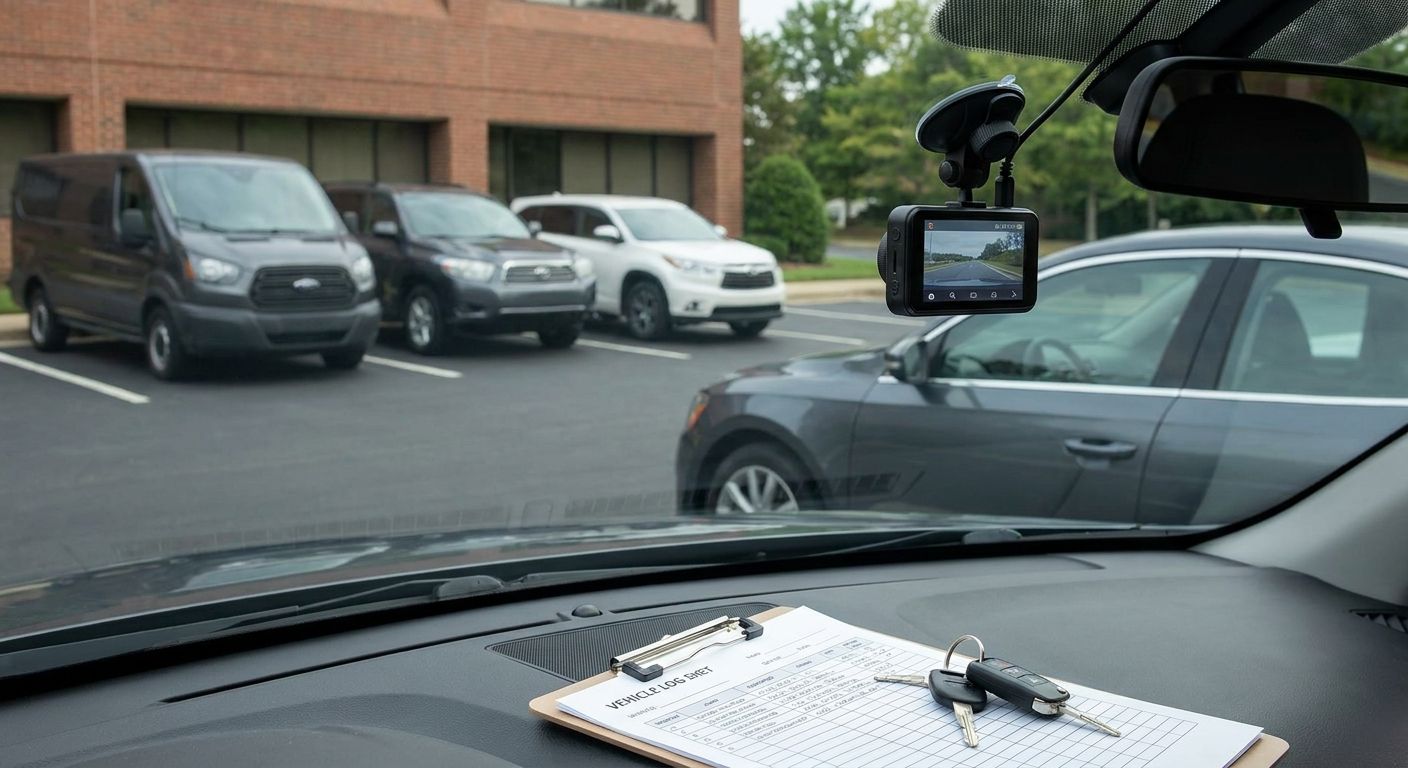
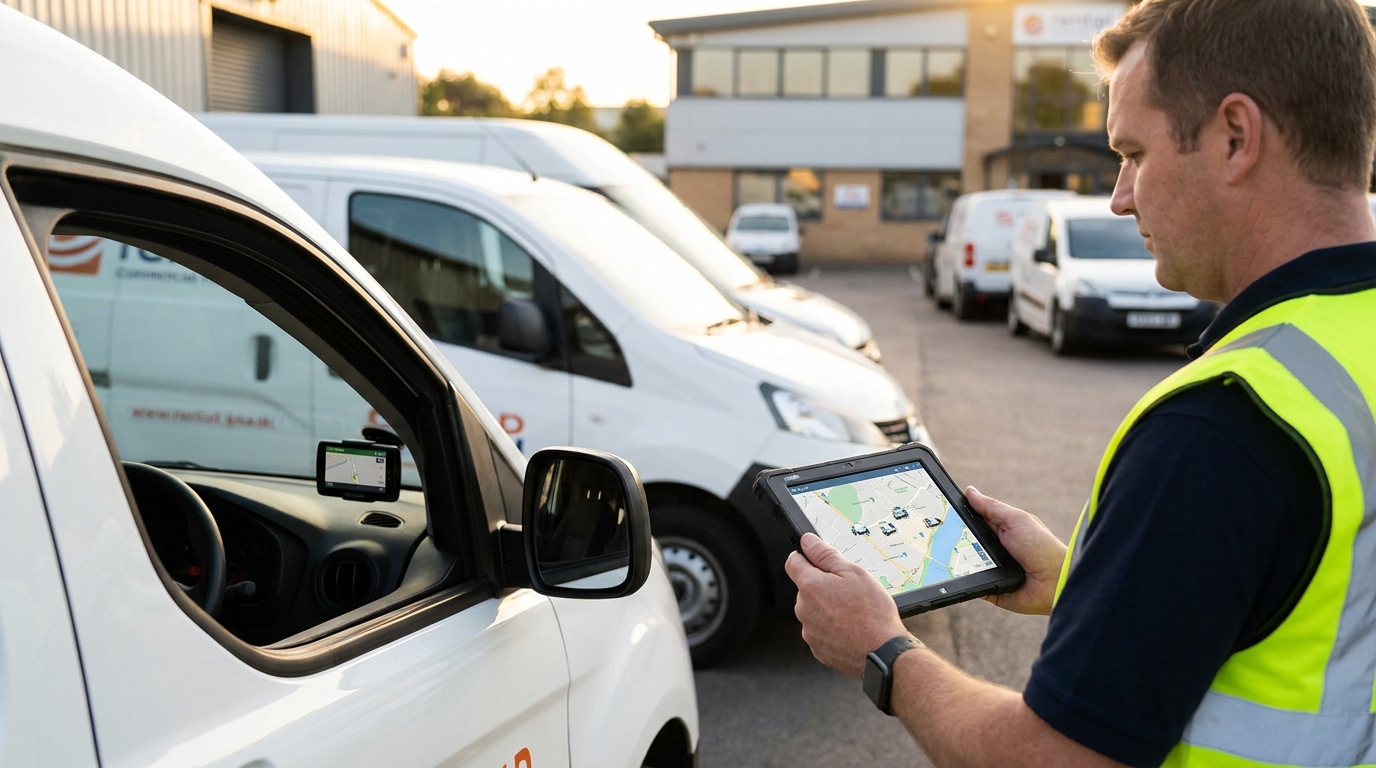
Van rental companies hand a different driver the keys every few days, sometimes every few hours. A van tracking system for van rental companies has to answer a harder question than fleet tracking for an owned fleet: not just "where's the van", but "who had it, what did they do with it, and did it come back the way it left".
- A van tracking system for van rental companies needs Thatcham S7-level security and driver ID as standard in 2026 — the Thatcham S7 Tracker at £198 covers fast-turnaround fleets. Buy.
- 4G dash cams settle 2026 damage disputes with renters in minutes instead of weeks — skip any rental fleet tracker that doesn't include one.
- Geofencing and remote immobilisation matter more for rental fleets than owned fleets, because you can't vet every driver before they take the vehicle.
- A tracker without a UK insurance-approved rating won't move your fleet insurance premium, no matter how cheap it is.
Why this matters
Owned fleets have one problem: keeping drivers honest. Rental fleets have three: unknown drivers, short handover windows, and no direct control over how the vehicle gets treated between pickup and drop-off. A van that comes back with a dent, an overrun on mileage, or a missed return time turns into a dispute you have to win with evidence, not opinion.
That's the gap a proper Crystal Ball fleet tracking setup closes. Real-time GPS tells you where the van is at handover and return. A 4G dash cam gives you footage the renter can't argue with. Driver ID ties a specific journey to a specific renter, even when three different people drove the same van in one week. None of that is optional in 2026 — it's the difference between a five-minute damage conversation and a week of he-said-she-said.
Who this is for
This guide is for operations and fleet managers running 10 to 200-plus vans hired out to trade and consumer renters on daily, weekly, or short-term contracts. If your business rotates vans through multiple renters a month, insures a fleet rather than a single vehicle, and needs proof of condition and location at every handover, the criteria below apply directly to you.
What to look for in a van tracking system for van rental companies
Thatcham-approved security rating
Insurers price rental fleet premiums against theft risk, and theft risk on a rental fleet is higher than on an owned one because the vehicle spends most of its life with someone outside your organisation. A Thatcham-approved tracker is the baseline insurers recognise — anything below that rating does little for your premium in 2026, whatever the sales copy claims.
Real-time GPS and geofencing
Renters agree to a usage area, then sometimes ignore it. Geofencing flags the moment a van leaves an approved zone, so you catch a boundary breach before it becomes a recovery job. This matters more for rental operators than for contractors running their own crews, because you have no relationship history to fall back on with a first-time renter.
Remote immobilisation
A non-return or a suspected theft needs a response that doesn't rely on the renter's cooperation. Remote immobilisation lets you stop a van once it's parked and stationary — it's built to shut down a stationary theft attempt, not to force a moving vehicle to stall, which matters for driver safety.
4G dash cam evidence
Damage disputes are the highest-frequency cost in van rental. A 4G dash cam captures condition footage at pickup and return and uploads it live, so you're not relying on a phone photo a renter claims was taken "before" the scratch. The same logic drives adoption in van tracking for courier and delivery fleets, where multiple drivers touch one van across a single shift.
Driver ID and multi-renter reporting
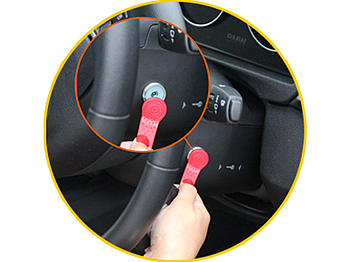
When three renters use the same van in a fortnight, you need journey-level attribution, not just vehicle-level location. Driver ID logs who was behind the wheel for every trip, which turns a fleet-wide mystery into a five-minute lookup when something goes wrong.
Mileage and usage reporting
Most rental agreements cap mileage or charge for overage. A tracking system that reports mileage automatically removes the argument at drop-off and gives you billable data instead of an estimate.
Top picks for van rental fleets
Thatcham S7 Tracker — the fast-turnaround pick. Priced at £198 with 24/7/365 monitoring, this is the tracker that fits high-churn rental operations where vans change hands weekly. It's insurance-recognised, which protects your premium on a fleet that's inherently higher-risk than an owned one. Verdict: Buy.
Thatcham S5 Plus Tracker — the high-value fleet pick. At £548, this tier adds journey history and driver behaviour data through the mobile app, useful if your rental fleet includes higher-value vans where recovery matters more than average. It costs more per unit than the S7, so reserve it for the vans where the extra data justifies the spend. Verdict: Consider.
Thatcham S5 Tracker — the mid-fleet pick. At £374 with a driver card included, it sits between the S7 and S5 Plus on price and features. Good fit for a mixed rental fleet where you want more than baseline monitoring without paying S5 Plus rates across every van. Verdict: Consider.
4G Fleet Dash Cam — the dispute killer. Live-uploaded footage at handover and return closes the single most common source of renter disputes: who caused the damage. Any rental fleet running without one is choosing to argue every claim from a weaker position. Verdict: Buy.
Driver ID — the multi-renter accountability pick. For fleets where more than one person drives the same van in a given month, this is what turns "someone drove it there" into "this renter drove it there, at this time". Verdict: Buy.
If your operation also rents out larger vehicles, the security and monitoring priorities shift again — see commercial vehicle tracking for HGV operators for what changes at that weight class.


What to avoid
- Consumer-grade GPS trackers without Thatcham approval. They look cheap on paper but do nothing for your insurance premium, and most insurers won't recognise them for recovery claims.
- Dash cams without 4G upload. A dash cam that only stores footage locally is useless once a disputed van has been driven off — the footage leaves with the vehicle.
- Systems without driver-level reporting. Vehicle-only tracking tells you where the van went, not who was driving, and that gap is exactly where rental disputes live.
“Remote immobilisation is built to stop a stationary theft, not to force a moving van to stall.”
Verdict comparison
| Solution | Thatcham rating | Real-time GPS | Remote immobilisation | Dash cam included | Best for | Verdict |
|---|---|---|---|---|---|---|
| Thatcham S7 Tracker | Yes | Yes | Yes | No | High-churn rental fleets | Buy |
| Thatcham S5 Plus Tracker | Yes | Yes | Yes | No | Higher-value van fleets | Consider |
| Thatcham S5 Tracker | Yes | Yes | Yes | No | Mixed rental fleets | Consider |
| 4G Fleet Dash Cam | N/A | N/A | No | Yes | Damage dispute evidence | Buy |
| Driver ID | N/A | N/A | No | No | Multi-renter accountability | Buy |
FAQ
What's the best van tracking system for van rental companies in 2026?
For most rental fleets in 2026, a Thatcham S7 Tracker paired with a 4G dash cam and Driver ID covers security, evidence, and renter accountability without overspending per unit. Higher-value vans can justify stepping up to an S5 Plus tracker for added journey history.
Is a Thatcham S7 tracker enough for a rental fleet, or do I need S5 Plus?
An S7 tracker is enough for most standard rental vans and costs £198 against £548 for an S5 Plus. Step up to S5 Plus only for higher-value vehicles where the extra journey and driver behaviour data justifies the price difference.
How much does van tracking cost for a rental fleet in 2026?
Thatcham-approved trackers for rental fleets run from £198 for an S7 to £548 for an S5 Plus per vehicle in 2026, with a mid-tier S5 tracker at £374. Dash cams and driver ID pricing depend on fleet size and are quoted separately.
Do 4G dash cams help with rental van damage disputes?
Yes, a 4G dash cam uploads condition footage live at handover and return, giving you evidence a renter can't dispute after the fact. This is the single biggest reason rental operators add dash cams over standalone GPS trackers.
Can van tracking stop a renter driving off with the vehicle?
Remote immobilisation stops a van once it's stationary, which prevents a parked theft attempt, but it won't force a moving vehicle to stall for safety reasons. Geofencing alerts you the moment a van leaves an agreed area so you can respond before recovery becomes necessary.
Does van tracking lower fleet insurance premiums for rental companies?
A Thatcham-approved tracker is what insurers recognise for premium adjustments on rental fleets in 2026, not a generic consumer GPS device. The rating, not the tracker's price, is what your insurer checks.
How does driver ID work when multiple renters use the same van?
Driver ID logs which specific driver was behind the wheel for each journey, so a van used by three different renters in a month still gives you journey-level attribution. That turns a fleet-wide dispute into a single lookup.
What happens if a rental van goes outside the geofence?
You get an alert the moment the van crosses the agreed boundary, before it turns into a recovery situation. This is more useful on rental fleets than owned fleets because you often have no prior relationship with the renter to fall back on.
One last thing
Most rental operators only add driver ID after their first unresolved damage dispute, not before. Fit it alongside the tracker and dash cam from day one in 2026 — retrofitting it after a bad renter experience costs more in admin time than the hardware ever would.