Refuse collection rounds run on tight windows, tight streets, and tight margins - the wrong fleet software either exposes your RCVs to theft and downtime or gives you the visibility to stop both cold.
- Crystal Ball's HGV and van tracking suits waste fleets running RCVs, skip lorries, and compactors on fixed rounds - Buy for route-heavy operations.
- 4G dash cams settle liability disputes on narrow streets and school runs in 2026 - non-negotiable for any fleet management software for waste management companies.
- Thatcham S7 trackers at 198 pounds work for lower-risk yard vehicles; S5 Plus at 548 pounds suits high-value compactor units - Buy either depending on risk.
- Direct Vision Standard compliance tools are mandatory groundwork for any HGV over the DVS threshold running into London in 2026 - Skip ignoring this.
- Generic consumer trackers without Thatcham approval fail insurers and fail waste depots - Skip.
Why this matters
Waste management fleets aren't ordinary vans doing point-to-point deliveries. RCVs reverse into cul-de-sacs, skip lorries hoist loads over pedestrians, and depot yards sit on some of the highest-theft postcodes in the country. Generic fleet software built for courier vans misses all of it.
Insurers know this too. A depot running Thatcham-approved trackers and 4G dash cams gets treated differently at renewal than one running nothing, and in 2026 that gap in premium pricing is only widening as insurers push harder on telematics data.
Who this is for
This guide is for operations managers and transport leads at waste and recycling companies, skip hire firms, and local authority waste depots running mixed fleets of RCVs, skip lorries, vans, and yard plant. If you're managing more than a handful of vehicles and answering to both a finance director on cost and a compliance officer on DVS and duty-of-care rules, fleet management software for waste management companies needs to do more than show a dot on a map.
What to look for in fleet software for waste operators
Real-time tracking built for fixed rounds
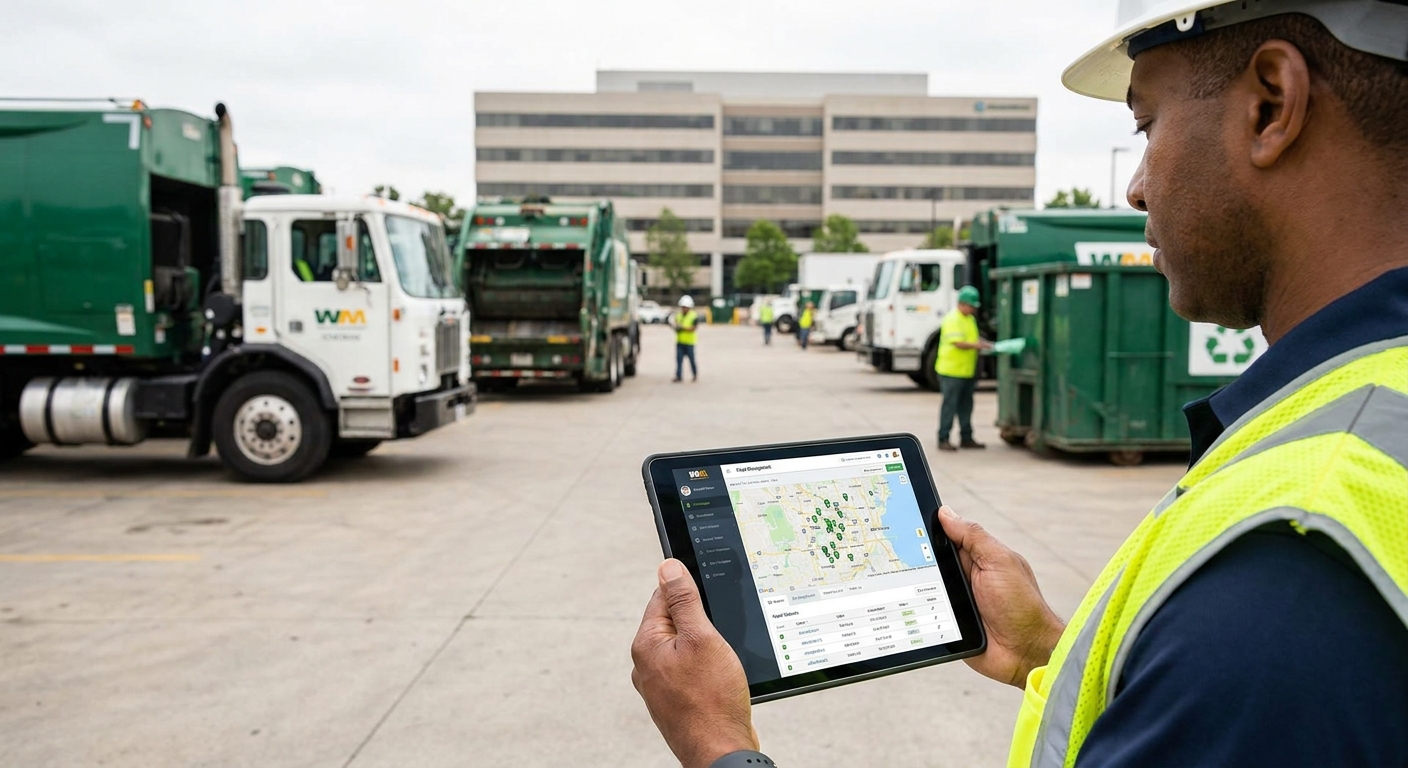
Waste collection runs the same streets on a schedule, so the software needs to flag deviations fast - a truck stuck 20 minutes on a route it normally clears in 8 minutes means a blockage, a breakdown, or a driver going off-plan. Live GPS with geofenced depots and tip sites turns that into an alert instead of a customer complaint call three hours later.
Thatcham-approved security, not generic GPS
RCVs and compactor units sit in yards overnight and get targeted for scrap metal value and diesel theft. A Thatcham-rated tracker with 24/7/365 monitoring backs your insurance policy in a way a bare-bones consumer GPS unit never will, and it's the difference between a recovered vehicle and a write-off claim.
4G dash cam footage for liability and customer disputes
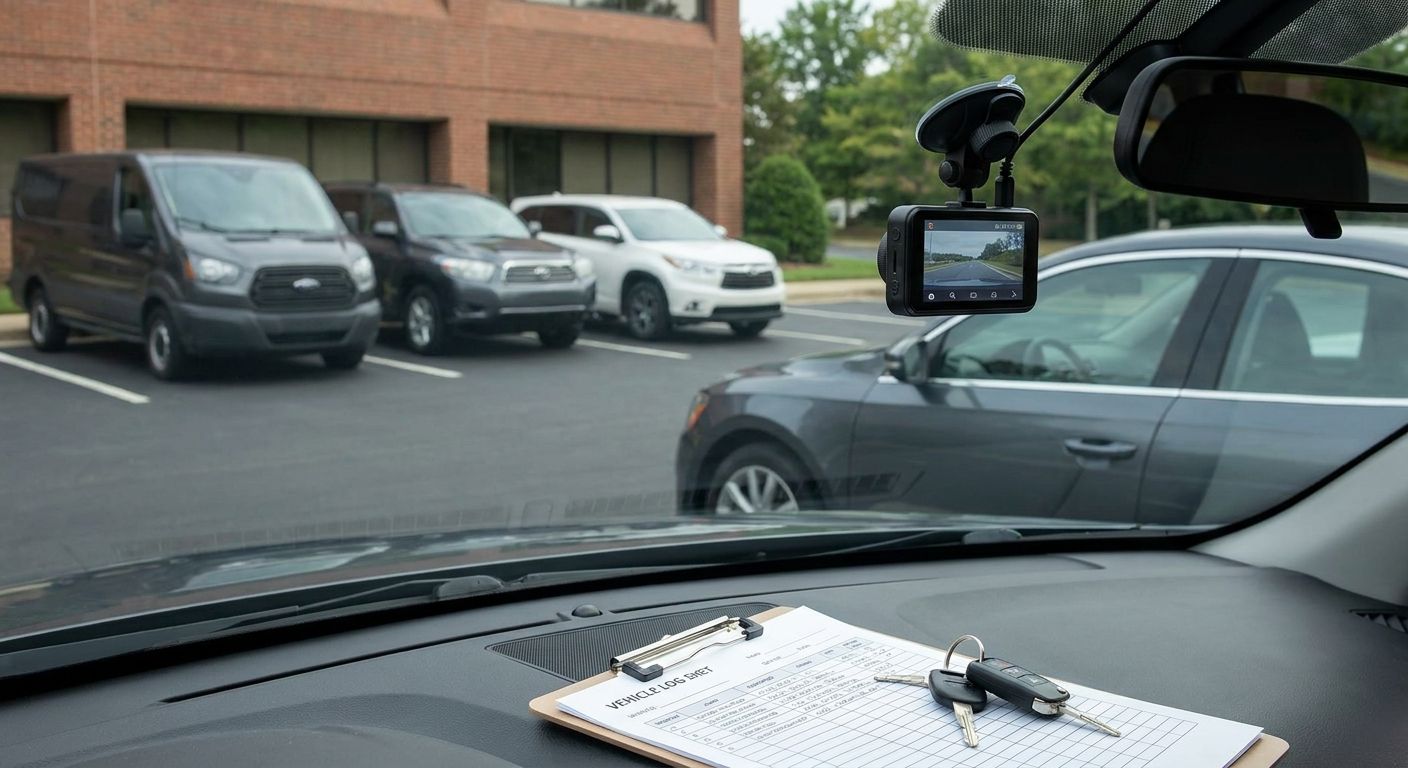
Waste crews get blamed for scraped wing mirrors, damaged bins, and near-misses with pedestrians on narrow residential streets - most of it unfair. A 4G dash cam streams footage live rather than storing it locally, so a claim gets resolved with evidence in hours instead of days, and repeat false claims stop landing on your excess.
Driver behaviour data for safety-critical routes
Harsh braking and reversing incidents matter more on a bin round than on a motorway trunk route, because the people around your vehicles are pedestrians, school kids, and cyclists on narrow pavements. Behaviour scoring gives you a way to coach drivers before an incident happens, not just investigate after one does.
Asset and trailer tracking for skips and bins
Skips and compactor bins go missing or get left on-site for weeks without anyone noticing the rental clock running. Trailer and asset tracking closes that gap and turns a forgotten skip into a billed job instead of a written-off asset.
DVS and HGV compliance tools for London operations
Any HGV over the Direct Vision Standard weight threshold running into Greater London needs a valid permit, and getting caught without one means fines and downtime, not just a warning letter. If any part of your waste round touches London postcodes, this isn't optional software - it's a licence to operate.
Top picks for waste management fleets in 2026
4G Fleet Dash Cams - the liability killer. Always-on 4G streaming means footage is accessible the moment a claim comes in, not three days later when the SD card gets pulled. For crews working narrow residential streets daily, this is the single highest-value add to any waste fleet setup in 2026. Buy.
360-degree Vehicle CCTV - the blind spot fix. RCVs have some of the worst blind spots on the road, and reversing into a cul-de-sac past parked cars and bins is where most low-speed incidents happen. Full 360-degree coverage removes the guesswork for the driver and the ambiguity for the insurer. Buy.
Direct Vision Standard London - the compliance gatekeeper. At 599 pounds, this is the tool that keeps HGVs legally in the city rather than parked up on a fine. Any operator running waste collection rounds that cross into Greater London needs this sorted before the vehicle moves, not after a penalty notice arrives. Buy if you run into London; Skip if your rounds never touch the zone.
Thatcham S7 Tracker - the insurance play. At 198 pounds with 24/7/365 monitoring, this suits lower-value yard vehicles and support vans where the insurance discount matters more than premium features. It's the entry point, not the ceiling. Consider.
Thatcham S5 Plus Tracker - the high-value asset lock. At 548 pounds, this is built for compactor units and RCVs where a theft or write-off costs far more than the tracker itself. The extra spend buys deeper monitoring on vehicles you genuinely can't afford to lose. Buy for high-value units; Consider for everything else.



What to avoid
- Consumer-grade dash cams without 4G - locally stored footage that needs a device pulled apart to retrieve it is useless when a claim lands the same afternoon.
- Generic GPS trackers without Thatcham approval - insurers discount premiums for Thatcham-rated devices specifically; a bargain tracker that isn't rated buys you nothing at renewal.
- Software with no asset or trailer tracking - if your fleet includes skips, bins, or detachable compactor units, a platform that only tracks powered vehicles leaves your most-stolen assets invisible.
Verdict comparison
| Solution | Best for | Price | Verdict |
|---|---|---|---|
| 4G Fleet Dash Cams | Liability disputes, narrow streets | Contact for quote | Buy |
| 360° Vehicle CCTV | Reversing blind spots on RCVs | Contact for quote | Buy |
| Direct Vision Standard London | London HGV compliance | £599.00 | Buy if operating in London |
| Thatcham S7 Tracker | Lower-value yard vehicles | £198.00 | Consider |
| Thatcham S5 Plus Tracker | High-value compactor units | £548.00 | Buy for high-risk assets |
FAQ
What's the best fleet management software for waste management companies in 2026?
There's no single best platform - the right setup pairs Thatcham-approved tracking with 4G dash cams and asset tracking for skips and bins. Match the tool to your vehicle mix rather than picking one generic package.
Is Thatcham S7 or S5 better for a waste fleet?
S7 at 198 pounds suits lower-value yard vehicles and support vans, while S5 Plus at 548 pounds suits high-value compactor units and RCVs. Match the tracker cost to the vehicle's replacement value, not a blanket policy.
How much does fleet tracking cost for a waste management company in 2026?
Costs vary by tracker tier and vehicle count, from around 198 pounds per unit for entry-level Thatcham trackers up to 548 pounds for higher-spec devices. Dash cams and asset tracking are typically quoted separately based on fleet size.
Do waste collection vehicles need Direct Vision Standard compliance?
Any HGV over the DVS weight threshold operating in Greater London needs a valid permit before it can legally enter the zone. This applies to most RCVs and heavy skip lorries running London rounds in 2026.
Do 4G dash cams actually reduce insurance claims for waste fleets?
Live-streamed footage settles disputed claims faster because evidence is available immediately rather than after a device is retrieved. Fleets running narrow residential rounds see the most value here since low-speed incident disputes are common.
Can fleet software track skips and bins, not just vehicles?
Yes - asset and trailer tracking covers detachable equipment like skips and compactor bins separately from the towing vehicle. This closes the gap where rented equipment sits forgotten on-site for weeks.
What's the difference between fleet tracking for vans and for HGVs in waste management?
Vans typically need lighter tracking and driver behaviour scoring, while HGVs need the added weight of DVS compliance and higher-tier Thatcham security given their higher replacement cost. Mixed fleets usually need both tiers running side by side.
One last thing
The detail most waste operators miss isn't the tracker spec - it's that skips and bins get tracked separately from the trucks that carry them, and that single gap is where most "missing asset" write-offs actually happen in 2026.