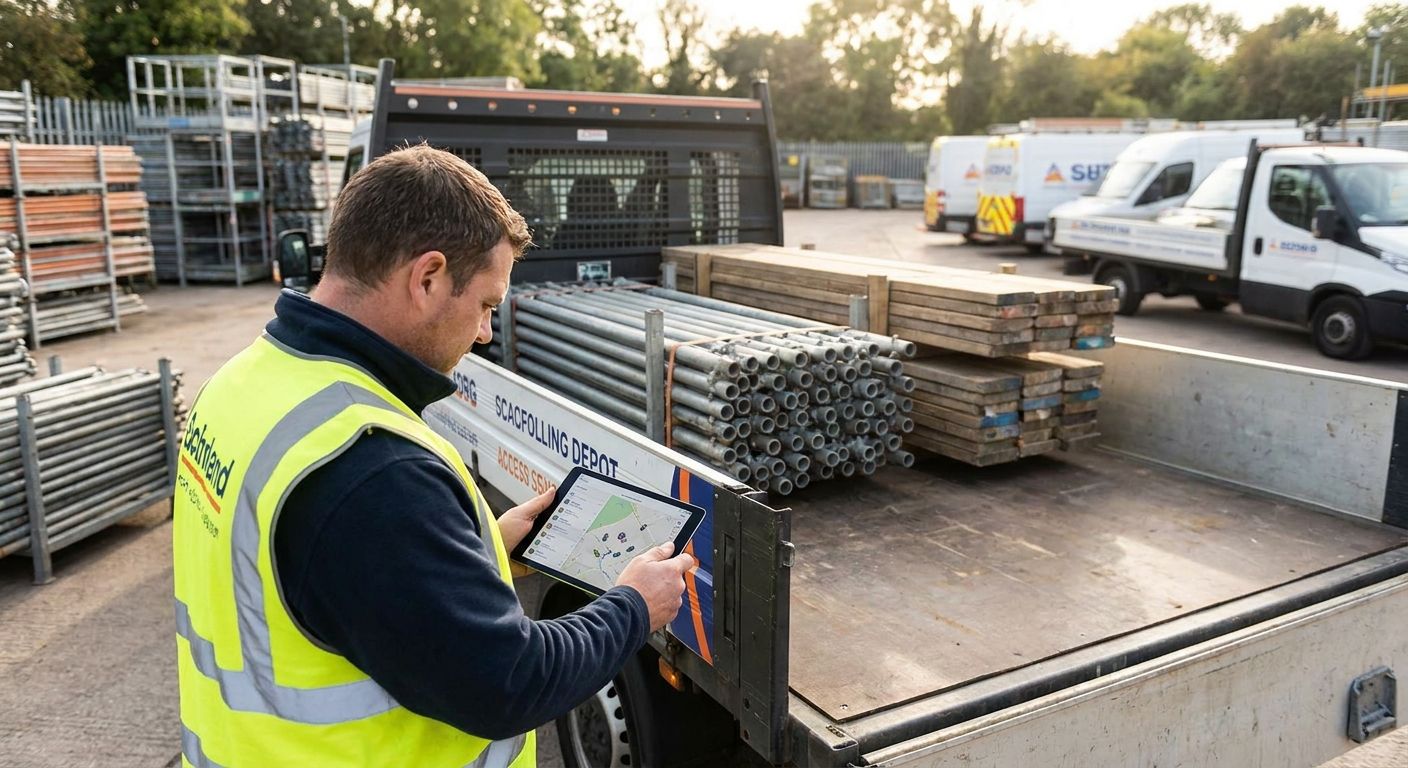

Skip hire and haulage fleets don't run like van fleets, and fleet tracking skip hire operators actually need has to handle 8-wheel skip wagons, hook-loaders, grab lorries, and towed skips as separate risk categories, not one blurred asset list.
- Fleet tracking skip hire operators need must separate vehicle, trailer and skip tracking - Crystal Ball's HGV and asset tracking covers both. Buy.
- 360-degree camera systems are the priority spend for HGV blind spot risk in 2026, not an add-on. Buy.
- Trackers wired to ignition miss towed skips and unpowered trailers entirely - battery-powered asset trackers close that gap. Buy.
- Driver behaviour data supports O-licence maintenance evidence and insurance renewals for haulage fleets running mixed HGV weights.
Why this matters
A skip wagon that's out of geofence at 6am, a hookloader idling on a customer site for two hours, a skip left on a verge overnight - none of that shows up on a standard van tracking dashboard built for courier routes. Haulage and skip hire operators carry O-licence obligations, drivers' hours rules, and asset theft exposure that a generic tracking package doesn't touch.
Commercial vehicle tracking for HGV operators is the starting point, but skip hire adds a wrinkle: the skip itself, and often the trailer carrying it, has no ignition and no power source. Get that layer wrong and half your fleet is invisible between depot and tip.
Who this is for
This is for operators running mixed fleets of HGVs, hookloaders, grab lorries and support vans under a standard national or restricted O-licence - typically 5 to 60 vehicles, moving between multiple tips, transfer stations and customer sites every day. If your business is skip hire, muck-away, or general haulage and you're still tracking vehicles but not the skips, trailers or plant riding behind them, the gap costs money and compliance risk in equal measure.
What to look for in fleet tracking for skip hire and haulage
Real-time location across depots, tips, and customer sites
Skip wagons don't run fixed routes - they bounce between depot, customer address, and licensed tip, often several times a day. Live location with geofence alerts on tips and depots tells you when a wagon has arrived, dwelled too long, or gone somewhere it shouldn't.
Trailer and skip tracking, separate from the towing vehicle
A skip left on-site for a week has no ignition to trigger a standard tracker. Battery-powered asset trackers that report independently of the vehicle are the only way to know where your skips and plant actually sit across multiple sites.
Driver behaviour monitoring for insurance and licence risk
Harsh braking, speeding and idling data feed directly into insurance renewal conversations and give you evidence for O-licence maintenance reviews. DVSA guidance on maintaining roadworthiness recommends safety inspection intervals of 6 to 10 weeks depending on vehicle risk - tracking data helps justify where your fleet sits on that scale.
360-degree camera coverage for HGV blind spots
Skip wagons and hookloaders have some of the worst blind spot profiles on the road, particularly around the nearside and rear when reversing onto a tip. Camera coverage that closes those gaps is a safety requirement first and an insurance discount second.
Fuel and route data to cut empty running
Haulage margins live and die on fuel spend, and empty running between tips is one of the biggest silent costs in a skip hire operation. Route and fuel data turns guesswork about which depot serves which job into a fixed decision.
Top picks for skip hire and haulage fleets
The backbone: HGV and skip wagon tracking. Live location and geofencing on the tow vehicle itself is the layer you build everything else on - without it, none of the other data has context. GB drivers' hours rules cap daily driving at 9 hours, and tracking data cross-checks against that limit automatically rather than relying on a driver's logbook. Buy - this is the non-negotiable first purchase for any HGV-based skip hire fleet in 2026.
The one operators forget: trailer and skip asset tracking. Skips and unpowered trailers don't trigger an ignition-based device, so they need their own battery-powered tracker reporting on a separate schedule. Tracking trailers and plant equipment across multiple sites stops skips going missing between customer collection and tip drop-off. Buy - the ROI shows up the first time a missing skip gets located instead of written off.
The insurance saver: 360-degree camera systems. Reversing incidents and nearside collisions are the most common claim type for wagons working tight residential streets and tip yards. Reducing HGV blind spots with 360-degree camera systems gives full visual coverage rather than a single forward-facing lens. Buy for any operator running 8-wheelers or hookloaders in urban collection rounds.
The compliance layer: driver behaviour monitoring. Harsh-braking and speed-event data builds a defensible record for O-licence maintenance reviews and gives insurers something concrete at renewal, rather than a claims history alone. Consider this a phase-two purchase once core vehicle and asset tracking is live - it's high value but not the first cheque you write.


What to avoid
- Van-tracking-only packages sold as HGV solutions. They handle ignition-triggered vehicles fine but go blank the moment a skip or trailer is unhooked and left on-site.
- Cheap trackers with no insurer recognition. A tracker that isn't Thatcham-approved won't move the needle on your fleet insurance premium, whatever the sales pitch claims.
- Systems with no driver ID layer. If you can't tell which driver was behind the wheel during a harsh-braking event, the behaviour data is close to useless for insurance or compliance conversations.
Verdict comparison
| Criteria | Why it matters for skip hire | Priority | Verdict |
|---|---|---|---|
| HGV/vehicle tracking | Base layer for geofencing and drivers' hours checks | Must-have | Buy |
| Skip/trailer asset tracking | Skips have no ignition trigger - separate tracking is the only visibility | Must-have | Buy |
| 360-degree cameras | Reversing and nearside incidents are the top claim type on tight rounds | High | Buy |
| Driver behaviour monitoring | Feeds O-licence maintenance evidence and insurance renewals | Medium-high | Consider |
| Fuel/route data | Cuts empty running between depot and tip | Medium | Consider |
FAQ
What's the best fleet tracking system for skip hire operators in 2026?
The best setup for skip hire in 2026 pairs HGV vehicle tracking with separate battery-powered asset tracking on skips and trailers, since ignition-triggered trackers miss unpowered assets entirely. Add 360-degree camera coverage on wagons working tight urban rounds for blind spot risk.
Is HGV tracking different from standard van tracking?
Yes - HGV tracking needs to account for drivers' hours limits, O-licence maintenance evidence, and heavier vehicle blind spot profiles that van tracking doesn't address. Skip and haulage fleets also need trailer or plant tracking layered on top of the vehicle itself.
Do skip wagons need separate tracking from the skip itself?
Yes - a skip has no ignition, so a standard vehicle tracker never reports on it once it's dropped on-site. A battery-powered asset tracker fitted to the skip or trailer is the only way to see where it sits across multiple customer sites.
How does fleet tracking help with O-licence compliance?
Tracking data supports the maintenance and driving-time records DVSA expects for O-licence holders, including cross-checks against the 9-hour daily driving limit under GB drivers' hours rules. DVSA guidance recommends safety inspection intervals of 6 to 10 weeks, and tracking history helps justify where a fleet sits on that scale.
Can fleet tracking reduce insurance premiums for haulage fleets?
Thatcham-approved tracker hardware and driver behaviour data both feed into insurance renewal conversations, since insurers price risk partly on recovery capability and driving standards. The effect on any individual premium depends on the insurer and the fleet's claims history.
How much does fleet tracking cost for a small skip hire business?
Hardware cost depends heavily on spec - Thatcham-approved tracker units on Crystal Ball range from £198 to £548 per unit in 2026, before software and monitoring. Camera systems and asset trackers for skips and trailers are priced separately from the core vehicle tracker.
Is fleet tracking footage admissible for disputing damage or insurance claims?
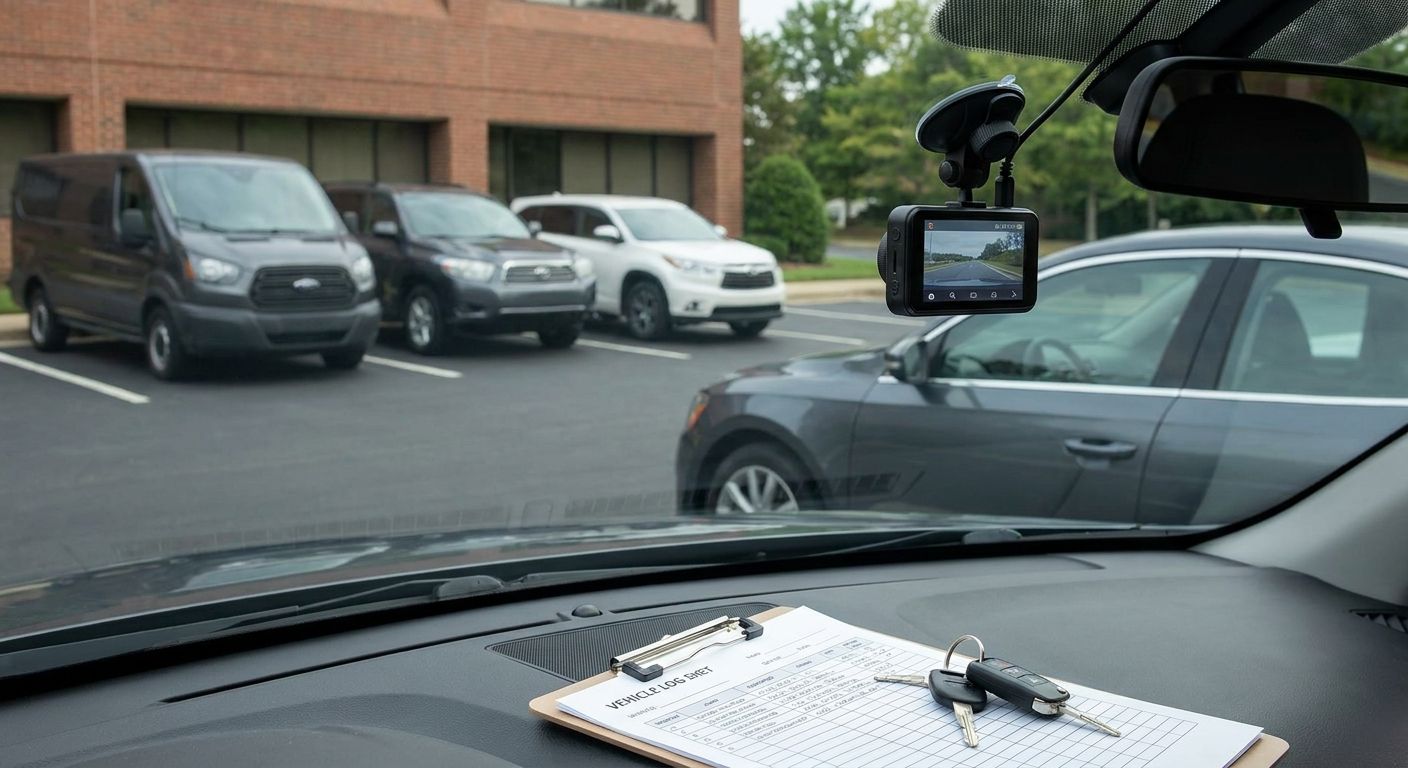
Dash cam and 360-degree camera footage is commonly used by fleets to dispute false liability claims, giving a timestamped visual record of an incident. Pair footage with location and speed data for the strongest evidence set.
Do 360-degree cameras actually reduce HGV blind spot accidents?
Full 360-degree coverage closes the visibility gap around the nearside and rear of an HGV, the areas most linked to reversing and turning incidents on tight residential and tip-yard routes. It doesn't eliminate risk on its own, but it removes the single biggest visibility blind spot HGVs carry.
One last thing
The detail most skip hire operators miss until it costs them: a tracker wired to ignition tells you nothing about a skip sitting on a verge for four days waiting for a tip slot. Fit the asset tracking layer to the skip itself, not just the wagon, and 2026's theft and loss numbers stop being a guessing game.