Waste and recycling fleets don't run like parcel vans or company cars — compactors, RCVs and skip lorries carry higher asset value, tighter insurance scrutiny, and heavier compliance exposure than almost any other commercial fleet type. This guide ranks the fleet management software and hardware combinations that hold up on a kerbside collection round or a construction skip run in 2026, not the generic office-fleet tools that get resold into every vertical.
- Crystal Ball's HGV-specific vehicle trackers top this list for waste operators running compactors and RCVs over 12 tonnes — buy for Thatcham-backed theft cover.
- The best fleet management software for waste and recycling operators is built on multi-drop logistics telematics, not generic small-business tools.
- 360-degree dash cam coverage cuts reversing-incident disputes on narrow streets — fit before your next insurance renewal, not after a claim.
- Direct Vision Standard compliance kit is mandatory for HGVs over 12 tonnes entering Greater London under the Progressive Safe System phase, in force since October 2024.
- Skip fuel-card-only trackers with no geofencing — they can't flag unauthorised tips or verify bin-lift dwell times.
Why this matters
A waste collection vehicle off the road for a day costs more than a missed parcel run — it's a missed round, a council penalty risk, or a customer complaint about an unemptied bin. Insurers already price HGVs and RCVs higher than standard vans, and a fleet without Thatcham-approved tracking or verified driver behaviour data pays for that gap every renewal.
Compliance adds another layer specific to this sector. Operators running fleet management software for waste management companies need visibility into bin-lift cycles, route completion, and vehicle dwell time that a generic small-business platform simply doesn't log. Get the software wrong here and you're not just losing efficiency — you're carrying uninsured risk on a 26-tonne vehicle.
How we ranked
Each entry below is scored against five criteria that matter specifically to waste and recycling operations: Thatcham accreditation level, Direct Vision Standard (DVS) compliance support, route and multi-drop handling, dash cam coverage for reversing and tipping incidents, and integration depth with waste-specific workflows like bin-lift logging and unauthorised tip alerts. Entries that only solve one of these get marked down even when they're strong general-purpose tools.
The ranked list
1. HGV-specific vehicle trackers — the compliance backbone
Waste collection vehicles over 12 tonnes need Thatcham-category tracking that insurers actually recognise, not a consumer GPS badge. Crystal Ball's HGV tracking devices run from the S7 tracker at £198.00 for standard RCVs up to the S5 Plus at £548.00 for higher-value compactor units, each with 24/7/365 monitoring and nationwide on-site installation. This is the non-negotiable layer for any waste fleet in 2026. Buy.
2. Multi-drop logistics telematics — the round optimiser
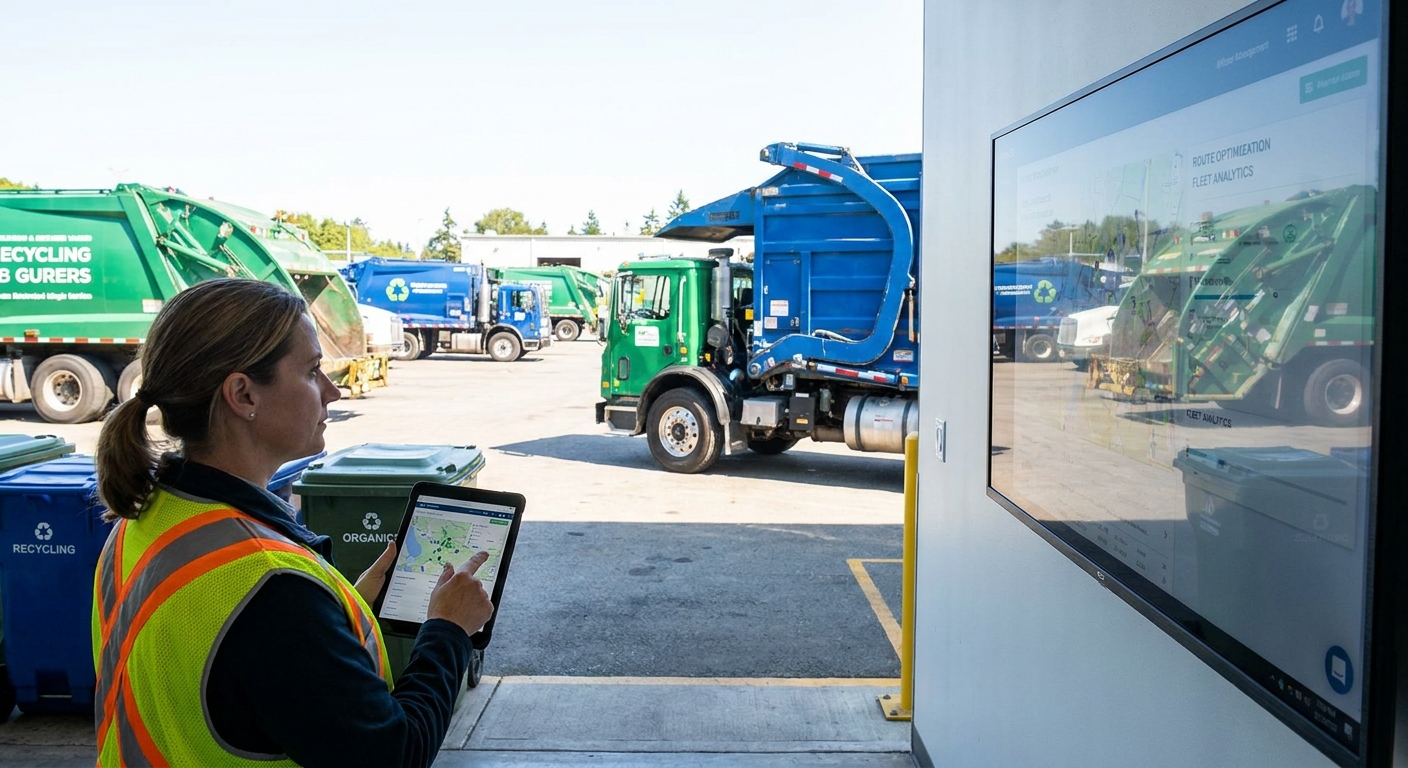
Generic fleet software tracks vehicles; logistics-grade telematics tracks rounds. Waste and recycling operations run fixed collection days with dozens of stops per shift, and a platform built for logistics companies will flag missed collections, idle time between bins, and route drift in real time instead of end-of-day reports. This is where most operators actually recoup their software spend. Buy.
3. 4G dash cams with 360-degree coverage — the incident-dispute killer
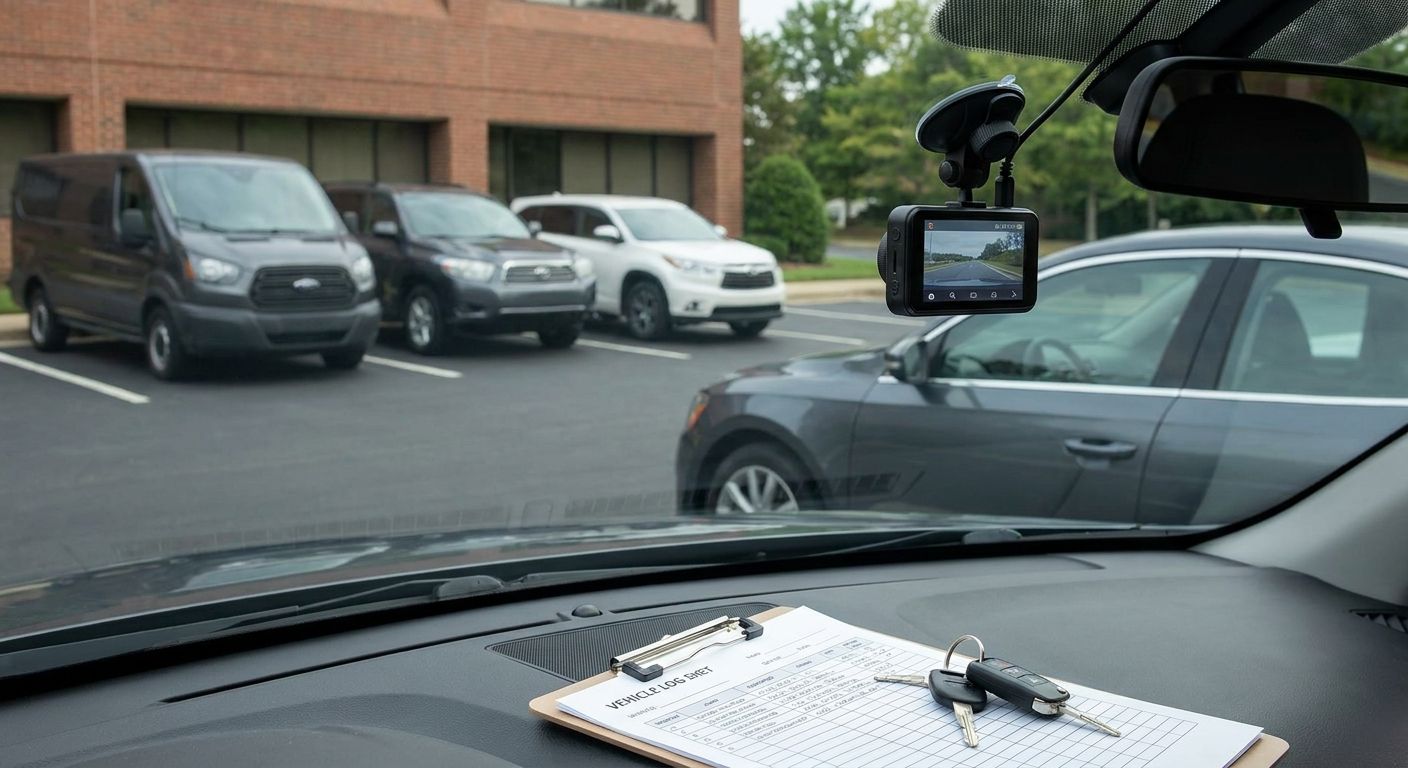
Reversing into a residential street or a recycling centre bay is the single most common incident type for waste vehicles. A 360-degree camera system removes the he-said-she-said from insurance claims and third-party disputes, with footage timestamped and retrievable within hours rather than days. Fleets that fitted this coverage before 2026 renewals report fewer contested claims. Buy.
4. Direct Vision Standard compliance kit — the London necessity
Transport for London's Direct Vision Standard has required HGVs over 12 tonnes entering Greater London to carry camera and sensor monitoring since the Progressive Safe System phase took effect in October 2024, with permit exemptions only for vehicles meeting the higher star rating. Any waste operator running collections inside the M25 needs this kit fitted and the permit renewed before the vehicle moves. Buy if you run routes in Greater London, Skip if you don't.
5. Fuel-card-only point trackers — the false economy
These cost less upfront and look like a fleet management tool, but they only track fuel spend, not vehicle location, driver behaviour, or geofence breaches. A waste operator using one of these has no way to prove a vehicle stayed on its authorised route or verify a bin-lift dwell time when a customer disputes a missed collection. Skip.
6. Generic small-business fleet software — the wrong shape
Software built for company car fleets or single-van operators handles mileage and servicing well but has no concept of a bin-lift cycle, a tipping event, or an unauthorised waste transfer alert. It's a reasonable starting point for a two-van business, covered in the fleet management software for small businesses guide, but it doesn't scale to a compactor fleet. Wait until you outgrow it, then move up.
“If a tracking system can't show you exact bin-lift dwell times, it isn't built for waste operations.”



Comparison table
| Solution type | Best for | Key feature | 2026 verdict |
|---|---|---|---|
| HGV-specific trackers | Compactors, RCVs over 12 tonnes | Thatcham-backed theft monitoring | Buy |
| Multi-drop telematics | Fixed collection rounds | Real-time route drift and idle alerts | Buy |
| 360° dash cams | Narrow-street reversing | Timestamped footage on demand | Buy |
| DVS compliance kit | Greater London HGV routes | Camera and sensor permit compliance | Buy if in London |
| Fuel-card-only trackers | Nothing waste-specific | Fuel spend only, no geofencing | Skip |
| Generic small-business software | Sub-3-vehicle operations | Basic mileage and servicing logs | Wait |
Where to buy
- Fit Thatcham-approved trackers only through installers on the official Thatcham register — an unregistered install can void the insurance discount entirely.
- Confirm your DVS permit status with Transport for London before ordering camera kit, since the star rating determines whether you need the full sensor package or a lighter exemption fit.
- Bundle dash cams and tracking hardware into one supplier invoice rather than sourcing separately — it simplifies warranty claims when a unit fails mid-round.
FAQ
What is the best fleet management software for waste and recycling operators in 2026?
HGV-specific vehicle tracking paired with multi-drop logistics telematics is the best fleet management software for waste and recycling operators in 2026, because it covers both Thatcham-backed theft monitoring and route-level visibility that generic small-business tools miss.
Do waste collection vehicles need Direct Vision Standard compliance?
Yes, HGVs over 12 tonnes entering Greater London have needed Direct Vision Standard camera and sensor compliance since the Progressive Safe System phase took effect in October 2024. Vehicles without the required star rating need a permit exemption or the full sensor kit fitted before entering the zone.
Is a Thatcham S7 or S5 tracker better for a waste fleet?
The S7 tracker at £198.00 suits standard RCVs and covers 24/7 theft monitoring, while the S5 Plus at £548.00 adds coverage for higher-value compactor units. Choose based on the insured value of the specific vehicle, not the fleet average.
How much does fleet tracking software cost for a waste operator?
Hardware pricing on Thatcham-approved trackers ranges from £198.00 to £548.00 per unit depending on the model, with monitoring included. Software platform costs vary by vehicle count and are best confirmed directly with the provider.
Can dash cams reduce insurance premiums for waste and recycling fleets?
4G dash cams with 360-degree coverage help fleets contest reversing and tipping incident claims with timestamped footage, which insurers factor into premium reviews. The discount depends on the insurer and the fleet's claims history.
Is generic small-business fleet software good enough for a waste operation?
Generic small-business software handles mileage and servicing for one or two vehicles but has no bin-lift logging or unauthorised tip alerts. Waste operators running fixed collection rounds outgrow it quickly.
What's the difference between fuel-card tracking and full fleet telematics?
Fuel-card trackers only log fuel spend, while full telematics tracks vehicle location, geofence breaches, and driver behaviour in real time. Waste operators need the latter to verify route completion and dispute unauthorised tips.
One last thing
Most waste operators fitting DVS compliance kit in 2026 treat it as a one-off London tax rather than a fleet-wide upgrade — but the same camera and sensor package that satisfies the Progressive Safe System also feeds directly into incident-dispute footage for every route, London or not. Fit it once, use it everywhere.