HGV blind spots cause collisions that a mirror alone can't prevent, and a 360 degree camera system closes that gap only when it's specified, installed, and used correctly — this guide covers the steps that make the difference in 2026.
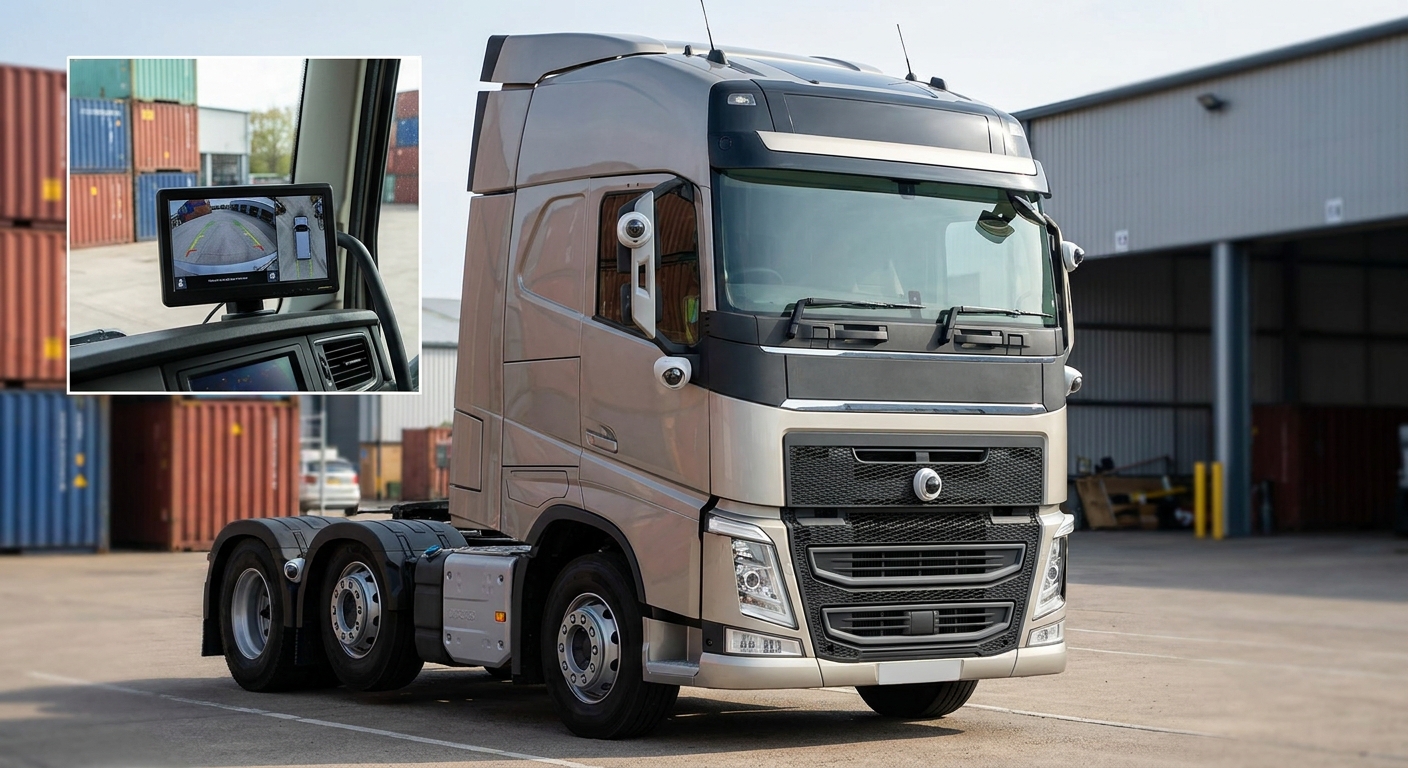
- A true 360 degree HGV camera system needs four synced cameras, not one wide-angle unit bolted to the cab.
- Direct Vision Standard (DVS) compliance in London requires a Progressive Safe System with camera monitoring for 0-2 star HGVs in 2026.
- Monitor placement in the driver's natural eyeline cuts reaction time more than adding extra cameras does.
- Crystal Ball's 360 degree Vehicle CCTV pairs with driver behaviour monitoring to turn footage into a training tool, not just evidence after the fact.
Why this matters
HGVs over 12 tonnes have four documented blind zones: nearside, offside, front, and rear — and the nearside is where the majority of cyclist and pedestrian fatalities happen at junctions. A 2026 fleet running mirrors alone is relying on a system designed decades before urban cycling volumes and Direct Vision Standard rules existed.
Insurers and local authorities have caught up faster than most operators have. Commercial vehicle tracking for HGV operators increasingly ties premium discounts to verified camera and safety system fitment, and TfL's Progressive Safe System requirements apply to any HGV over 12 tonnes operating in Greater London. Getting the camera system right isn't a compliance box-tick — it's the difference between a driver who sees a cyclist at the junction and one who doesn't.
What you'll need
- A blind-spot audit of your actual vehicle types (rigid, artic, tipper — coverage needs differ by chassis)
- Four camera positions minimum: front, rear, nearside, offside
- An in-cab monitor with a single stitched view, not four separate feeds
- Proximity sensors or audible blind-spot alerts as a second layer
- A DVS star rating check if any vehicle operates in London
- Driver time for a proper handover, not a five-minute demo
- A footage retrieval process for incidents and near-misses
The steps
1. Map the blind spots on each vehicle type before you spec anything
A rigid 18-tonner and an articulated trailer have different blind zones, and buying one camera kit for the whole fleet without checking this wastes money on coverage you don't need and leaves gaps you do. Walk each vehicle type and note where a driver genuinely cannot see a pedestrian or cyclist from the seated position. Expect the nearside to be the biggest gap on almost every configuration.
Common mistake: treating the fleet as one vehicle type and buying a single camera package for everything.
2. Specify full 360 degree coverage, not a front-and-rear pair
A front and rear dash cam covers collision evidence, not blind spots — the nearside and offside cameras are what actually prevent the incident. A genuine 360 degree system stitches four camera feeds into one composite view on a single monitor, so the driver reads one screen instead of scanning four. Best vehicle tracking devices for HGV fleets covers the hardware side of pairing cameras with tracking units on the same install.
Common mistake: buying a 2-camera dash cam and calling it a 360 system because the spec sheet says wide angle.
3. Check your DVS star rating before you install anything
If any vehicle runs in Greater London, its Direct Vision Standard star rating determines what's mandatory. HGVs rated 0-2 stars need a Progressive Safe System fitted — camera monitoring, a Class V and VI mirror setup, and audible/visual warnings for left turns — before a valid TfL permit is issued. Skipping this step means the camera install you just paid for might still leave the vehicle non-compliant.
Expected outcome: a documented star rating on file for every HGV, and a PSS spec sheet matched against it.
4. Mount the monitor in the driver's natural eyeline
A monitor bolted low on the dash or off to one side gets ignored within a week — drivers revert to mirrors because the eye path is faster. Position the screen close to the windscreen sightline, angled so a glance takes under a second, and test it with an actual driver in the seat before final fitting, not just against a spec diagram.
Common mistake: installing the monitor wherever the wiring run is easiest instead of where the driver will actually look.
5. Add proximity sensors as a second warning layer
Cameras rely on the driver looking at the right moment; proximity sensors trigger an audible alert regardless of where attention is. Pairing camera coverage with ultrasonic or radar-based nearside sensors catches the moments a driver is mid-manoeuvre and hasn't glanced at the monitor. This layered approach is what most Progressive Safe System specifications assume, not camera coverage alone.
6. Train every driver on the system, not just the new starters
A 360 degree camera system only works if drivers trust the composite view over habit. Run a session that covers what each camera zone looks like on-screen, how the stitched image differs from four raw feeds, and what the audible alerts mean in practice. Book a refresher within 90 days — drivers who get one session and nothing else drift back to old habits by month three.
Common mistake: treating the install as complete once the hardware is fitted, with no driver walkthrough.
7. Build a footage review workflow, not just storage
Footage sitting on a card until an incident happens wastes the system's real value. Best dash cams for driver behaviour monitoring covers how footage reviews catch near-misses before they become claims — set a weekly or monthly cadence for spot-checking clips, not just an after-the-fact pull when something goes wrong.
Expected outcome: near-miss patterns identified and fed back to drivers within days, not discovered six months later in a claims review.
8. Schedule quarterly hardware checks
Camera lenses pick up road grime, mounts loosen with vibration on HGV chassis, and cables chafe against moving parts over time. A quarterly physical check — clean lenses, tighten mounts, confirm the monitor still displays all four zones — catches degradation before it shows up as a gap in coverage during an actual incident.


Troubleshooting
- Monitor washes out in direct sunlight — fit an anti-glare screen or reposition the mount slightly off the direct light path; a washed-out screen gets ignored.
- Footage gaps at incident review — check the card is rated for continuous 24/7 loop recording, not a consumer-grade card that drops frames under heat.
- False blind-spot alerts on every left turn — recalibrate the sensor sensitivity; over-sensitive sensors train drivers to tune the system out entirely.
- Cracked or dirty lenses reducing image quality — add lens cleaning to the pre-trip walkaround, not just the quarterly service.
- Drivers reverting to mirrors and ignoring the monitor — this is a training gap, not a hardware fault; schedule the 90-day refresher from step 6.
- Cameras losing sync and showing four separate feeds instead of one stitched view — a firmware or wiring fault; get it fixed immediately, since four raw feeds recreate the scanning problem the system was meant to solve.
Tools and resources
- Best telematics systems for logistics companies — for fleets running camera systems alongside route and driver tracking
- TfL's Direct Vision Standard checker — confirms star rating and PSS requirements per vehicle
- Crystal Ball's driver behaviour reporting — turns camera footage into measurable coaching data
- A quarterly maintenance checklist covering lens cleaning, mount tightness, and monitor calibration
What to do next
Once the camera system is fitted and drivers are trained, the next gap is usually theft and unauthorised use outside working hours — a Thatcham-approved tracker closes that separately from blind-spot cameras, and the two systems work together rather than overlapping.
FAQ
What's the best way to reduce HGV blind spots in 2026?
A full 360 degree camera system with four synced cameras (front, rear, nearside, offside) stitched into one monitor view is the standard fix in 2026. Pairing it with proximity sensors and driver training closes the gap that mirrors alone leave open.
Do I need a 360 degree camera system for Direct Vision Standard compliance?
HGVs rated 0-2 stars under DVS need a Progressive Safe System, which typically includes camera monitoring alongside Class V/VI mirrors and audible alerts. A standalone dash cam without full coverage doesn't satisfy the PSS requirement on its own.
Is a 360 degree camera system better than blind-spot mirrors?
Cameras and mirrors solve different parts of the same problem, and most compliant setups use both. Mirrors are passive and always visible, while cameras give a wider composite view but depend on the driver actually looking at the monitor.
How much does a 360 degree HGV camera system cost in 2026?
Pricing varies by number of cameras, monitor spec, and whether DVS/PSS compliance hardware is included, so get a fleet-specific quote rather than relying on a generic figure. Installation and monitor placement affect the total more than the camera units themselves.
Where should the monitor be positioned in an HGV cab?
The monitor should sit in the driver's natural eyeline near the windscreen, close enough that a glance takes under a second. A monitor mounted low on the dash gets ignored within weeks because it breaks the driver's normal sightline.
Can 360 degree cameras replace proximity sensors?
No — cameras rely on the driver looking at the right moment, while proximity sensors trigger an audible alert regardless of attention. Most Progressive Safe System specifications assume both layers working together, not one replacing the other.
How often should HGV camera systems be serviced?
Run a physical check every quarter covering lens cleanliness, mount tightness, and monitor calibration. HGV chassis vibration loosens mounts faster than on cars or vans, so quarterly checks catch degradation before it becomes a coverage gap.
Does footage from a 360 camera system help with insurance premiums?
Insurers increasingly factor in verified camera and safety system fitment when pricing HGV fleet premiums in 2026. Documented near-miss review processes, not just raw footage storage, tend to carry more weight in renewal negotiations.
One last thing
The camera system that gets used is the one drivers trust more than their mirrors — and that trust comes from the monitor placement and the 90-day refresher, not from how many cameras are bolted to the cab. Fleets that skip driver training on a new 360 system see adoption drop within the first three months, which turns a compliance investment into an ignored screen.