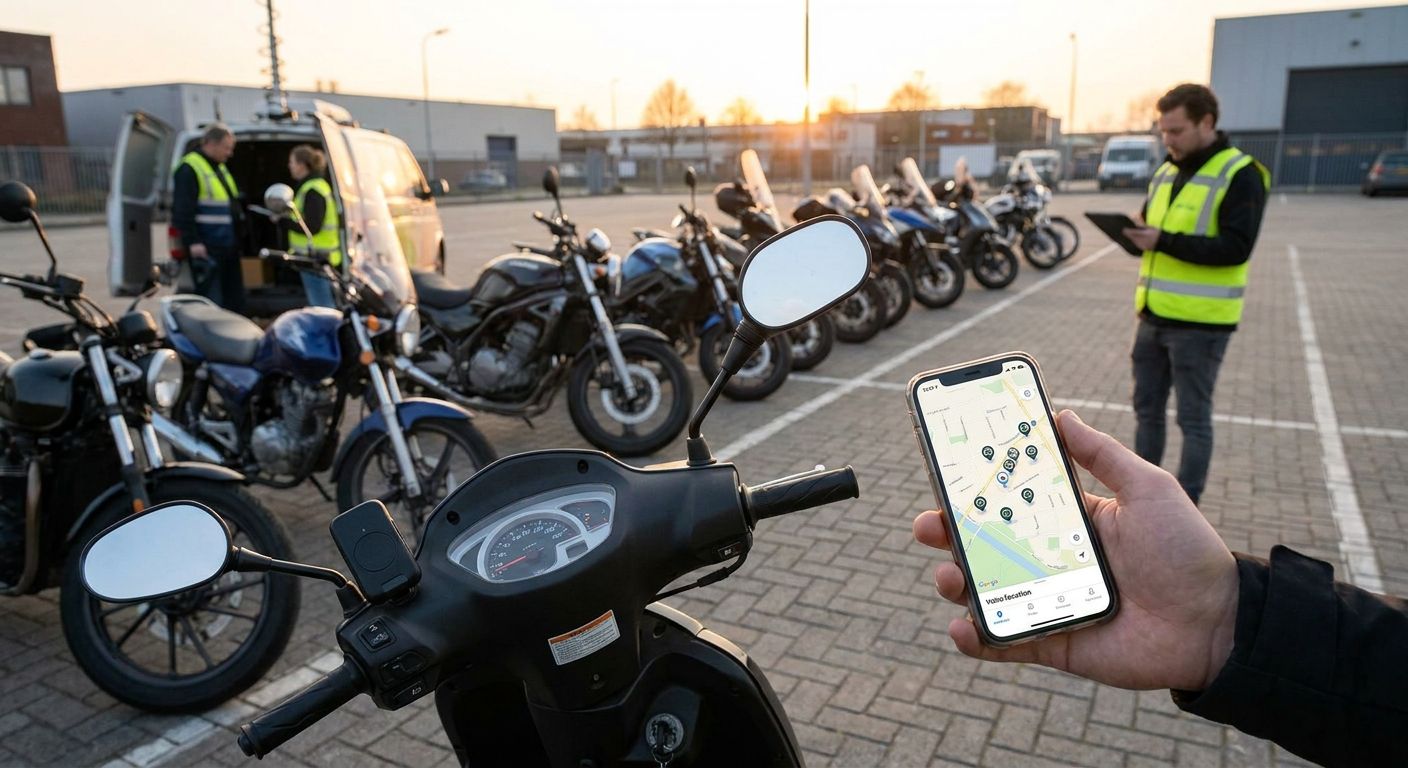
Delivery riders and patrol officers on two wheels get stolen from, crash more often per mile, and cost more to insure than the van drivers sitting next to them in the yard — yet most fleet tracking guides are written for cars and vans and bolt an afterthought paragraph onto motorbikes. This guide covers what actually works for a motorcycle or moped fleet in 2026, and what to skip.
- Motorcycle fleet tracking in 2026 means Thatcham-rated hardware built for two wheels, not a shrunk-down van tracker.
- Thatcham S7 Tracker at £198 is the safe pick for standard delivery and patrol fleets — Buy.
- Thatcham S5 Tracker at £374 suits higher-value bikes needing professional install and insurer sign-off — Buy for premium fleets.
- A dedicated Motorbike Tracking solution beats a repurposed van device on vibration tolerance and battery draw — Consider.
- 4G Fleet Dash Cams add rider-side evidence but don't replace a proper GPS tracker — Consider as a add-on, not a substitute.
Why this matters
A motorcycle sitting on a driveway or chained outside a depot is a faster theft than a van — no keys to cut, no immobiliser to bypass on older models, just a lift into the back of a Transit. Insurers know this, which is why Thatcham-rated tracking on two-wheelers pulls a bigger premium discount, proportionally, than the same rating on a car. If your fleet runs motorcycles or mopeds for delivery, patrol, or field service and you're still using a generic van tracker glued under the seat, you're paying for hardware that wasn't built for the vibration, weather exposure, or battery profile of a bike.
Crystal Ball builds fleet tracking for exactly this mix of vehicle types, and the difference between a tracker designed for two wheels and one adapted from a car fleet shows up fastest in theft recovery and battery reliability — the two things motorcycle operators actually get burned on.
Who this is for
This guide is for fleet managers and operations leads running motorcycle or moped fleets for parcel and food delivery, courier work, security patrol, or field service call-outs — typically anywhere from three to a few hundred bikes. It also applies to local government fleets running mopeds for parking enforcement or community patrol. If your fleet is mixed — vans and bikes together — read this alongside Crystal Ball's van tracking guidance rather than treating the two vehicle types the same way.
What to look for in motorcycle fleet tracking
Compact, vibration-rated hardware
A motorcycle engine vibrates at frequencies that shake loose connectors designed for a van chassis. Tracking hardware built for cars and vans often isn't rated for sustained vibration, which means intermittent signal loss or early hardware failure on a bike that's ridden eight hours a day. Purpose-built motorcycle tracking units are smaller, sealed against water ingress, and mounted to tolerate constant engine vibration without the connection dropping out.
GPS refresh rate that matches how bikes move
Motorcycles change direction and speed faster than vans in city traffic — filtering through queues, cutting into side streets, stopping for two minutes at a drop-off. A tracker with a slow refresh rate shows a location that's already stale by the time a manager checks it. For delivery and patrol fleets where route verification matters, refresh frequency is the difference between a useful live map and a rough guess.
Thatcham security rating — S5 vs S7
Thatcham S5 and S7 trackers cover different risk profiles. S5 includes driver recognition and requires professional installation, which suits higher-value bikes where insurers want the extra verification layer. S7 doesn't need driver ID but still carries the insurance-approved monitoring, and it's the more common fit for standard delivery and patrol fleets. Get this wrong and you either overpay for a rating you don't need or install one that doesn't satisfy your insurer's policy wording — check Thatcham-approved tracker ratings against your policy before you buy.
Power source that survives short rides and cold starts
Motorcycle batteries are smaller than van batteries and drain faster under a tracker's constant draw, especially on bikes that sit idle overnight between shifts. A tracker that pulls too much current flattens the bike's battery before the rider's first job of the day — a mistake that shows up as a call-out, not a support ticket.
Rider safety and lone worker data
Riders working alone at night — food delivery, late patrol shifts — carry a different risk profile than a driver in a cab. Tracking that also flags harsh braking, unexpected stops, or a rider who's gone quiet on a route adds a safety layer that a bare location dot doesn't.
Top picks for motorcycle and moped fleets
Thatcham S7 Tracker — the safe pick. Priced at £198, it carries UK insurance-approved 24/7/365 monitoring with nationwide on-site installation, which covers the standard theft-and-recovery need for most delivery and patrol bikes without the added driver-ID layer of S5. Verdict: Buy for standard fleets where the priority is theft recovery and an insurance discount, not driver verification.
Thatcham S5 Tracker — the insurer's favourite for high-value bikes. At £374, S5 adds driver recognition and comes with a driver card included, plus the same 24/7/365 monitoring and nationwide install. It's built for fleets where the insurer specifically wants verified-driver reporting, or where the bikes themselves are expensive enough to justify the extra cost over S7. Verdict: Buy if your policy asks for driver ID or your bikes sit in a higher value bracket.
Motorbike Tracking — the purpose-built option. This is Crystal Ball's dedicated two-wheeler solution rather than a car or van tracker adapted after the fact, aimed at reducing theft risk and supporting route optimisation specifically for bikes. Verdict: Consider it as the base layer for any motorcycle fleet before adding a Thatcham-rated device on top for insurance purposes.
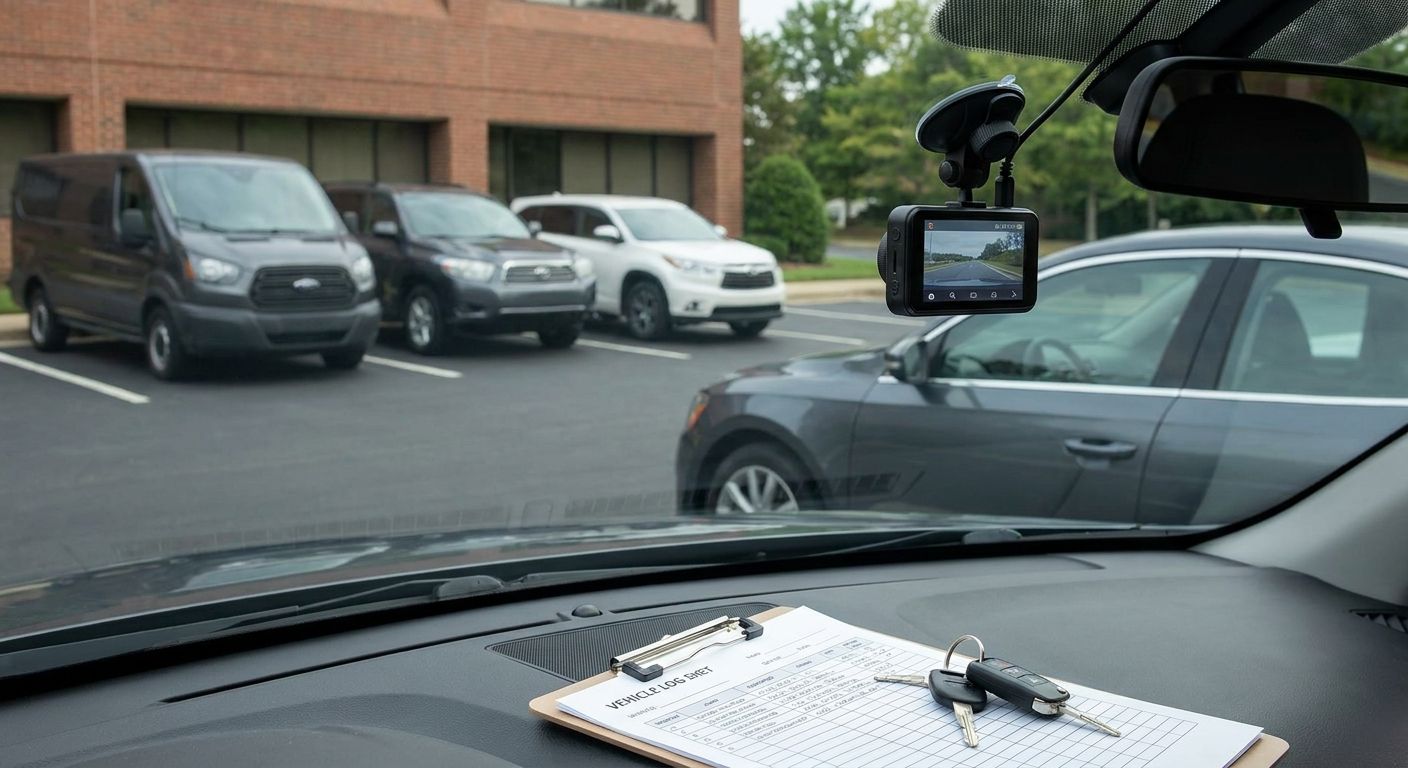
4G Fleet Dash Cams — the evidence backup. A dash cam doesn't replace GPS tracking, but for riders on high-traffic delivery routes it captures footage that can dispute a liability claim after a collision. It's a second layer, not a first purchase. Verdict: Consider as an add-on once tracking is in place, not as a substitute for it.


What to avoid
- A repurposed van tracker with no vibration rating. It looks cheaper on paper, but constant engine vibration on a motorcycle shakes loose connections that a van chassis never stresses, and you'll be paying for call-outs within months.
- Any tracker not rated Thatcham S5 or S7. Skipping the rating might save £100 upfront but it removes the insurance premium discount that usually pays that back within a year — see how tracking can cut fleet insurance premiums before deciding to go unrated.
- A dash cam bought as a tracking substitute. Dash cams give you footage after an incident; they don't give you a live location or theft alert before one. Treat the two as separate purchases with separate jobs.
Verdict comparison
| Product | Best for | Install | Price | Verdict |
|---|---|---|---|---|
| Thatcham S7 Tracker | Standard delivery and patrol bikes | Nationwide on-site | £198 | Buy |
| Thatcham S5 Tracker | High-value bikes needing driver ID | Nationwide on-site, professional | £374 | Buy for premium fleets |
| Motorbike Tracking | Base tracking layer for any two-wheeler fleet | Standard fit | Contact for quote | Consider |
| 4G Fleet Dash Cams | Evidence backup alongside a tracker | Standard fit | Contact for quote | Consider as add-on |
FAQ
What's the best vehicle tracker for a motorcycle fleet in 2026?
For most delivery and patrol motorcycle fleets, a Thatcham S7 Tracker at £198 covers theft recovery and 24/7/365 monitoring without extra cost for driver ID you may not need. Higher-value bikes or policies requiring driver verification should step up to Thatcham S5 at £374.
Is Thatcham S5 or S7 better for motorbikes?
S7 suits standard fleets needing insurance-approved monitoring without driver recognition, while S5 adds driver ID and suits higher-value bikes or insurer requirements that specifically ask for it. Check your policy wording before choosing — some insurers only discount premiums for one or the other.
How much does motorcycle fleet tracking cost in 2026?
Thatcham-rated hardware runs from £198 for S7 to £374 for S5 per unit as of 2026, with dedicated motorbike tracking and dash cams priced separately by fleet size. Ongoing monitoring is typically included in the unit cost for Thatcham-approved devices.
Do motorcycle trackers drain the bike's battery?
A tracker built for two-wheelers is designed to manage draw against a smaller motorcycle battery, but a repurposed van or car tracker often isn't and can flatten the battery overnight. This is one of the main reasons to choose hardware built specifically for bikes rather than adapted from a van fleet.
Can vehicle tracking lower motorcycle fleet insurance premiums?
Yes — Thatcham-approved tracking on motorcycles typically qualifies for an insurance premium discount because it improves theft recovery odds. The size of the discount depends on your insurer and fleet claims history, so confirm the exact figure with your broker.
What's the difference between GPS tracking and a dash cam for a motorcycle fleet?
GPS tracking gives you live location, theft alerts, and route data, while a dash cam records footage for use after an incident or dispute. The two do different jobs and most motorcycle fleets need tracking as the base layer before adding a dash cam on top.
Do moped delivery riders need lone worker protection as well as tracking?
Riders working alone at night on delivery or patrol routes carry more risk than a driver in a cab, and location tracking alone doesn't flag a rider who's gone quiet or hasn't checked in. A lone worker app layered on top of GPS tracking closes that gap for late-shift riders.
One last thing
The fleets that get the most out of motorcycle tracking aren't the ones with the fanciest hardware — they're the ones that match the Thatcham rating to what their insurer actually asks for, instead of buying the more expensive option by default. S5's driver-ID layer at £374 is wasted spend on a standard delivery fleet where S7's £198 monitoring already satisfies the policy.