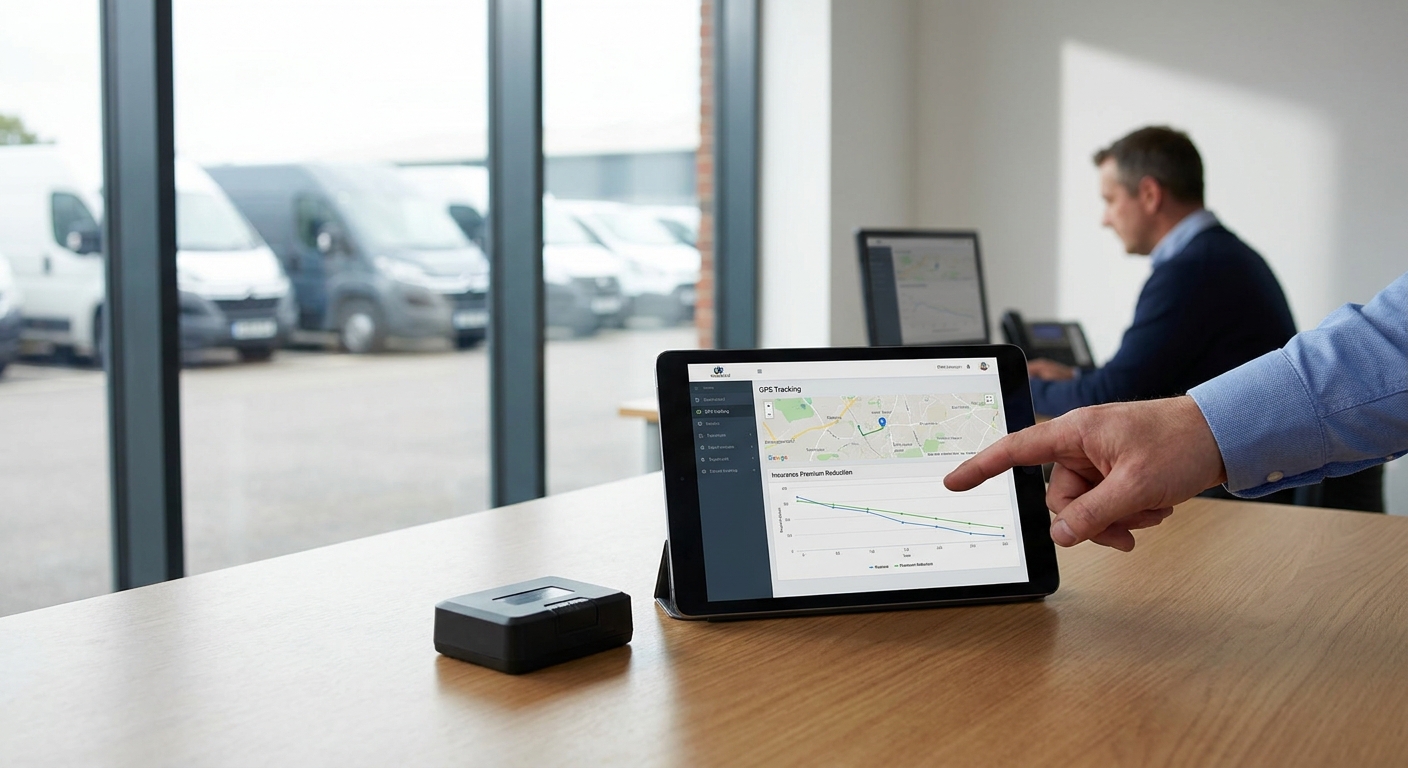
Fitting a vehicle tracking system is one of the few fleet costs that pays for itself twice: once in stolen-vehicle recovery, and again every year at insurance renewal. Insurers price fleet risk on data, and a tracker plus dash cam gives them exactly the data that lowers your number.
- Thatcham Category S5 and S7 trackers are the standard UK insurers recognise when you cut fleet insurance premiums with vehicle tracking, so fit one before renewal, not after a claim.
- Driver behaviour monitoring and 4G dash cam footage give your broker claims evidence, which shortens disputes and protects your no-claims history.
- Crystal Ball's S7 tracker starts at £198 and the S5 at £374, both with 24/7/365 monitoring built in — book installation six weeks before renewal.
- A tracked fleet with dash cams typically settles false liability claims faster, which keeps claims frequency, and premiums, lower year over year.
Why this matters
Insurers set fleet premiums on claims history, vehicle theft risk, and driver behaviour, three things they normally have to estimate. A fitted tracking system replaces that estimate with evidence: recovery data, geofence alerts, and telematics scores an underwriter can actually price against.
Brokers renewing fleet policies in 2026 are asking for Thatcham category detail as standard on vehicles over a certain value, and fleets that show up with nothing get quoted the worst-case rate. Crystal Ball fits Thatcham-approved trackers and 4G dash cams specifically so fleet managers walk into renewal with proof, not promises.
The goal here isn't a vague "tracking helps" pitch. It's a sequence: fit the right hardware, capture the right data, hand it to your broker at the right moment, and repeat every renewal cycle so the discount compounds.
What you'll need
- A current vehicle list with registration numbers and approximate values, so you know which vehicles need Thatcham S5 versus S7
- Your broker or insurer's contact details and renewal date
- A Thatcham-approved tracker for each high-value vehicle (Category S5 for tracking plus immobilisation, S7 for tracking alone)
- A 4G dash cam on vans and HGVs that carry liability risk day to day
- An installation slot — most fleet installs run half a day per vehicle depending on access
- Login access to the telematics dashboard so you can pull reports for your broker
The steps
1. Audit your current claims and theft exposure
Pull your last two years of claims data before you talk to anyone about hardware. This tells you whether your premium problem is theft, at-fault accidents, or disputed liability claims, and each of those points to a different fix.
A fleet with three theft claims in 24 months needs Thatcham S5 immobilisation first. A fleet with disputed liability claims needs dash cams first. Skipping this step means buying the wrong kit and still paying the same renewal rate.
Common mistake: treating tracking as one product instead of matching the tracker category to the actual loss pattern.
2. Match Thatcham category to vehicle value
Thatcham S7 covers tracking and monitoring; Thatcham S5 adds remote immobilisation on top, which most insurers want for vehicles over roughly £30,000 or anything considered high theft-risk. Getting this wrong means paying for immobilisation you don't need, or under-specifying a vehicle your insurer expects to see locked down.
Check Thatcham-approved trackers for high-value fleet vehicles against your vehicle list before you order anything, vehicle by vehicle, not fleet-wide.
Common mistake: fitting S7 across the whole fleet to save money, then finding the insurer still rates your top-value vans at the uninsured-tracker tier.
3. Fit trackers and dash cams before the renewal window opens
Installation six to eight weeks before renewal gives you a full data cycle to show your broker, not just a fitting certificate. A certificate alone gets you a modest discount; six weeks of clean telematics data gets you a negotiated rate.
Book nationwide on-site installation rather than a workshop drop-off if your vehicles are spread across sites, it keeps vehicles earning instead of parked.
Common mistake: fitting hardware the week of renewal, which leaves nothing to actually show the underwriter.
4. Pull driver behaviour reports, not just location logs
Insurers care about harsh braking, speeding events, and idling far more than they care about where a van was parked on a Tuesday. Export driver behaviour scores by vehicle and by driver for the reporting period your broker asks for.
Fleets that cut harsh-braking events month on month have a concrete story to tell at renewal: fewer at-fault accidents predicted, lower expected claims cost.
Common mistake: handing the broker a raw GPS export instead of a summarised behaviour report they can actually use in the submission.
5. Add dash cam footage to your claims process
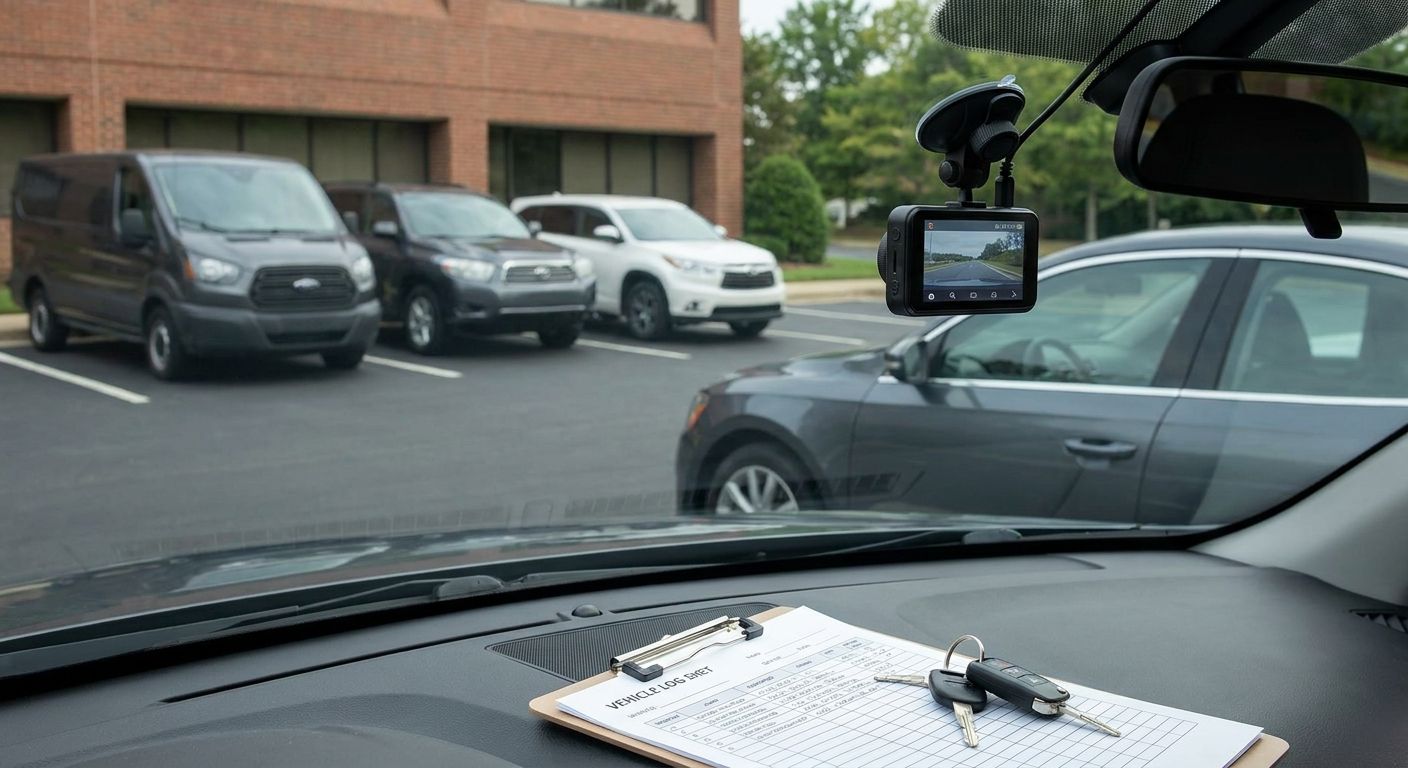
Equip vans and HGVs carrying real liability exposure with 4G dash cams for fleet insurance discounts so every incident has footage attached automatically, not requested after the fact. Insurers weigh dash cam-equipped fleets differently because disputed liability claims resolve faster and cheaper.
Set footage to auto-upload on impact detection so nothing depends on a driver remembering to save a clip.
Common mistake: installing dash cams but never building footage retrieval into the actual claims workflow, so the evidence exists but nobody uses it.
6. Take the full data pack to your broker, not just the invoice
Give your broker three things at renewal: the Thatcham fitting certificate, three to six months of driver behaviour scores, and a note on any incidents where dash cam footage resolved a claim in your favour. Brokers negotiate rates against evidence, not against a vague "we fitted trackers" statement.
Ask directly whether your insurer offers a fleet telematics discount tier and what threshold triggers it, some insurers won't volunteer this.
Common mistake: assuming the insurer automatically applies a discount once hardware is fitted. Most require you to ask and to submit proof.
7. Review the numbers every renewal, not just year one
A discount agreed in 2026 is not guaranteed to carry over automatically in 2027. Re-run the claims audit, re-pull the behaviour data, and resubmit every cycle, because insurers reprice risk annually and a lapsed submission resets you to standard rates.


Troubleshooting
Insurer won't confirm a discount even with trackers fitted. Ask your broker for the specific telematics discount clause in the policy wording; some insurers apply it silently as a lower base rate rather than a line-item discount, and it only shows up in the quote comparison.
Drivers disable or ignore the tracker. Pair tracker installation with a short driver briefing on why it's there, tie it to a company vehicle policy, and set tamper alerts so you know immediately if a unit's been interfered with.
Dash cam footage isn't reaching the claims desk in time. Set auto-upload on impact detection rather than relying on manual download, and confirm 4G signal coverage on your regular routes before rollout, not after an incident.
Renewal quote came in flat despite a full year of clean data. Resubmit through a broker who actively works fleet telematics discounts; not every insurer's front-line underwriter applies it without prompting, and switching broker relationship sometimes moves the number more than switching insurer.
Thatcham category mismatch flagged at claim stage. Confirm the fitted category matches what's declared on the policy schedule; an S7-fitted vehicle declared as S5 can complicate a theft claim even though the tracker itself works fine.
Tools and resources
- Thatcham-approved trackers for high-value fleet vehicles — category selection by vehicle value
- Your broker's fleet telematics discount criteria — ask for it in writing at renewal
- A driver behaviour report export from your telematics dashboard, run monthly
- A dash cam footage retrieval process built into your claims workflow, not bolted on after an incident
What to do next
Once hardware is fitted and the data's flowing, the next job is proving the spend was worth it beyond the insurance line, fuel, accident rates, and utilisation all move too. Run the numbers through a proper ROI calculation before your next budget review so the case holds up beyond renewal season.
FAQ
How much does a Thatcham-approved tracker cost in 2026?
A Thatcham S7 tracker runs from £198 and a Thatcham S5 tracker with remote immobilisation from £374 as of 2026. Prices vary by fitting location and vehicle count on the order.
Is Thatcham S5 or S7 better for cutting insurance premiums?
Thatcham S5 adds remote immobilisation on top of S7's tracking and monitoring, and most insurers expect S5 on higher-value vehicles. S7 suits lower-risk vehicles where tracking alone satisfies the underwriter.
How long before renewal should I fit a vehicle tracker?
Fit trackers six to eight weeks before your renewal date so you have a real data cycle to show your broker. A fitting certificate alone with no history gets a smaller discount than certificate plus clean driver behaviour data.
Do 4G dash cams reduce fleet insurance premiums?
Dash cams reduce disputed liability claims by giving insurers footage instead of conflicting driver accounts, which lowers claims cost over time. Insurers factor that claims history into the next renewal quote.
Will my insurer automatically apply a telematics discount once I fit a tracker?
No, most insurers require you to submit fitting certificates and request the discount explicitly at renewal. Ask your broker directly whether a fleet telematics discount tier exists on your policy.
Does driver behaviour monitoring actually lower premiums?
Improving harsh-braking and speeding scores month on month gives your broker evidence of lower at-fault accident risk, which supports a better renewal quote. Raw GPS logs without a behaviour summary carry far less weight with underwriters.
Can dash cam footage overturn a false fleet insurance claim?
Yes, footage from an impact-triggered upload settles liability disputes faster than conflicting witness statements, which shortens the claim and protects your no-claims history. It works best when footage retrieval is built into the claims process from day one.
What's the difference between vehicle tracking and a dash cam for insurance purposes?
Vehicle tracking (Thatcham S5/S7) covers theft recovery and immobilisation risk, while dash cams cover liability and accident disputes. Fleets carrying both risks typically need both fitted, not one or the other.
One last thing
The biggest premium wins rarely come from the tracker fitting alone, they come from what you do with the data at renewal. Fleets that show up with a claims audit, six months of driver behaviour scores, and a fitting certificate consistently negotiate harder than fleets that just say "we've got trackers now." Build the submission pack before you need it, not the week renewal lands.