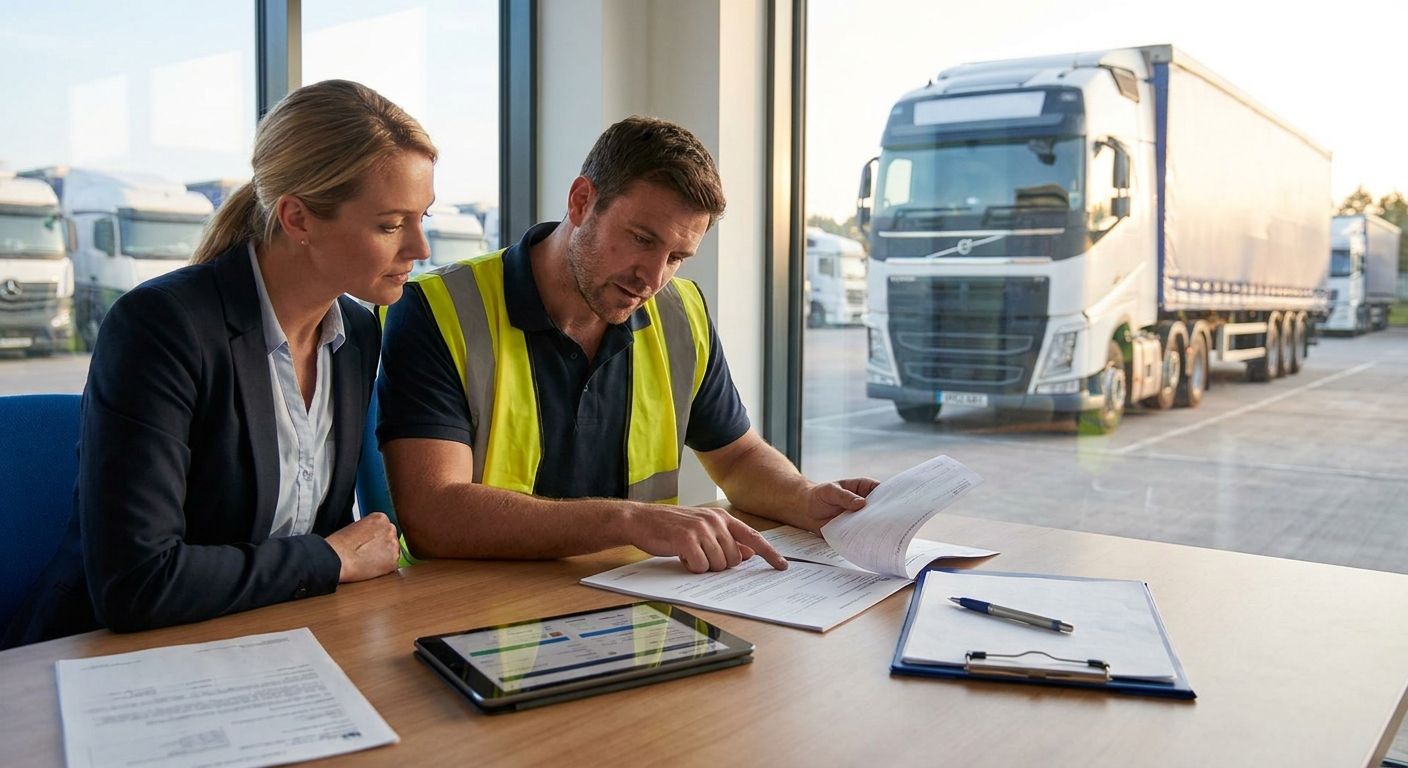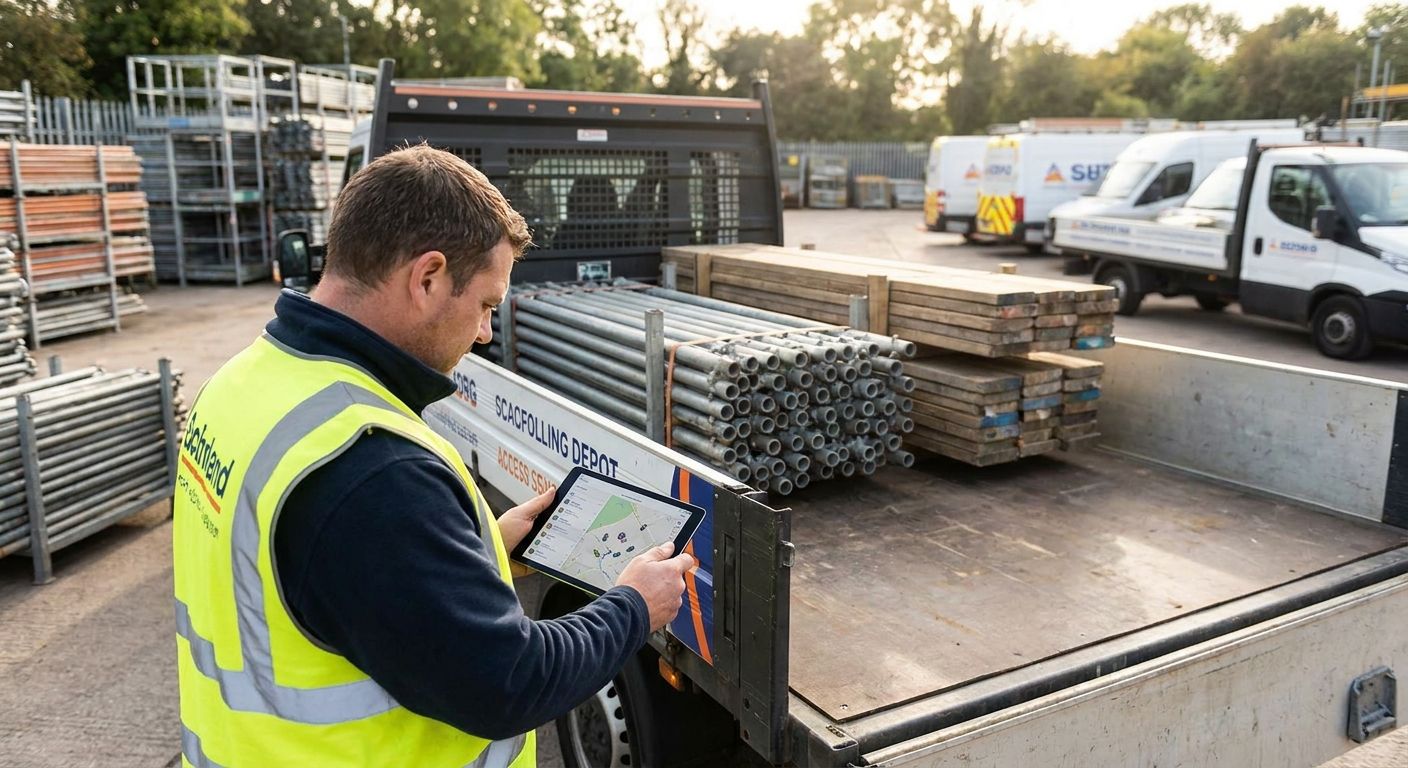
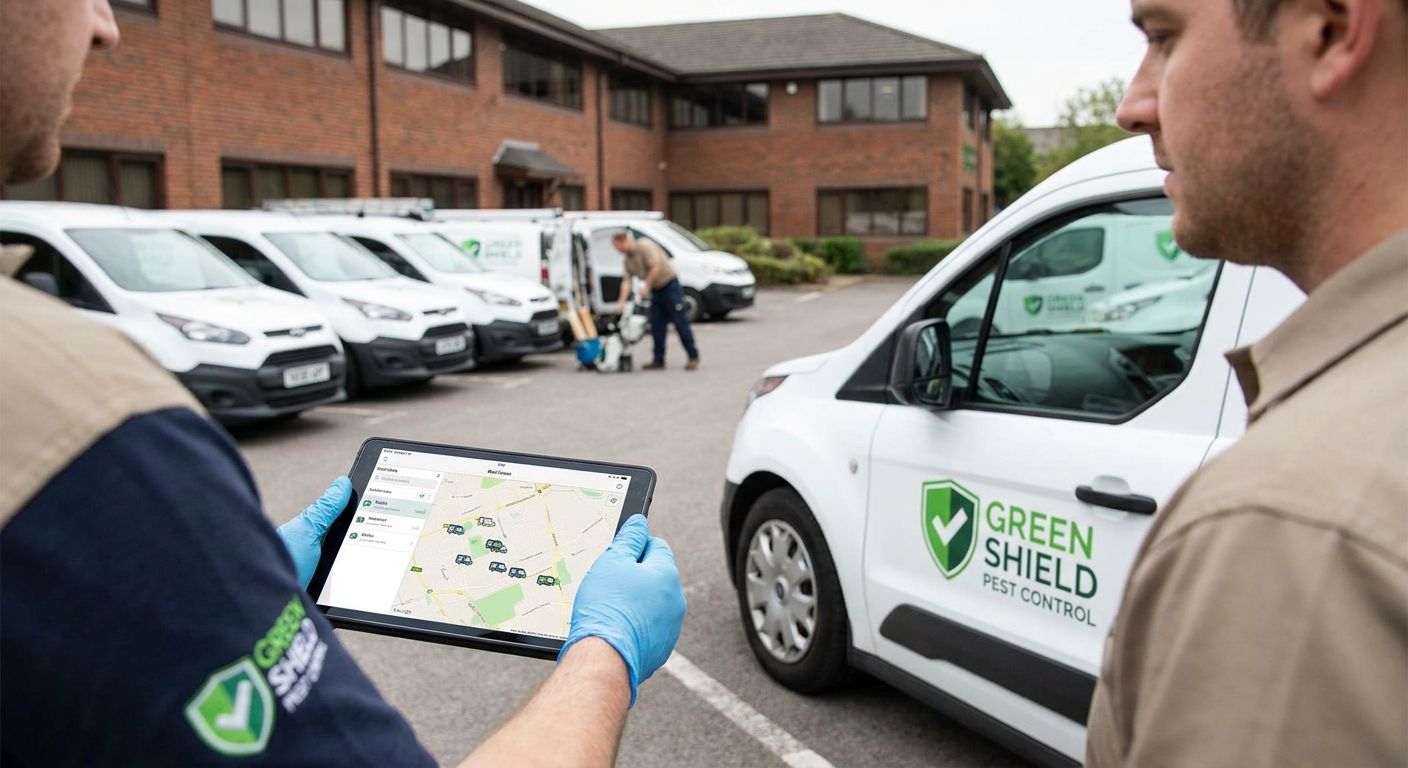
Pest control vans rarely stay still: technicians run 8-12 jobs a day, park on residential streets, and carry chemicals and traps worth stealing. Choosing fleet management software for pest control companies means matching the tool to that pattern, not buying whatever an HGV haulier uses.
- Fleet management software pest control buyers need multi-stop route visibility, not long-haul telematics built for HGVs.
- Lone worker apps matter because technicians enter private gardens and homes solo, often out of sight of colleagues.
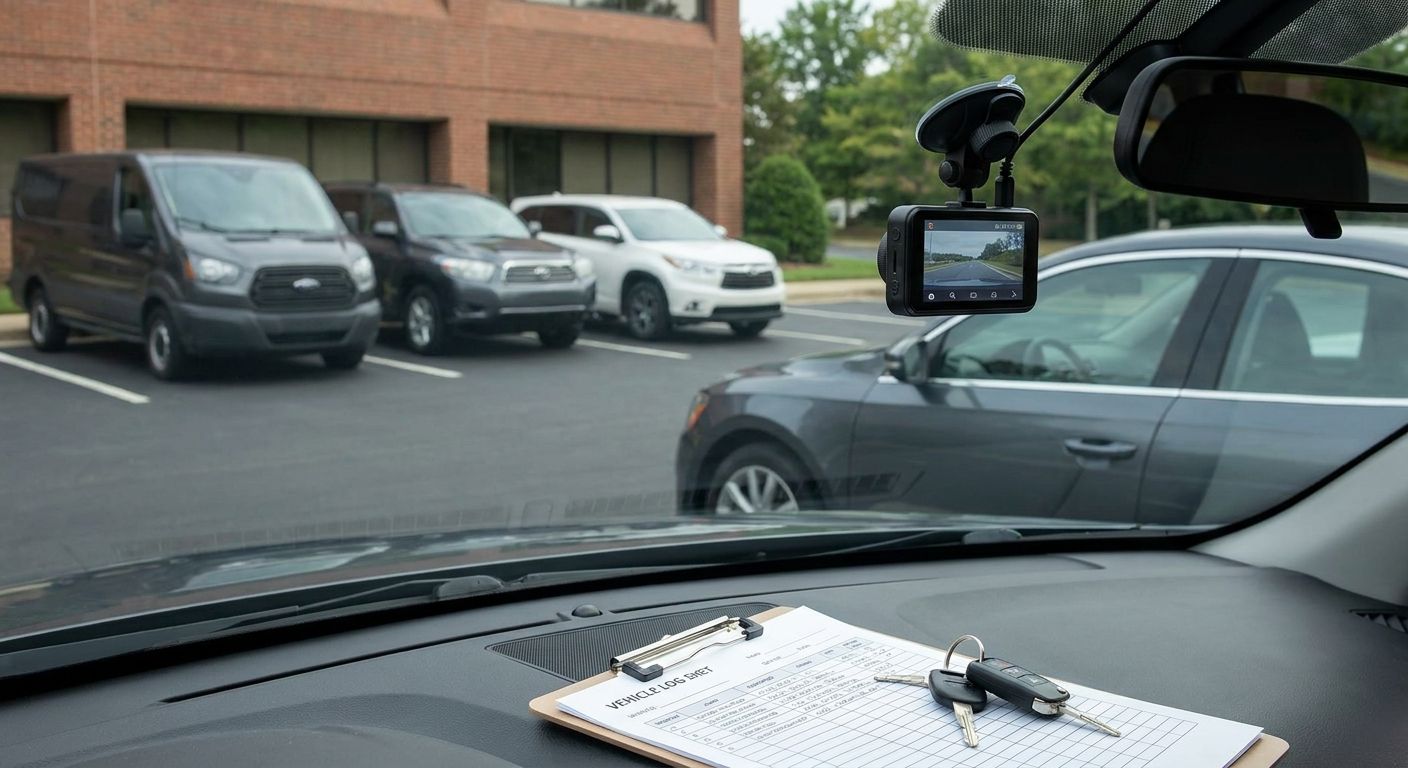
- 4G dash cams settle chemical-damage and access disputes with timestamped footage rather than he-said-she-said calls.
- Crystal Ball's Manager App gives a single view across a mixed van fleet without a dedicated dispatcher role.
- Skip HGV-grade tracking suites in 2026 - the extra cost buys compliance features a pest control fleet doesn't need.
Why this matters
A pest control round is built on tight windows and repeat visits, so a missed ETA or a disputed damage claim costs more than the callout itself. Fleet tracking closes both gaps: it shows a controller exactly where every van sits against the day's schedule, and it produces evidence when a customer disputes what happened on site.
Margins in pest control are thin because most jobs are short and mileage-heavy. Fleet management software for pest control companies pays for itself through fuel savings and fewer disputed claims before it pays for itself through anything else.
Who this is for
This guide is for pest control operators running 3 to 40 vans, where technicians work independently across a wide postcode area and the office has no dedicated dispatcher. If your team is mostly solo technicians attending residential and commercial sites, and you're comparing fleet management software for small businesses against something built for bigger logistics fleets, this is the comparison you need.
What to look for in fleet management software for pest control
Multi-stop route visibility
A pest technician might hit 10 addresses before lunch, so software needs to show live progress against the day's job list, not just a dot on a map. Without this, a controller can't tell a customer a realistic arrival time, and repeat callbacks eat into the day.
Lone worker safety
Technicians go into back gardens, lofts, and commercial kitchens alone, often with no phone signal check-in built into the job. Software with a proper lone worker function - panic alerts, check-in timers, location sharing - covers a real gap most generic tracking tools ignore.
Dash cam evidence for disputes
Chemical treatments and access to private property generate disagreements: a customer claims a fence was damaged, or disputes that a technician showed up at all. Timestamped 4G footage resolves this in minutes instead of weeks of back-and-forth.
Fuel and mileage cost control
Short multi-drop routes burn fuel disproportionately to distance covered, and idling outside a property while treating a garden adds up across a fleet. Tracking data that flags reduce fuel costs with fleet tracking data turns a vague fuel bill into a controllable number.
Easy scaling from small to large fleet
Pest control companies grow by adding a van and a technician at a time, not in fleet-wide rollouts. Software should let you add one vehicle without a re-onboarding project, because a system that only makes sense at 50+ vans wastes money at 8.
Top picks
1. Real-time GPS vehicle tracking - the safe pick
Live location refresh and geofencing around job sites are the baseline any pest control fleet needs in 2026. It confirms a technician actually arrived at the address on the job sheet, which matters when a customer disputes a visit.


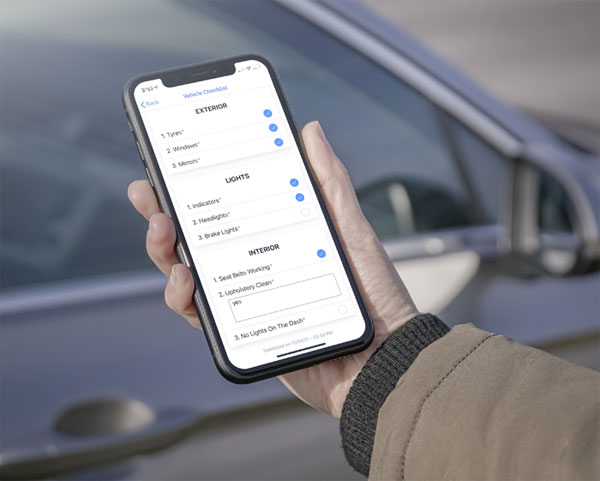
Fleet Vehicle Tracking covers van, car and HGV variants under one system, which matters if your fleet mixes small vans with a larger service vehicle. Verdict: Buy.
2. 4G dash cams - the trust builder
A dash cam with 4G connectivity uploads footage live rather than waiting for the van to return to base, so a dispute raised the same afternoon can be closed the same afternoon. 4G Fleet Dash Cams handle this without needing physical access to the SD card. Verdict: Buy.
3. Automated route and drop planning - the wildcard
Most pest control controllers still build routes by memory or a spreadsheet, which works until a technician calls in sick or a job runs long. Software that reduces empty running turns a reactive re-shuffle into a two-minute reassignment. Read the detail on route planning before you assume your current spreadsheet is good enough. Verdict: Consider.
4. Lone worker app - the safety net
A technician spraying a loft alone in a stranger's house is a genuine risk, and general fleet tracking doesn't cover it. Purpose-built lone worker apps for field service engineers add check-in timers and panic alerts that a plain GPS tracker skips entirely. Verdict: Buy for solo-technician fleets, Consider if you always pair-crew.
5. Manager App for fleet oversight - the day-to-day tool
A controller running eight vans off a laptop dashboard misses what happens between refreshes; a phone-based manager view catches it. The Manager App puts live van positions and job status on the same screen a controller already checks all day. Verdict: Buy.
What to avoid
- HGV-grade telematics suites. Systems built around tachograph compliance and driver hours reporting add cost for features a pest control van fleet never uses.
- Dash cams without 4G upload. SD-card-only cameras look identical in a sales sheet but mean physically retrieving footage days after an incident, by which point a dispute has already escalated.
- Tracking platforms with no lone worker module. A system that only plots a van's location tells you nothing if a technician is unresponsive inside a property.
Verdict comparison
| Pick | Solves | Fleet size fit | 2026 Verdict |
|---|---|---|---|
| GPS vehicle tracking | Route visibility, arrival proof | 3-40+ vans | Buy |
| 4G dash cams | Damage and access disputes | 3-40+ vans | Buy |
| Route planning | Empty running, missed slots | 8+ vans | Consider |
| Lone worker app | Solo technician safety | Any solo-crew fleet | Buy |
| Manager App | Day-to-day oversight | 3-40+ vans | Buy |
Before committing budget, run the numbers with calculate ROI on fleet management software against your current fuel and callback costs rather than the sticker price alone.
FAQ
What's the best fleet management software for pest control companies in 2026?
The best setup pairs real-time GPS vehicle tracking with a lone worker app and 4G dash cams, since pest control fleets need route visibility, solo-technician safety, and dispute evidence together. A generic HGV telematics platform without those three covers less of what a pest control fleet actually needs.
Is fleet tracking worth it for a small pest control fleet?
Yes, even a 3-van pest control fleet benefits because fuel and repeat-callback costs scale with route count, not fleet size. Software built for small businesses avoids paying for enterprise features a small operator won't use.
Do pest control technicians need a lone worker app?
Yes, if technicians attend properties solo, since a lone worker app adds check-in timers and panic alerts that plain vehicle tracking doesn't provide. This matters most for loft, cellar, or after-hours commercial jobs.
How much does fleet tracking cost for a small van fleet?
Costs vary by hardware and monitoring level, so get a current quote rather than relying on a generic figure. Compare it against your fuel and dispute costs using an ROI calculation before deciding.
Do I need dash cams if I already have GPS tracking?
Yes, GPS tracking confirms location and timing but dash cams provide visual evidence for damage claims and access disputes that location data alone can't settle. The two work as a pair, not a substitute for each other.
Can fleet software help reduce fuel costs on multi-drop routes?
Yes, tracking data flags excess idling and inefficient routing on short multi-drop days, which is where pest control fleets lose the most fuel relative to distance covered. Route planning tools reduce this further by cutting empty running between jobs.
How many vans justify fleet management software?
Even a 3-van operation benefits once technicians work unsupervised across a wide area, since the value comes from route visibility and dispute evidence rather than fleet size. Most pest control operators see the case by 5 vans.
What's the difference between fleet tracking for pest control vs HGV haulage?
Pest control fleets need multi-stop route visibility and lone worker safety, while HGV haulage software focuses on tachograph compliance and long-distance route optimisation. Buying the wrong one means paying for compliance features you don't need or missing safety features you do.
One last thing
Most pest control fleets underrate the dash cam until the first disputed damage claim, then treat it as essential from that point on. Set the 4G upload up before the first dispute, not after.