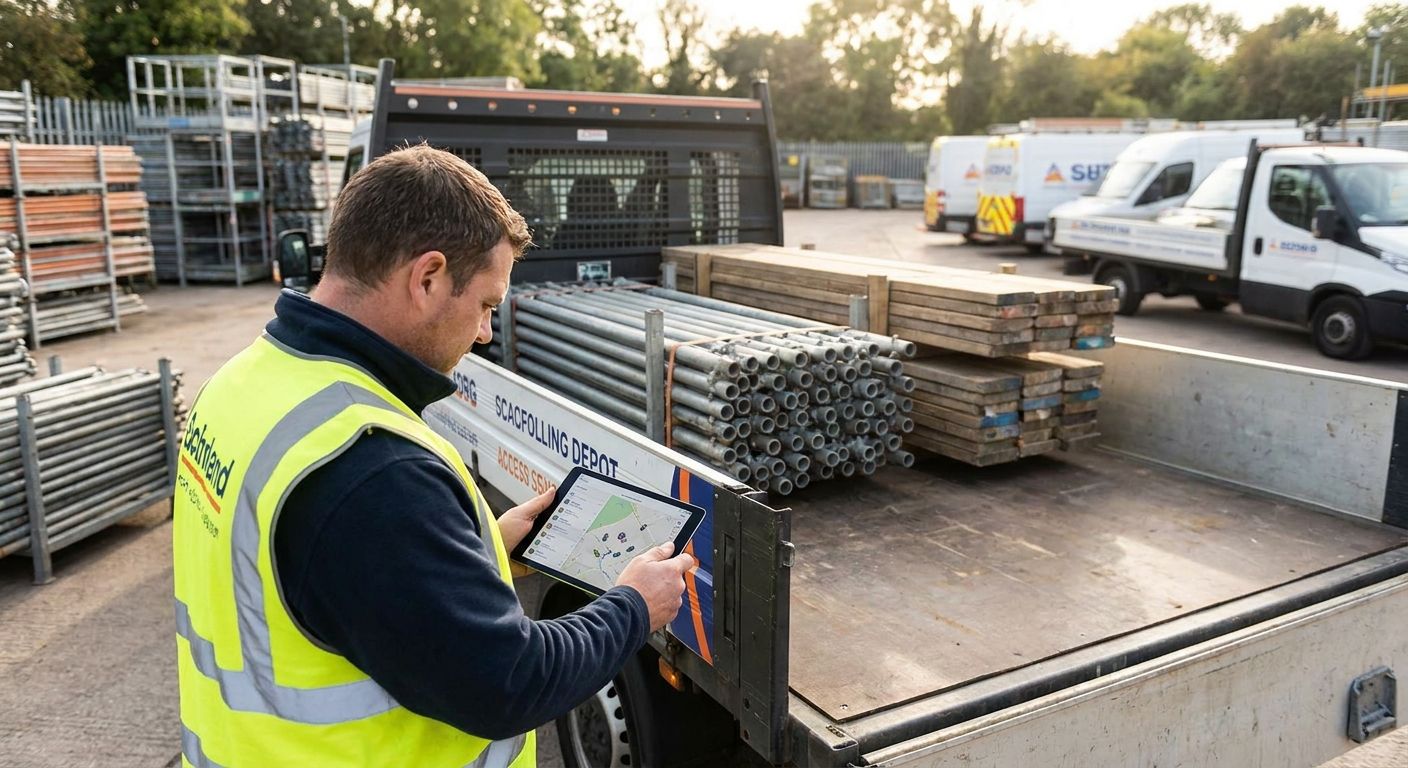

Van leasing companies carry a different kind of risk to fleet operators who own their vehicles outright: the vans on the road belong to the leasing company on paper, but someone else's drivers put the miles on them. Fleet management software for van leasing companies in 2026 has to do two jobs at once — protect the asset value of vehicles that will be re-leased or sold on, and give lessees enough visibility to trust the arrangement.
- Crystal Ball's Thatcham S7 tracker at £198 suits leasing fleets that need insurance-grade security plus lessee-level reporting — Buy.
- Fleet management software for van leasing companies must isolate one lessee's vehicles from the rest of the book; consumer GPS apps can't do this — Skip.
- 4G dash cam footage settles damage disputes with lessees at handback using timestamped video, not a verbal argument — Buy.
- Leasing companies running more than 50 vans need multi-tenant reporting before adding more trackers — Consider.
- Driver behaviour scoring protects residual value across a 3-year lease cycle better than mileage caps alone — Buy.
Why this matters
A leased van comes back at the end of the term and gets re-marketed, re-leased, or sold. Every hard brake, every overnight parked outside the geofence, every unreported knock against a bollard shows up as reduced resale value or a dispute at handback. Leasing companies that run generic tracking bolted onto a spreadsheet find out about that damage when the van is already back on the yard, not when it happened.
The vehicle tracking systems built for van rental businesses share a lot of DNA with what leasing companies need, because both models involve handing a vehicle to someone outside your own payroll and needing proof of how it was treated. The difference for leasing is contract length — months or years, not days — which changes what condition monitoring actually means.
Who this is for
This guide is for van leasing companies managing a book of 20 to 500+ vans across multiple business customers, where each lessee needs to see their own vehicles without touching anyone else's data, and where the leasing company needs a single view of the whole fleet for insurance, resale planning, and contract enforcement. If you're leasing five vans to one long-term client, a lighter setup will do. If you're managing dozens of lease contracts running in parallel, the software has to separate them cleanly.
What to look for in fleet management software for van leasing companies
Multi-tenant reporting, not one flat dashboard
Each lessee needs to see their own vans, their own mileage, their own driver behaviour scores — and nothing belonging to another customer. Software built for owner-operated fleets often assumes one company sees everything, which becomes a data-sharing problem the moment you're running contracts for 15 different businesses at once.
Driver behaviour monitoring tied to residual value
Harsh braking, harsh acceleration and speeding events wear a van down faster than the odometer shows. Driver behaviour scoring flags the lessees whose drivers are quietly reducing the van's resale value months before the lease ends, giving you time to raise it in a contract review rather than at handback.
Thatcham-approved tracking for insurance and theft protection
A leased van sitting in a customer's yard overnight is a theft target that isn't fully in your control. A Thatcham-approved tracker — S5 or S7 category — gives 24/7/365 monitoring backed by an insurance-recognised standard, which matters when the vehicle on the road is a company asset, not the lessee's own capital.
4G dash cam footage for damage disputes
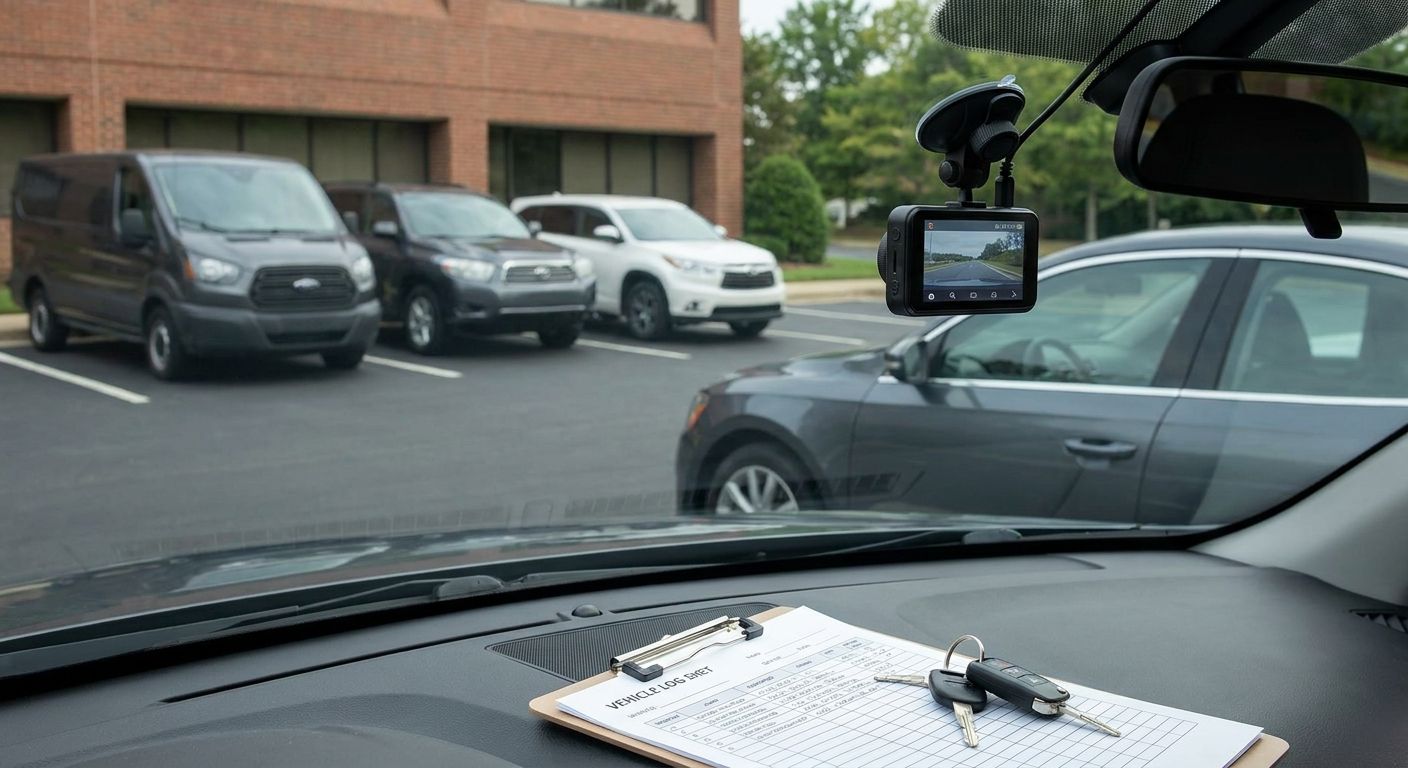
Handback disputes over dents, scrapes and interior damage cost time and goodwill. A 4G dash cam with cloud-stored footage settles the argument with a timestamp instead of two conflicting accounts, and cuts the admin time spent chasing evidence after the fact.
Fuel card and cost integration
Leasing contracts often bundle fuel or maintenance costs, and reconciling that manually against dozens of lessees is where margin leaks. Software with fleet fuel card management built in ties spend directly to the vehicle and driver, not just the invoice.
Geofencing and out-of-hours alerts
A van parked outside its agreed operating radius, or moving at 2am when the lessee's business is closed, is either a theft in progress or a contract breach. Geofence alerts flag both without anyone having to check the map manually.
Top picks for van leasing companies
The insurance-grade pick: Thatcham S7 Tracker. At £198, this covert tracker carries the Thatcham S7 category rating with 24/7/365 monitoring through Crystal Ball's monitoring centre. It's the baseline for any leased van worth protecting against theft, and most commercial insurers recognise the category on the policy. Buy for standard vans entering the leasing book.
The high-value pick: Thatcham S5 Plus Tracker. At £548, the S5 Plus adds driver identification and a higher security category than the standard S5, aimed at vehicles where the leasing company is carrying more capital risk — refrigerated vans, specialist conversions, higher-spec panel vans. Buy for vehicles above the fleet average purchase price.
The dispute-settler: 4G Fleet Dash Cams. These pair live video with the tracking data, so a claim about who caused a shunt, or a lessee's complaint about pre-existing damage, gets resolved against footage rather than memory. Buy for any van going out on a multi-lessee rotation.
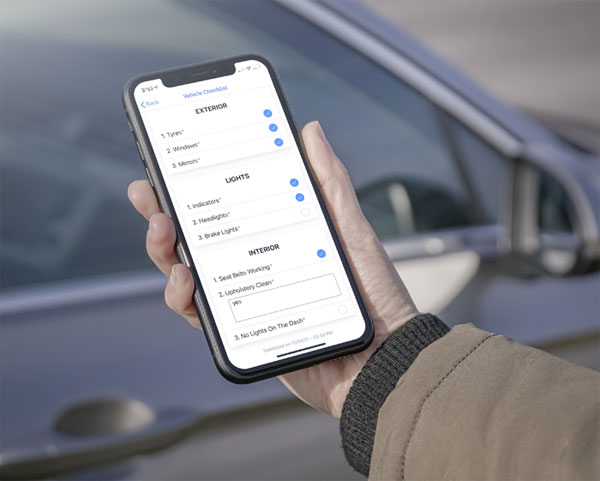
The oversight layer: Manager App. Running a book of leased vans across dozens of customers without a single screen to check status is how small problems become handback disputes. The Manager App puts location, driver behaviour and vehicle status on one phone or tablet. Consider once the fleet passes roughly 20 vehicles under active lease.
The margin protector: fuel card integration. For leasing contracts that include fuel, reconciling spend by vehicle and driver rather than by invoice line stops fraud and misuse from eating into contract margin. Consider as a bolt-on once the core tracking and dash cam layer is in place — it's not the first thing to buy, but it pays for itself once volume climbs.


“If a lessee returns a van with harsh-braking events well above the fleet average, you've lost residual value before the next contract even starts.”
What to avoid
- Consumer GPS apps. They give one login and one map view — no way to isolate 40 lessees from each other's data, and no Thatcham category an insurer will recognise.
- Dash cams without cloud storage. A camera that only records to an SD card means the footage you need for a handback dispute might already be overwritten by the time you ask for it.
- Software with no driver behaviour scoring. Mileage caps alone don't catch the driving style that ages a van faster than its odometer suggests, and that's what actually erodes resale value on a leasing book.
Verdict comparison
| Criteria | Thatcham S7 Tracker | Thatcham S5 Plus | 4G Fleet Dash Cams | Manager App |
|---|---|---|---|---|
| Fits standard lease vans | Yes | Overkill | Yes | Yes |
| Fits high-value/converted vans | Adequate | Best fit | Yes | Yes |
| Settles handback disputes | No | No | Yes | Partial |
| Multi-lessee oversight | Partial | Partial | Partial | Yes |
| Verdict | Buy | Buy (high-value only) | Buy | Consider |
Running the ROI numbers before committing to a full rollout is worth doing properly rather than guessing — the ROI calculation method for fleet management software walks through the maths against fuel, insurance and downtime savings, which matters more for a leasing book than a single-owner fleet because the savings compound across every lease cycle.
FAQ
What is the best fleet management software for van leasing companies in 2026?
The best setup pairs a Thatcham-approved tracker such as the S7 with 4G dash cams and a manager-level app that separates each lessee's vehicles. This combination covers theft protection, damage evidence and multi-tenant oversight, which are the three things a generic tracking app can't do together.
Do leased vans need Thatcham-approved trackers?
They don't legally need one, but a Thatcham S5 or S7 tracker gets recognised by most commercial insurers and lowers the premium risk on vehicles the leasing company doesn't directly control day to day. It also gives 24/7/365 monitored recovery if a leased van is stolen.
How does dash cam footage help with lease handback disputes?
4G dash cam footage gives a timestamped record of incidents and vehicle condition, which settles disagreements about who caused damage without relying on either party's memory. Footage stored in the cloud stays available even if the incident is reported weeks after it happened.
Is fleet tracking software different for leasing companies than for owner-operated fleets?
Yes — leasing companies need multi-tenant reporting so each lessee sees only their own vehicles, while owner-operated fleets typically need one flat dashboard. Software that assumes single ownership becomes a data-sharing problem once you're running contracts for multiple separate businesses.
How much does a Thatcham-approved tracker cost for a leased van?
Crystal Ball's Thatcham trackers range from £198 for the S7 category to £548 for the S5 Plus, depending on the security category and features needed. Higher-value or specialist conversion vans usually justify the higher category.
Does driver behaviour monitoring actually affect resale value on leased vans?
Yes — harsh braking, harsh acceleration and speeding events accelerate mechanical wear beyond what mileage alone shows, which shows up as reduced resale value at the end of the lease. Scoring drivers during the lease term lets leasing companies flag it in a contract review rather than discover it at handback.
Can leasing companies integrate fuel cards with fleet tracking?
Yes, fuel card data can be tied to the vehicle and driver identified through the tracking system, which reconciles spend automatically instead of matching invoices by hand. This matters most for leasing contracts where fuel or maintenance costs are bundled into the agreement.
One last thing
The leasing companies that struggle most aren't the ones without tracking — they're the ones who bought tracking for their own fleet management and only later realised it has no way to hand a lessee their own view of their own vans. Sort out multi-tenant reporting before you scale the hardware rollout, because retrofitting that structure across a live book of contracts is far messier than building it in from vehicle one.
Fleet management software for van leasing companies works best in 2026 when it's chosen for the contract structure first, and the hardware second. Get the reporting boundaries right and the trackers, dash cams and driver scoring all slot in cleanly behind them.
For the full picture on running a leasing operation day to day, Crystal Ball covers vehicle tracking, dash cams and lone worker tools built for exactly this kind of multi-customer fleet.