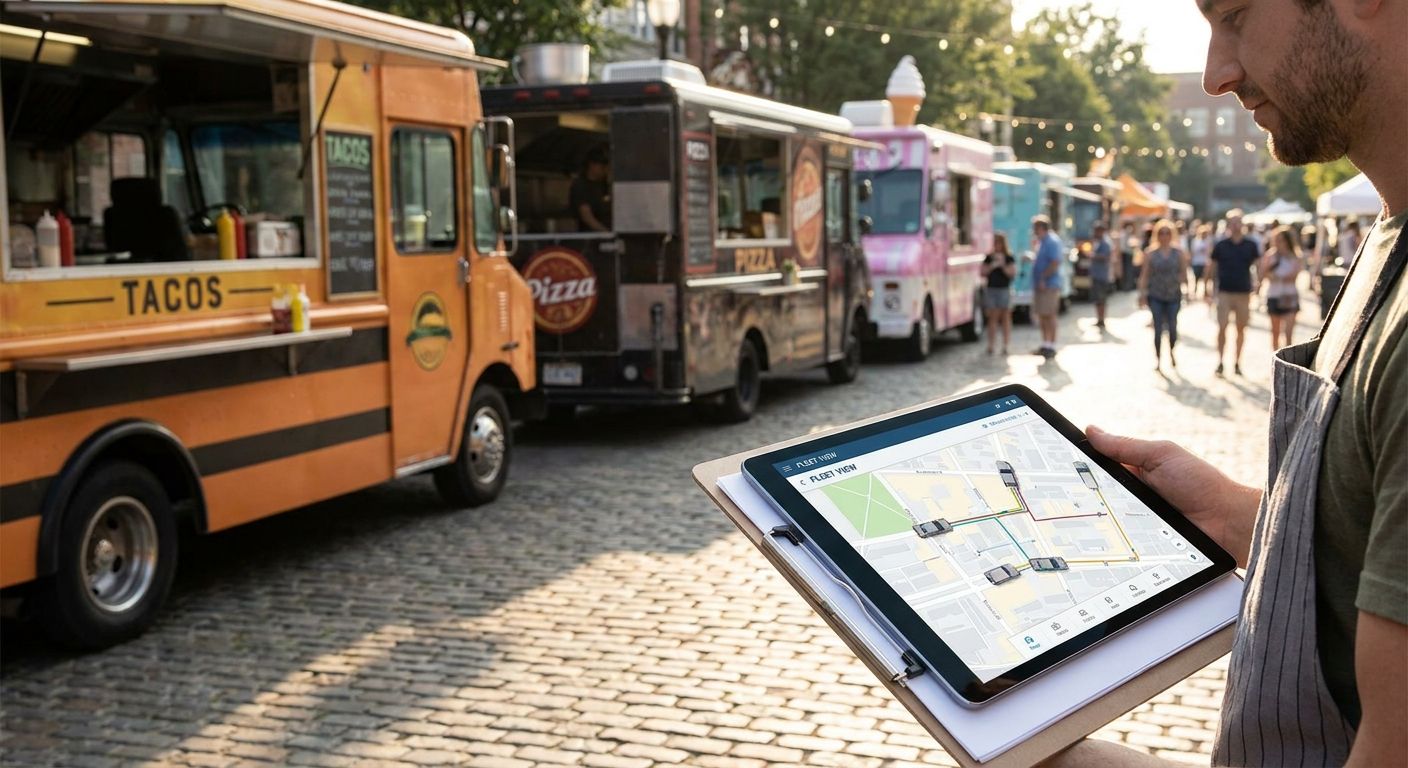
Food truck and mobile catering fleets don't sit on a single yard overnight — they're scattered across market pitches, festival fields, and private event car parks by lunchtime, and a driver running late or a van parked in the wrong zone costs you the booking. Fleet tracking for food truck fleets has to solve for constant movement, cash handling, and casual staff in a way that a generic car tracker never will.
- Crystal Ball's Fleet Vehicle Tracking suits multi-stop food truck fleets — buy it for live GPS across every pitch.
- 4G Fleet Dash Cams give operators footage evidence for cash-handling disputes and public liability claims — buy.
- Thatcham S7 Tracker at £198 covers standard catering vans; upgrade to S5 for custom-built high-value trucks.
- Personal car trackers and single dash cams don't scale for multi-vehicle catering fleets — skip both.
Why this matters
A food truck fleet runs a different risk profile than a delivery van fleet. Vehicles carry cooking equipment, cash floats, and often a generator or gas bottles, and they're parked in public spaces for hours at a time with the side hatch open. Insurers price that risk accordingly, and a single theft of a fitted-out van can wipe out a season's margin.
Operators running three or more vans across multiple pitches in 2026 also deal with congestion charge zones, clean air zone fees, and staff who aren't full-time drivers. None of that shows up in a standard tracker built for office car fleets.
Who this is for
This guide is built for operators running two to twenty catering vans or trailers across markets, festivals, corporate sites, and private hire — not single-truck owner-operators parked on one pitch daily. If you're managing casual weekend drivers, multiple daily site changes, and cash-heavy transactions, a proper fleet management software for small businesses setup pays for itself faster than most people expect.
What to look for in fleet tracking for food truck fleets
Live multi-site visibility
You need to see every van's position in real time when three trucks are booked to three different festivals on the same Saturday. Without live GPS, a late arrival at a paying event client only gets flagged when the phone starts ringing.
Idle time and generator runtime alerts
Food trucks idle for power and refrigeration far more than delivery vans do, and that idle time burns fuel nobody's tracking. An alert past 15 minutes of continuous idling flags exactly the runtime worth reviewing before it eats into margin.
Clean air zone and congestion charge geofencing
Most catering fleets work city centres and event sites inside charging zones. London's Congestion Charge runs at £15 a day and ULEZ adds £12.50 for non-compliant vehicles — geofence alerts on clean air zone compliance stop a driver clocking up daily fines without anyone noticing until the invoice lands.
Driver behaviour monitoring for casual and seasonal staff
Festival season means hiring drivers you haven't vetted for years of clean mileage. Harsh braking and acceleration data flags risky driving before it turns into a claim, not after.
Thatcham-approved security for high-value equipment onboard
A fitted-out catering van with a fryer, griddle, and point-of-sale kit is worth protecting like the asset it is. Thatcham S5 and S7 trackers are insurance-recognised, which matters directly to your premium.
Fast onboarding for small teams
Most catering operators don't have an IT department. A system your pitch manager can set up between bookings beats one that needs a two-day install schedule.
Top picks for food truck fleet tracking
Fleet Vehicle Tracking — the all-rounder. Live GPS across every van, geofencing for pitches and charging zones, and journey history you can pull up if a client disputes an arrival time. This is the baseline every catering fleet running more than two vehicles needs. Buy.
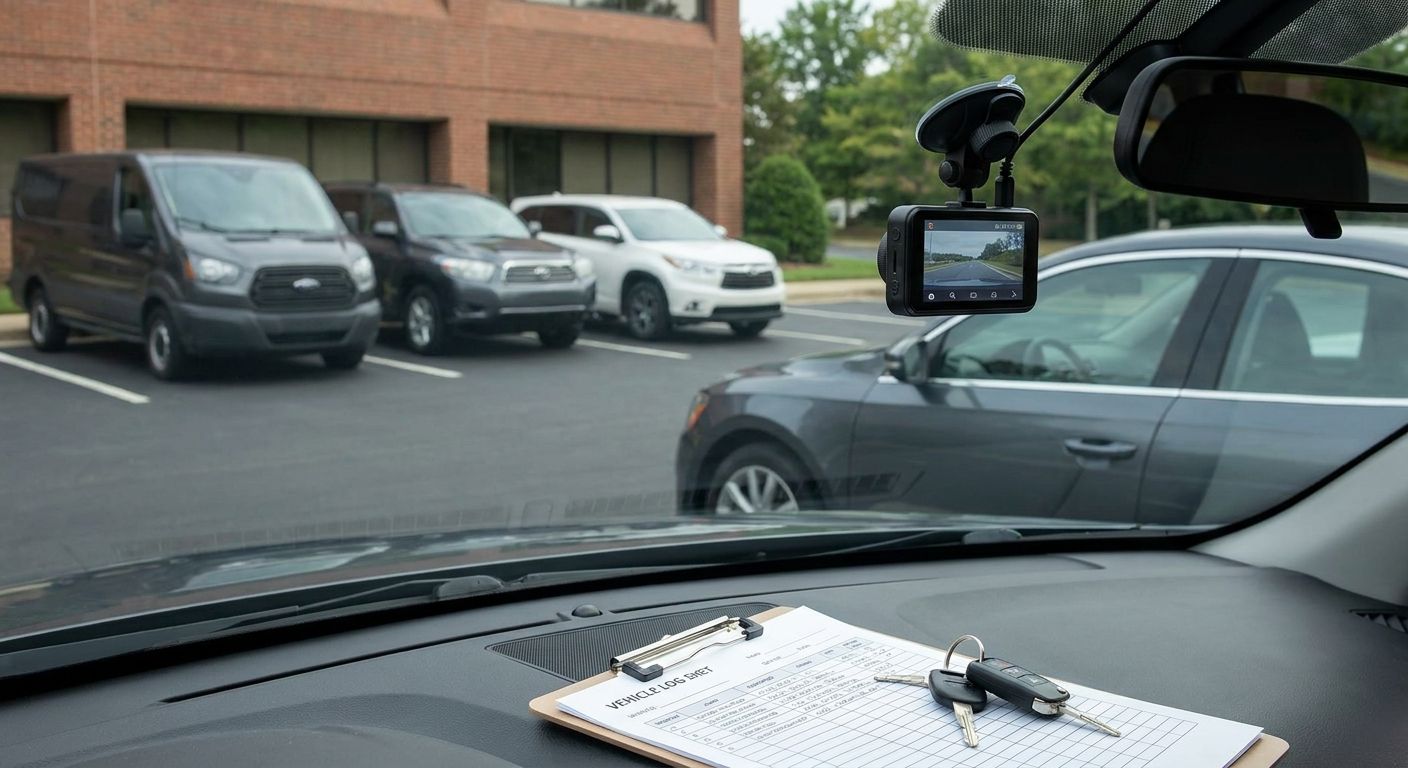
4G Fleet Dash Cams — the evidence pick. Cash disputes, slip-and-fall claims at a serving hatch, and minor parking knocks at cramped festival sites all get resolved faster with footage. A 4G connection means the clip uploads before the incident's even finished, not after the van gets back to base. Buy.
Thatcham S7 Tracker — the safe pick for standard vans. At £198, it's insurance-approved and monitored 24/7/365, which is the level most standard catering vans need to satisfy an insurer. Trucks with a full custom fit-out and higher replacement value should step up to S5 instead. Consider.
Driver Behaviour — the coaching pick. For fleets bringing on seasonal or weekend drivers for festival runs, this turns braking and acceleration data into a conversation before it turns into an accident report. Consider.


What to avoid
- Personal car trackers marketed for individual vehicles. They're built for one owner checking one car, not a manager watching five vans move between six pitches in a day.
- Single stand-alone dash cams with no live upload. Footage that only downloads once the van's back at base is useless for resolving a dispute that happened at 2pm at a festival three hours away.
- Trackers with no idle or generator-draw visibility. Catering vans idle constantly for refrigeration and power — a system that only reports movement misses where the fuel actually goes.
Verdict comparison
| Criteria | Fleet Vehicle Tracking | 4G Fleet Dash Cams | Thatcham S7 Tracker | Driver Behaviour |
|---|---|---|---|---|
| Multi-site GPS | Yes | No (footage only) | Yes | No |
| Insurance-approved | No | No | Yes | No |
| Best for | Daily pitch tracking | Cash and incident disputes | Insurance discount on standard vans | Coaching casual drivers |
| Price | Quote-based | Quote-based | £198 | Quote-based |
| Verdict | Buy | Buy | Consider | Consider |
FAQ
What's the best fleet tracking for food truck fleets in 2026?
Live GPS tracking paired with a 4G dash cam covers the two biggest risks for food truck fleets in 2026: missed site arrivals and disputed incidents at pitches. Add a Thatcham-approved tracker for any van carrying a high-value fit-out.
Do food truck operators need a Thatcham-approved tracker?
Only if the insurer requires one or the van's fit-out value pushes it into a higher risk category. Thatcham S7 suits standard catering vans; S5 is built for higher-value custom builds.
Is fleet tracking worth it for a two-van catering business?
Yes, once you're running two vehicles to two different sites on the same day, visibility stops being optional. A single missed pitch arrival can cost more than a year of tracking.
How much does fleet tracking cost for a small catering fleet?
Pricing is typically quote-based and scales with vehicle count and features, though hardware like the Thatcham S7 Tracker runs £198 per unit as of 2026. Get a specific quote based on fleet size and required features.
Do dash cams help with cash-handling disputes at food trucks?
Yes. A 4G dash cam with live upload captures footage before a dispute escalates, which matters when transactions happen through a serving hatch with no fixed till camera.
Can fleet tracking reduce congestion charge and ULEZ costs?
Geofencing alerts flag when a van enters a charging zone, which stops accidental daily fines stacking up unnoticed. London's Congestion Charge is £15 a day and ULEZ adds £12.50 for non-compliant vehicles.
Does driver behaviour monitoring matter for seasonal festival staff?
It matters more for seasonal staff than full-time drivers, since you have no driving history to judge risk against. Harsh braking and acceleration data gives you that visibility from week one.
What's the difference between Thatcham S5 and S7 for catering vans?
S7 covers standard theft monitoring and tracking suited to most catering vans, while S5 adds remote immobilisation for higher-value, custom-built trucks. Choose based on the replacement cost of the fit-out, not just the vehicle.
One last thing
Most catering operators budget for fuel and staff but never for idle time — and idle time is where a generator-drawing van at a six-hour festival pitch quietly burns through the day's margin. Set the idle alert threshold at 15 minutes, review it weekly against your pitch schedule, and you'll usually find one van in the fleet running the generator far longer than the booking needed.