Congestion charge fines rack up when nobody in the fleet office knows a van crossed into a charging zone until the penalty notice lands weeks later. Fleet tracking with geofencing catches the crossing in real time, warns the driver before the cut-off, and hands you the GPS log to fight fines that were never valid in the first place.
- Geofencing every congestion zone boundary is the fix that lets fleets avoid congestion charge fines fleet-wide, automatically.
- London's Congestion Charge runs £15 a day and ULEZ adds £12.50 for non-compliant vans, with unpaid charges escalating to a £180 penalty.
- Timestamped GPS logs from fleet tracking overturn wrongly-issued PCNs when a council or TfL disputes a crossing.
- Route planning around zone boundaries cuts exposure for vans that don't need to enter Central London daily.
- Verdict: fit geofence-enabled tracking before your next fine lands, not after.
Why this matters
A single missed Congestion Charge payment in London costs £15 for the day plus a Penalty Charge Notice that starts at £180 and drops to £90 if you pay within 14 days. Multiply that across a 30-van fleet making unplanned crossings and the annual leak runs into thousands, all for a charge that a fleet tracking platform would have flagged before the driver ever crossed the line.
The problem isn't usually reckless driving. It's visibility. Fleet managers running paper schedules or basic satnav have no way of knowing a driver clipped the ULEZ boundary on a detour, and by the time TfL's cameras process the plate, the charge has already become a fine. Geofencing closes that gap by putting a digital boundary around every charging zone your vehicles touch, so the alert fires the moment the vehicle enters, not three weeks later in the post.
What you'll need
- A GPS fleet tracking system with geofencing, not just live location dots
- A list of every charging zone your routes touch — Congestion Charge, ULEZ, and any Clean Air Zone outside London (Birmingham, Bristol, and others run their own schemes)
- A manager app or dashboard that pushes alerts to the office and the driver's cab in real time
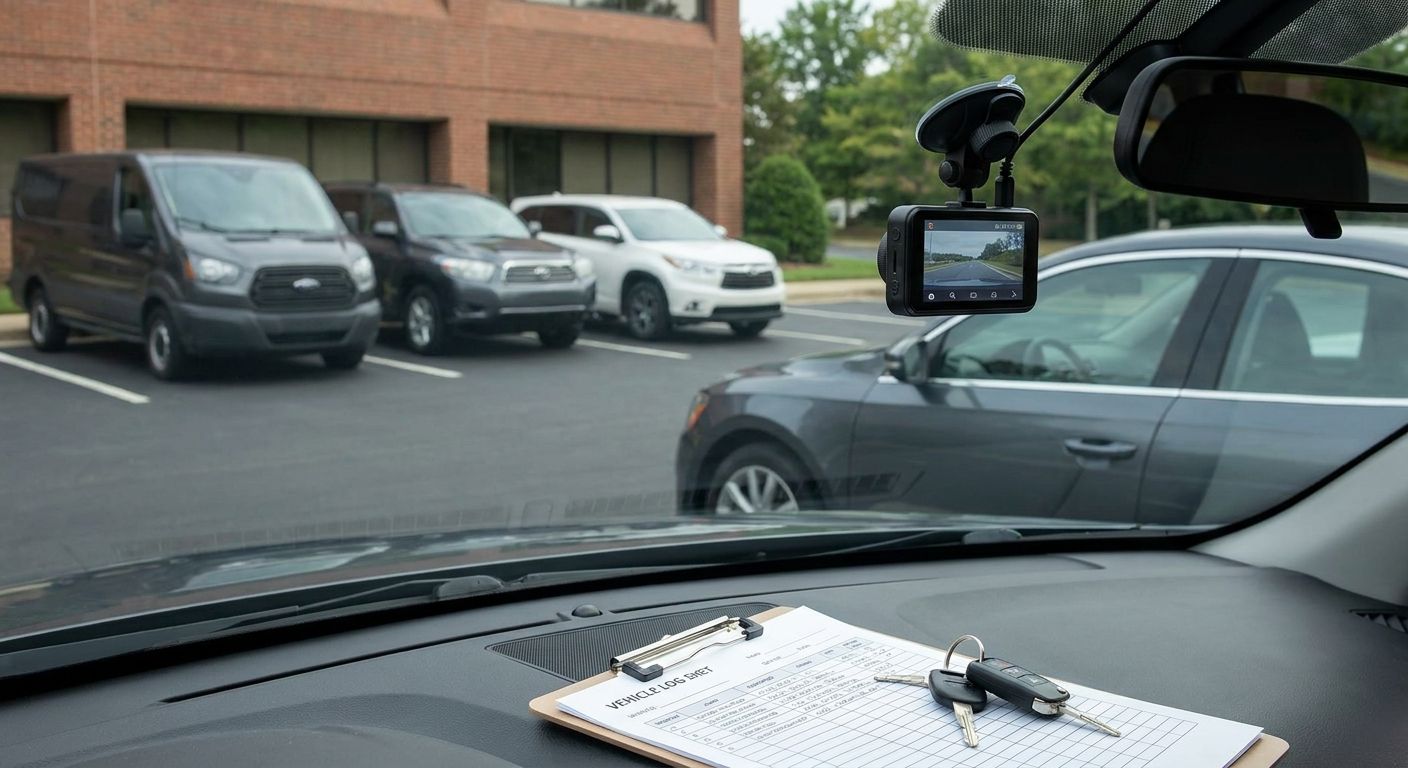
- Historic route and timestamp data going back at least 90 days, for disputing charges already issued
- 30 minutes per zone to draw and verify the geofence boundary against the official TfL or council map
The steps
1. Map every charging zone your fleet actually touches
Start with the routes your drivers run today, not a generic list of UK zones. Pull the last three months of journey data and overlay it against the Congestion Charge zone, the London ULEZ boundary, and any Clean Air Zone your vans pass through outside the capital. Skip this step and you'll geofence the zones you assume matter while missing the one a driver actually crosses twice a week.
2. Draw geofences that match the real boundary, not an approximation
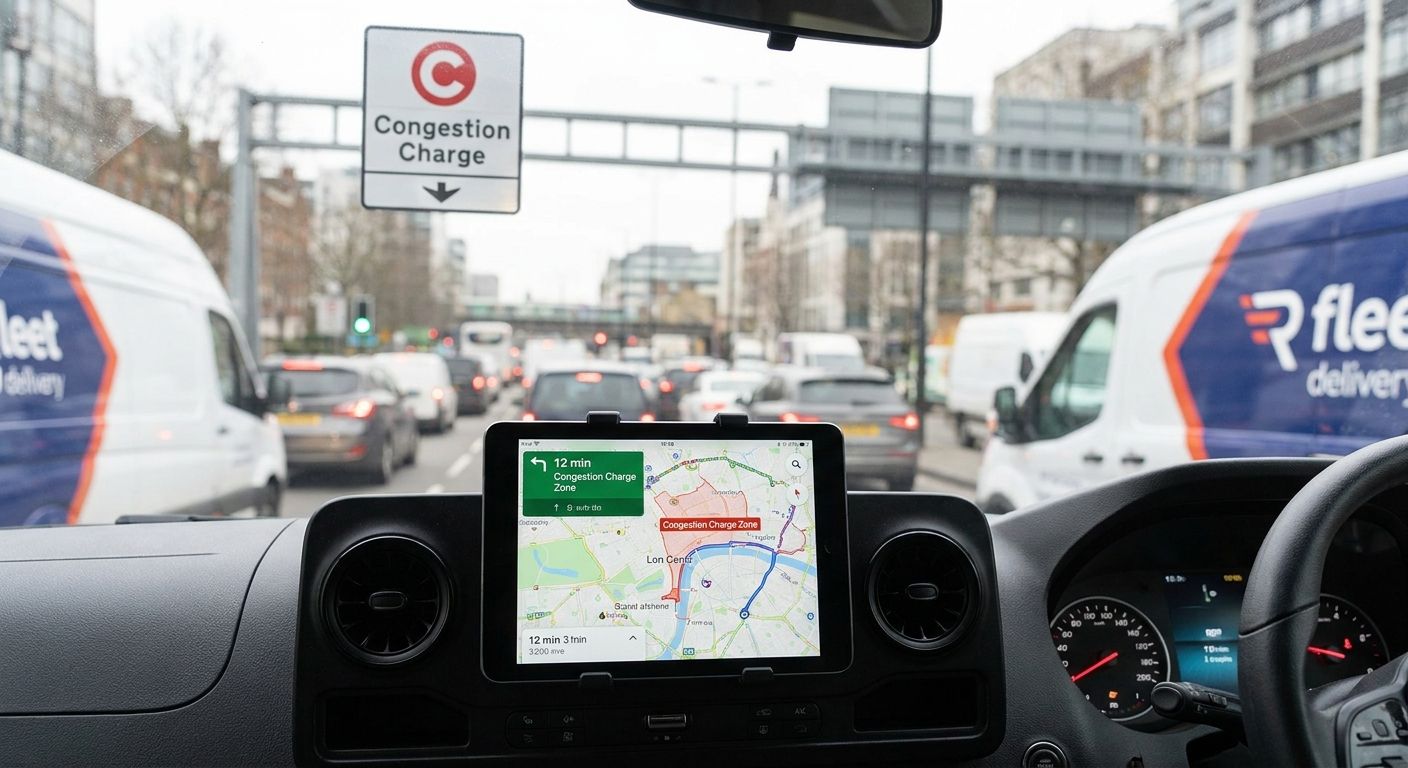
A geofence set 200 metres inside the actual Congestion Charge line will miss crossings; one set 200 metres outside will trigger false alerts on every nearby delivery. Trace the boundary directly from the official TfL map inside your tracking software and check it against a test drive along the perimeter. A tight geofence is the difference between a genuine alert and noise your drivers start ignoring.
3. Set real-time zone-entry alerts, not end-of-day reports
An alert that lands in a morning summary email is useless for stopping the crossing itself, but it's still valuable for catching the charge before the payment deadline. London's Congestion Charge must be paid by midnight on the day of travel; ULEZ runs 24/7 with no grace period on hours. Configure alerts to fire the moment the vehicle enters the zone, and route a copy to whoever handles TfL payments.
4. Route around zones vehicles don't need to enter
Not every job that looks like it needs a Central London run actually does. Feeding the same journey data into route planning software often shows a shorter, zone-free route exists for 15-20% of trips that currently clip a charging boundary out of habit rather than necessity.
5. Automate the payment, don't rely on a driver to remember
TfL offers fleet auto-pay registration that charges the account automatically on any day a registered vehicle enters the Congestion Charge zone. Pair this with your tracking alerts as a backstop, not a replacement — auto-pay stops the fine, but you still want the alert data to catch vehicles that shouldn't be crossing at all.
6. Brief drivers on zone hours, not just zone locations
The Congestion Charge doesn't apply on weekends or bank holidays in the same way it does on weekdays, but ULEZ runs every day of the year including Christmas. Drivers who learned the rules in 2023 may not know a boundary expanded in the meantime. A five-minute briefing using the geofence map from step 2 removes the excuse of "I didn't know that road was inside the zone."
7. Keep timestamped GPS logs to dispute incorrect charges
Cameras misread plates, and PCNs get issued to the wrong vehicle or for a crossing that never happened. A GPS log with a timestamp and location trail is the evidence that gets a wrongly-issued fine cancelled on appeal, usually within the standard 28-day contest window TfL and most councils allow.
8. Extend the same discipline to council and public-sector fleets
Local authorities running mixed fleets across multiple boroughs face the same exposure with more zones to track. Council fleet tracking that geofences every zone a service vehicle might enter — refuse trucks, minibuses, grounds maintenance vans — catches the same crossings before they become a line item in next year's fines budget.
“If the geofence doesn't sit tight on the real boundary, a near-miss on the map becomes a real fine on the invoice.”

Troubleshooting
- Alerts fire late, after the vehicle has already left the zone. Check the data refresh interval on your tracker — anything slower than 30 seconds means the alert arrives after the fact, not during the crossing.
- False alerts on roads that run near, but not through, a zone boundary. The geofence is drawn too loosely. Re-trace it against the official map rather than a hand-drawn approximation.
- Drivers ignore alerts because they've become routine noise. Cut the alert volume by fixing false positives first; a driver who's seen 40 false alerts this month won't react to the real one on day 41.
- A PCN arrives for a vehicle that was never in the zone. Pull the GPS log for that exact date and time immediately — most disputes need to be lodged within 28 days, and the log is your entire case.
- New drivers keep clipping zones nobody briefed them on. Build the zone briefing into onboarding rather than a one-off session; fleets turning over drivers every few months lose the knowledge otherwise.
- ULEZ compliance changes mid-fleet-cycle. A van bought as compliant in 2022 may not meet 2026 emissions standards after an engine swap or a change in use classification — recheck compliance annually, not once at purchase.
Tools and resources
- Geofencing module inside your fleet tracking platform, set against the current TfL Congestion Charge and ULEZ maps
- Route planning to move zone-optional jobs away from charging boundaries
- TfL's fleet auto-pay registration for automatic Congestion Charge settlement
- A logged history of GPS timestamps for every vehicle, kept for at least 90 days to support disputes
- Council fleet tracking for public-sector operators running vehicles across multiple charging zones
What to do next
Once the fines stop, the next line item worth attacking is the insurance premium — the same tracking data that proves a vehicle's location also proves driver behaviour, which insurers price into the policy. Read the breakdown on cutting fleet insurance premiums with a vehicle tracking system for the next move.
FAQ
What's the best way to avoid congestion charge fines for a fleet in 2026?
Geofence every charging zone your vehicles cross inside a fleet tracking platform so alerts fire the moment a vehicle enters, then pair that with TfL fleet auto-pay for automatic settlement. This combination catches the crossing before it becomes a fine rather than after.
How much is the London Congestion Charge in 2026?
The London Congestion Charge is £15 per day for vehicles entering the zone during charging hours. Fleets that miss payment by midnight on the day of travel move straight to a Penalty Charge Notice.
Is ULEZ different from the Congestion Charge?
Yes. ULEZ charges £12.50 a day for non-compliant vehicles and runs 24/7 with no weekend exemption, while the Congestion Charge applies only during charging hours set by TfL. A fleet can owe both charges for a single crossing if the vehicle is inside both zones and non-compliant.
Can GPS tracking data cancel a wrongly-issued penalty charge notice?
Yes, a timestamped GPS log showing the vehicle's actual location and route is standard evidence in a PCN dispute. Most disputes need to be filed within 28 days of the notice, so the log needs to be pulled and submitted quickly.
How much does an unpaid Congestion Charge fine cost?
An unpaid Congestion Charge becomes a Penalty Charge Notice starting at £180, reduced to £90 if paid within 14 days. Across a fleet of 20-30 vehicles making regular unplanned crossings, this adds up to thousands per year.
Does geofencing work for Clean Air Zones outside London?
Yes, geofencing works the same way for Birmingham, Bristol, and other UK Clean Air Zones — draw the boundary from the local authority's official map inside the tracking software. Each zone has its own charge rate and vehicle compliance rules, so zones need to be geofenced individually.
Do council fleets need to worry about congestion charge fines too?
Yes, local authority vehicles are not automatically exempt from Congestion Charge or ULEZ unless registered for a specific exemption. Council fleets running vehicles across multiple boroughs face more zone exposure than a single-depot commercial fleet, making geofencing across every route more important, not less.
How long does it take to set up geofence alerts for congestion zones?
Drawing an accurate geofence for a single zone takes roughly 30 minutes once the boundary map is available, including a test check against the real perimeter. A fleet covering three or four zones can have alerts running within a single afternoon.
One last thing
The London ULEZ boundary now covers the full area inside the M25, not just Central London, which means a delivery route that avoided charges in 2022 may run straight through it in 2026 without anyone updating the geofence. Check zone boundaries against your tracking software at least twice a year — charging areas expand more often than they shrink.