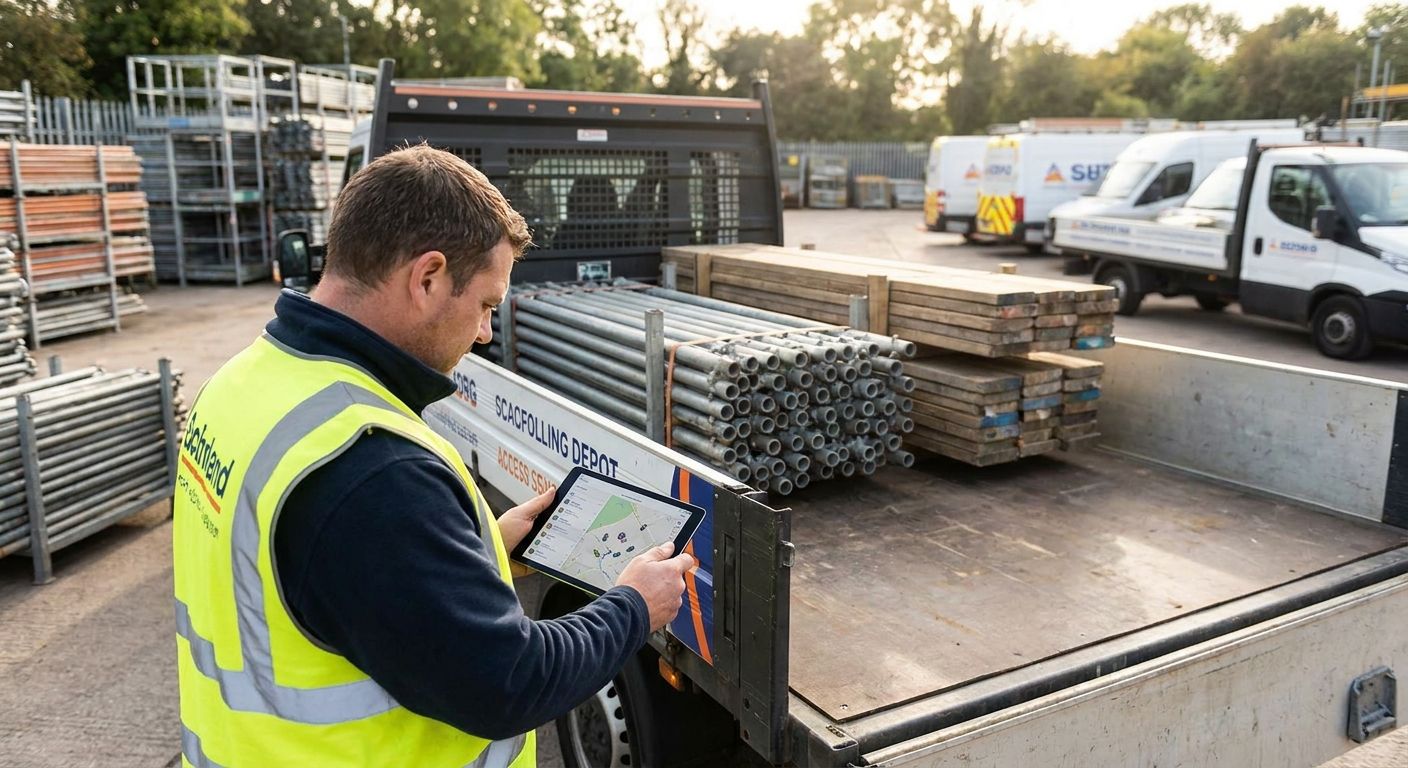
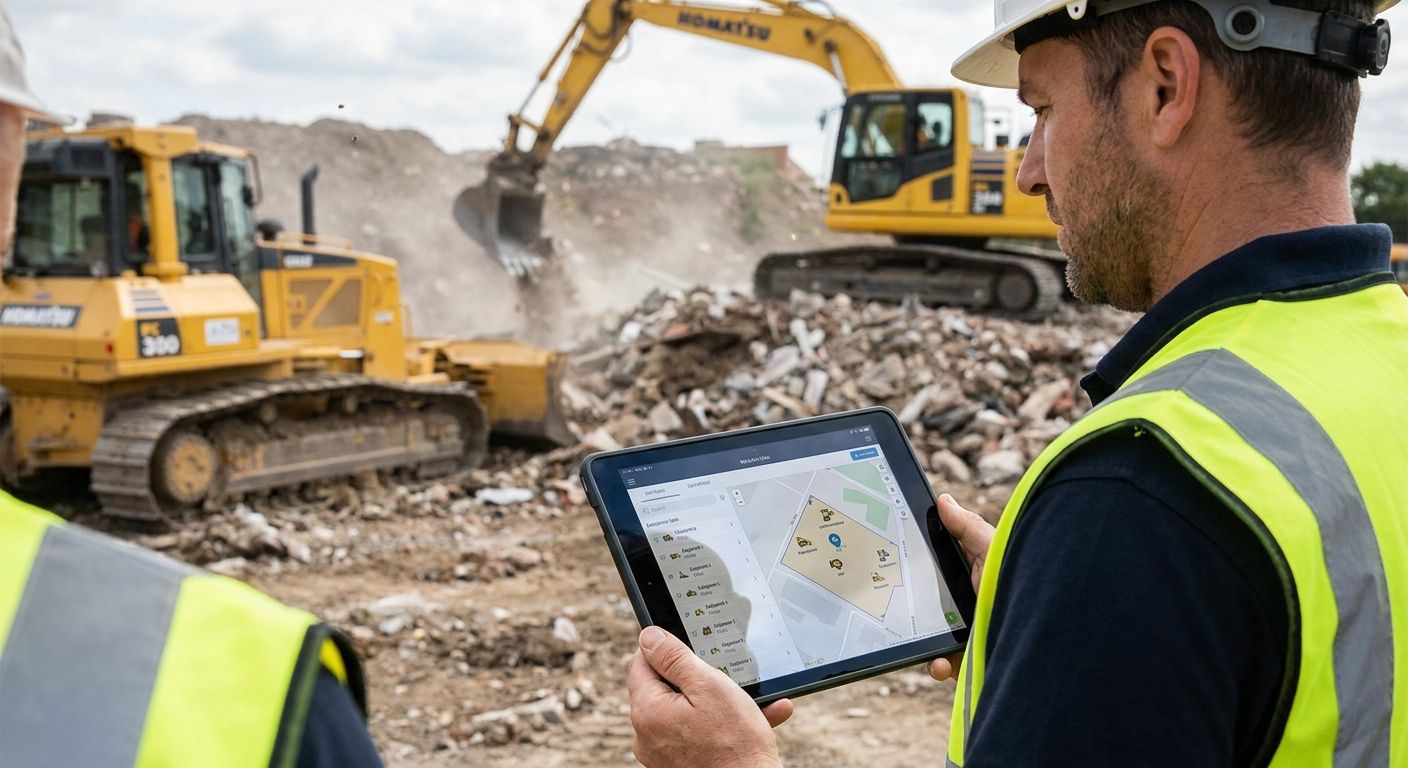
Demolition and groundworks fleets don't look like a standard construction fleet: muck-away tippers, low-loaders hauling excavators, bowsers, and vans moving between sites that don't have a postcode yet. Fleet management software for demolition companies has to track plant as hard as it tracks vehicles, or it's the wrong tool for the job.
- Crystal Ball's fleet management software for demolition companies tracks HGVs, plant and trailers on one platform in 2026. Buy.
- Driver behaviour monitoring matters more on tight demolition sites than on the open road. Consider it, don't skip it.
- Lone worker protection is essential for groundworks crews working alone on isolated sites, not a nice-to-have.
- HGV operator licence compliance needs a system built around tachograph rules, not a bolt-on app.
- Consumer-grade trackers and SD-card-only dash cams fail this sector. Skip both.
Why this matters
A demolition or groundworks operator loses money in three specific places: plant theft from unattended sites, HGV downtime from compliance failures, and liability disputes where nobody has footage. Standard fleet software built for parcel vans or company cars doesn't cover any of these well.
The firms that get this right in 2026 run one system that tracks the truck, the trailer, the excavator on the back of it, and the lone groundworker on a site with no fixed address. Everyone else is running three separate logins and hoping nothing falls through the gap.
Who this is for
This is written for the fleet manager or owner-operator running a demolition, groundworks, or civils contracting business with a mixed fleet — HGVs, tippers, vans, and towed plant — moving between short-term sites. If your biggest headaches are plant going missing overnight, drivers racking up tachograph infringements, or insurers asking hard questions after a near-miss on a live site, keep reading.
What to look for in fleet management software for demolition companies
Plant and trailer visibility, not just vehicle GPS
A telematics dashboard that only shows where the HGV is misses the point when the excavator on the low-loader is the expensive item. Look for a vehicle tracking system for construction companies that extends to trailers and towed plant, not just cabs with ignition keys.
HGV operator licence and driving hours compliance
UK drivers' hours rules cap daily driving at 9 hours (extendable to 10 hours twice a week), with a 45-minute break required after 4.5 hours behind the wheel. Software that flags infringements before a DVSA audit, rather than after one, protects the O-licence your business runs on.
Driver behaviour monitoring for heavy vehicles on tight sites
Harsh braking and reversing incidents on a live demolition site carry more risk than the same events on a dual carriageway. Behaviour scoring that flags reversing patterns and idling around pedestrians on site gives a fleet manager something to act on before an incident, not after one.
Lone worker protection for remote groundworks sites
Groundworks crews often start before daylight on sites with no phone signal marked and no colleague nearby. A lone worker app with a check-in schedule and a panic function matters more here than in almost any other trade covered by fleet software.
Dash cam footage that survives a liability dispute
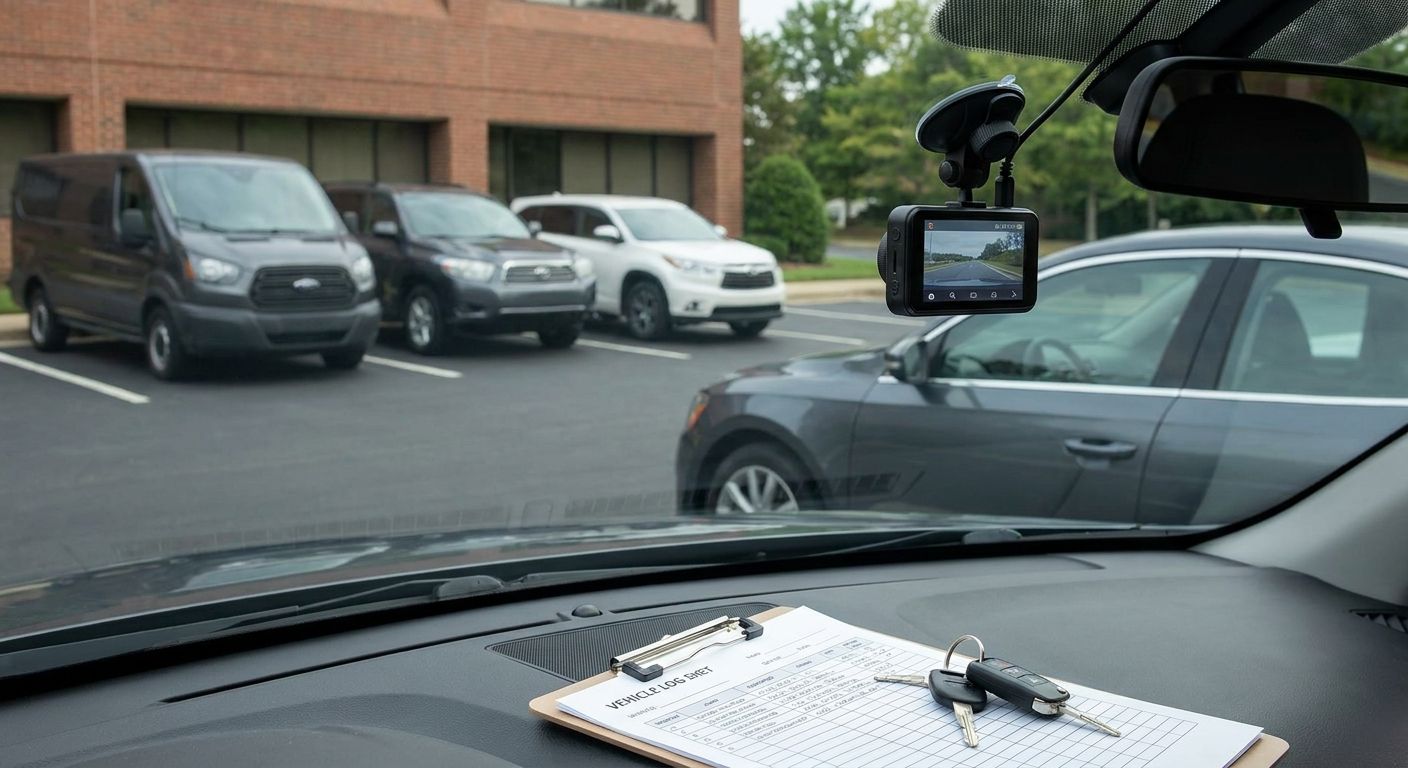
Demolition trucks near public roads generate more third-party damage claims than most fleets. 4G dash cams that upload footage automatically beat SD-card-only units every time a claim shows up three weeks after the event and the card's been overwritten.
Fuel and asset theft prevention
Sites with parked plant overnight are a target. Geofencing that alerts the moment a trailer or generator crosses a site boundary outside working hours closes the gap that consumer alarms and padlocks leave open.



Top picks for demolition and groundworks fleets in 2026
The plant tracker — Buy. Excavators, breakers, and dumpers rarely have an ignition to trigger standard vehicle telematics. GPS trackers for construction plant and equipment run on standalone battery power, reporting position even when the machine hasn't moved in weeks. If your plant list runs into double figures, this is the first gap to close.
The multi-site tracker — Buy. Demolition contractors rarely work one site at a time. A system for tracking trailers and plant equipment across multiple sites keeps a single view of every asset regardless of which site it's currently parked on, which matters the moment you're running three jobs at once in 2026.
The compliance essential — Buy. Commercial vehicle tracking built for HGV operators handles tachograph data, driving hours, and O-licence reporting in one place instead of a separate spreadsheet nobody updates. Skip this and a single DVSA roadside check can put the whole operator licence at risk.
The risk reducer — Consider. Driver behaviour monitoring scores harsh braking, acceleration, and reversing events, which matter more on a demolition site with pedestrians and other plant moving around than on an open road. It won't stop every incident, but it gives a fleet manager evidence and a coaching conversation instead of a guess.
The site-safety layer — Consider. A lone worker app with scheduled check-ins and an alert function protects groundworkers on isolated sites before daylight or after the rest of the crew has gone home. It's the cheapest insurance against the worst outcome on this list.
What to avoid
- Consumer car trackers rebadged for commercial use. They're built for theft recovery on a driveway, not for a machine sitting unattended on a demolition site overnight — battery life and geofencing tolerances aren't built for that.
- Dash cams that only save to an SD card. By the time a liability claim lands, the card's often been overwritten. 4G upload is the difference between having footage and having an excuse.
- Route planning software with no off-road or site geofencing. Demolition and groundworks vehicles spend real time off the public road network; software built purely for van delivery routes won't cover it.
How the options compare
| Solution | Best for | Key detail | Verdict |
|---|---|---|---|
| Plant GPS tracking | Excavators, breakers, dumpers | Standalone battery power, no ignition needed | Buy |
| Multi-site trailer tracking | Firms running 3+ concurrent sites | Single dashboard across every site | Buy |
| HGV compliance tracking | O-licence holders | Tachograph and driving hours reporting | Buy |
| Driver behaviour monitoring | Sites with pedestrian and plant movement | Harsh braking and reversing alerts | Consider |
| Lone worker app | Groundworks crews on isolated sites | Scheduled check-ins, panic alert | Consider |
FAQ
What's the best fleet management software for demolition companies in 2026?
The best option combines HGV tracking, plant and trailer visibility, and driver behaviour monitoring in one system rather than three separate tools. Crystal Ball builds this specifically for mixed fleets moving between sites.
Do demolition firms need separate plant tracking or does vehicle telematics cover it?
Standard vehicle telematics only reports when there's an ignition to trigger it, which excavators and dumpers don't have. A dedicated plant tracker with standalone battery power is needed to cover towed and unpowered equipment.
Is a lone worker app necessary for groundworks crews?
Yes, if crews work alone on remote sites before daylight or after hours. A lone worker app with check-in scheduling and a panic function covers the risk that standard site inductions don't.
How much does fleet tracking cost for a small demolition fleet?
Pricing depends on fleet size and which modules — vehicle tracking, plant tracking, dash cams, lone worker — you combine, so check current pricing directly rather than relying on a flat figure.
What's the DVSA driving hours limit for HGV drivers?
UK drivers' hours rules cap daily driving at 9 hours, extendable to 10 hours twice a week, with a 45-minute break required after 4.5 hours of driving. Software that flags approaching limits in real time prevents infringements before a roadside check catches them.
Do 4G dash cams help with demolition site liability claims?
Yes. 4G dash cams upload footage automatically instead of storing it only on an SD card, so footage is available weeks later when a third-party damage claim actually lands.
Is driver behaviour monitoring worth it for a small groundworks fleet?
It's worth it once a fleet runs more than a handful of HGVs or plant-carrying vehicles around live sites, because reversing and braking incidents near pedestrians carry higher risk than on the open road.
One last thing
Greater London has banned zero-star HGVs under the Direct Vision Standard since 2021, and demolition contractors running muck-away wagons into the capital without a Progressive Safe System permit face fines, not warnings. If any part of the fleet touches London sites, check DVS compliance before checking anything else on this list.