Plumbing and heating vans carry more value in tools and parts than in the vehicle itself, and fleet tracking for plumbing and heating contractors has to protect both. This guide breaks down what actually matters for a trade fleet running one van or twenty, and which hardware earns its keep.
- Fleet tracking for plumbing and heating contractors should prioritise Thatcham-rated trackers over basic GPS dots — Buy.
- Thatcham S7 Tracker at £198 suits single-van firms; Thatcham S5 Plus at £548 covers high-value tool loads — Buy or Consider.
- Skip driver behaviour scoring on its own — it won't stop the copper and boiler-parts theft that actually targets these vans.
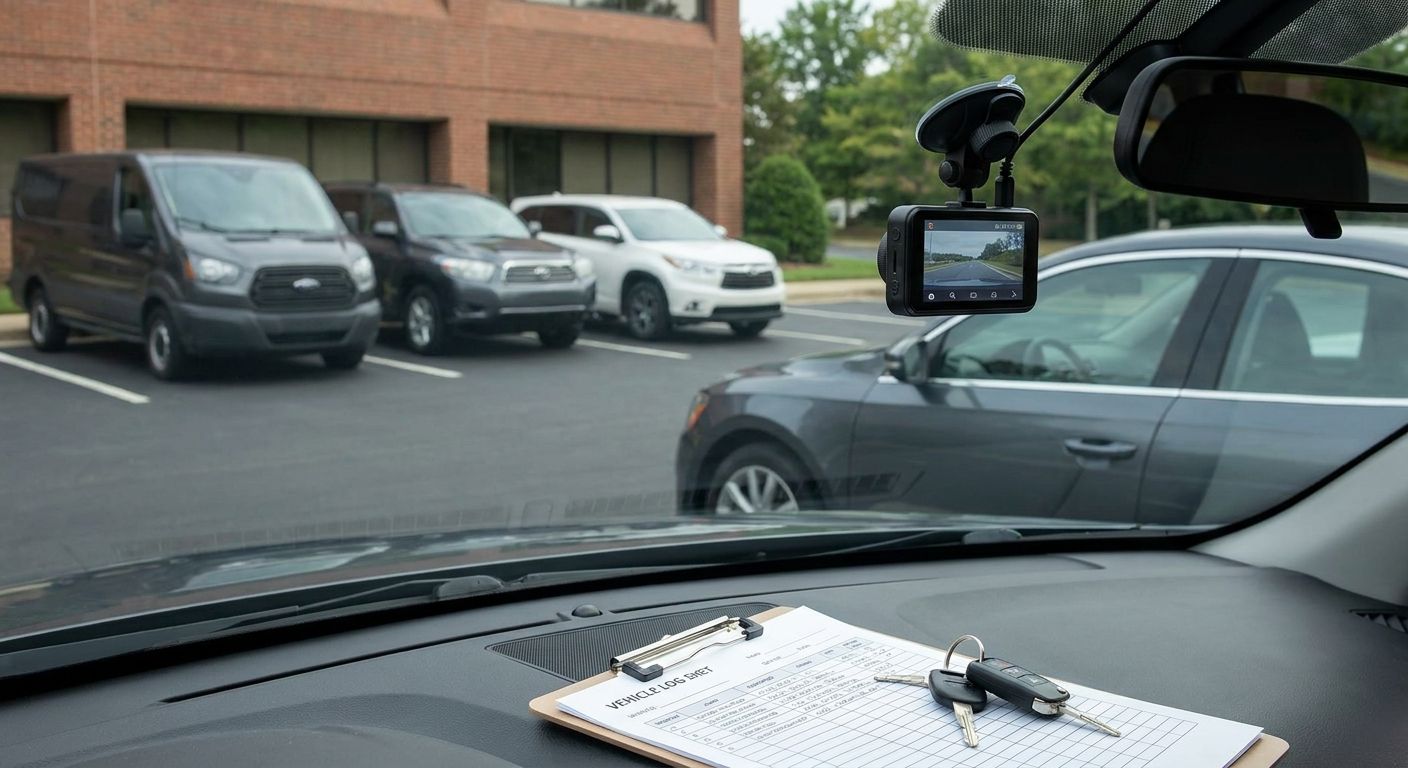
- 4G dash cams settle liability disputes on multi-job days, not just accidents — Buy for firms running 5+ callouts daily.
Why this matters
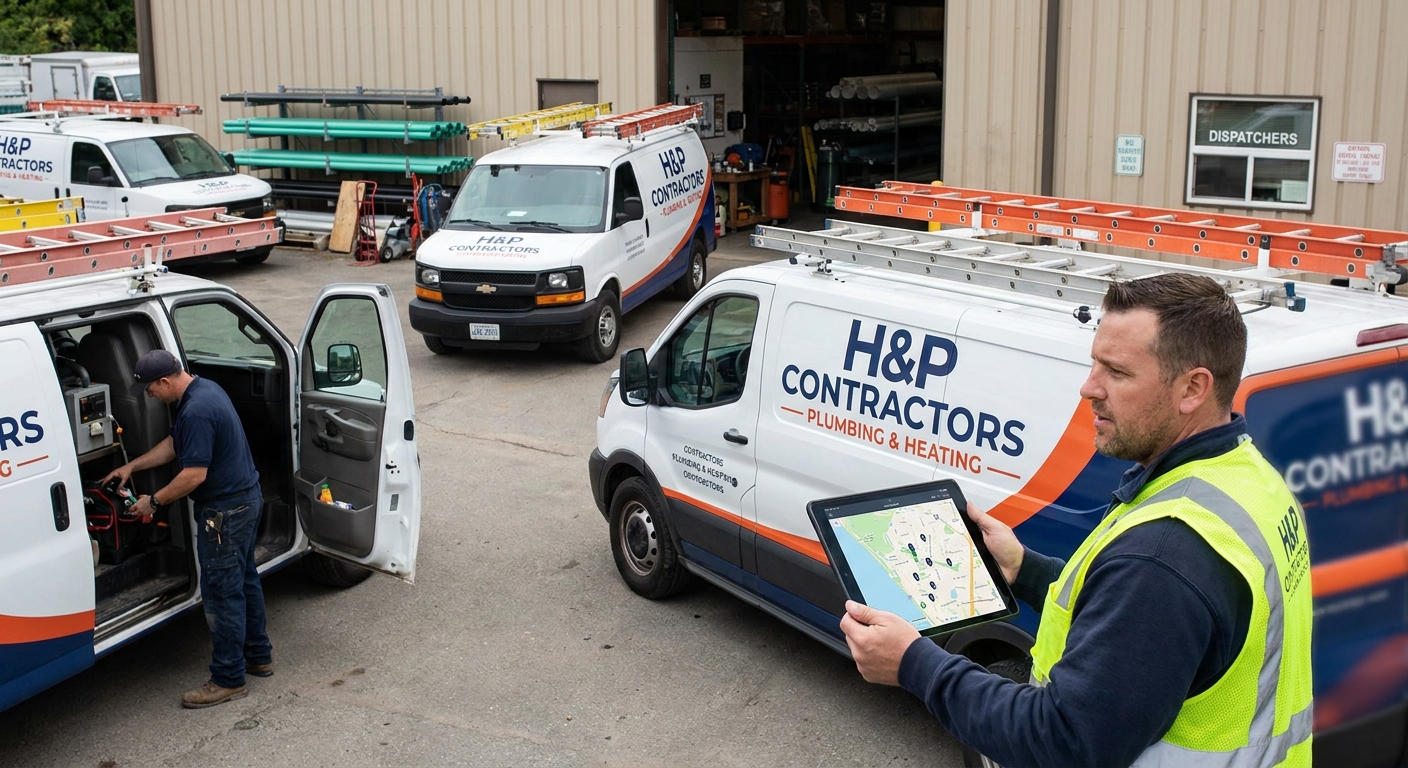
A plumbing or heating engineer's van is a rolling stockroom: boilers, copper pipe, power tools, diagnostic kit. Insurers price that risk into the premium, and a tracker without the right accreditation does nothing to bring it down. Crystal Ball's fleet tracking platform is built around that gap — accredited hardware plus the reporting a trade business actually uses day to day.
Most heating and plumbing firms aren't choosing between ten vendors on features. They're choosing between a system that satisfies their insurer and one that doesn't, and between software built for their job type versus software repurposed from HGV or construction fleets. That distinction drives every recommendation below.
Who this is for
This guide is written for plumbing and heating contractors running 1 to 20 vans, doing scheduled installs and emergency callouts, where jobs get reassigned mid-morning and vans sit outside customer properties or engineers' homes overnight. If your fleet also runs HGVs for parts distribution, the criteria below still apply to the van side of the operation.
What to look for in fleet tracking for plumbing and heating contractors
Thatcham-approved security rating
Insurers only recognise Thatcham S5 and S7 categories for premium reductions on commercial vans carrying high-value stock. A non-accredited GPS tracker might show you the van's location, but it won't move the needle on your policy in 2026. Confirm the category before you buy, not after your renewal quote comes back unchanged.
Real-time location for last-minute job reallocation
Heating engineers get rerouted mid-shift when a boiler breakdown call comes in closer to their current job than the next scheduled one. Live location lets the office reassign the nearest available van instead of guessing from a morning schedule that's already three jobs out of date.
Geofencing and out-of-hours alerts
Vans parked at engineers' homes overnight are a common theft target, and a geofence alert flags unauthorised movement before the van's ten miles away. Set the fence around the depot or the engineer's address, and set the alert window to match your actual working hours, not a generic 9-to-5.
Tool and asset visibility
A copper cylinder or a set of diagnostic tools can walk off a van in under a minute if it's left unlocked outside a job. Tracking that covers the vehicle but ignores what's inside it only tells you the van moved — not why.
Driver behaviour and idle time reporting
Harsh braking with a boiler in the back risks damaged stock, and idle time on multi-drop days eats fuel budget fast. Behaviour reporting flags the pattern before it shows up as a warranty claim or a fuel card bill nobody can explain.
4G dash cam footage for liability disputes
Customers dispute damage, parking, and access on jobs more than most contractors expect, and a verbal account doesn't settle it. Footage that uploads over 4G rather than sitting on an SD card in the glovebox is the difference between resolving a dispute in a day and losing three weeks to it.
Top picks for plumbing and heating fleets
Thatcham S7 Tracker — the compliance pick. Priced at £198, it's the entry point into insurance-recognised tracking with 24/7/365 monitoring centre coverage. Right for a single van or a two-to-three-van crew that needs the accreditation without paying for features they won't use. Buy.
Thatcham S5 Tracker — the mid-tier pick. At £374, it steps up to the higher S5 category with a driver card included, aimed at fleets of roughly three to eight vans where accountability per driver matters. Buy for growing plumbing and heating firms adding vans faster than they're adding admin staff.
Thatcham S5 Plus Tracker — the high-value pick. At £548, this is the option for vans carrying the most expensive stock — multiple boilers, specialist plant tools — overnight or between jobs. Consider it if a single theft would cost more than the tracker's price difference against the standard S5 unit.
4G Fleet Dash Cams — the dispute-settler. Combines dash cam footage with fleet tracking rather than treating them as separate systems, which matters when a customer complaint needs both the video and the timestamped location. Buy for any firm running five or more callouts a day where access and damage disputes are a recurring admin cost.
Generic van GPS tracker — the false economy. Cheaper upfront, but without Thatcham accreditation it does nothing for your insurance premium and often lacks 24/7 monitoring. Skip it unless you genuinely have no theft or insurance pressure at all, which is rare for a stocked plumbing van.


What to avoid
- Non-Thatcham trackers marketed as "insurance-friendly." If it doesn't carry an S5 or S7 category, your insurer treats it the same as no tracker at all when calculating your premium.
- Systems built for HGV compliance. Tools designed around axle-weight monitoring and tachograph rules add cost and complexity a plumbing van never needs — that's a fit for commercial vehicle tracking for HGV operators, not a heating engineer's Transit.
- Site-focused platforms built for construction fleets. Features tuned for plant and site geofencing, like those covered under vehicle tracking system for construction companies, don't map cleanly onto a callout-based trade business moving between residential addresses all day.
“A plumbing van left unlocked for ten minutes outside a job is exactly the window thieves wait for.”
Verdict comparison
| Product | Cost | Thatcham category | Best for | Verdict |
|---|---|---|---|---|
| Thatcham S7 Tracker | £198 | S7 | Single van or small crew | Buy |
| Thatcham S5 Tracker | £374 | S5 | 3-8 van fleets | Buy |
| Thatcham S5 Plus Tracker | £548 | S5 | High-value tool loads | Consider |
| 4G Fleet Dash Cams | Varies | n/a | Callout-heavy schedules, disputes | Buy |
| Generic non-Thatcham GPS tracker | Varies | None | Firms with no insurance pressure | Skip |
FAQ
What's the best fleet tracking for plumbing and heating contractors in 2026?
A Thatcham S5 or S7-rated tracker paired with 4G dash cam coverage is the best fleet tracking for plumbing and heating contractors in 2026, since it covers both insurance accreditation and dispute evidence. Basic GPS-only trackers without Thatcham certification don't affect your premium at all.
Is a Thatcham S5 or S7 tracker better for a plumbing van?
The Thatcham S7 Tracker at £198 suits a single van or small crew, while the S5 category, starting at £374, fits fleets of three to eight vans or higher-value tool loads. Choose S5 if a theft would cost more than the price difference between the two units.
How much does fleet tracking cost for a small plumbing business?
Entry-level Thatcham-accredited hardware starts around £198 for a single S7 tracker, rising to £548 for the S5 Plus tier on higher-value vans. Costs scale with fleet size and the level of insurance accreditation required.
Do 4G dash cams help with fleet tracking for plumbing and heating contractors?
Yes, 4G dash cams combined with fleet tracking give a timestamped, location-tagged video record that resolves customer disputes over access or damage faster than tracking data alone. This matters most for firms running five or more callouts a day.
How does fleet tracking lower insurance premiums for van-based trades?
Insurers apply premium discounts specifically for Thatcham S5 and S7-category trackers, not for generic GPS devices. A plumbing or heating fleet needs the accredited category on file with the insurer to see any reduction.
Can fleet tracking stop tool theft from plumbing vans?
Tracking and Thatcham-rated immobilisation reduce the risk and speed up recovery, but they don't physically stop someone forcing a rear door for tools inside. Pair the tracker with secure locking and consider dash cam coverage of the load area.
How many vans need to be tracked before it's worth investing?
A single van carrying stock worth more than a basic tracker's cost already justifies the investment, particularly for insurance accreditation. Multi-van fleets see additional value from driver-level reporting and reassignment tools once vans exceed roughly three.
What's the difference between GPS tracking and Thatcham-approved tracking?
Generic GPS tracking shows location only, with no independent security accreditation recognised by insurers. Thatcham-approved tracking, covering S5 and S7 categories, adds certified theft monitoring and immobilisation that insurers factor into premium pricing.
One last thing
A Thatcham S7 or S5 tracker proves the van moved and helps recover it, but it won't stop someone forcing the rear doors for a boiler or a bag of tools in the two minutes an engineer's inside a customer's house. Pair the tracker with a physical locking upgrade or in-vehicle CCTV if your vans regularly carry stock worth more than the vehicle itself — the accreditation protects your premium, the physical layer protects the stock.