Vending machine route operators run vans on tight loops all day, often with cash floats on board and multiple drivers sharing the same vehicle across shifts. Fleet tracking for vending route operators needs to prove stop-level activity, protect cash and stock, and keep insurance premiums down without adding admin your route team doesn't have time for.
- Fleet tracking for vending route operators works best with geofenced stop tracking, not just a live map dot.
- Thatcham S7 Tracker at £198.00 suits high-theft vending vans that need fast insurance-approved cover in 2026.
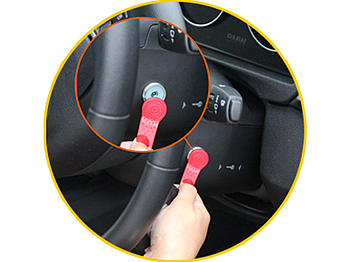
- Thatcham S5 Plus Tracker at £548.00 fits multi-van operators who need driver fobs and full journey history.
- 4G dash cams settle liability disputes at customer sites where vending vans park illegally or block loading bays.
- Skip basic plug-in trackers with no geofencing - they can't confirm a machine was actually restocked.
Why this matters
A vending route operator's profit sits in the gap between fuel spent and stops completed. Miss a machine, and you're back on the road the next day for a call-out that should never have happened. Fleet tracking closes that gap by timestamping every stop, not just showing where the van is right now.
2026 insurance renewals are also pushing vending operators toward Thatcham-approved trackers, because underwriters increasingly ask for proof of vehicle security before quoting on vans that carry cash. A single-van tracking setup closes that gap for a sole operator; a fleet-wide rollout does the same job at scale for a five-van route business.
“If a tracker can't tell you which stop a van missed, it isn't fleet tracking - it's just a map.”
Who this is for
This guide is for vending machine route operators running 1 to 20 vans that restock, collect cash, and service machines across a fixed territory. If your drivers hit 15 to 40 stops a day and your biggest costs are fuel, missed restocks, and van break-ins, the criteria below are built for your route pattern, not for long-haul haulage or single-site delivery.
What to look for in fleet tracking for vending route operators
Stop-level geofencing, not just live location
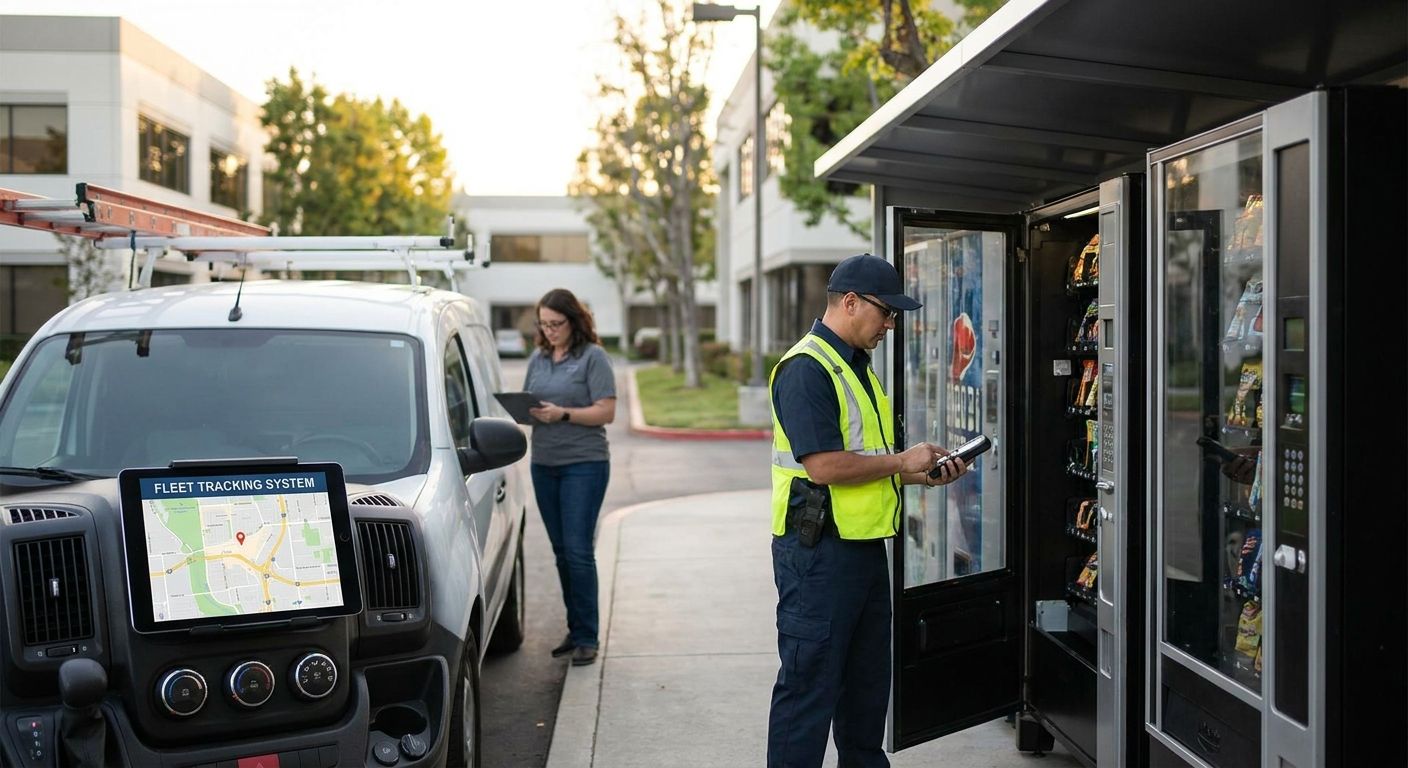
A live dot on a map tells you where the van is right now, but it doesn't prove a machine got restocked. Geofences around each machine site log arrival and departure times automatically, giving you a stop record without asking drivers to log anything manually.
Cash and stock theft protection
Vending vans carry cash floats and stock that make them a theft target, especially overnight in depot yards. A Thatcham-approved tracker with remote immobilisation stops a stolen van dead and alerts a monitoring centre within minutes, which matters when the load includes a day's takings.
Fuel and route efficiency reporting
Route drift - drivers taking longer paths or idling between stops - eats margin fast on a business built on small per-visit revenue. Fuel and idling reports flag which routes are running long before it shows up as a fuel bill surprise at month end.
Multi-driver and shift support
Many vending fleets share vans across two or three drivers a week. Driver ID logs which driver was behind the wheel for every trip, so mileage, fuel use, and driving style get attributed to the right person instead of the vehicle as a whole.
Dash cam evidence for site disputes
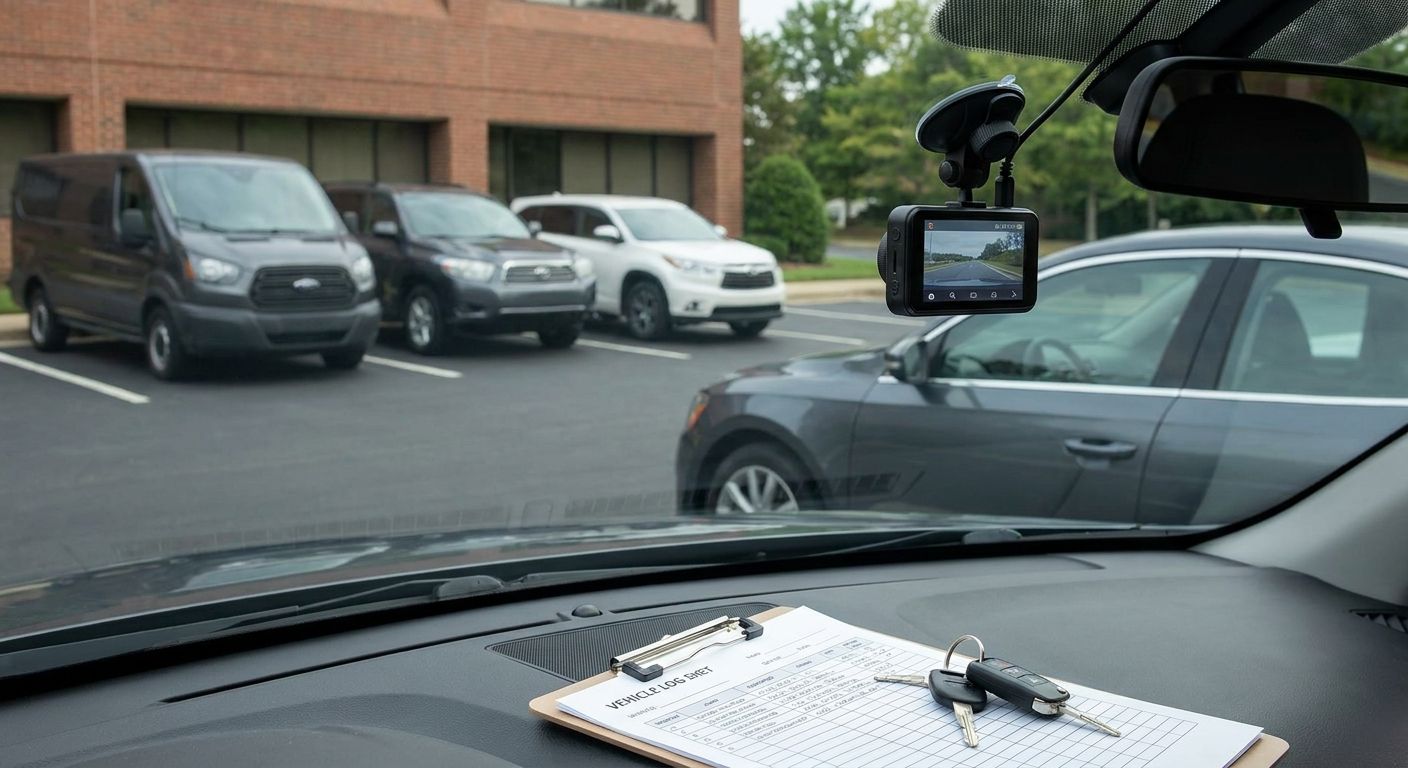
Vending vans park in loading bays, service corridors, and tight retail forecourts where blame for a scrape or a blocked exit gets disputed fast. 4G dash cam footage settles those arguments on the spot instead of dragging into a weeks-long insurance claim.
Simple onboarding for small route teams
Vending operators rarely have a dedicated fleet manager. A system that installs in a day and doesn't need a training session for every new driver keeps the tool actually used, rather than switched off after week two.


Top picks for vending route fleets
The fast-fit theft pick: Thatcham S7 Tracker
At £198.00, the Thatcham S7 Tracker gives vending operators insurance-approved theft cover with 24/7/365 monitoring, without the higher spec (or higher cost) of a full S5 system. It suits vans under a lower risk banding where the main concern is opportunist theft from a depot yard overnight, not organised vehicle crime. Buy for single vans or smaller routes that need cover fitted fast.
The multi-van pick: Thatcham S5 Plus Tracker
The Thatcham S5 Plus Tracker runs £548.00 and adds a driver fob plus full journey history through the mobile app, which matters once you're running several vans across different drivers and shifts. Operators with 5 to 20 vans get better fleet-wide visibility here than the S7 tier provides. Buy if your route business has grown past a single van and needs consistent tracking across the fleet.
The dispute-proof pick: 4G Fleet Dash Cams
Vending vans spend their day parked in loading bays and tight forecourts where a scraped bumper or a blocked exit turns into a blame game. 4G dash cams tied to fleet insurance discounts give you footage the moment something happens, cutting the time spent arguing over a claim. Buy for any route that regularly parks on shared or restricted access.
The route-efficiency pick: geofenced route planning
Fuel is the single biggest controllable cost on a vending route, and reducing empty running through van fleet route planning shows exactly where drivers double back or run longer loops than needed. This isn't a single product purchase, it's a reporting layer that sits on top of your tracker data. Buy once you have three or more vans running daily loops.
The shared-van pick: Driver ID
When two or three drivers rotate through the same van across a week, Driver ID attributes every trip, every idling minute, and every fuel fill to the actual driver behind the wheel. Consider this if your route business runs a shift pattern rather than one driver per van; skip it if every van has a single dedicated driver, since the attribution problem doesn't exist yet.
What to avoid
- Plug-in OBD trackers with no geofencing - they show live location but can't confirm a machine was actually visited, which defeats the point for a stop-based route.
- Trackers without insurance approval - a non-Thatcham device won't satisfy underwriters asking for proof of security on vans carrying cash, and it won't cut your fleet insurance premium the way an approved system does.
- Systems that need a dedicated fleet manager to run - vending route businesses rarely have the headcount, so a tool that needs constant configuration gets abandoned within a month.
Verdict comparison
| Pick | Best for | Price | Verdict |
|---|---|---|---|
| Thatcham S7 Tracker | Fast-fit theft cover, single vans | £198.00 | Buy |
| Thatcham S5 Plus Tracker | Multi-van fleets, driver fobs | £548.00 | Buy |
| 4G Fleet Dash Cams | Site disputes, insurance discounts | Contact for pricing | Buy |
| Driver ID | Shared vans, multiple shifts | Contact for pricing | Consider |
FAQ
What's the best fleet tracking for vending machine route operators in 2026?
A geofenced GPS tracker paired with a 4G dash cam is the best combination for vending routes in 2026, because it proves stop-level visits and settles disputes at customer sites. A Thatcham-approved tracker also satisfies insurers looking for proof of security on cash-carrying vans.
How much does a Thatcham-approved tracker cost for a vending van?
A Thatcham S7 Tracker costs £198.00 and a Thatcham S5 Plus Tracker costs £548.00. Which one you need depends on the vehicle's risk rating and whether you need driver fob functionality across multiple drivers.
Do vending route operators need dash cams as well as trackers?
Yes, dash cams cover a different risk than trackers: they record what happened at a specific stop, not just where the van was. Vending vans park in tight loading bays and shared access points where liability disputes are common, and footage resolves those disputes immediately.
Can fleet tracking prove a machine was actually restocked?
Geofenced tracking logs the exact arrival and departure time at each machine site, which acts as a stop record without manual driver logging. A live-location-only tracker cannot do this because it doesn't distinguish a completed stop from a drive-past.
Is fleet tracking worth it for a single-van vending operator?
Yes, a single-van setup still protects against theft, proves stops were completed, and can lower insurance premiums with an approved tracker. The cost scales down with fleet size, so a one-van operator isn't paying for features built for a 20-van fleet.
What's the difference between Thatcham S5 and S7 trackers for vending vans?
The Thatcham S7 Tracker is the lighter-tier, faster-fit option at £198.00, suited to lower-risk vans. The Thatcham S5 Plus Tracker at £548.00 adds driver fob identification and fuller journey history, better suited to multi-van fleets with shared drivers.
How long does it take to install a vehicle tracker on a vending fleet?
Nationwide on-site installation is typically arranged per van rather than requiring the fleet to come off the road at once. Most vending operators can get a small fleet fitted within a matter of days once installation is booked.
Does fleet tracking help reduce fuel costs on vending routes?
Yes, fuel and idling reports show which routes and drivers are running longer or idling more than the loop requires. Vending routes with tight per-stop margins see this show up quickly in the monthly fuel bill once route drift is corrected.
One last thing
Most vending route operators buy a tracker for theft protection and only later realise the bigger win is proving a stop happened at all. Set up geofences on your top 20 highest-revenue machines first, not the whole route at once - that's where a missed restock costs you the most, and it's the fastest way to see whether the system earns its keep before rolling it out fleet-wide in 2026.