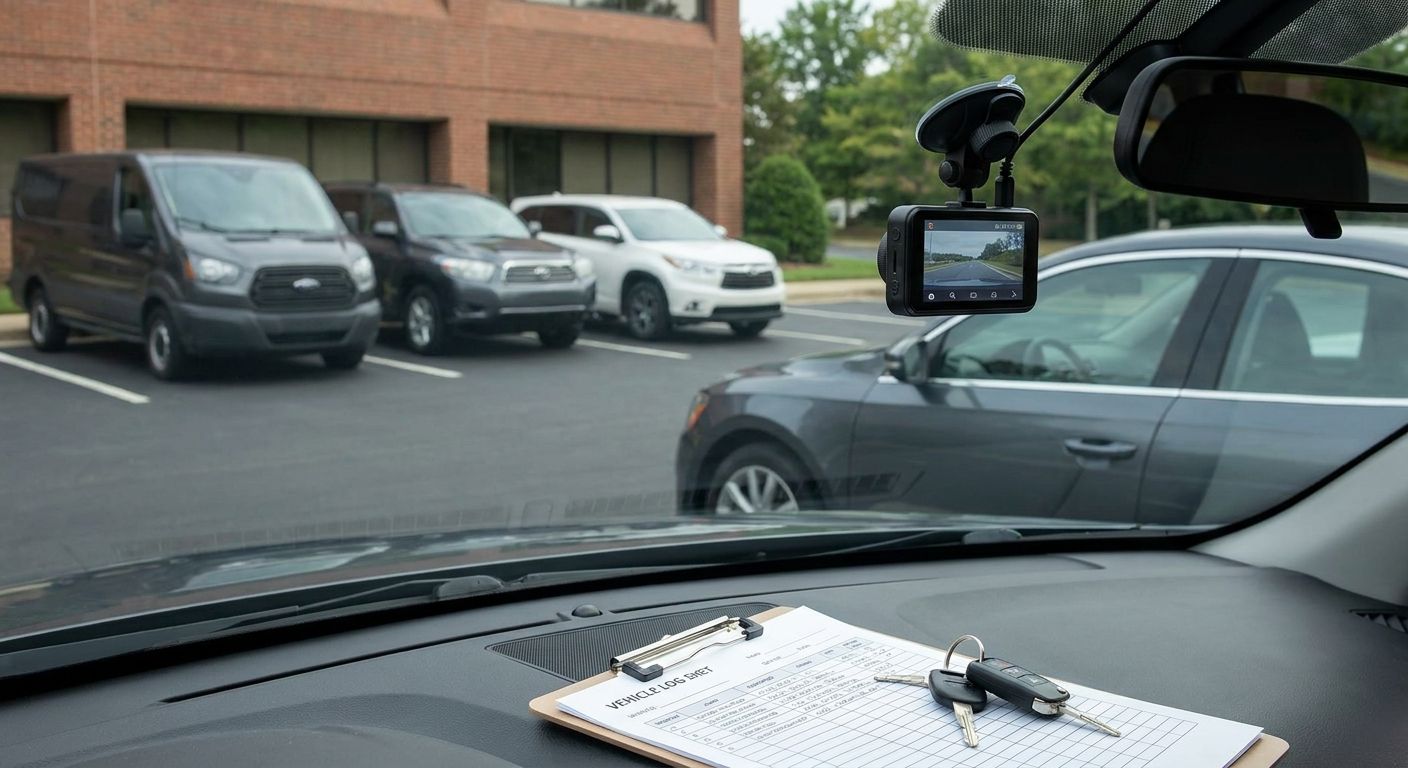
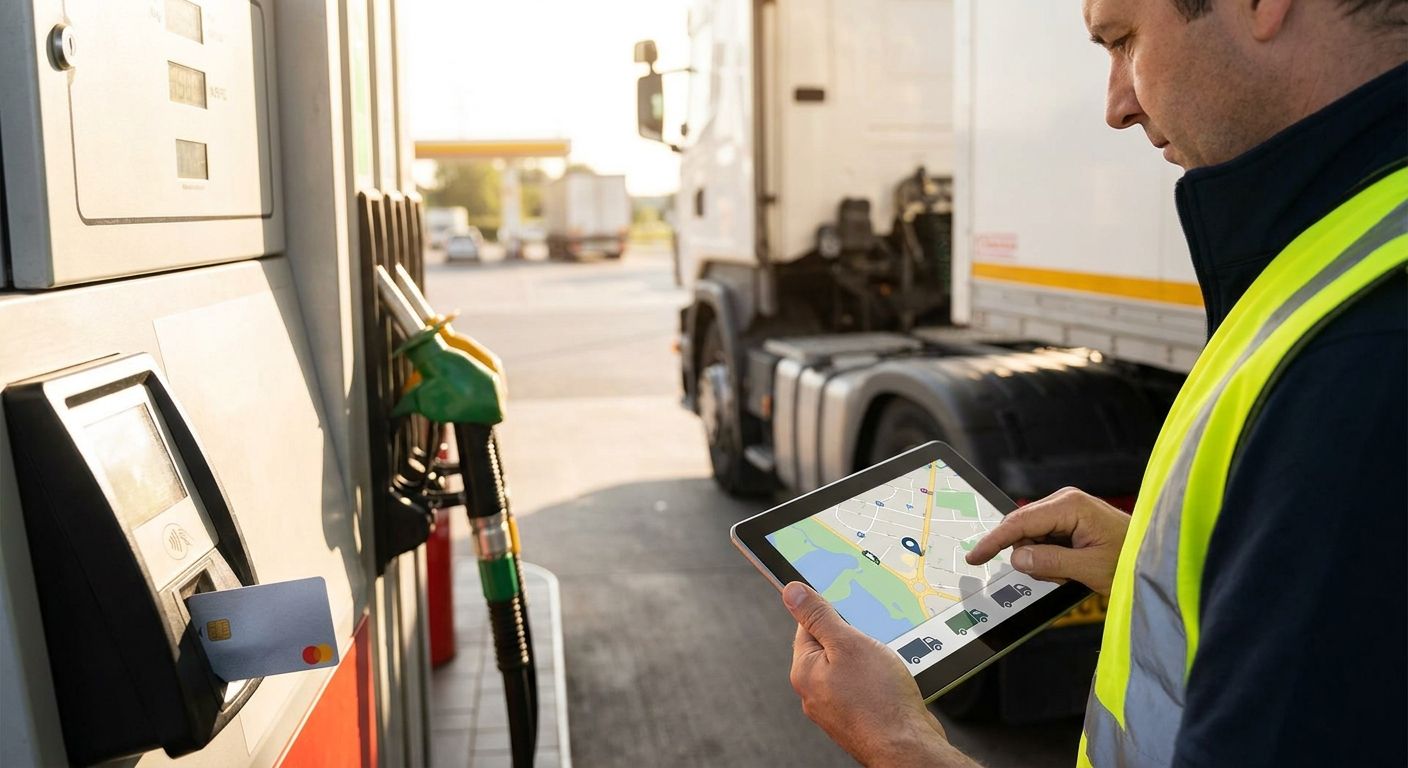
Fuel card fraud drains fleet budgets quietly — a driver fills up a personal car, tops off a jerry can, or claims mileage that never happened, and the invoice looks routine until you cross-check it against GPS data. This guide walks through the steps to close that gap using vehicle tracking, from matching transactions to location data through to setting up automated exception alerts.
- Match every fuel card transaction against GPS location and time to catch mismatched fill-ups fast.
- Driver ID locks each card to a specific vehicle and driver, closing the loophole that lets cards get shared.
- Geofence alerts around depots and fuel stations flag transactions that happen outside expected zones.
- Litres-per-fill checks against tank capacity catch top-ups that exceed what the vehicle can physically hold.
- Automated exception reports beat manual invoice reviews for spotting fuel card fraud in 2026 fleets.
Why this matters
Fuel is one of the largest line items on any fleet's operating budget, and it's also one of the easiest to manipulate without anyone noticing for months. A driver who fills a personal vehicle once a week on the company card, or logs a 200-litre transaction against a van with a 70-litre tank, costs real money every single time it happens.
Vehicle tracking closes the gap because it gives you an independent, timestamped record of where every vehicle actually was. Cross-reference that against fuel card transaction logs and the discrepancies surface on their own — no forensic accounting required. Crystal Ball fleets running GPS tracking alongside fuel card programmes in 2026 catch these mismatches at the invoice-reconciliation stage rather than months later during an annual audit.
What you'll need
- A GPS vehicle tracking system with live location history (Thatcham-approved trackers work well here since they also cover insurance and theft monitoring)
- Fuel card transaction data with timestamps, location, and litres purchased
- Driver ID hardware or software that ties each journey to a named driver, not just a vehicle
- Access to a fleet management dashboard or app that lets you overlay both data sets
- Two to three hours a week initially to build the reconciliation habit, dropping to under an hour once alerts are automated
- Buy-in from drivers — theft prevention measures work better when the team knows they're in place
The steps
1. Pull 90 days of fuel card and GPS data side by side
Start with a baseline. Export fuel card transactions for the last quarter and match each one against the vehicle's GPS location log for that exact timestamp. This accomplishes one thing: it tells you whether your current fraud exposure is a handful of edge cases or a pattern across multiple vehicles.
Most fleet management platforms let you export both data sets to a spreadsheet or overlay them directly on a dashboard. Look specifically for fuel purchases logged more than half a mile from where the vehicle's GPS says it was parked at that time.
Common mistake: comparing dates only, not exact timestamps — a driver can legitimately fuel up at 8am and again the next evening, but a card swipe at 11pm on a Sunday when the vehicle's tracker shows it parked at the depot is the pattern you're looking for.
2. Set geofence alerts around fuel stations and depots
Geofencing draws a virtual boundary around a location and triggers an alert when a vehicle enters or exits it. Set one around your depot and around any fuel stations your drivers use regularly, then flag any fuel card transaction that fires without a matching geofence entry.
This catches the most common fraud pattern directly: a card used at a station the vehicle's tracker never visited. Configure the alert to fire within minutes of the transaction landing, not at end-of-day, so the record is fresh when you review it.
Common mistake: setting geofences too tight around a single station address when drivers legitimately use three or four different forecourts on their routes — widen the radius to cover the realistic catchment area first.
3. Lock fuel cards to drivers with Driver ID, not vehicles
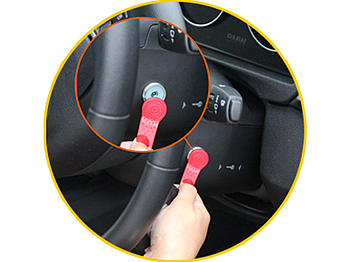
A fuel card assigned to a vehicle gets shared the moment two drivers swap shifts on the same van. Driver ID hardware ties each journey and each transaction to the individual behind the wheel, which removes the anonymity that makes card-sharing fraud possible.
Once Driver ID is active, any transaction that doesn't match the identified driver for that vehicle at that time gets flagged automatically. This single change closes one of the most exploited loopholes in fuel card programmes, because it removes the ability to claim you don't know who used the card.
Common mistake: rolling out Driver ID hardware without onboarding drivers onto the new tracking system properly first — drivers who don't understand why the system is there are more likely to resist it or find workarounds.
4. Check litres purchased against actual tank capacity
This one sounds obvious but gets missed constantly: if a van has a 70-litre tank and a fuel card transaction logs 95 litres, that's not a rounding error. Run a simple check against your fleet's vehicle specs and flag any transaction that exceeds 90% of tank capacity as a review item.
Combine this with the timestamp check from step one — a near-full tank purchased only two days after the last full tank, with 40 miles logged in between, doesn't add up on any reasonable MPG figure.
Expected outcome: within the first month of running this check, most fleets identify at least a handful of transactions that need a direct conversation with the driver.
5. Cross-check mileage between fill-ups against expected fuel economy
Every vehicle has a realistic MPG range. If a diesel van rated for 40mpg is logging fuel purchases that only account for 25mpg of driven distance, either the vehicle has a mechanical fault or fuel is going somewhere other than the tank.
Vehicle tracking data gives you exact mileage between fill-ups, which you can compare against litres purchased in seconds once the two data sets are linked. Fleet tracking data cuts fuel costs partly through this exact mechanism — spotting inefficiency and fraud using the same reconciliation process.
Common mistake: ignoring seasonal and route variation — a van doing motorway miles will always outperform one doing stop-start urban delivery routes, so benchmark by route type, not a single fleet-wide average.
6. Review driver behaviour reports alongside fuel data
Harsh braking, excessive idling, and aggressive acceleration all burn extra fuel, and drivers with high scores on these metrics sometimes also show up in the fraud-pattern reviews. The correlation isn't automatic, but checking both data sets together during monthly reviews surfaces problems faster than checking either one alone.
An idling van sitting at a depot for 45 minutes with the engine running burns fuel that never shows up as suspicious on a fuel card statement, but it does show up as wasted spend once you're tracking both. Treat inefficiency and fraud as two ends of the same reconciliation exercise.
7. Automate exception reports instead of manual reviews
Manual spreadsheet cross-checks work for a small fleet but fall apart past a dozen vehicles. Set up automated exception reports that flag transactions failing the geofence, capacity, or timestamp checks above, and route those flags to whoever manages fuel spend.
This is the step that turns a one-off audit into an ongoing control. Fleets that automate this in 2026 typically spend under an hour a week reviewing flagged transactions instead of days reconciling invoices after the fact.
Common mistake: setting the alert threshold so loose that every transaction gets flagged — tune the rules over the first month so exceptions land at a manageable, genuinely actionable volume.

Troubleshooting
- Fuel transactions still don't match GPS timestamps even after setup — check the clock sync between your fuel card provider's system and your tracking platform; a five-minute drift can cause false negatives on the timestamp check.
- Drivers are pushing back on Driver ID — explain it protects them too, since it clears an individual driver of blame when a transaction is questioned and someone else was actually driving.
- Too many false-positive alerts — widen geofence radii around fuel stations and adjust the tank-capacity threshold from 90% up to 95% to cut noise while still catching genuine outliers.
- A vehicle has no GPS data for a flagged transaction — check for a lapsed SIM connection or a tracker unit that's been tampered with; a gap in tracking data during a fraud-prone period is itself a red flag.
- Fraud continues after Driver ID rollout — look at grey fleet or personal vehicles being used for business claims, since these often sit outside the main tracking system entirely.
- Reconciliation takes longer than an hour a week — the exception rules are probably too loose; narrow them so only genuine anomalies get surfaced for manual review.
Tools and resources
- A Thatcham-approved GPS tracker on every vehicle handling a fuel card, for location history and theft protection in one system
- Driver ID hardware to remove card-sharing ambiguity
- A fleet management app or dashboard that overlays fuel and GPS data automatically
- Monthly driver behaviour reports to spot idling and inefficiency alongside fraud patterns
- A documented fuel policy that drivers sign off on during onboarding, so expectations are clear before any card is issued
What to do next
Once fuel card reconciliation is running smoothly, the natural next step is quantifying what the whole tracking rollout is worth. Use the process above to build a business case, then calculate the ROI on fleet management software using the fuel savings and fraud recovery figures from your first quarter of data.
FAQ
What's the best way to reduce fuel card fraud?
Match every fuel card transaction against GPS location and timestamp data, and lock cards to individual drivers using Driver ID rather than to a shared vehicle. This closes the two most common fraud routes: mismatched location and unclear driver responsibility.
Is vehicle tracking better than fuel card alerts alone?
Vehicle tracking gives an independent record that fuel card systems can't provide on their own, since the card data only shows what was purchased, not where the vehicle actually was. Combining both closes gaps that either system alone would miss.
How much does fuel card fraud typically cost a fleet?
The cost varies by fleet size and card volume, but even one driver misusing a card weekly adds up fast when tank fills run into tens of litres each time at current pump prices. Reconciling transactions against GPS data is the fastest way to quantify your own exposure.
Can Driver ID stop fuel card fraud completely?
Driver ID removes card-sharing as an option and ties every transaction to a named individual, which stops the most common fraud pattern. It doesn't cover grey fleet vehicles operating outside the tracked fleet, so those need separate controls.
How long does it take to set up fuel fraud monitoring?
Most fleets can pull baseline data and set initial geofence and capacity alerts within a week. Tuning the exception rules to cut false positives typically takes a further two to four weeks of adjustment.
Do I need a Thatcham-approved tracker for fuel fraud monitoring?
A Thatcham-approved tracker isn't strictly required for fuel reconciliation, but it adds insurance and theft-monitoring benefits on top of the location data you need for fraud checks, making it the more practical choice for most fleets.
What data should I check first when investigating fuel card fraud?
Start with timestamp mismatches between fuel purchases and GPS location, since this catches the most common and easiest-to-prove fraud pattern. Litres purchased versus tank capacity is the second check worth running immediately.
One last thing
The transaction that looks most innocent — a small, regular top-up rather than one large suspicious purchase — is usually the one that costs the most over a year, because nobody flags it as unusual until the pattern is pointed out directly. Run the 90-day baseline check in step one before anything else; it tells you in an afternoon whether you're dealing with an occasional mismatch or a habit that's been running for months.