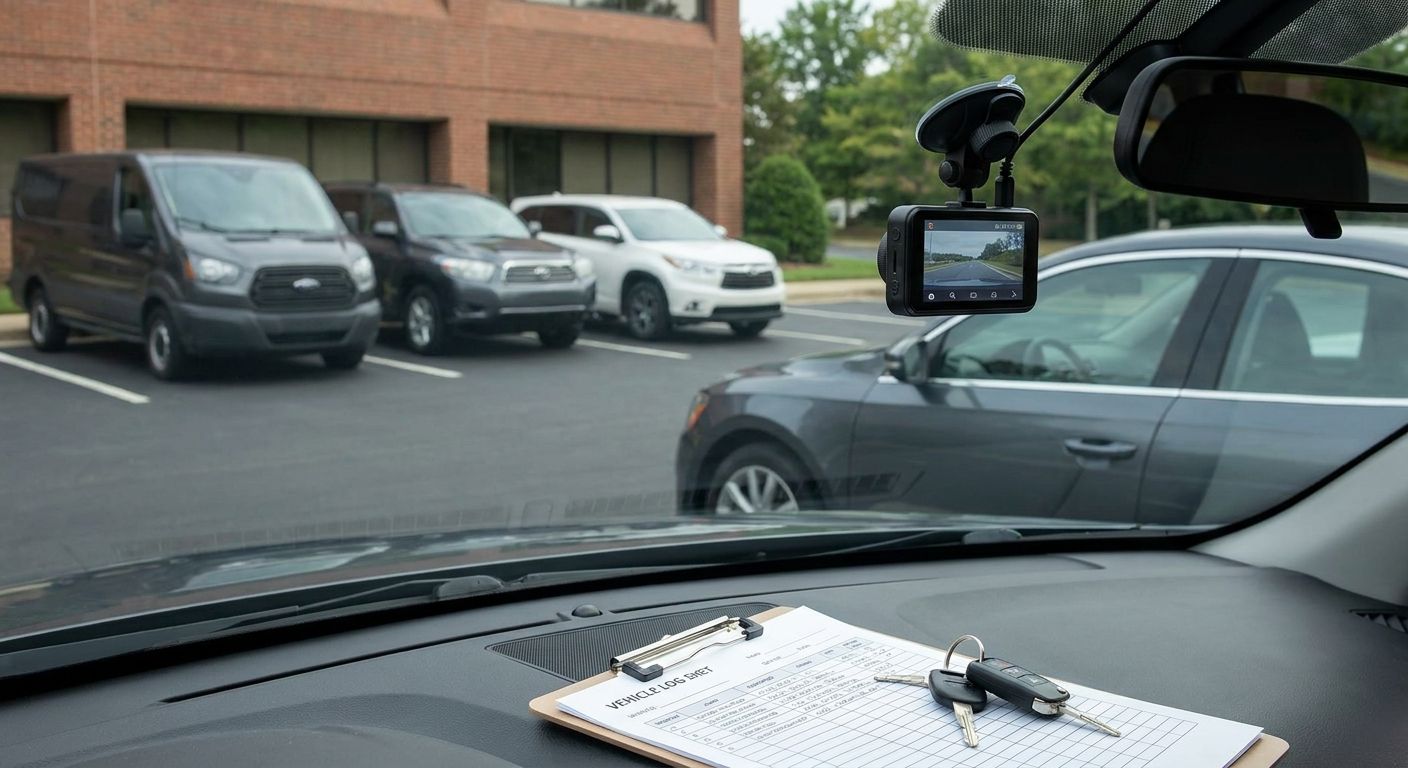

Running a fleet compliance audit means checking driver licences, vehicle defects, tachograph data and operator licence conditions in one structured pass, instead of waiting for a DVSA knock on the door. This guide walks through the steps, the paperwork you need, and where audits usually fall apart in 2026.
- A fleet compliance audit checks driver licences, defect reports, tachograph data and operator licence conditions together, ideally every quarter.
- Driver CPC needs 35 hours of periodic training every five years — gaps here are the most common reason fleets fail a DVSA earned recognition audit.
- Digital checklist tools and dash cam evidence turn a paper audit trail into a searchable record auditors can pull in minutes.
- Since 28 October 2024, HGVs over 12 tonnes need a minimum 3-star direct vision rating or a Progressive Safe System to enter Greater London — check this during the audit, not after a fine.
Why this matters
A missed defect report or an expired driver CPC certificate does not just sit quietly in a filing cabinet. It shows up at renewal time, at a roadside check, or during a DVSA earned recognition audit, and by then it is too late to fix cheaply.
Fleet compliance audits catch these gaps while you can still act on them. For SMEs and local authority fleets running vans, HGVs or company cars, the audit is also the document trail insurers and DVSA examiners ask for after an incident — no paper trail, no defence. Crystal Ball exists to make that trail digital rather than a drawer full of paper checklists.
What you'll need
- Your current operator's licence (O-licence) and vehicle count on the disc
- Driver CPC certificates and expiry dates for every driver
- The last 6-12 months of daily walkaround and defect reports
- Tachograph or driver hours data, including infringement reports
- Vehicle tracking and dash cam access for location and incident evidence
- MOT and maintenance records for every vehicle on the fleet list
- A spreadsheet or audit template to log findings against a deadline
- Roughly half a day per 10 vehicles if records are digital; longer if you're still working from paper
The steps
1. Confirm your operator licence conditions and vehicle count
Start here because everything else is scoped against it. Pull your operating centre licence and check the vehicle count on the O-licence disc against what is actually on the road today.
Fleets grow or shrink vehicle numbers faster than the paperwork keeps up, and DVSA checks the disc first. Review HGV operator licence compliance requirements alongside your renewal date so you're not auditing against last year's fleet list.
Common mistake: treating the O-licence as a one-time application rather than a living document that needs updating every time a vehicle is added or removed.
2. Audit driver CPC and licence status
Every professional HGV and PCV driver needs 35 hours of periodic Driver CPC training completed every five years — this is the single most common gap DVSA finds during earned recognition reviews. Pull each driver's certificate expiry date and cross-check against the DVSA register rather than trusting a driver's own record.
Fleet management software with built-in driver CPC training compliance tracking flags expiries automatically, which matters once you're managing more than a handful of drivers.
Common mistake: relying on drivers to self-report when their CPC hours run out. By the time they mention it, they're already non-compliant.
3. Review daily walkaround and defect reports
This step accomplishes the most in the least time. Defect reports prove the vehicle was checked before it left the yard, and DVSA wants to see reports logged the same day a defect is found, not weeks later during a spot check.
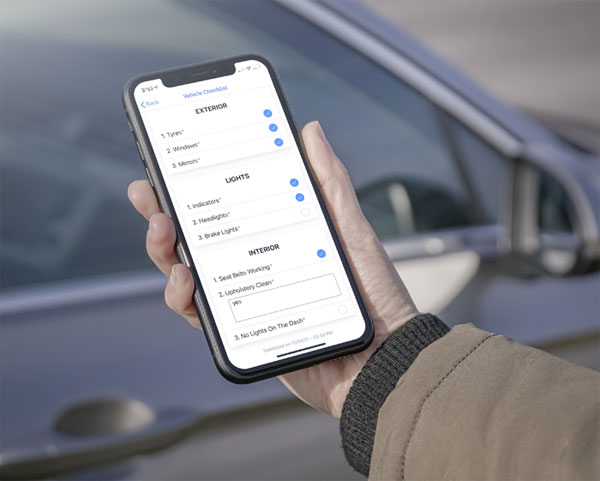
Set up driver defect reporting for fleet compliance as a digital process rather than a paper pad that sits in a glovebox. Look for gaps: any vehicle with zero defects reported in six months either has an exceptional maintenance record or nobody is filling in the checklist.
Common mistake: paper walkaround checklists that never make it back to the transport manager, so defects go unactioned for weeks.
4. Pull tachograph and driver hours data
GB domestic and EU drivers' hours rules cap daily driving at 9 hours (extendable to 10 hours twice a week) and require 45 hours of weekly rest. Download the last quarter of tachograph data and scan specifically for unreviewed infringements — most tachograph software flags them automatically, but flags mean nothing if nobody checks the dashboard.
Common mistake: infringement alerts sitting unread in the tachograph portal because nobody owns the weekly review.
5. Verify vehicle tracking and dash cam evidence
Thatcham-approved trackers and 4G dash cams are what auditors and insurers ask for after an incident — not the memory of a driver. Check that tracking data is actually being retained and pulled regularly, not just installed and forgotten. Crystal Ball's Thatcham S5 tracker (£349) and S7 tracker (£248) both log the location and journey evidence that stands up during a claim or an audit.
Common mistake: dash cam footage gets overwritten before anyone thinks to request it for an insurance dispute.
6. Check Clean Air Zone and Direct Vision Standard compliance
If any vehicle over 12 tonnes runs routes into Greater London, confirm its Direct Vision Standard rating. Since 28 October 2024, TfL requires a minimum 3-star direct vision rating or a fitted Progressive Safe System for a permit — vehicles below that threshold get fined per entry, not warned.
Common mistake: assuming a permit obtained years ago under the older 1-star threshold still applies today.
7. Log findings and set a corrective action tracker
An audit that ends in a spreadsheet nobody revisits achieves nothing. Assign an owner and a fixed re-check date — 14 days is a reasonable default — to every finding, from an expired CPC certificate to a dash cam that stopped uploading footage.
Expected outcome: a fleet compliance audit that produces a ranked list of fixes with owners and dates, not just a pass or fail stamp.
Common mistake: findings logged without an owner or a deadline, which is functionally the same as not logging them at all.

Troubleshooting
- Driver CPC records are incomplete or unverifiable. Cross-check directly against the DVSA-linked training provider records rather than driver-supplied certificates — self-reported dates are the first thing an examiner will query.
- Defect reports have gaps or missing signatures. Move from a paper pad to a digital checklist app so a missed report is visible immediately, not discovered three months later.
- Tachograph infringements pile up unreviewed. Set a fixed weekly slot for someone to open the infringement dashboard — a report nobody reads is worse than no report.
- Dash cam footage isn't available when you need it. Confirm footage is uploading via 4G rather than sitting only on a local SD card that gets overwritten.
- A DVS permit has lapsed or the rating no longer meets the 2026 threshold. Check the vehicle's star rating against the current TfL requirement before it's booked onto a London route, not after a fine arrives.
Tools and resources
- Operator licence checklist and vehicle count reconciliation
- Digital defect reporting and manager checklist tools
- Tachograph/driver hours reporting software with infringement alerts
- Vehicle tracking and 4G dash cam data for incident and audit evidence
- A fixed audit calendar — quarterly beats annual for catching gaps early
What to do next
Once your internal audit is clean, the next step is preparing for the formal version. Read how to prepare for a DVSA earned recognition audit to see what examiners actually ask for beyond the basic checklist, and how earned recognition status changes your audit frequency going forward.
FAQ
What is a fleet compliance audit?
A fleet compliance audit is a structured review of driver licences, vehicle defect reports, tachograph data and operator licence conditions to confirm a fleet meets legal requirements. It's distinct from an MOT, which only checks vehicle roadworthiness on a single test date.
How often should you run a fleet compliance audit?
Quarterly audits catch gaps before they become DVSA findings; annual audits leave too much time for defect reports or CPC expiries to slip through unnoticed. Larger fleets with HGVs benefit from monthly spot-checks between full quarterly audits.
What documents do you need for a DVSA compliance audit?
You need the operator's licence, driver CPC certificates, walkaround and defect reports, tachograph data, and MOT and maintenance history for every vehicle. DVSA earned recognition audits also ask for evidence of how findings from previous audits were actioned.
Is a fleet compliance audit the same as an MOT check?
No. An MOT checks a single vehicle's roadworthiness on one date; a fleet compliance audit reviews the whole fleet's driver, tachograph, defect and licensing records over a period of months. A fleet can pass every MOT and still fail a compliance audit on paperwork.
How much does a fleet compliance audit cost?
Cost depends mostly on staff time rather than a fixed fee, since most SMEs run the audit internally using existing tracking and checklist software. Fleets still using paper records typically spend far more time per vehicle than fleets with digital defect reporting already in place.
What happens if you fail a DVSA earned recognition audit?
Failing usually means a period of increased scrutiny, more frequent roadside checks, or loss of earned recognition status if it was previously granted. Fixing the specific findings with a documented corrective action log is what restores standing at the next review.
Do dash cams help with a fleet compliance audit?
Yes — 4G dash cam footage provides incident evidence that auditors and insurers ask for directly, rather than relying on a driver's account after the fact. Footage retention matters more than footage quality; confirm it's uploading, not just recording locally.
What's the difference between an internal audit and a DVSA audit?
An internal audit is a fleet's own review against the same standards DVSA applies, run on a schedule the business controls. A DVSA audit, including earned recognition reviews, is external and unannounced in scope, which is why internal audits should run more often, not less.
One last thing
The fleets that pass audits without drama in 2026 aren't the ones with the most paperwork — they're the ones where a defect report reaches a transport manager the same day it's filed, not the same month. Fix the reporting lag before you fix anything else on the checklist.
Want this pattern for your patch? Crystal Ball fleet vehicle tracking, dash cams and checklist tools are built to close the exact gaps this audit format checks for.