Bulk haulage runs on tight margins and heavy liability — a tanker full of fuel, chemicals or foodstuffs sitting on the wrong tracker is a compliance gap and an insurance risk at once. Tanker fleet tracking in 2026 has to do more than show a dot on a map: it needs to prove where the vehicle went, what the driver did, and that the load stayed within its hours and its route.
- Tanker fleet tracking in 2026 needs ADR-aware geofencing, trailer tracking and driver hours data in one system — Buy.
- Commercial vehicle tracking for HGV operators is the safe pick for mixed rigid-and-tanker bulk haulage fleets — Consider.
- Skip basic van trackers with no trailer decoupling alert; tanker trailers get parked and swapped daily on site.
- Thatcham-approved trackers add 24/7/365 monitoring for high-value tanker cabs parked overnight in depots — Buy.
Why this matters
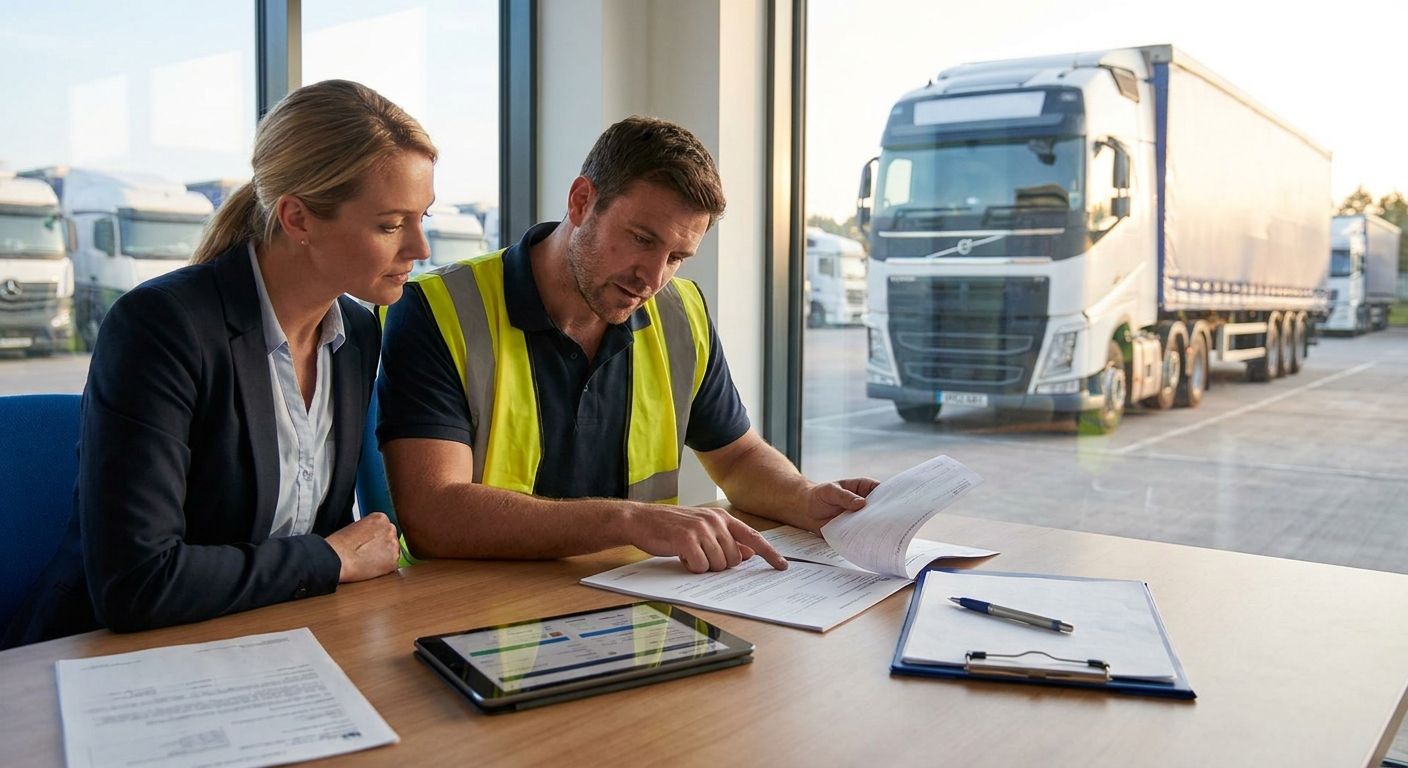
A bulk haulage operator answers to more than the customer waiting on a delivery. Operator licence conditions, ADR routing restrictions, and drivers' hours rules (a 4.5-hour driving limit before a 45-minute break) all get checked by the Traffic Commissioner and by insurers after an incident. Generic van-fleet tracking wasn't built for that level of scrutiny.
Crystal Ball builds fleet tracking around exactly this gap — commercial vehicle tracking for HGV operators that pairs location data with the compliance record an operator licence review actually asks for. For tanker and bulk haulage fleets specifically, the priority list looks different from a courier van fleet, and picking tracking on price or dot-on-map accuracy alone gets expensive fast.
Who this is for
This guide is for fleet managers and transport managers running tanker or bulk tipper vehicles — fuel, chemical, food-grade liquid, aggregate or waste tankers — where the vehicle, the trailer and the load each carry separate risk. If your fleet mixes rigid HGVs with articulated tanker trailers, or you're managing ADR-classified loads across multiple depots, the criteria below apply directly. Straight van or car fleet operators should look at general HGV tracking guidance instead, since tanker-specific features like trailer decoupling alerts and hazmat routing don't add value for parcel or light commercial work.
What to look for in tanker fleet tracking
ADR and hazmat routing alerts
Tanker fleets carrying ADR-classified goods can't take the same route as a general haulage HGV — tunnels, low bridges and restricted zones matter more when the cargo is flammable or corrosive. A tracking system that flags a driver deviating from an approved route, or entering a restricted zone, catches the problem before it becomes a Traffic Commissioner enquiry rather than after.
Trailer and tank decoupling visibility
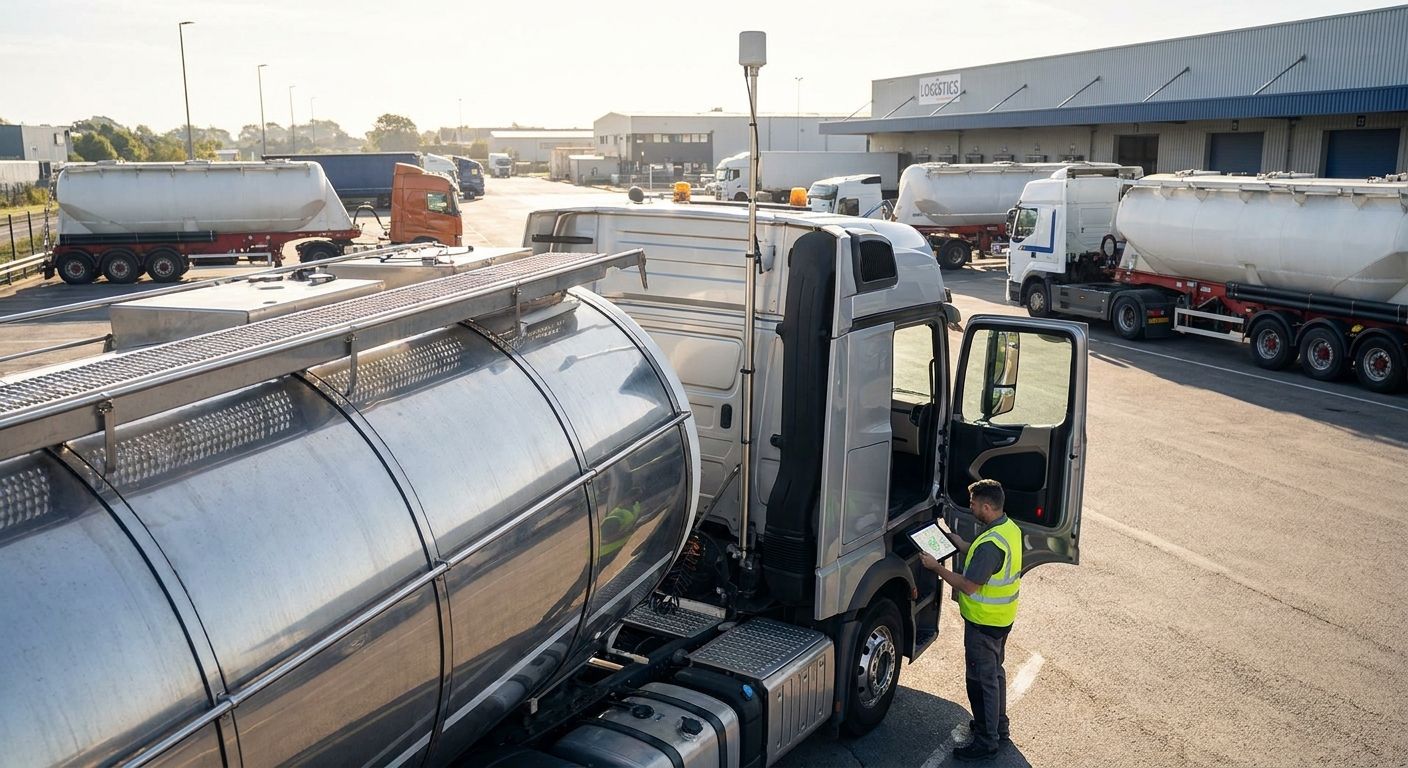
Tanker trailers get dropped at loading bays, washed out at cleaning stations and swapped between tractor units constantly. A tracker fitted only to the cab loses visibility the moment the trailer is uncoupled — asset-level tracking on the tank itself closes that gap and tells you where every trailer sits, not just where the tractor unit last was.
Driver hours and tachograph integration
Bulk haulage drivers run against the same 4.5-hours-then-45-minutes rule as any other HGV driver, but tanker routes often involve waiting time at loading terminals that eats into the working day differently. Tracking that pulls tachograph data alongside GPS location gives a transport manager one place to check compliance instead of cross-referencing two systems.
Thatcham-approved security for high-value cabs and cargo
Tanker cabs and their cargo represent serious asset value sitting in a depot overnight. A Thatcham-approved tracker with 24/7/365 monitoring matters here in a way it doesn't for a low-value delivery van, both for recovery odds and for the insurance conversation that follows a theft.
Geofencing around depots and loading sites
Bulk haulage fleets tend to run fixed routes between a small number of terminals and depots. Geofencing that alerts on arrival, dwell time and departure at each site turns tracking data into a usable record for demurrage disputes and customer delivery confirmations, not just a historical breadcrumb trail.
Breakdown response built for tanker recovery
A loaded tanker breaking down isn't a standard recovery job — specialist handling and site access change the picture. Fleet tracking that flags a stopped tanker fast, combined with breakdown cover suited to HGV recovery, shortens the time a loaded vehicle sits exposed on a hard shoulder or site access road.
Top picks for tanker and bulk haulage fleets
The compliance backbone — commercial HGV tracking. Commercial vehicle tracking for HGV operators gives a bulk haulage fleet the operator licence-facing record: routes, stops, driver identification and geofence alerts in one dashboard. For a fleet running tankers under an O-licence, this is the system a Traffic Commissioner review actually looks for. Buy.
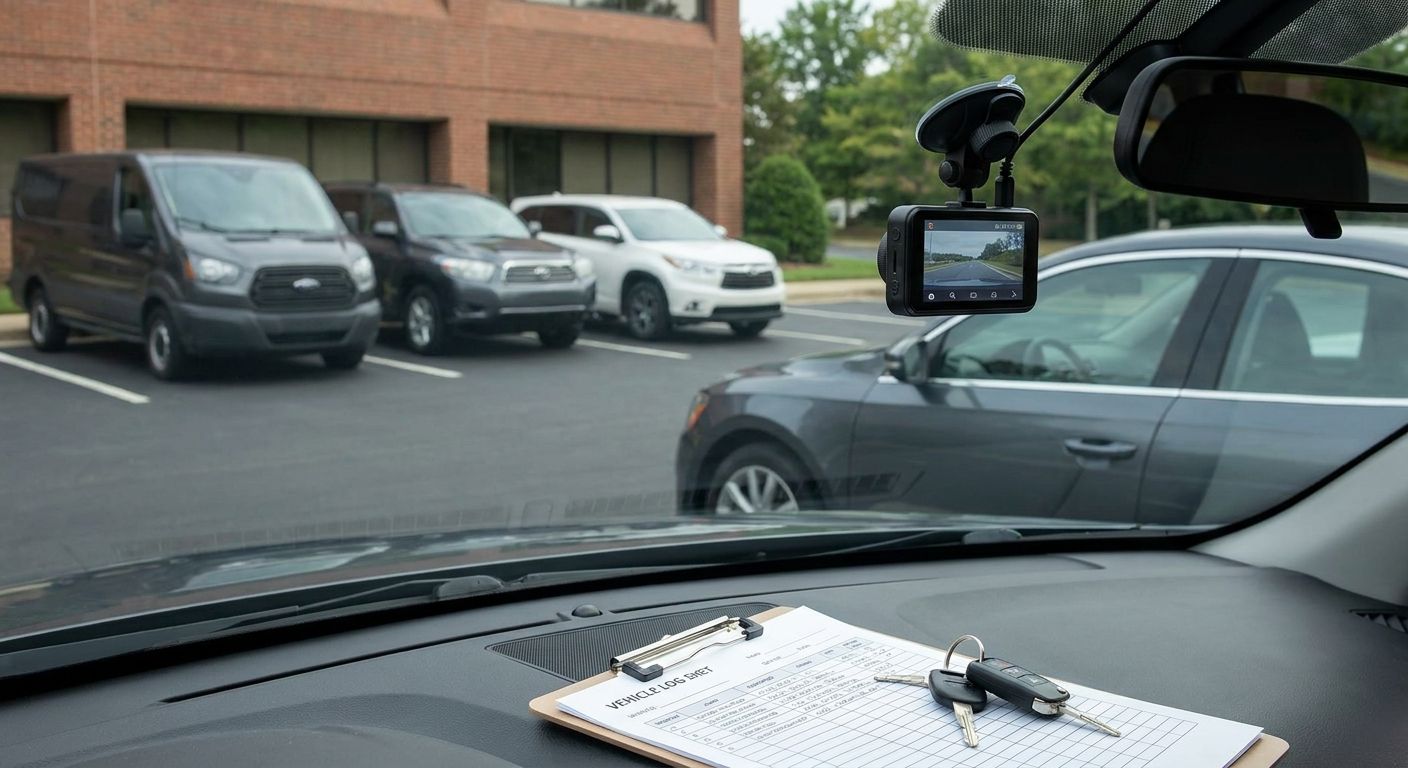
The hardware decision — device-level tracking. Best vehicle tracking devices for HGV fleets matters because tanker cabs run harder duty cycles than a delivery van — more idle time at terminals, more vibration on aggregate routes. Get the device spec wrong and you're replacing hardware mid-contract. Consider, and check installation coverage before committing a whole fleet.
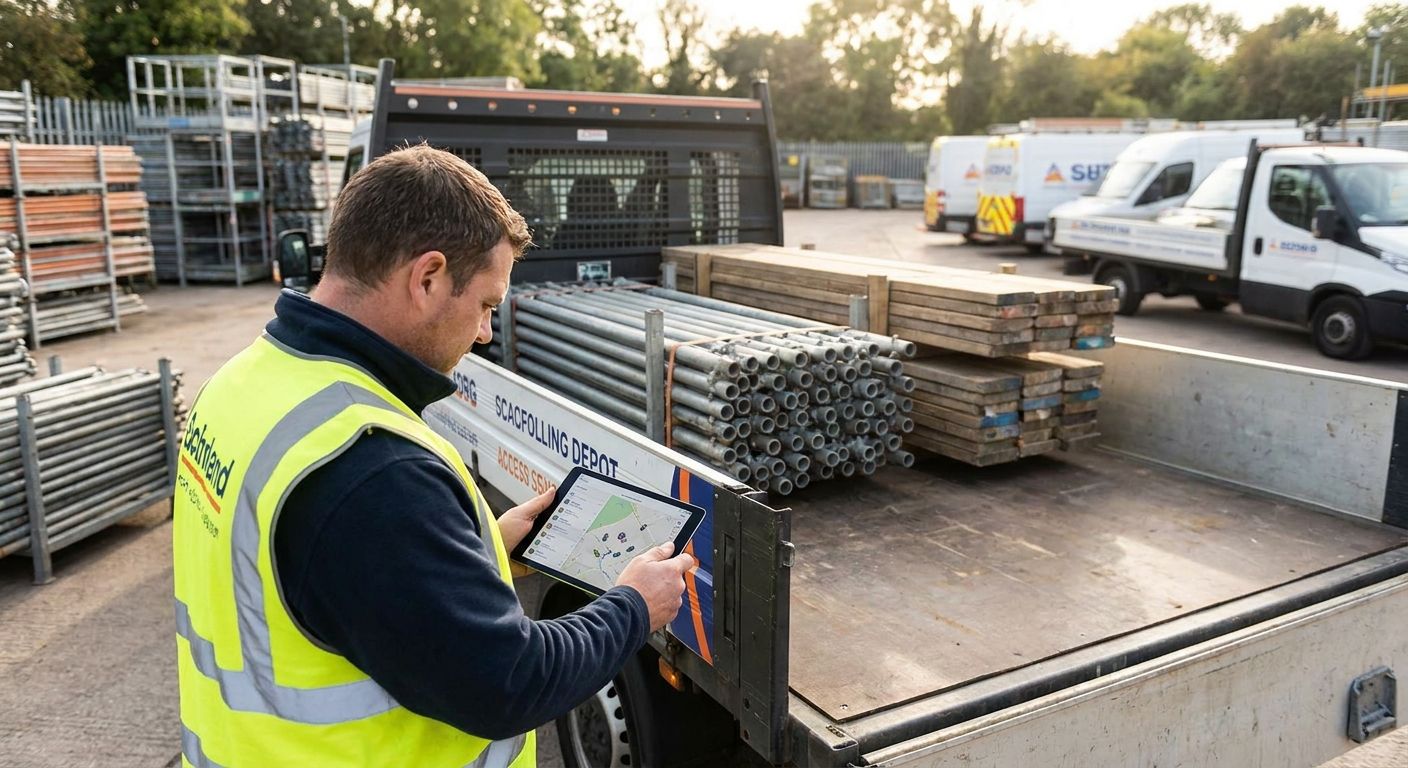
The trailer gap most fleets miss — asset and trailer tracking. How to track trailers and plant equipment across multiple sites covers the exact problem tanker fleets run into: a tractor unit tracker that goes quiet the second the tank trailer is dropped at a wash bay. Any fleet running detachable tanker trailers across more than one site needs this layer. Buy if your trailers move independently of tractor units.
The security layer for high-value cabs. Thatcham-approved tracking with 24/7/365 monitoring suits tanker cabs parked overnight in yards, particularly where cargo value or fuel content makes the vehicle a theft target. Worth pairing with the compliance tracking above rather than running it alone. Consider for depots with any history of overnight vehicle theft.


What to avoid
- Basic van-fleet trackers repackaged for HGVs. They handle location fine but skip ADR routing alerts and tachograph integration — features a tanker operator licence review will ask about.
- Tracking sold without trailer-level coverage. If the quote covers the tractor unit only, ask directly what happens to visibility the moment a tanker trailer is dropped — for a lot of systems, the answer is nothing.
- Cheap devices with no installation network. A tanker fleet running multiple depots needs installation coverage that matches its geography, not a single regional fitter who can't reach every yard within a reasonable window.
Verdict comparison
| Criteria | Commercial HGV tracking | Device-level tracking | Trailer/asset tracking | Thatcham security tracking |
|---|---|---|---|---|
| Best for | Operator licence compliance | Hardware fit and durability | Detachable tanker trailers | High-value cab/cargo theft risk |
| ADR routing alerts | Yes | Depends on setup | No | No |
| Trailer visibility | Partial | No | Yes | No |
| Theft monitoring | Basic | Depends on device | No | 24/7/365 |
| Verdict | Buy | Consider | Buy (if trailers detach) | Consider |
FAQ
What is the best tanker fleet tracking system in 2026?
There isn't one single best system — a tanker fleet needs commercial HGV tracking for compliance, separate trailer tracking for detachable tanks, and Thatcham-approved security for high-value cabs. Combining these three layers covers what a single all-in-one van tracker misses.
Is tanker fleet tracking different from standard HGV tracking?
Yes, tanker fleet tracking adds ADR route restriction alerts and trailer decoupling visibility that standard rigid HGV tracking doesn't need. The core location and driver hours data is shared, but bulk haulage operators need the extra layers to satisfy operator licence checks.
Does vehicle tracking help with ADR compliance?
Vehicle tracking helps by flagging route deviations and restricted zone entry, giving a transport manager an alert before a compliance breach rather than a report after the fact. It doesn't replace ADR training or documentation, but it closes the routing gap.
How much does tanker fleet tracking cost in 2026?
Cost depends on the device, installation coverage and whether trailer tracking is added separately from cab tracking — check current pricing directly rather than relying on a fleet-wide average, since tanker fleets often mix device types across tractor units and trailers.
Can vehicle tracking reduce insurance premiums for tanker fleets?
A Thatcham-approved tracker is recognised by UK insurers and can support a lower premium negotiation, particularly for high-value tanker cabs. The reduction depends on the insurer and the fleet's claims history, not the tracker alone.
Do I need separate tracking for tanker trailers and tractor units?
If your trailers detach and get parked, washed or swapped independently of the tractor unit, yes — cab-only tracking loses visibility the moment the trailer is uncoupled. Asset-level trailer tracking closes that gap.
What is a Thatcham-approved tracker?
A Thatcham-approved tracker meets UK insurance industry security standards and typically includes 24/7/365 monitoring for theft recovery. Categories like S5 and S7 differ in the level of monitoring and driver recognition included.
One last thing
The detail most bulk haulage fleets miss isn't the tracker — it's the trailer. A tanker tractor unit can show a clean, fully compliant record while its trailer sits unaccounted for at a wash bay three depots away. Before signing off on any tanker fleet tracking system in 2026, ask the provider directly what happens to visibility the second the tank is uncoupled — that answer tells you more than any spec sheet.