Local government fleets run everything from refuse trucks to pool cars to school minibuses under one procurement umbrella, and picking the best fleet tracking software for local government fleets in 2026 means weighing compliance, driver safety, and public scrutiny at the same time a private haulier never has to think about.
- GPS fleet tracking for local council fleets is the strongest core pick for mixed council fleets in 2026 — Buy.
- Thatcham S7 trackers start at £198 and suit lower-value pool cars needing insurance-approved GPS tracking.
- Lone worker apps matter as much as vehicle GPS for adult social care and environmental health teams — Buy.
- Skip generic small-business fleet software if HGVs in your fleet need Direct Vision Standard compliance for London.
- NHS-style and waste management fleet platforms exist because a single council tracking system rarely fits every vehicle class.
Why this matters
Council fleets get scrutinised in ways private fleets don't. Freedom of Information requests can ask for vehicle costs, mileage, and incident logs, and a fleet tracking system with weak reporting turns a routine FOI response into a week of manual data pulls.
Mixed fleets compound the problem. A single authority might run pool cars, refuse HGVs, school minibuses, and vans for highways or environmental health teams, each with different insurance, compliance, and safety requirements. Fleet tracking software built for one vehicle class rarely handles all four well.
Add lone-working duty of care for home visiting and enforcement staff, and Direct Vision Standard (DVS) rules for HGVs entering London, and it's clear why generic small-business telematics platforms fall short for local government fleets by 2026.
How this list is ranked
This ranking reflects the procurement criteria most local authority telematics tenders weigh: Thatcham insurance-approval category for higher-value vehicles, integration between vehicle tracking and a manager-facing dashboard, lone-worker escalation for staff working alone in the community, DVS and HGV compliance documentation, and total cost of ownership across a genuinely mixed fleet rather than a single vehicle type.
Each pick below is scored against those criteria, not against marketing claims. Where a solution only suits part of a council fleet, that's flagged rather than glossed over.
The ranked list
1. GPS fleet tracking for local council fleets — the core pick
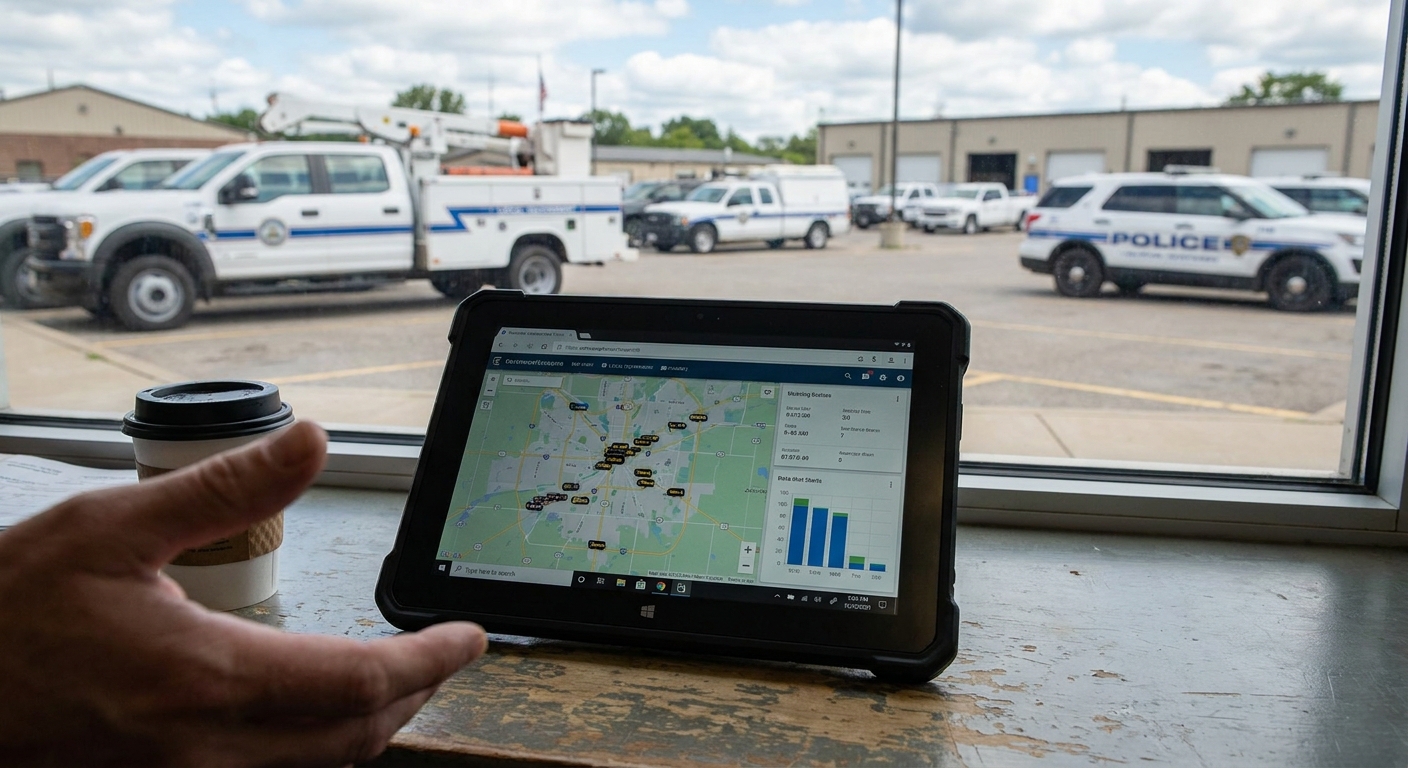
GPS fleet tracking for local council fleets is built around the reality that a council fleet manager oversees pool cars, vans, and heavier vehicles under one contract. It combines real-time location, geofencing around depots and sites, and reporting formats suited to FOI and audit requests.
For authorities replacing an ageing telematics contract in 2026, this is the sensible default because it doesn't force a second system for the non-HGV part of the fleet. Verdict: Buy.
2. NHS and healthcare fleet software — for social care and community health vehicles
NHS and healthcare fleet software targets fleets doing home visits and community appointments, where journey verification and appointment-linked mileage matter more than raw speed data.
Councils running adult social care or community health vehicles alongside standard council fleet vehicles get more value here than from a generic tracker. Verdict: Buy if social care or community health vehicles make up a meaningful share of the fleet; Skip if the fleet is purely operational vehicles like refuse or grounds maintenance.
3. Waste management fleet software — for refuse and street cleansing
Waste management fleet tracking is built around route verification and bin collection proof, which matters when residents complain about missed collections and the council needs an answer that isn't just guesswork.
Refuse and street cleansing fleets also rack up heavy mileage and higher wear, so fuel and idling data pays back faster here than on a pool car fleet. Verdict: Buy for authorities running in-house waste collection; Hold if waste collection is fully contracted out to a third party.
4. School minibus tracking — for education transport teams
School minibus tracking exists because parents and safeguarding officers want proof a minibus arrived and departed on schedule, not just a general fleet dashboard.
Geofenced alerts around school sites and SEND transport routes are the differentiator, not top-line vehicle count. Verdict: Buy for authorities running direct school transport or SEND minibus routes.
5. Lone worker protection — the duty-of-care layer most tenders under-rank
Environmental health officers, home care visitors, and highways inspectors often work alone in unpredictable settings, and vehicle GPS alone doesn't cover a staff member once they're out of the vehicle. Crystal Ball's lone worker app adds panic alerts, check-in timers, and location sharing tied to the same account as vehicle tracking.
Most council tenders rank GPS accuracy above lone-worker escalation, which is backwards given where the real liability sits. Verdict: Buy for any authority with community-facing staff working solo.
6. Thatcham-approved trackers — for high-value fleet vehicles
Councils running specialist or high-value vehicles — mobile CCTV units, plant, specialist enforcement vehicles — need insurance-recognised tracking, not just GPS location. Thatcham S7 tracking starts at £198 and suits lower-value pool cars; the Thatcham S5 Plus, at £548, adds the driver ID and monitoring depth insurers expect on higher-value assets.
The premium reduction on comprehensive cover often offsets the hardware cost within the first policy renewal. Verdict: Buy for any vehicle over typical pool-car value; Skip for low-value short-life vehicles where the premium saving won't cover the hardware.
7. 4G dash cams — for incident evidence and DVS-adjacent fleets
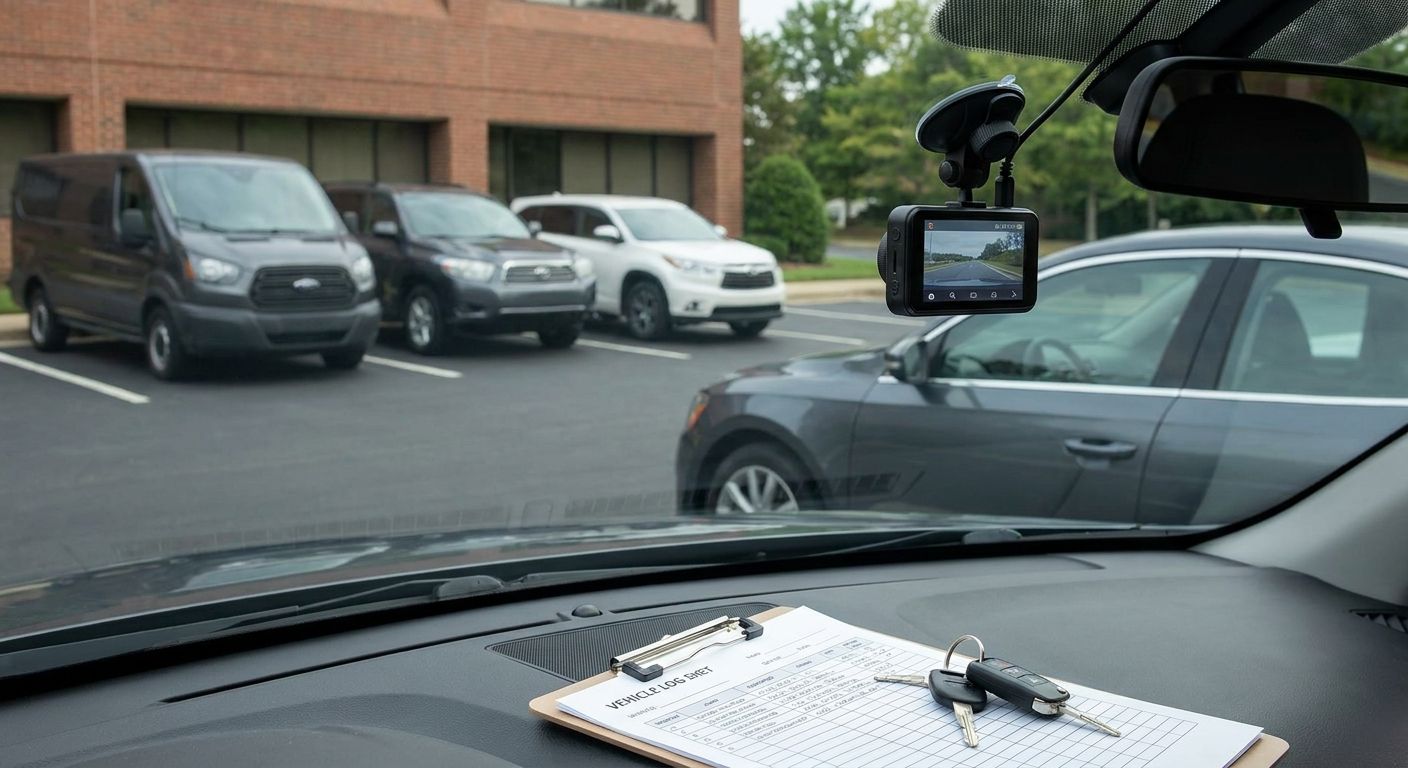
HGVs and larger vans operating near pedestrians and cyclists in town centres generate more third-party claims than pool cars do. 4G dash cam footage settles liability disputes faster and supports insurance claims with timestamped video rather than driver testimony alone.
For HGVs entering London and subject to Direct Vision Standard rules, camera systems and tracking increasingly sit on the same compliance checklist. Verdict: Buy for HGV and larger van fleets; Hold for pool car-only fleets where the incident rate doesn't justify the extra hardware.
Comparison table
| Pick | Best for | Key feature | Verdict |
|---|---|---|---|
| GPS fleet tracking for local council fleets | Mixed council fleets | FOI-ready reporting, geofencing | Buy |
| NHS and healthcare fleet software | Social care/community health vehicles | Appointment-linked journey data | Buy for relevant fleets |
| Waste management fleet software | Refuse and street cleansing | Route and collection verification | Buy |
| School minibus tracking | Education transport | School-site geofencing | Buy |
| Lone worker protection | Community-facing staff | Panic alerts, check-in timers | Buy |
| Thatcham S7 / S5 Plus trackers | High-value or specialist vehicles | Insurance-approved monitoring | Buy for higher-value assets |
| 4G dash cams | HGV and larger van fleets | Incident evidence, DVS-adjacent | Buy for HGV/van fleets |
Where to buy
- Request the Thatcham approval category in writing before signing — insurers price policies against the category, not the marketing name.
- Confirm DVS compliance documentation is included if any HGV in the fleet enters London's low-emission or DVS-regulated zones.
- Ask whether lone worker escalation and driver ID sit on the same platform as vehicle tracking before committing to a multi-year framework contract — bolting on a second system later costs more than buying it together.


FAQ
What is the best fleet tracking software for local government fleets in 2026?
GPS fleet tracking for local council fleets is the strongest core pick in 2026 because it handles mixed vehicle types under one FOI-ready reporting system. Councils with social care, waste, or school transport fleets typically layer a specialist add-on alongside it.
Do local councils need Thatcham-approved trackers?
Yes, for higher-value or specialist vehicles, because Thatcham approval is what most insurers recognise when calculating premium reductions. The Thatcham S7 tracker starts at £198 and the S5 Plus is £548 in 2026, with the higher tier adding deeper monitoring for higher-value assets.
How does fleet tracking help with FOI requests?
Fleet tracking software with structured reporting turns a Freedom of Information request about vehicle costs or mileage into an export rather than a manual audit. Systems without proper reporting formats leave fleet managers pulling data by hand.
What's the difference between fleet tracking and a lone worker app?
Fleet tracking monitors the vehicle's location and driving data, while a lone worker app protects the staff member once they've left the vehicle. Councils with home visiting or enforcement staff need both, not one or the other.
Do council HGVs need Direct Vision Standard compliance?
Any HGV over 12 tonnes entering Greater London needs to meet Direct Vision Standard requirements. Councils running refuse or highways HGVs into London should confirm their tracking and camera provider covers DVS documentation.
How much does fleet tracking software cost for a council fleet?
Cost depends on fleet size and vehicle mix, with hardware like Thatcham trackers running £198 to £548 per unit in 2026 plus ongoing monitoring. Get a fleet-specific quote rather than pricing off a single vehicle.
Can one system cover cars, vans, HGVs, and minibuses?
A core GPS fleet tracking platform can cover all four vehicle types, but specialist features like school-site geofencing or DVS compliance usually sit in add-on modules. Most councils end up combining a core system with one or two specialist layers.
Is dash cam footage useful for local government fleets?
Yes, particularly for HGVs and larger vans operating near pedestrians and cyclists, where 4G dash cam footage settles liability disputes faster than driver testimony alone. It's less critical for low-incident pool car fleets.
One last thing
Most council telematics tenders rank vehicle GPS accuracy above lone worker protection, but the actual liability risk in 2026 concentrates on staff working alone in the community, not on the vehicle itself. If budget forces a choice between upgrading tracking hardware and adding lone worker escalation for home visiting or enforcement teams, the lone worker layer is the one that protects the council from the bigger claim.